

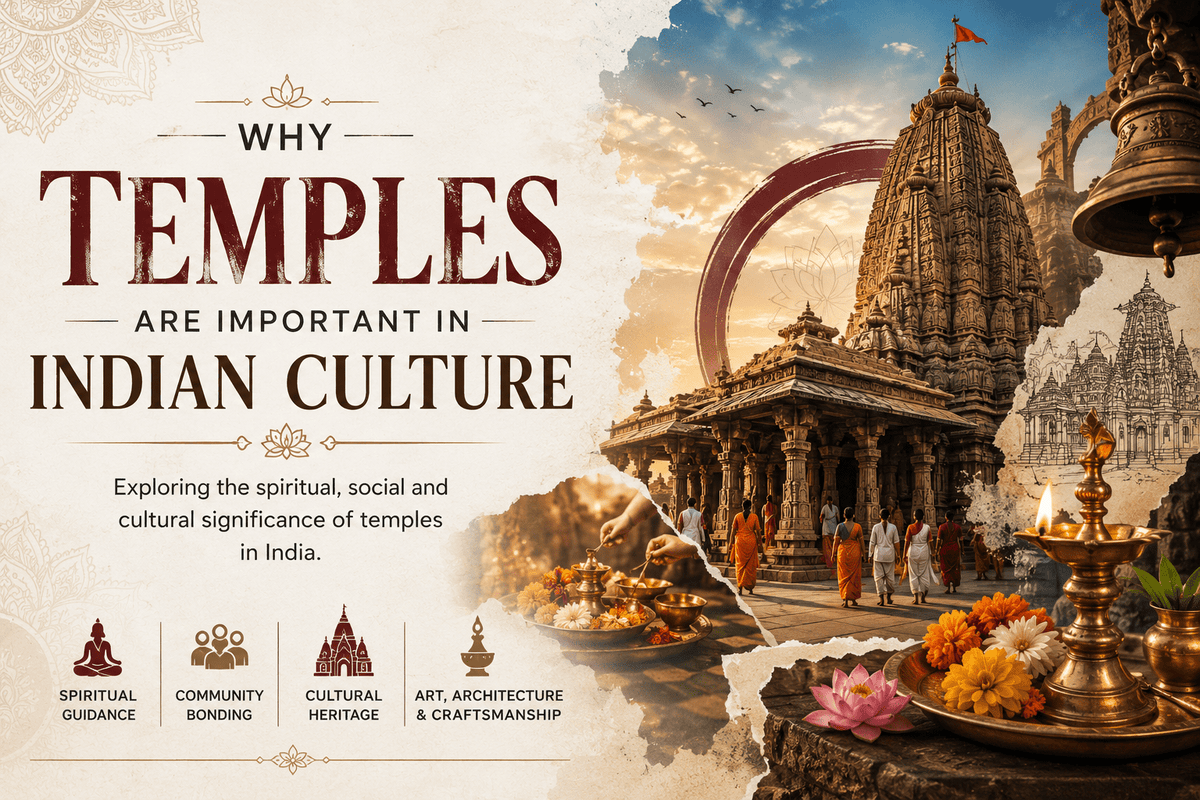
Why Temples Are Important in Indian Culture: Their Spiritual, Social & Cultural Significance
In India, a temple is rarely just a building. It may be a place where a family begins an important day, where devotees gather during a festival, where a traveller pauses for prayer, or where generations come together to follow traditions passed down through centuries.
From the ancient temples of South India to the Himalayan shrines and sacred pilgrimage centres across the country, temples have played an important role in shaping Indian culture. They bring together faith, tradition, art, architecture, music, community and spirituality in one living space.
But why are temples so important in Indian culture?
Their significance goes far beyond worship. Temples help preserve traditions, connect communities, celebrate festivals, support pilgrimage and keep India's rich cultural heritage alive.
What Is the Importance of Temples in Indian Culture?
The importance of temples in Indian culture can be understood through the many roles they have played in people's lives.
For devotees, a temple is a sacred space for prayer and darshan. For communities, it can be a place for gathering and celebration. For visitors, temples offer an opportunity to understand India's history, architecture and traditions.
Unlike monuments that exist only as reminders of the past, many Indian temples remain active centres of worship and community life. Daily prayers, festivals, rituals and traditional practices continue to take place within them.
This is why temples are often described as part of India's living heritage.
1. Temples Are Centres of Spiritual Life

(Devotees offering prayers and lighting diyas at an Indian temple)
At their heart, temples are places of devotion.
People visit temples to offer prayers, participate in rituals, seek blessings and spend moments in quiet reflection. For many families, visiting a temple is also connected with important occasions such as marriages, births, festivals and other significant milestones.
The experience may involve:
-
Darshan of the deity
-
Offering flowers, fruits or other traditional offerings
-
Lighting diyas
-
Listening to prayers or devotional music
-
Receiving prasad
-
Participating in festivals and special rituals
- Traditional puja rituals
For devotees, these practices create a connection between everyday life and spiritual traditions.
A temple visit can therefore be both a personal and communal experience.
2. Temples Preserve Indian Traditions

(Indian family passing temple traditions from one generation to the next)
One of the most important roles of temples is the preservation of cultural traditions.
India is home to hundreds of regional customs, languages, rituals and artistic traditions. Many of these are closely associated with temples and continue to be practiced today.
Temple traditions may include:
-
Traditional puja rituals
-
Sanskrit and regional devotional traditions
-
Classical music
-
Dance and cultural performances
-
Flower decoration
-
Festival ceremonies
-
Traditional food and prasad
-
Ritual craftsmanship
These customs are often passed from grandparents and parents to younger generations.
Traditional worship also involves a variety of traditional Hindu pooja utensils, each serving a particular purpose during religious ceremonies and daily worship.
A child visiting a temple with their family may learn not only how to participate in a ritual but also why a particular festival is celebrated, why certain offerings are made and what a particular tradition means.
In this way, temples become spaces where culture is experienced rather than simply remembered.
3. Temples Bring Communities Together
The role of temples in Indian society extends beyond individual worship.
Throughout India's history, temples have often served as gathering places for local communities. Festivals, religious celebrations, charitable activities and cultural events can bring large numbers of people together.
During major celebrations, a temple may become a centre of activity where people:
-
Decorate the temple
-
Prepare and distribute prasad
-
Organize religious ceremonies
-
Meet family and neighbours
-
Participate in devotional music
-
Support community activities
-
Welcome pilgrims and visitors
This sense of togetherness is one reason temples continue to hold an important place in Indian social life.
4. Temples Give Festivals a Living Tradition

(Indian temple decorated with diyas and flowers during a traditional festival)
Indian festivals are deeply connected with temples.
During celebrations such as Janmashtami, Maha Shivratri, Navratri, Ram Navami and Diwali, temples may be decorated with flowers, lamps and traditional ornaments. Special prayers and ceremonies attract devotees throughout the day.
In different parts of India, regional temple festivals also bring their own distinctive customs, music, food and celebrations.
The temple therefore becomes more than the location of a religious ceremony. It becomes a place where stories, rituals, family traditions and community participation come together.
For someone learning about Indian culture, experiencing a temple festival can offer a deeper understanding of how traditions continue to evolve while remaining connected to their roots.
5. Temples Are Closely Connected With Indian Art and Craftsmanship

(Handcrafted brass diyas and ritual vessels displayed inside an Indian temple)
Indian temples have also played a significant role in the development and preservation of traditional craftsmanship.
Across different regions, temples are associated with intricate stone carving, sculpture, painting, metalwork, woodwork and decorative arts.
Traditional temple objects may include:
-
Diyas and lamps
-
Bells
-
Brass pooja items
-
Puja utensils
-
Sculptures and idols
-
Decorative vessels
-
Ritual objects
-
Ornamental metalwork
Materials such as stone, wood, bronze, copper and brass have been used in different forms of Indian religious and artistic craftsmanship. This long-standing tradition of craftsmanship can still be seen today in handcrafted brass and copper products inspired by India's cultural heritage.
This connection between spirituality and craftsmanship is particularly significant because the making of a traditional object can itself become an expression of cultural heritage.
The artisans who create these objects carry techniques and knowledge that may have been passed down through generations.
6. Temples Reflect India's Architectural Heritage

(Intricate stone carvings and traditional architecture of a historic Indian temple)
The significance of temples in India can also be seen through their architecture.
Indian temple architecture varies dramatically from one region to another. The towering gopurams of South Indian temples, the distinctive forms of North Indian temples and the architectural traditions found in the Himalayan and coastal regions all demonstrate India's incredible diversity.
Temple architecture can reveal information about:
-
Regional traditions
-
Historical periods
-
Religious beliefs
-
Artistic techniques
-
Local materials
-
Patronage and cultural development
Some temples are also important historical and architectural landmarks in their own right.
7. Temples Are Important to the Tradition of Pilgrimage

(`Pilgrims walking toward a sacred Himalayan temple during sunrise)
For millions of people, visiting a temple is not simply a short local visit. It can be part of a pilgrimage or yatra.
Pilgrimage has long been an important part of Indian religious and cultural life. People may travel great distances to visit sacred temples, rivers, mountains and pilgrimage centres.
These journeys can become deeply meaningful experiences involving:
-
Prayer
-
Family traditions
-
Community participation
-
Spiritual reflection
-
Visiting sacred places
-
Learning about regional cultures
India's pilgrimage traditions are incredibly diverse, ranging from the Himalayan shrines of the Char Dham to the Jyotirlingas and countless regional pilgrimage centres.
If you are planning to explore India's sacred destinations, read our guide to the [Best Pilgrimage Destinations to Visit in India].
8. Temples Connect Generations
One of the most beautiful aspects of temple traditions is the way they connect different generations.
A grandparent may explain the story behind a deity to a child. Parents may teach their children how to participate in a puja. Families may return to the same temple year after year for festivals or special occasions.
These repeated experiences create cultural memories.
The importance of this connection becomes especially clear in a rapidly changing world. As lifestyles change, traditional spaces can provide younger generations with opportunities to experience customs that might otherwise become distant from everyday life.
Temples therefore help create a bridge between India's past and its present.
9. Temples Support Cultural Learning
A temple visit can also be an introduction to many aspects of Indian culture.
Someone visiting a historic temple may encounter architecture, sculpture, mythology, music, traditional clothing, rituals and regional customs within a single experience.
For this reason, temples can be valuable places of informal cultural learning.
Children can learn through stories. Travellers can learn through architecture and local traditions. Families can learn through participation.
This makes temples particularly important for preserving cultural knowledge in a way that is accessible and experiential.
10. Temples Are Part of India's Living Heritage
When we think about heritage, we often imagine ancient monuments, museums or archaeological sites.
Temples are different because many continue to function as active religious and cultural spaces.
A temple may have existed for hundreds of years, yet people still light lamps there, offer prayers, celebrate festivals and follow traditions today.
This combination of history and continuing practice makes Indian temples a powerful example of living heritage.
Their importance is therefore not limited to what happened in the past. It also lies in how traditions continue to be practiced in the present.
Famous Temples That Represent India's Cultural Diversity
India's temple traditions are incredibly diverse. Different temples reflect different regions, historical periods and cultural practices.
Some well-known examples include:
Kedarnath Temple, Uttarakhand
Located in the Himalayas, Kedarnath is one of India's important pilgrimage destinations and is closely associated with the worship of Lord Shiva.
Jagannath Temple, Odisha
The Jagannath tradition is deeply connected with Odisha's cultural identity and is particularly famous for the annual Rath Yatra.
Meenakshi Amman Temple, Tamil Nadu
Known for its elaborate architecture and towering gopurams, the temple represents the rich artistic and architectural traditions of South India.
Somnath Temple, Gujarat
Somnath is an important pilgrimage centre associated with Lord Shiva and forms part of India's broader Jyotirlinga tradition.
Tirupati, Andhra Pradesh
Tirupati is one of India's best-known pilgrimage centres and attracts devotees from across the country and beyond.
These examples demonstrate that there is no single definition of an Indian temple. Each region has developed its own architectural styles, rituals, festivals and traditions.
Planning to visit some of India's most renowned temples? Knowing the best time to visit India’s most famous temples can help you plan your journey around weather, festivals and regional conditions.
How Temples Preserve Indian Cultural Heritage
The cultural importance of temples can be summarized through the many traditions they help sustain:
Spiritual heritage: Prayer, worship and religious traditions continue through generations.
Artistic heritage: Sculpture, painting, music, dance and craftsmanship remain connected to sacred spaces.
Architectural heritage: Historic temple structures preserve distinctive regional building traditions.
Social heritage: Festivals and community gatherings bring people together.
Pilgrimage heritage: Sacred journeys continue to connect people with India's religious geography.
Family heritage: Parents and grandparents pass traditions and stories to younger generations.
Together, these elements explain why temples remain so significant to Indian culture.
How to Respect Temple Traditions as a Visitor
Whether visiting a famous pilgrimage destination or a small local temple, visitors should remember that temples are active sacred spaces.
A few simple practices can help ensure a respectful visit:
-
Dress appropriately according to local customs.
-
Remove footwear where required.
-
Follow temple-specific rules.
-
Respect queues and designated areas.
-
Ask before photographing people or rituals.
-
Avoid disturbing devotees during prayer.
-
Follow instructions regarding offerings and food.
-
Be respectful of local customs, even when they differ from your own.
Understanding and respecting these traditions can make a temple visit more meaningful.
Why Temples Continue to Matter Today

(Generations of devotees experiencing India's living temple heritage)
Modern India has changed dramatically, but temples continue to hold an important place in people's lives.
For some, they are places of daily worship. For others, they are connected with family traditions, festivals or pilgrimage. For travellers, they can provide a window into India's architecture and cultural history.
Their continued relevance comes from their ability to bring together different dimensions of life: faith, family, community, art, tradition and heritage.
A temple is therefore not simply a structure from India's past. It can be a living space where the past continues to interact with the present.
Conclusion
The importance of temples in Indian culture lies in everything they represent and preserve.
They are places of worship and reflection, but they are also centres of community, festivals, pilgrimage, art, craftsmanship and cultural learning. They connect generations by keeping rituals, stories and traditions alive.
From a small village shrine to one of India's great pilgrimage temples, each sacred space contributes to the country's extraordinary cultural landscape.
To understand Indian temples is therefore to understand something much larger than architecture or religion. It is to discover how faith and culture have continued to shape one another across generations.
And perhaps that is why, even after centuries, the sound of a temple bell, the glow of a diya and the gathering of devotees still remain such familiar and meaningful parts of Indian life.
Frequently Asked Questions
1. Why are temples important in Indian culture?
Temples are important because they serve as places of worship while also preserving traditions, festivals, art, architecture, craftsmanship and community practices.
2. What is the cultural significance of temples in India?
Temples represent India's living cultural heritage. They connect spirituality with architecture, music, festivals, craftsmanship, pilgrimage and family traditions.
3. What role do temples play in Indian society?
Temples can serve as community gathering spaces where people participate in festivals, religious ceremonies, charitable activities and cultural events.
4. Why do people visit temples?
People visit temples for prayer, darshan, festivals, spiritual reflection, family traditions and pilgrimage.
5. How do temples preserve Indian traditions?
Temples help preserve rituals, festivals, devotional music, traditional arts, craftsmanship and cultural practices that are often passed from one generation to another.
6. How are temples connected with Indian craftsmanship?
Temples have long been associated with sculpture, metalwork, woodwork, painting, decorative arts and the creation of traditional ritual objects.
7. Why is pilgrimage important in Indian culture?
Pilgrimage connects people with sacred places and traditions while creating opportunities for spiritual reflection, family experiences and cultural discovery.
8. Are Indian temples only places of worship?
No. Many temples are also important centres of cultural heritage, festivals, art, architecture, community life and pilgrimage.
Read more

Temple History, Architecture & Sacred Scriptures: Understanding India’s Living Heritage
Explore the history, architecture and sacred scriptures of Indian temples, and discover how these traditions continue to shape India’s living cultural heritage.
Read more
Understanding the Significance of Hindu Temple Worship: Rituals, Traditions & Spiritual Meaning
Discover the spiritual meaning of Hindu temple worship, from darshan and aarti to prasad, diyas, pooja rituals, and sacred temple traditions across India.
Read more