
Article: Best Pilgrimage Destinations to Visit in India


Best Pilgrimage Destinations to Visit in India
India is home to some of the world's most remarkable pilgrimage destinations, where spirituality, history, architecture and living traditions come together. From the sacred ghats of Varanasi and the temples of Mathura-Vrindavan to the Himalayan shrines of Kedarnath and Badrinath, every destination offers a different spiritual and cultural experience.
For devotees, these places are more than tourist attractions. They are destinations for darshan, prayer, rituals, festivals and reflection, often connected with centuries-old traditions and stories from Hindu religious heritage.
Whether you are planning your first Hindu pilgrimage in India or looking to explore new sacred places, choosing the right destination depends on your interests, travel season, accessibility and the type of spiritual experience you are seeking.
In this guide, we explore some of the best pilgrimage destinations in India, their significance and what makes each place worth visiting.
1. Varanasi — The Spiritual Heart of India

( Varanasi Ganga ghats at sunset with temple spires, historic buildings, pilgrims, and boats along the sacred river.)
Located on the banks of the sacred Ganges, Varanasi is one of India's most famous pilgrimage cities. The city is traditionally associated with Lord Shiva and has been an important centre of Hindu religious life for generations.
The Kashi Vishwanath Temple is one of its most important sacred sites and is also associated with the Jyotirlinga tradition. The city's ghats along the Ganges are another defining feature, where visitors can witness prayers, ceremonies and the evening Ganga Aarti.
Varanasi offers more than a temple visit. Its narrow lanes, ancient shrines, riverfront rituals, music, architecture and everyday devotional life create an immersive experience of India's spiritual heritage.
Varanasi at a Glance
- State: Uttar Pradesh
- Major tradition: Lord Shiva
- Known for: Ganges, Kashi Vishwanath Temple and Ganga Aarti
- Best for: Shiva devotees, spiritual experiences and cultural exploration
Best for: Shiva devotees, first-time pilgrims, spiritual and cultural exploration.
Quick Comparison of India's Major Pilgrimage Destinations
If you're planning a pilgrimage and aren't sure where to begin, this quick comparison can help you choose a destination based on your spiritual interests, location and travel experience.
| Pilgrimage Destination | State | Major Tradition | Best Known For |
|---|---|---|---|
| Varanasi | Uttar Pradesh | Lord Shiva | Ganges, temples and spiritual traditions |
| Ayodhya | Uttar Pradesh | Lord Rama | Ramayana heritage and sacred sites |
| Mathura & Vrindavan | Uttar Pradesh | Lord Krishna | Krishna devotion and temple traditions |
| Haridwar | Uttarakhand | Ganga worship | Ganga Aarti and river pilgrimage |
| Kedarnath | Uttarakhand | Lord Shiva | Himalayan pilgrimage |
| Badrinath | Uttarakhand | Lord Vishnu | Char Dham pilgrimage |
| Rameswaram | Tamil Nadu | Lord Shiva | Char Dham and Shiva traditions |
| Tirupati | Andhra Pradesh | Lord Venkateswara | Major Vaishnava pilgrimage |
| Puri | Odisha | Lord Jagannath | Char Dham and Rath Yatra |
| Dwarka | Gujarat | Lord Krishna | Char Dham and Krishna traditions |
| Somnath | Gujarat | Lord Shiva | Jyotirlinga tradition |
| Kamakhya | Assam | Goddess Kamakhya | Shakti traditions |
2. Ayodhya — The Sacred City of Lord Rama
 (Ram Mandir in Ayodhya at sunset, with ornate temple architecture, landscaped gardens, saffron flags, and pilgrims visiting the sacred complex.)
Ayodhya holds a significant place in Hindu tradition and is traditionally associated with Lord Rama. The city is an important destination for devotees interested in Ramayana traditions and the religious heritage surrounding Rama.
The Ram Janmabhoomi site is one of the major attractions for pilgrims, while the city's temples and sacred locations provide opportunities to explore its broader religious traditions.
Ayodhya becomes particularly vibrant during important religious occasions, when devotees gather for prayers, celebrations and special ceremonies.
For a first-time visitor, Ayodhya offers an opportunity to experience how mythology, faith, festivals and living traditions continue to shape a sacred city.
Ayodhya at a Glance
- State: Uttar Pradesh
- Major tradition: Lord Rama
- Known for: Ramayana heritage and sacred sites associated with Rama
- Best for: Rama devotees, religious heritage and temple visits
Best for: Rama devotees, Ramayana traditions, temple visits and religious festivals.
3. Mathura & Vrindavan — The Land of Krishna

(Mathura and Vrindavan Krishna temple during sunset with devotees, colorful floral decorations, devotional music, and traditional temple architecture.)
Mathura and Vrindavan are among the most important pilgrimage destinations associated with Lord Krishna.
Mathura is traditionally regarded as Krishna's birthplace, while Vrindavan is closely connected with stories of his childhood and devotional traditions. Together, the two destinations form an important pilgrimage circuit for devotees following Krishna and Vaishnava traditions.
Visitors can explore numerous temples, participate in devotional activities and experience the distinctive atmosphere of the towns.
The destinations are particularly lively during Janmashtami, Holi and other Krishna-related celebrations, when pilgrims and visitors arrive from across India and beyond.
Mathura & Vrindavan at a Glance
- State: Uttar Pradesh
- Major tradition: Lord Krishna
- Known for: Krishna's birthplace traditions, temples and devotional culture
- Best for: Krishna devotees, Vaishnava traditions and festivals
4. Haridwar — Gateway to the Ganges

(Ganga Aarti in Haridwar at dusk with priests holding large brass lamps, devotees gathered along the ghats, temples, and glowing reflections on the sacred Ganges River.)
Situated on the banks of the Ganges, Haridwar is one of the most important pilgrimage destinations in northern India. The city's name is traditionally associated with its role as a gateway to the Himalayan pilgrimage region, and it has long been connected with Hindu religious traditions.
Har Ki Pauri is among Haridwar's most recognised sacred areas, where devotees gather along the river and participate in religious ceremonies. The evening Ganga Aarti creates a memorable spiritual atmosphere as lamps, prayers and devotional chants come together along the riverfront.
Haridwar can also serve as a starting point for pilgrims travelling toward other Himalayan destinations.
Haridwar at a Glance
- State: Uttarakhand
- Major tradition: Ganga worship
- Known for: Har Ki Pauri and Ganga Aarti
- Best for: River worship, spiritual experiences and pilgrimage journeys
5. Kedarnath — A Sacred Himalayan Pilgrimage

(Kedarnath Temple surrounded by snow-capped Himalayan mountains, with pilgrims gathered outside the historic stone temple.)
Located in the Himalayan region of Uttarakhand, Kedarnath is one of India's most revered pilgrimage destinations dedicated to Lord Shiva. The ancient Kedarnath Temple is traditionally associated with the Jyotirlinga tradition and forms an important part of the Himalayan pilgrimage landscape. For readers interested in Shiva worship and its traditions, explore our guide to Sawan and the spiritual significance of Lord Shiva.
Reaching Kedarnath is itself an important part of the experience. The journey involves travelling through mountainous terrain, making preparation particularly important for first-time pilgrims.
Because of its high-altitude location and seasonal accessibility, visitors should carefully check weather conditions, travel arrangements and official guidance before planning their journey.
The combination of spiritual significance and dramatic Himalayan surroundings makes Kedarnath a distinctive pilgrimage experience.
Kedarnath at a Glance
- State: Uttarakhand
- Major tradition: Lord Shiva
- Known for: Himalayan setting and Jyotirlinga tradition
- Best for: Shiva devotees and Himalayan pilgrimage
6. Badrinath — A Sacred Vishnu Pilgrimage

(Badrinath Temple in Uttarakhand with colorful traditional architecture, pilgrims entering the temple, and snow-capped Himalayan mountains in the background.)
Located in Uttarakhand, Badrinath is one of India's most important pilgrimage destinations associated with Lord Vishnu. The Badrinath Temple is situated in the Himalayas and forms part of the traditional Char Dham pilgrimage.
The destination attracts devotees seeking darshan and those interested in experiencing one of India's best-known Himalayan sacred sites.
Badrinath is also closely connected with the wider religious landscape of Uttarakhand, making it possible for pilgrims to combine the visit with other sacred destinations in the region.
Because Himalayan travel can be affected by weather and seasonal conditions, visitors should plan carefully and check current travel information before setting out.
Badrinath at a Glance
- State: Uttarakhand
- Major tradition: Lord Vishnu
- Known for: Badrinath Temple and Char Dham tradition
- Best for: Vishnu devotees and Himalayan pilgrimage
7. Rameswaram — A Major Shiva Pilgrimage
 (Ramanathaswamy Temple in Rameswaram with its ornate gopuram, long temple corridors, pilgrims, and sacred temple tank under a bright blue sky.)
Located on Rameswaram Island in Tamil Nadu, Rameswaram is one of the most significant pilgrimage destinations in southern India. It is traditionally associated with Lord Shiva and has an important place in Hindu pilgrimage traditions.
The Ramanathaswamy Temple is renowned for its religious importance and distinctive architecture, including its celebrated long corridors and numerous pillars.
Rameswaram also holds a special place in traditions associated with the Ramayana, adding another layer of significance for pilgrims interested in the connection between sacred geography and Hindu religious narratives.
As one of the four traditional Char Dham destinations, Rameswaram also connects southern India with a much larger pilgrimage tradition extending across the country.
Rameswaram at a Glance
- State: Tamil Nadu
- Major tradition: Lord Shiva
- Known for: Ramanathaswamy Temple and Char Dham tradition
- Best for: Shiva devotees, temple architecture and spiritual journeys
If you want to understand the broader traditions behind Hindu worship, explore our guide to traditional Hindu pooja rituals.
8. Tirupati — A Major Vishnu Pilgrimage

(Jagannath Temple in Puri with its towering temple architecture, ornate shrines, colorful entrance, and pilgrims gathered around the sacred complex.)
Located in Andhra Pradesh, Tirupati is one of India's most visited pilgrimage destinations and is closely associated with Lord Venkateswara, a form of Lord Vishnu.
The Sri Venkateswara Temple at Tirumala is the centre of the pilgrimage experience. Devotees travel here for darshan and to participate in long-standing traditions of worship and devotion.
The destination is especially suitable for pilgrims who want to experience a large, well-established temple complex with organised darshan arrangements and a strong devotional atmosphere.
Because the temple can attract very large numbers of visitors, first-time pilgrims should check current darshan procedures, timings and visitor guidelines before travelling.
Tirupati at a Glance
- State: Andhra Pradesh
- Major tradition: Lord Venkateswara
- Known for: Sri Venkateswara Temple and darshan
- Best for: Vishnu devotees and major temple pilgrimage
9. Puri — Sacred Home of Lord Jagannath

(Jagannath Temple in Puri with its towering temple architecture, ornate shrines, colorful entrance, and pilgrims gathered around the sacred complex.)
Puri, in Odisha, is one of India's most important pilgrimage destinations and is best known for the Jagannath Temple.
The temple is dedicated to Lord Jagannath, along with Balabhadra and Subhadra, and occupies a special place in Vaishnava traditions. Puri is also one of the four traditional Char Dham pilgrimage destinations.
The city's religious identity extends beyond the temple itself. Its festivals, rituals, food traditions and long connection with devotees make Puri an important centre of Indian spiritual and cultural heritage.
The Rath Yatra is particularly significant, attracting enormous attention and participation.
Visitors should remember that access rules and photography restrictions can apply within temple premises, so it is important to follow current temple guidelines.
Puri at a Glance
- State: Odisha
- Major tradition: Lord Jagannath
- Known for: Jagannath Temple and Rath Yatra
- Best for: Vaishnava traditions, Char Dham pilgrimage and festivals
10. Dwarka — The Sacred City of Lord Krishna
(Dwarkadhish Temple in Dwarka beside the Arabian Sea at sunset, with its ornate stone architecture, temple flag, coastal waves, and pilgrims visiting the sacred site.)
Located on the western coast of Gujarat, Dwarka is traditionally associated with Lord Krishna and is one of India's major pilgrimage destinations.
The Dwarkadhish Temple is the city's principal pilgrimage site and attracts devotees seeking darshan of Krishna in his Dwarkadhish form.
Dwarka is also one of the four traditional Char Dham destinations, giving it importance beyond its association with Krishna. Its coastal setting and temple architecture add to the distinctive character of the pilgrimage experience.
For devotees interested in Krishna traditions, Dwarka offers a different perspective from Mathura and Vrindavan, allowing visitors to explore another important part of Krishna's sacred geography.
Dwarka at a Glance
- State: Gujarat
- Major tradition: Lord Krishna
- Known for: Dwarkadhish Temple and Char Dham tradition
- Best for: Krishna devotees and Char Dham pilgrims
11. Somnath — An Important Shiva Pilgrimage
Located on the coast of Gujarat, Somnath is one of India's best-known Shiva pilgrimage destinations.
The Somnath Temple is traditionally associated with the Jyotirlinga tradition and holds an important place in Hindu religious heritage. Its location overlooking the Arabian Sea gives the temple a distinctive setting.
For pilgrims, a visit to Somnath can combine devotion with an appreciation of temple architecture, history and the cultural traditions surrounding one of India's prominent Shiva shrines.
The destination can also be included in a broader Gujarat pilgrimage itinerary along with Dwarka and other important sacred places.
Somnath at a Glance
- State: Gujarat
- Major tradition: Lord Shiva
- Known for: Somnath Temple and Jyotirlinga tradition
- Best for: Shiva devotees and temple heritage
12. Kamakhya — A Major Shakti Pilgrimage
Located on Nilachal Hill in Guwahati, Assam, the Kamakhya Temple is one of the most important Shakti pilgrimage destinations in India.
The temple is associated with Goddess Kamakhya and occupies a significant place in Shakta traditions. Its distinctive religious practices and regional cultural heritage make it different from many other major pilgrimage destinations in India.
Kamakhya is also associated with the broader tradition of Shakti Peethas, making it an important destination for devotees interested in the worship of the divine feminine.
The temple's major festival, Ambubachi Mela, draws pilgrims and visitors who come to experience its unique religious traditions.
Kamakhya at a Glance
- State: Assam
- Major tradition: Goddess Kamakhya
- Known for: Shakti traditions and Ambubachi Mela
- Best for: Shakti devotees and exploring Northeast India's spiritual heritage
Why These Destinations Are Different
One of the most fascinating aspects of pilgrimage destinations in India is their diversity.
A journey to Kedarnath takes you into the Himalayas, while Rameswaram offers a sacred coastal experience. Varanasi is deeply connected with the Ganges and Shiva traditions, while Mathura and Vrindavan are central to Krishna devotion. Puri and Dwarka connect to the wider Char Dham tradition, while Kamakhya represents an important Shakti tradition.
Together, these destinations show how India's sacred geography brings together different deities, regions, landscapes, architectural styles and living traditions.
How to Choose the Right Pilgrimage Destination
With so many pilgrimage destinations in India, choosing one can feel overwhelming, especially for a first-time pilgrim. A good starting point is to consider your spiritual interests, travel preferences and the amount of time available.
Choose by Spiritual Tradition
If you feel drawn to a particular deity or tradition, you can begin there.
- Shiva: Kedarnath, Varanasi, Rameswaram, Somnath
- Vishnu/Krishna: Tirupati, Badrinath, Dwarka, Mathura and Vrindavan
- Rama: Ayodhya
- Jagannath tradition: Puri
- Shakti: Kamakhya and other Shakti pilgrimage sites
Consider Accessibility
Some destinations are relatively easy to reach, while others involve long journeys, walking or mountainous terrain.
For example, Himalayan pilgrimages such as Kedarnath require considerably more preparation than a city-based temple visit.
Consider the Season
Weather can have a major impact on your experience. Before booking, check the local climate, temple schedules, road conditions and official travel information.
Consider Your Purpose
Ask yourself what you want from the journey:
Spiritual experience? Choose a destination connected with a tradition that interests you.
Architecture and heritage? Consider destinations known for their historic temple complexes.
Festival experience? Plan around a major temple festival, while remembering that crowds can be significantly larger.
The best pilgrimage destination is ultimately one that matches your purpose, time, comfort level and spiritual interests.
Best Time to Visit India's Pilgrimage Destinations
There is no single best season for every pilgrimage destination in India.
The ideal time depends on geography, climate, temple schedules and the type of experience you want.
Himalayan Destinations
Places such as Kedarnath and Badrinath are strongly influenced by seasonal weather and accessibility. Pilgrims should always check current opening dates and travel conditions before planning.
River & Northern Pilgrimage Cities
Destinations such as Varanasi and Haridwar can generally be visited throughout the year, although major festivals and religious occasions can bring very large crowds.
Southern India
Destinations such as Rameswaram and Tirupati have different climatic conditions from Himalayan pilgrimage sites and can be approached with a more region-specific travel plan.
Festival Season
Visiting during a major festival can provide a particularly memorable experience because of special prayers, decorations and celebrations. However, expect larger crowds and potentially higher demand for transportation and accommodation.
Always check the current temple schedule and local conditions before travelling.
What to Carry on a Pilgrimage
A well-planned pilgrimage does not require excessive luggage.
Basic Essentials
- Comfortable and modest clothing
- Comfortable footwear
- Water bottle
- Personal medicines
- Identification and travel documents
- Phone and charger
- Suitable payment method
- Personal hygiene essentials
Temple-Specific Items
Depending on the destination's rules, you may also carry permitted:
- Flowers
- Fruits
- Prayer items
- Offerings
- A small reusable bag
- Shawl or additional covering
Remember that temple rules differ, so always check what is permitted before carrying offerings or other objects inside.
Traditional offerings are an important part of many Hindu worship practices. Learn more about brass offerings used in Hindu temples and their traditional significance.
Temple Etiquette for First-Time Pilgrims
Respectful behaviour is one of the most important parts of visiting a sacred place.
| Do | Don't |
|---|---|
| Dress modestly | Ignore local dress requirements |
| Follow temple queues | Push ahead of other devotees |
| Remove footwear where required | Enter restricted areas |
| Follow photography rules | Photograph prohibited areas |
| Keep your phone silent | Make loud calls |
| Follow instructions from temple staff | Assume every temple has identical rituals |
| Keep the premises clean | Leave waste behind |
| Respect devotees and priests | Disrupt prayers or ceremonies |
Most importantly, remember that a temple is a place of worship first. Even when you are interested in architecture, photography or history, approach the space with sensitivity.
A Simple Pilgrimage Planning Checklist
Before You Travel
☐ Choose your destination
☐ Research its religious significance
☐ Check temple timings and official visitor information
☐ Check weather and accessibility
☐ Plan transportation and accommodation
☐ Learn basic temple etiquette
☐ Prepare suitable clothing
☐ Check rules regarding photography and offerings
During the Pilgrimage
☐ Follow the designated entry route
☐ Remove footwear where required
☐ Follow queues and darshan procedures
☐ Respect sacred spaces
☐ Keep your phone silent
☐ Follow photography restrictions
☐ Keep the surroundings clean
☐ Allow enough time for prayer and reflection
 (Peaceful Indian pilgrimage scene at sunset with a devotee beside a sacred river, temple ghats, glowing diyas, flowers, and an Om symbol surrounded by a serene spiritual landscape.)
Frequently Asked Questions About Pilgrimage Destinations in India
1. Which is the best pilgrimage destination in India?
There is no single best destination for everyone. Varanasi, Ayodhya, Mathura-Vrindavan, Haridwar, Kedarnath, Badrinath, Rameswaram, Tirupati, Puri, Dwarka, Somnath and Kamakhya are among the country's important pilgrimage destinations, each connected with different traditions.
2. Which pilgrimage destination is best for a first-time pilgrim?
A first-time pilgrim may prefer a destination that matches their spiritual interests and is convenient to reach. Varanasi, Haridwar, Mathura-Vrindavan and other major temple cities can offer a broad introduction to Hindu pilgrimage traditions.
3. Which pilgrimage places are associated with Lord Shiva?
Important Shiva pilgrimage destinations include Kedarnath, Varanasi, Rameswaram and Somnath, among many others.
4. Which pilgrimage places are associated with Lord Krishna?
Mathura, Vrindavan and Dwarka are among the most important destinations associated with Krishna traditions.
5. What are the four traditional Char Dham destinations?
The traditional Char Dham destinations are Badrinath, Dwarka, Puri and Rameswaram.
6. What should I carry for a temple pilgrimage?
Carry comfortable clothing, suitable footwear, water, personal essentials, identification, travel documents and any offerings permitted by the temple.
7. Can I visit pilgrimage destinations as a non-Hindu visitor?
Many pilgrimage destinations welcome visitors, but access rules vary. Visitors should research the specific temple's current entry requirements and always respect religious customs and restrictions.
8. What is the most important thing to remember during a pilgrimage?
Approach the destination with respect, patience and an open mind. Follow temple rules, respect devotees and sacred spaces, and take time to understand the traditions you are experiencing.
Explore India's Sacred Heritage
India's pilgrimage destinations offer much more than individual temples. Together, they form a vast cultural and spiritual landscape shaped by faith, mythology, architecture, festivals, craftsmanship and generations of devotional traditions.
From the sacred Ganges in Varanasi and Haridwar to the Himalayan shrines of Kedarnath and Badrinath, from Krishna's sacred geography in Mathura, Vrindavan and Dwarka to the coastal pilgrimage traditions of Puri and Rameswaram, every destination tells a different story.
For a first-time pilgrim, the journey does not need to be complicated. Choose a destination that speaks to your interests, learn about its traditions, prepare thoughtfully and travel respectfully.
Most importantly, remember that pilgrimage is not simply about checking a sacred place off a travel list.
It is about experiencing a place with faith, curiosity and respect—and understanding the traditions that have made it sacred for generations.
Read more
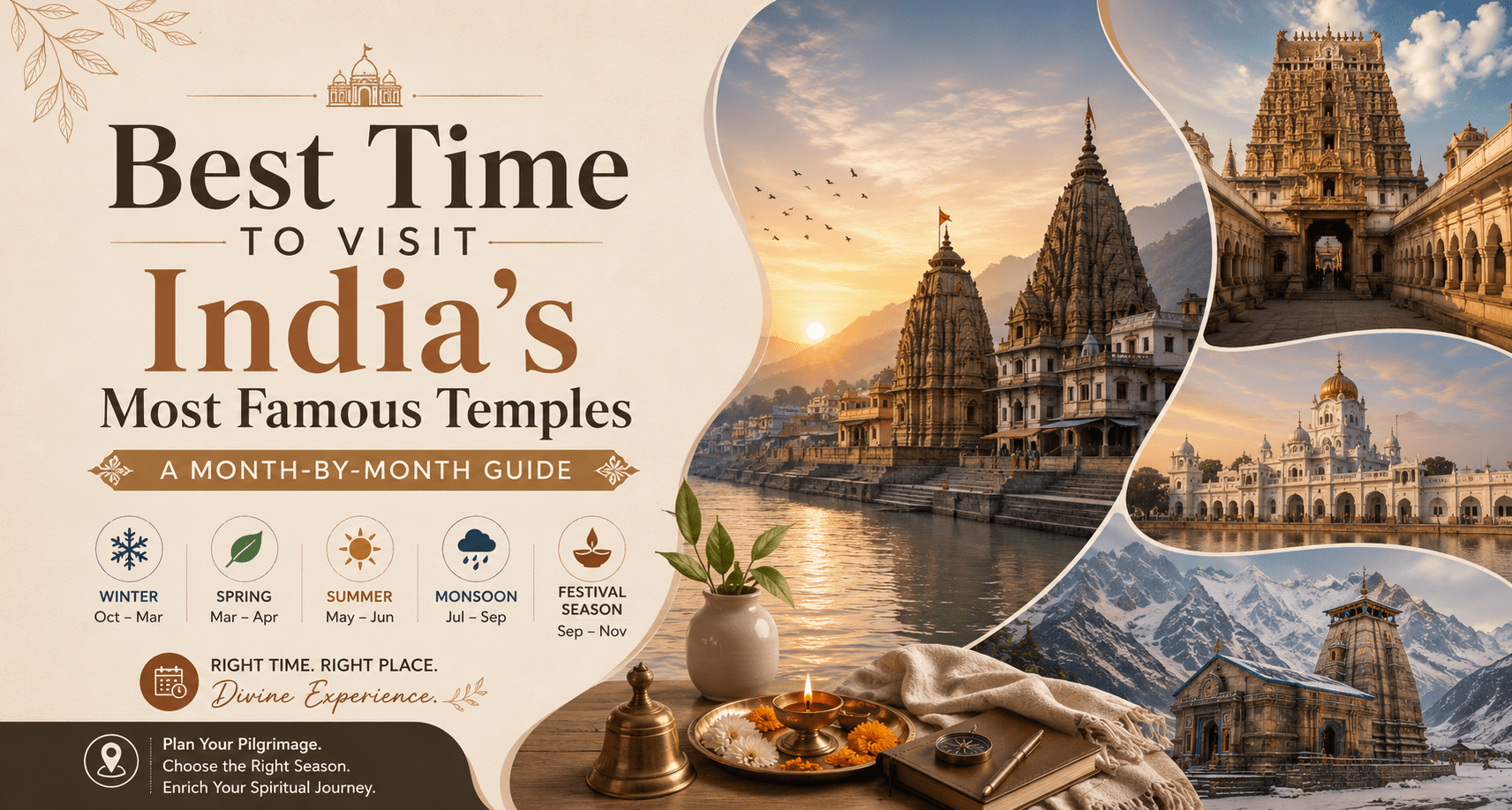
Best Time to Visit India's Most Famous Temples
Best Time to Visit India's Most Famous Temples: Discover the ideal months and seasons for temple pilgrimages across India, from Himalayan shrines to South Indian temples, with practical travel tips.
Read more