

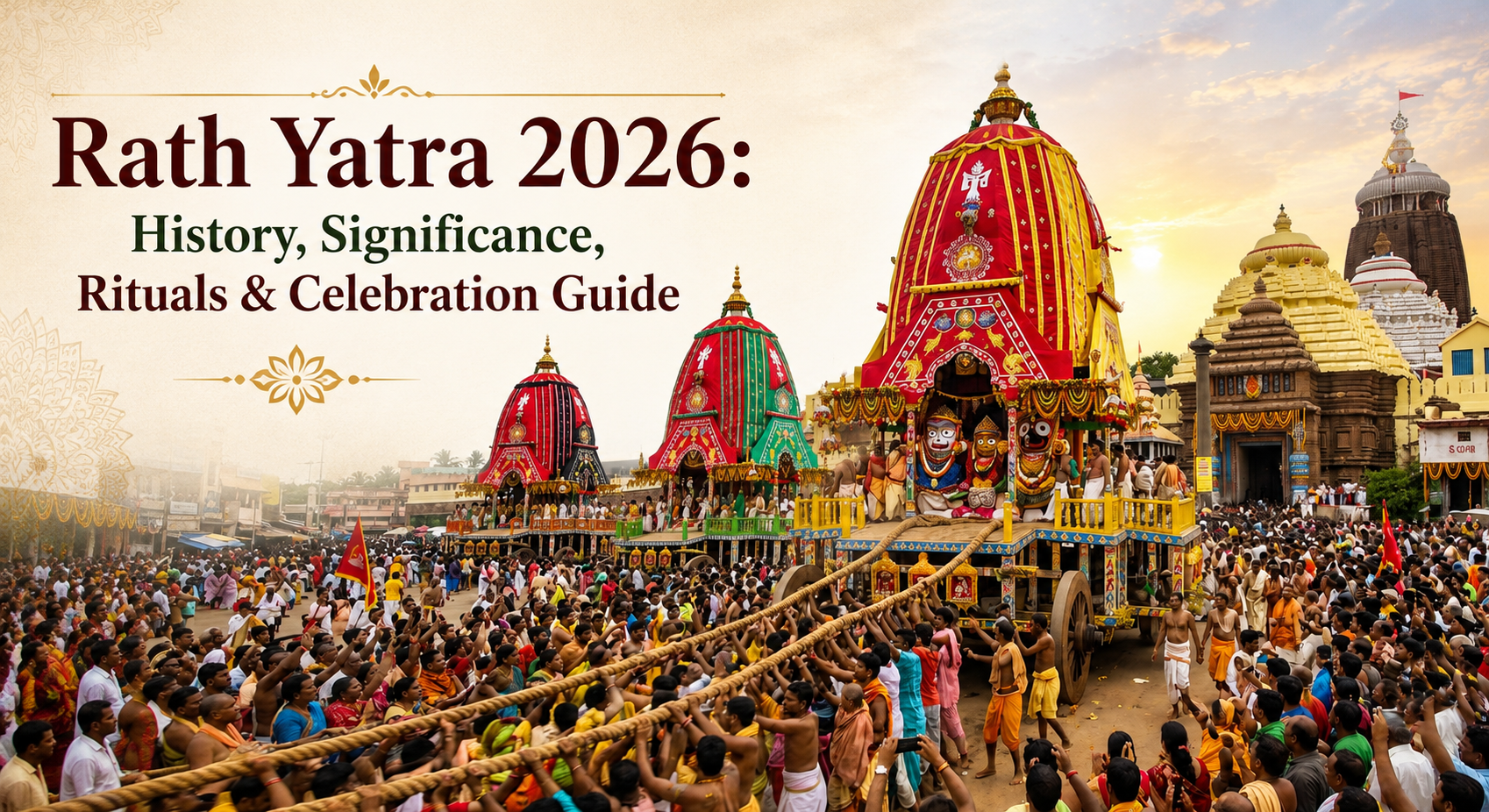
Rath Yatra 2026: History, Significance & Rituals
July 16,2026

Table of content :
1.Introduction to Rath Yatra 2026
2.Rath Yatra 2026 Quick Facts
👍 Rath Yatra 2026 Date and Timings
3.What is Rath Yatra?
👍 Why is Rath Yatra Celebrated?
4.History and Origin of Rath Yatra
5.Spiritual Significance of Lord Jagannath's Journey
6.Major Rituals and Traditions of Rath Yatra
7.The Three Sacred Chariots and Their Importance
👍 Interesting Facts About Rath Yatra
8.Rath Yatra Celebrations Across India
9.Conclusion: Lessons and Relevance of Rath Yatra
10.Frequently Asked Questions About Rath Yatra 2026
1.Introduction to Rath Yatra 2026
As the first rays of the morning sun illuminate the sacred city of Puri, the air fills with chants of "Jai Jagannath" and the sound of conch shells. Thousands of devotees gather on the streets, eagerly awaiting a glimpse of Lord Jagannath, Lord Balabhadra, and Goddess Subhadra as they embark on their divine journey. This extraordinary spectacle is known as the Rath Yatra Festival, one of the most revered and celebrated Hindu festivals in the world.
The Jagannath Puri Rath Yatra is much more than a grand procession of beautifully decorated chariots. It is a timeless tradition that symbolizes faith, devotion, equality, and the deep bond between the Lord and His devotees. Every year, millions of pilgrims travel to the Jagannath Temple Puri to witness this sacred event and seek the blessings of Lord Jagannath.
The Rath Yatra Date 2026 falls on 16 July 2026, when devotees from across India and around the world will come together to participate in this magnificent celebration. From its rich history and spiritual significance to its unique rituals and traditions, the Puri Rath Yatra continues to inspire generations with its message of unity, compassion, and divine love .India's festivals and traditions continue to inspire modern lifestyles, reflecting the same cultural values celebrated through platforms like Royal Stuffs that promote heritage-inspired living.
Rath Yatra 2026 Quick Facts
-
Date: 16 July 2026
-
Timings: During the Hindu month of Ashadha,
-
Location: Puri, Odisha
-
Main Deities: Lord Jagannath, Lord Balabhadra, and Goddess Subhadra
-
Festival Type: Hindu Chariot Festival
-
Famous Ritual: Chhera Pahanra
-
Return Journey: Bahuda Yatra
2.What is Rath Yatra?
Imagine a day when the doors of the sacred Jagannath Temple open, and Lord Jagannath, along with Lord Balabhadra and Goddess Subhadra, leaves the temple to personally meet His devotees. This divine journey is known as Rath Yatra, which literally translates to the "Festival of Chariots."
During the Rath Yatra Festival, the deities are placed on magnificent wooden chariots and taken from the Jagannath Temple Puri to the Gundicha Temple. As the massive chariots move through the streets of Puri, thousands of devotees come together to pull the sacred ropes, chanting prayers and seeking divine blessings.
The Jagannath Puri Rath Yatra is unique because it symbolizes that the Lord belongs to everyone, regardless of caste, status, or background. More than just a religious procession, the festival represents devotion, unity, and the spiritual journey of life. This timeless tradition continues to make the Puri Rath Yatra one of the most cherished and widely celebrated festivals in India.
Why is Rath Yatra Celebrated?
Rath Yatra is celebrated to commemorate the annual journey of Lord Jagannath, Lord Balabhadra, and Goddess Subhadra from the Jagannath Temple to the Gundicha Temple in Puri. According to Hindu tradition, this sacred journey symbolizes the Lord's desire to step out of the temple and personally bless all devotees, regardless of caste, status, or background. The festival represents devotion, equality, compassion, and the eternal bond between the divine and humanity, making it one of the most significant celebrations in Hinduism.
3. History and Origin of Rath Yatra

The history of Rath Yatra dates back thousands of years and is deeply rooted in Hindu scriptures, traditions, and devotion. According to ancient legends, Lord Jagannath, believed to be a form of Lord Krishna, embarks on an annual journey with His siblings, Lord Balabhadra and Goddess Subhadra, from the Jagannath Temple Puri to the Gundicha Temple, which is affectionately regarded as their aunt's home .
As the grand chariots roll through the streets of Puri, they recreate a tradition that has been followed for over a thousand years. Historical records suggest that the Jagannath Puri Rath Yatra has been celebrated in Odisha for centuries, attracting saints, pilgrims, and devotees from across the world. Over time, what began as a sacred local tradition evolved into the world-famous Puri Rath Yatra, becoming one of the largest religious gatherings on the planet.
The rich Rath Yatra History reflects more than a journey between two temples—it symbolizes the Lord's desire to step out and bless all devotees equally. This timeless tradition continues to preserve the spiritual and cultural heritage of India, making Rath Yatra one of the most significant festivals in Hinduism.Today, the Puri Rath Yatra attracts millions of devotees, tourists, and spiritual seekers from around the world. Its enduring popularity reflects the timeless relevance of faith, unity, and devotion in modern society.
4. Spiritual Significance of Lord Jagannath's Journey

As the sacred chariots move through the streets of Puri, Rath Yatra becomes much more than a grand procession—it transforms into a powerful spiritual experience. The Rath Yatra Significance lies in the belief that Lord Jagannath leaves the temple to personally meet and bless His devotees, reminding everyone that divine grace is accessible to all.
For millions of devotees, this journey symbolizes the path of the soul toward spiritual awakening and self-realization. The act of pulling the chariot is considered a sacred service, representing devotion, humility, and surrender to the divine will. It is believed that participating in the Lord Jagannath Festival helps devotees overcome obstacles and strengthen their connection with God.
The Jagannath Puri Rath Yatra also carries a timeless message of equality and inclusiveness. Regardless of social status, background, or beliefs, everyone gathers together in devotion, making this festival a beautiful celebration of faith, unity, and divine love.
5. Major Rituals and Traditions of Rath Yatra

The grandeur of Rath Yatra is not limited to the chariot procession alone. The festival is a series of sacred rituals that begin weeks before the main celebration, each carrying deep spiritual meaning and centuries-old traditions.
The journey begins with Snana Purnima, when Lord Jagannath, Lord Balabhadra, and Goddess Subhadra are ceremonially bathed with 108 pots of holy water. Following this ritual, the deities enter a period known as Anavasara, during which they remain away from public view, symbolizing rest and rejuvenation.
The most awaited moment arrives with the Rath Yatra Procession, as thousands of devotees gather to pull the magnificent chariots through the streets of Puri. During the festival, the sacred Hera Panchami ritual takes place, followed by Bahuda Yatra, the return journey of the deities to the Jagannath Temple. The celebrations conclude with Suna Besha, where the deities are adorned with stunning gold ornaments, leaving devotees mesmerized by their divine appearance.
Together, these rituals make Rath Yatra a remarkable celebration of faith, devotion, and spiritual heritage.
6.The Three Sacred Chariots and Their Importance

One of the most captivating aspects of the Jagannath Puri Rath Yatra is the sight of the three magnificent chariots carrying Lord Jagannath, Lord Balabhadra, and Goddess Subhadra. Each chariot is uniquely designed and holds deep spiritual significance.
Nandighosa, the chariot of Lord Jagannath, is the largest of the three and is adorned with vibrant red and yellow coverings. Taladhwaja, dedicated to Lord Balabhadra, is recognized by its green and red canopy, while Darpadalana, the chariot of Goddess Subhadra, is beautifully decorated in black and red.
For devotees, these chariots are more than ceremonial vehicles. They symbolize the divine journey of the Lord among His people, carrying a message of faith, unity, and compassion. As the grand chariots move through the streets of Puri, they become a powerful reminder of the spiritual bond between the divine and humanity.
Interesting Facts About Rath Yatra
1. The Chariots Are Rebuilt Every Year
Unlike most religious festivals, the grand chariots of Lord Jagannath, Lord Balabhadra, and Goddess Subhadra are built from scratch every year. Skilled artisans use sacred wood and centuries-old techniques to create these magnificent structures, making the construction itself a sacred ritual.
2. One of the Largest Religious Gatherings in the World
Every year, millions of devotees, pilgrims, and visitors gather in Puri to witness Rath Yatra. The sea of devotees, devotional chants, and vibrant celebrations make it one of the world's largest and most remarkable spiritual gatherings.
3. Lord Jagannath Comes Out to Meet His Devotees
Rath Yatra is unique because Lord Jagannath leaves the temple and travels among His devotees. This beautiful tradition symbolizes that divine blessings are available to everyone, regardless of caste, status, or background.
4. A Sacred Tradition That Has Endured for Centuries
The Rath Yatra Festival has been celebrated in Puri for over a thousand years. Despite changing times, the festival continues to preserve its spiritual essence and remains an important part of India's cultural heritage.
5. Pulling the Chariot Is Considered a Divine Blessing
For many devotees, pulling the sacred ropes of the chariot is a once-in-a-lifetime experience. It is believed to bring spiritual merit, remove obstacles, and strengthen one's connection with Lord Jagannath.
6. Chhera Pahanra: The Royal Sweeping Ritual
Before the procession begins, the Gajapati King of Puri performs the revered Chhera Pahanra ritual by sweeping the chariots with a golden broom. This unique tradition symbolizes humility and conveys the powerful message that everyone is equal before Lord Jagannath.
7.Rath Yatra Celebrations

Across India
While Puri remains the spiritual heart of Rath Yatra, the festival's spirit extends far beyond the borders of Odisha. As the sacred chariots roll through the streets of Puri, thousands of devotees across India celebrate the occasion with equal devotion, enthusiasm, and faith.
From the grand Rath Yatra processions of Ahmedabad and Kolkata to the vibrant celebrations in Delhi, Mumbai, Bengaluru, and Hyderabad, devotees come together to sing bhajans, offer prayers, and participate in cultural and religious activities. Temples and communities are beautifully decorated, creating an atmosphere filled with spirituality and joy.
The influence of Lord Jagannath's divine journey has also spread across the world through ISKCON temples and Hindu communities abroad. Whether in India or overseas, Rath Yatra continues to unite millions of people through a shared message of devotion, unity, and divine love, making it one of the most widely celebrated Hindu festivals
8.Conclusion: Lessons and Relevance of Rath Yatra
As millions of devotees gather to witness the grand procession, the festival continues to inspire values of humility, compassion, equality, and selfless devotion. From the magnificent chariots and ancient rituals to the vibrant celebrations across India, every aspect of Rath Yatra reflects the rich spiritual and cultural heritage of Hinduism.
As Rath Yatra 2026 approaches, devotees around the world eagerly await this sacred occasion to seek blessings, strengthen their faith, and reconnect with the timeless teachings of Lord Jagannath. Just as this festival helps preserve India's rich traditions, embracing traditional Indian craftsmanship and cultural heritage in our daily lives allows us to stay connected to these timeless values. Explore more heritage-inspired collections at Royal Stuffs.
Jai Jagannath!
Frequently Asked Questions (FAQs) About Rath Yatra 2026
1. When is Rath Yatra 2026?
Rath Yatra 2026 will be celebrated on 16 July 2026. The festival marks the sacred journey of Lord Jagannath, Lord Balabhadra, and Goddess Subhadra from the Jagannath Temple to the Gundicha Temple in Puri, Odisha.
2. Why is Rath Yatra celebrated?
Rath Yatra is celebrated to commemorate the annual visit of Lord Jagannath and His siblings to the Gundicha Temple. The festival symbolizes devotion, equality, compassion, and the bond between the Lord and His devotees.
3. Where is Rath Yatra celebrated?
While Rath Yatra is celebrated across India and around the world, the most famous and grand celebration takes place in Puri, Odisha, at the Jagannath Temple.
4. What are the names of the three chariots in Rath Yatra?
The three sacred chariots are:
-
Nandighosa – Chariot of Lord Jagannath
-
Taladhwaja – Chariot of Lord Balabhadra
-
Darpadalana – Chariot of Goddess Subhadra
5. What is the significance of pulling the Rath Yatra chariot?
Devotees believe that pulling the chariot of Lord Jagannath brings spiritual blessings, removes obstacles, and helps one progress on the path of devotion and righteousness.
6. Is Rath Yatra and Jagannath Rath Yatra the same?
Yes, Rath Yatra is commonly known as Jagannath Rath Yatra because it is celebrated in honor of Lord Jagannath, along with Lord Balabhadra and Goddess Subhadra.
7. What is Chhera Pahanra in Rath Yatra?
Chhera Pahanra is a sacred ritual performed before the Rath Yatra procession begins. During this ceremony, the Gajapati King of Puri sweeps the chariots with a golden broom, symbolizing humility, service, and the belief that everyone is equal before Lord Jagannath.
Read more

Premium Brass Dining Sets for Festive Occasions | Traditional Elegance for Celebrations
Celebrate festivals in style with premium brass dining sets. Explore handcrafted brass dinnerware that adds elegance and tradition to every gathering.
Read more
Guru Purnima 2026: Complete Guide to Date, Puja Vidhi, Rituals, Wishes & Sacred Gift Ideas
Celebrate Guru Purnima 2026 with our complete guide covering the date, puja vidhi, rituals, history, wishes, quotes, and meaningful brass gift ideas to honor your guru with devotion.
Read more