

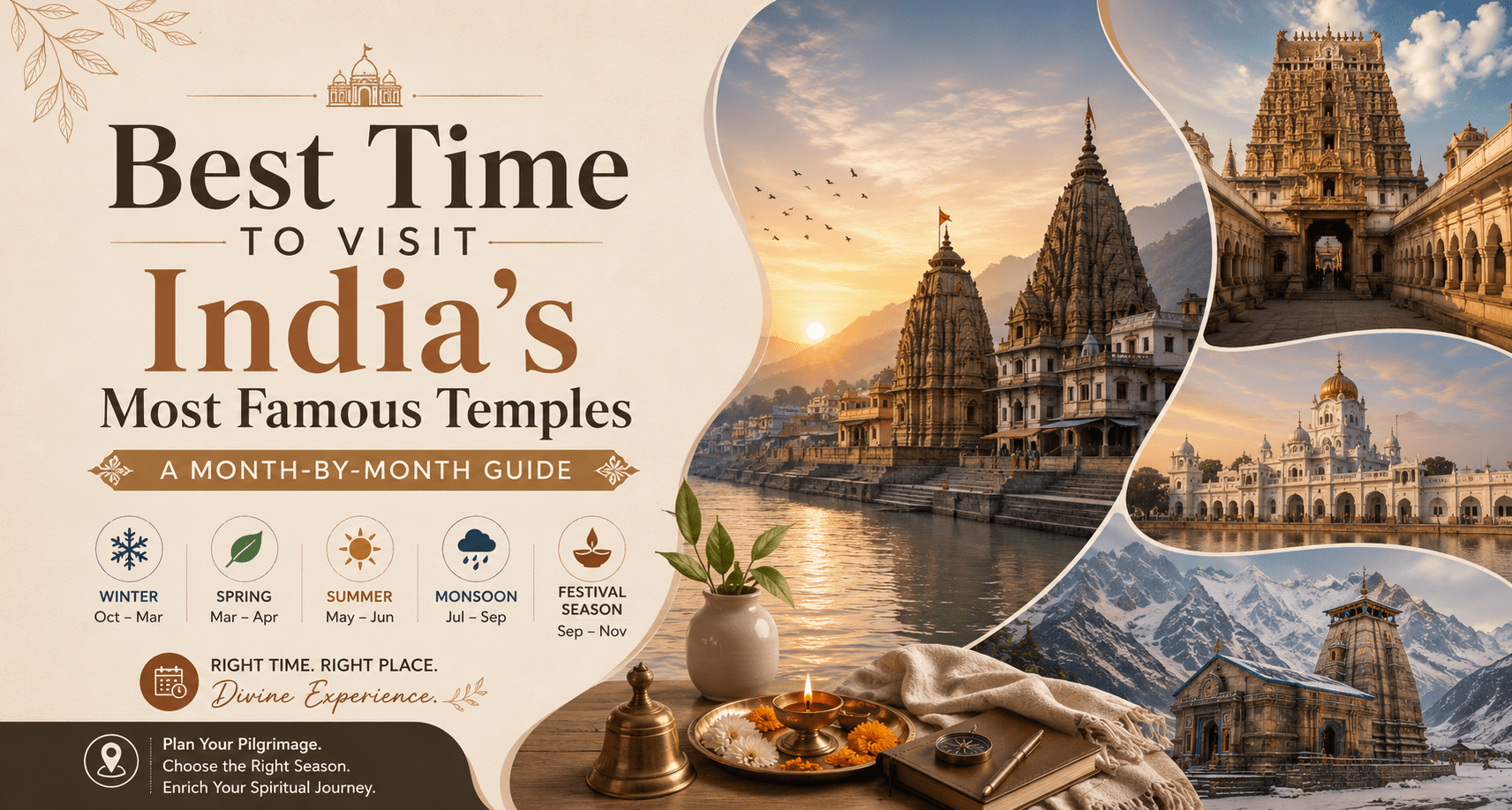
Best Time to Visit India's Most Famous Temples
India's temples are not just places of worship—they are living expressions of history, architecture, craftsmanship, mythology, and tradition. From the Himalayan shrines of Uttarakhand to the ancient temples of Tamil Nadu, every region offers a different spiritual experience.
But choosing the best time to visit India's most famous temples can make a major difference to your journey.
Weather, temple opening schedules, festivals, crowds, road conditions, and regional climate all influence the experience. A peaceful winter morning in Varanasi feels very different from visiting the city during Mahashivratri, just as a summer pilgrimage to Kedarnath is completely different from visiting a South Indian temple during the monsoon.
If you are planning a temple pilgrimage in India, this guide will help you understand which months are best for temple travel, which seasons suit different regions, and when to visit India's most famous temples for weather, festivals, spirituality, and a more comfortable experience. If you are still deciding where to go, explore our guide to the [best pilgrimage destinations to visit in India] before planning your travel dates.
Quick Answer: When Is the Best Time to Visit Temples in India?

(Famous Indian temples across different regions and seasons for pilgrimage travel)
For most temple destinations across India, October to March is considered one of the most comfortable periods for travel because temperatures are generally more pleasant. For a broader overview of India's major pilgrimage destinations and their spiritual significance, explore our [Temple & Pilgrimage Hub].
However, there is no single best month for every temple.
| Season | Best For | Examples |
|---|---|---|
| January–February | Winter temple trips | Varanasi, Amritsar, Madurai, Somnath |
| March–April | Spring & festivals | Vaishno Devi, South Indian temples |
| May–June | Himalayan pilgrimage | Kedarnath, Badrinath |
| July–August | Monsoon & selected temple journeys | Kerala, Karnataka, Maharashtra |
| September–October | Post-monsoon travel | Himalayan & North Indian temples |
| November–December | Pleasant pilgrimage weather | Varanasi, Puri, Tirupati, Rameswaram |
For comfortable sightseeing: October to March
For Himalayan pilgrimage: May–June and September–October, depending on official opening dates and weather
For major festival experiences: Plan around the relevant temple's festival calendar
For fewer crowds: Travel outside major festival and holiday periods
Best Time to Visit Famous Temples in India by Season
Winter: October to March

(Kashi Vishwanath and Varanasi ghats during a peaceful winter morning)
For many travellers, winter is the best season to visit temples in India.
Northern and central India generally experience cooler weather, while southern India is also relatively comfortable for sightseeing. This makes it easier to spend several hours walking through temple complexes, exploring old cities, visiting ghats, and travelling between nearby attractions.
Best destinations during winter
-
Kashi Vishwanath, Varanasi
-
Golden Temple, Amritsar
-
Somnath Temple, Gujarat
-
Jagannath Temple, Puri
-
Meenakshi Amman Temple, Madurai
-
Ramanathaswamy Temple, Rameswaram
-
Tirupati Balaji, Andhra Pradesh
Winter is particularly suitable if your trip combines temple visits with cultural sightseeing.
You can comfortably explore local markets, heritage streets, monuments, ghats, and traditional food destinations without dealing with the intense heat experienced in some parts of India during summer.
Best for:
First-time temple travellers, families, heritage travellers, photographers, and multi-city pilgrimage tours.
Spring: March to April
Spring can be an excellent period for temple tourism, particularly in northern and southern India.
Temperatures begin rising in many regions, but conditions can still be comfortable for early-morning temple visits.
This period is also associated with several important Hindu festivals, making it attractive for travellers who want to experience temples during celebrations rather than during ordinary days.
Why visit temples in spring?
-
Pleasant mornings
-
Colourful festival celebrations
-
Religious processions
-
Temple decorations
-
Cultural performances
-
Opportunities for photography
-
Vibrant local markets
However, festival dates can bring substantially larger crowds.
If your main goal is a spiritual or cultural experience, this can be a rewarding season. If you prefer quiet exploration, consider travelling immediately before or after major celebrations.
Summer: May to June

(Himalayan temple pilgrimage to Kedarnath during the summer pilgrimage season)
Summer is hot across much of India, but it is an especially important season for Himalayan temple pilgrimage.
High-altitude destinations that remain inaccessible during the harsh winter gradually reopen for pilgrims as weather conditions improve.
Best suited for:
-
Kedarnath
-
Badrinath
-
Himalayan pilgrimage routes
-
Mountain temples and spiritual destinations
The summer months are also popular for family holidays, meaning some pilgrimage routes can become busy.
If you are travelling to a Himalayan temple, remember that mountain weather can change quickly. Road conditions, rainfall, landslides, altitude, and official temple schedules should always be checked before departure.
Important:
Do not assume that the general Indian summer calendar applies to Himalayan temples. Their accessibility depends heavily on local weather and official opening schedules.
Monsoon: July to September

(Indian temple surrounded by lush greenery during the monsoon season)
Monsoon creates a completely different atmosphere around India's temples.
The landscape becomes greener, waterfalls and rivers become more dramatic, and many historic cities take on a fresh appearance.
However, monsoon travel requires more planning.
Heavy rainfall can affect:
-
Roads
-
Mountain routes
-
Train and flight schedules
-
Outdoor sightseeing
-
Trekking routes
-
Temple access in certain areas
For this reason, monsoon is not universally the best season for a temple pilgrimage.
But if you enjoy lush landscapes, fewer tourists, and a slower travel experience, selected destinations can still be rewarding.
Monsoon travel tip
Avoid making a tightly packed pilgrimage itinerary during periods of heavy rain. Leave additional time between destinations and check local weather conditions before travelling.
Autumn: September to November

(Indian temple decorated with flowers and diyas during the festive season.)
Autumn is one of the most attractive seasons for temple tourism in India.
After the monsoon, many landscapes become greener, temperatures begin to improve, and the festive calendar becomes increasingly active.
This season is especially appealing for travellers who want to combine:
Temple + Festival + Culture + Food + Heritage
Major celebrations during this broad period can bring temples to life with lamps, flowers, music, traditional rituals, decorations, and processions.
The trade-off is that popular destinations can become significantly busier.
Best for:
-
Festival travellers
-
Cultural tourists
-
Families
-
Photography
-
Spiritual journeys
-
Heritage exploration
Best Time to Visit Famous Temples Month by Month

(Month-by-month guide to the best time to visit famous temples in India)
January – Best for Winter Temple Tours
January is one of the most comfortable months for visiting many temples in North, West, and South India.
The cooler weather is particularly suitable for walking-heavy destinations such as Varanasi, Amritsar, Madurai, and temple towns across Rajasthan and Gujarat.
Consider visiting:
-
Kashi Vishwanath
-
Golden Temple
-
Somnath Temple
-
Meenakshi Amman Temple
-
Rameswaram
Ideal for: Comfortable sightseeing and family pilgrimage trips.
February – Great for Spiritual and Cultural Travel
February continues the pleasant winter season across many destinations.
It can also be an excellent time for travellers interested in religious festivals and cultural events.
For Shiva devotees, the period around Mahashivratri can offer an especially powerful temple experience, although major Shiva temples can become extremely crowded.
Ideal for: Shiva temples, spiritual travel, cultural experiences, and pleasant weather.
March – Spring and Festival Season
March marks the transition from winter into warmer weather.
Early mornings and evenings can still be comfortable in many parts of India, making them ideal for temple visits.
Festival celebrations can also create colourful scenes around temples.
Ideal for: Festival experiences and spring temple journeys.
April – Visit Early in the Day
Temperatures start increasing in many parts of India during April.
If travelling during this month, plan temple visits for:
-
Early morning
-
Late afternoon
-
Evening
Avoid scheduling long outdoor sightseeing sessions during the hottest part of the day.
Ideal for: Southern temples, selected pilgrimage destinations, and festival travel.
May – Himalayan Pilgrimage Season Begins
May is an important month for Himalayan pilgrimage planning.
As winter conditions ease, seasonal pilgrimage destinations become accessible according to their official schedules.
Ideal for: Kedarnath, Badrinath, and other Himalayan pilgrimage routes, subject to official opening dates and weather.
For these destinations, preparation is more important than simply choosing a month.
June – Good for Mountain Pilgrimages
June can be a good period for Himalayan temple journeys, although the peak pilgrimage season can also mean large crowds.
Elsewhere in India, temperatures can become uncomfortable, especially in inland areas.
Ideal for: Himalayan pilgrimage and mountain landscapes.
July – Monsoon Temple Travel
July brings widespread monsoon conditions across India.
For most travellers, this is not the easiest month for a multi-destination pilgrimage, especially if mountain roads are involved.
However, some temple destinations surrounded by lush landscapes can be beautiful during the rainy season.
Ideal for: Slow travel, selected regional temple trips, and monsoon landscapes.
August – A Spiritual and Festive Month
August often brings a strong festive atmosphere across India.
Janmashtami, Raksha Bandhan, and other regional celebrations can make temples particularly vibrant.
However, weather conditions vary significantly by region.
Ideal for: Festival experiences and devotional travel.
September – Transition to Better Travel Conditions
September can be a useful transition month.
In many regions, the most intense monsoon conditions begin to ease, although rainfall can still be significant.
For Himalayan travel, conditions must be checked carefully because mountain weather can remain unpredictable.
Ideal for: Selected pilgrimage routes and post-monsoon travel.
October – One of the Best Months for Temple Travel
October is often an excellent month for temple tourism.
The weather begins becoming more comfortable across many parts of India, while the festive season brings extraordinary energy to cities and temples.
This is an ideal month for travellers who want to combine spirituality with cultural exploration.
Ideal for: Varanasi, Puri, Gujarat temples, South Indian temples, and festival travel.
November – Excellent for Pilgrimage and Heritage Travel
November is another strong month for temple journeys.
The weather is generally comfortable in many destinations, and the festive season continues.
It is particularly suitable for travellers who want to explore temple architecture without dealing with extreme summer temperatures.
Ideal for: North Indian, western, eastern, and southern temple destinations.
December – Comfortable Winter Pilgrimage
December marks the beginning of the winter travel season.
Northern India can become quite cold, particularly in the mornings and evenings, while many southern destinations remain comfortably warm.
Ideal for: Varanasi, Puri, Gujarat, Tamil Nadu, Andhra Pradesh, and winter heritage tours.
Best Time to Visit India's Famous Temples by Region

(Best temple destinations in North South East and West India by travel season)
India's huge geographical diversity means that the ideal temple travel season varies by region.
North India
Best period: October to March
North Indian destinations generally become more comfortable during winter.
Popular choices include:
-
Kashi Vishwanath
-
Vaishno Devi
-
Golden Temple
-
Mathura and Vrindavan temples
-
Ayodhya temples
For Himalayan destinations, however, seasonal accessibility is different.
South India
Best period: October to March
Southern India remains relatively warm throughout the year, but the cooler months are generally more comfortable for temple sightseeing.
This period is particularly suitable for:
-
Meenakshi Amman Temple
-
Ramanathaswamy Temple
-
Tirupati
-
Brihadeeswarar Temple
-
Srirangam temples
The architecture alone makes South Indian temple tourism worth planning as a dedicated journey.
West India
Best period: October to March
Gujarat and Rajasthan are especially attractive during the cooler months.
Temple travellers can combine spiritual destinations with historic forts, stepwells, handicraft markets, and heritage cities.
Somnath is particularly memorable for travellers interested in combining temple heritage with a coastal landscape.
East India
Best period: October to February
The cooler months are generally more comfortable for exploring Odisha and eastern India's temple heritage.
Puri is a major pilgrimage destination, while Bhubaneswar is known for its remarkable collection of historic temples.
Best Time to Visit Temples: Peaceful Trip vs Festival Experience
The "best" time depends on what you want from your journey.
If you want fewer crowds:
Travel outside major festivals, school holidays, and long weekends.
If you want festival celebrations:
Plan around the temple's major annual festival.
If you want comfortable weather:
October to March is a strong choice for many destinations.
If you want Himalayan pilgrimage:
Plan according to official seasonal opening dates rather than the general Indian travel calendar.
If you want photography:
Early morning and late afternoon generally provide more comfortable light and temperatures.
Best Time to Visit Temples During Major Indian Festivals
Indian temples become particularly vibrant during major festivals. For more ideas on experiencing India's religious celebrations, explore our [Indian festivals and traditions guide]
Some important occasions to consider include:
| Festival | Temple Experience |
|---|---|
| Mahashivratri | Shiva temples, night prayers, devotional gatherings |
| Ram Navami | Rama temples and Ayodhya celebrations |
| Janmashtami | Krishna temples, midnight celebrations |
| Navratri | Goddess temples, decorations and devotional events |
| Diwali | Diyas, lamps and temple decorations |
| Kartik Purnima | Sacred bathing, prayers and illuminated temples |
| Rath Yatra | Jagannath Temple traditions and processions |
| Guru Purnima | Spiritual and devotional gatherings |
Festival travel can be unforgettable, but it requires additional planning.
Expect larger crowds, increased accommodation demand, traffic restrictions, and longer waiting times.
How to Plan a Comfortable Temple Pilgrimage

(Traveller preparing for a temple pilgrimage in India)
Choosing the right month is only the first step.
1. Check Official Temple Information
Opening dates, darshan systems, entry rules, and festival schedules can change.
Always check the latest official information before travelling.
2. Avoid Overpacking Your Itinerary
A pilgrimage should not feel like a race.
Instead of visiting five temples in two days, consider spending more time in fewer destinations.
This allows you to appreciate the architecture, rituals, local culture, and history.
3. Start Your Day Early
Early morning can be one of the best times for temple visits.
You may experience:
-
Cooler weather
-
Softer light
-
A calmer atmosphere
-
Fewer tourists at certain destinations
-
Morning rituals
4. Dress Appropriately
Choose modest and comfortable clothing.
Some temples have specific dress codes or restrictions, so check their requirements before your visit.
5. Respect Photography Rules
Not every temple allows photography inside the main shrine or certain sacred areas.
Follow the instructions of temple authorities and avoid using cameras or phones where prohibited.
6. Carry Small Essentials
Depending on the destination, useful items may include:
-
Water bottle
-
Comfortable footwear
-
Shawl or light covering
-
Small towel
-
Personal medicines
-
ID documents
-
Reusable bag
-
Cash for small purchases or donations
If you plan to participate in permitted personal rituals, a small traditional traditional brass puja thali or brass devotional accessory can also be useful.
Make Your Temple Journey More Meaningful

(Traditional brass puja thali and diya arranged with flowers for an Indian temple ritual)
India's temple traditions are closely connected with traditional craftsmanship.
Brass diyas, puja thalis, bells, kalash, incense holders, utensils, and decorative objects have been part of Indian households and devotional practices for generations. Travellers interested in traditional craftsmanship can explore [handcrafted brass puja items] inspired by India's rich devotional heritage.
For travellers interested in bringing a piece of India's traditional craftsmanship home, handcrafted brass and copper products can become meaningful reminders of a pilgrimage.
Rather than choosing a souvenir simply because it looks beautiful, consider selecting something connected to the tradition or region you have experienced.
Frequently Asked Questions
What is the best time to visit temples in India?
For many famous temples, October to March offers comfortable weather for sightseeing and pilgrimage. However, Himalayan temples have different seasonal schedules and should be planned according to their official opening dates.
Which month is best for temple tourism in India?
October and November are particularly attractive because the weather improves in many regions and India's festive season creates a vibrant cultural atmosphere.
What is the best time to visit Kedarnath?
Kedarnath is a seasonal Himalayan pilgrimage destination. The best period depends on its official opening schedule and current mountain conditions, with the pilgrimage season generally concentrated in the warmer months.
Is winter good for visiting temples in South India?
Yes. October to March is generally a comfortable period for exploring many South Indian temples, although local weather varies by destination.
Is it better to visit temples during festivals?
If you want to experience traditional celebrations, festivals can be extraordinary. If you prefer a peaceful visit and shorter queues, travelling outside major festival periods may be better.
What is the best time to visit Kashi Vishwanath?
The cooler months from October to March are generally comfortable for exploring Varanasi. Major occasions such as Mahashivratri can provide a unique spiritual experience but also attract very large crowds.
What should I consider before planning a temple pilgrimage?
Consider weather, temple opening dates, festival calendars, crowd levels, accommodation, transportation, dress requirements, photography rules, and the amount of walking involved.
Final Thoughts
There is no single best time to visit India's most famous temples because every destination has its own rhythm.
The Himalayas follow the seasons. South India's ancient temple towns remain active throughout the year. Varanasi becomes especially atmospheric during winter evenings, while major festivals can transform temples into spectacular centres of devotion and celebration.
For most travellers seeking comfortable weather, October to March is an excellent starting point. For Himalayan pilgrimage, the focus should be on official seasonal opening dates and weather conditions. And for travellers who want to witness India's living religious traditions at their most vibrant, festival periods can offer an unforgettable experience.
The most rewarding temple journey is not necessarily the one where you visit the most temples.
It is the one where you have enough time to pause, observe, pray, appreciate the architecture, discover local traditions, and experience the spiritual character of the place.
If you are planning your first pilgrimage across India, start by choosing the right destination—and then choose the season that allows you to experience it at its best.
Explore More from the Temple Pilgrimage Hub
Continue your journey with our guide to the best pilgrimage destinations to visit in India and discover more about India's temples, pilgrimage traditions, festivals, and spiritual heritage.
Read more

Best Pilgrimage Destinations to Visit in India
Explore the best pilgrimage destinations in India, from Varanasi and Ayodhya to Kedarnath, Rameswaram, Puri and Dwarka. Discover their spiritual significance, major traditions, travel tips, temple ...
Read more
Beginner’s Guide to Hindu Pilgrimage: How to Plan Your First Yatra
Planning your first Hindu pilgrimage? This beginner-friendly guide explains everything you need to know about yatra, from choosing a sacred destination and planning your journey to temple etiquette...
Read more