


Beginner’s Guide to Hindu Pilgrimage: How to Plan Your First Yatra
A Hindu pilgrimage is more than a journey to a temple. It is a journey of faith, devotion, culture, and self-reflection that has been part of Indian traditions for centuries. From visiting an ancient temple and participating in an aarti to walking along a sacred river or travelling to a holy mountain, every yatra can offer a deeply personal experience.
For someone planning their first Hindu pilgrimage, however, the experience can raise many questions. Where should you go? When should you travel? What should you carry? What happens during darshan? Do you need to perform puja? And what temple etiquette should you follow?
This beginner's guide to Hindu pilgrimage explains the essentials you need to know before beginning your first Hindu yatra, helping you plan a meaningful and comfortable spiritual journey.
What Is Hindu Pilgrimage?

(Indian pilgrims visiting an ancient Hindu temple during a spiritual yatra)
In Hindu traditions, pilgrimage is commonly known as yatra, meaning a journey or pilgrimage undertaken for a spiritual purpose.
A pilgrimage may involve travelling to a sacred temple, river, mountain, city, shrine, or other location associated with Hindu religious traditions. For many devotees, the journey itself is as meaningful as reaching the destination.
Unlike an ordinary holiday, a pilgrimage often combines travel with prayer, devotion, rituals, reflection, and participation in local traditions.
Some people undertake a yatra to seek blessings, while others travel as part of a family tradition, religious vow, festival, or personal spiritual journey.
The experience can be different for every pilgrim. Some may visit one temple and return home, while others may spend several days travelling between sacred sites.
Why Is Pilgrimage Important in Hinduism?
Pilgrimage has a long-standing place in Hindu religious and cultural traditions. Sacred journeys are mentioned in Hindu literature and have historically connected people with important temples, rivers, spiritual teachers, and places associated with divine stories.
There are several reasons why people undertake pilgrimage.
Seeking Blessings and Spiritual Connection
Many devotees visit temples to pray to a particular deity and seek blessings for themselves and their families. Learning about Hindu puja rituals can help first-time pilgrims better understand what they may see during their journey.
Following Family Traditions
A pilgrimage may be an important family tradition passed down through generations. Visiting a particular temple after marriage, during a milestone birthday, or at a specific festival can hold special meaning.
Fulfilling a Sankalp
Some devotees undertake a yatra after making a sankalp, or spiritual resolve, connected with a personal prayer or intention.
Reflection and Inner Peace
Travelling away from everyday responsibilities can provide an opportunity to slow down, reflect, pray, and reconnect with one's spiritual side.
Experiencing India's Heritage
Hindu pilgrimage destinations are also closely connected with Indian history, architecture, music, food, festivals, and traditional craftsmanship. A pilgrimage can therefore become both a spiritual and cultural experience.
Understanding the Different Types of Hindu Pilgrimage
India has many pilgrimage traditions, and you do not need to understand all of them before planning your first yatra. Knowing some of the major categories is a useful starting point.
Char Dham Pilgrimage
The traditional Char Dham refers to four important pilgrimage destinations associated with different regions of India:
-
Badrinath
-
Dwarka
-
Jagannath Puri
-
Rameswaram
There is also the Chota Char Dham pilgrimage in Uttarakhand, consisting of Yamunotri, Gangotri, Kedarnath, and Badrinath.
Jyotirlinga Pilgrimage
The 12 Jyotirlingas are highly revered Shiva temples located across India. Devotees may visit one or undertake journeys covering multiple Jyotirlinga temples.
Shakti Peetha Pilgrimage
Shakti Peethas are sacred sites associated with Goddess Shakti and important traditions surrounding Goddess Sati.
Vaishnav Pilgrimage
Many important pilgrimage sites are associated with Lord Vishnu and his various forms. Destinations connected with Krishna, Rama, Vishnu, and other Vaishnav traditions attract devotees throughout the year.
Sacred River Pilgrimage
Rivers such as the Ganga, Yamuna, Narmada, Godavari, and Kaveri hold deep cultural and spiritual significance.
Cities located along these rivers can become important pilgrimage destinations where devotees participate in bathing rituals, prayers, aarti, and other traditions.

(Sacred temples, rivers and pilgrims representing Hindu pilgrimage traditions in India)
How to Choose Your First Hindu Pilgrimage
Your first pilgrimage does not have to be the longest or most challenging journey.
Start by considering why you want to undertake the yatra.
Are you interested in visiting a particular deity? Is there a temple your family has always wanted to visit? Do you want a peaceful spiritual experience? Or are you interested in exploring India's religious heritage?
Once you understand your purpose, consider practical factors such as:
-
Distance from your home
-
Travel time
-
Weather
-
Physical requirements
-
Accommodation
-
Temple timings
-
Budget
-
Who will be travelling with you
For first-time pilgrims, choosing a destination with convenient transportation and accommodation can make the experience much easier. If you are still deciding where to begin, explore our guide to Best Pilgrimage Destinations to Visit in India for inspiration.
When Should You Plan a Hindu Pilgrimage?
There is no single best season for every pilgrimage destination.
Weather, temple schedules, festivals, local events, and accessibility can all influence the ideal time to travel.
For example, Himalayan pilgrimage routes can have very different travel conditions from temple cities in southern or central India.
Festival periods can be especially beautiful because temples and cities often come alive with decorations, devotional music, processions, and special rituals. At the same time, these periods can attract very large crowds.
Before booking your journey, research the destination's seasonal conditions and temple schedules.
You can also read our detailed guide on Best Time to Visit India's Most Famous Temples to understand how seasons can affect temple travel.
How to Plan Your First Hindu Pilgrimage
Good planning allows you to focus more on the spiritual experience and less on travel stress.
1. Research the Destination
Learn about the temple, its history, deity, traditions, opening hours, dress requirements, and local customs before you travel.
2. Check Temple Timings
Many temples have specific timings for darshan, aarti, special pujas, and other rituals. Some may close for certain periods during the day.
Always check current information before visiting.
3. Plan Your Transportation
Depending on the destination, you may travel by train, flight, bus, taxi, private vehicle, or a combination of different transport options.
For remote or mountainous destinations, transportation may require additional planning.
4. Book Accommodation in Advance
Pilgrimage destinations can become extremely busy during festivals and peak seasons.
If you are travelling with elderly family members or children, consider choosing accommodation that is conveniently located and easy to access.
5. Keep Your Itinerary Flexible
Do not create an itinerary that leaves no room for unexpected delays.
Temple queues, traffic, weather, local events, and transportation changes can affect your schedule.
A pilgrimage should not feel like a race.

(Travel essentials prepared for a Hindu pilgrimage journey)
What Should You Pack for a Hindu Pilgrimage?
Packing light and practically can make your yatra much more comfortable.
Essential items include:
-
Comfortable and modest clothing
-
Walking shoes or comfortable footwear
-
Personal identification
-
Mobile phone and charger
-
Power bank
-
Personal medicines
-
Basic toiletries
-
Reusable water bottle
-
Small towel
-
Weather-appropriate clothing
-
Some cash and a digital payment option
-
Any necessary travel documents
If you plan to visit several temples, a small day bag can be useful for carrying essentials while keeping your hands free.
What Should You Wear to a Hindu Temple?
Temple dress codes vary from one destination to another.
As a general rule, choose clean, comfortable, and modest clothing.
Depending on the temple, visitors may be expected to cover their shoulders and legs or follow a specific traditional dress code.
Some temples also require visitors to remove footwear before entering certain areas.
Before travelling, check whether your chosen temple has specific clothing requirements.
Understanding Temple Etiquette
For a first-time visitor, knowing basic temple etiquette can make the experience more comfortable and respectful.
Remove Footwear Where Required
Most Hindu temples require footwear to be removed before entering sacred areas.
Follow the Queue
Popular temples can have long queues, particularly during festivals. Follow the designated route and avoid pushing or attempting to bypass other devotees.
Maintain a Respectful Environment
Keep conversations quiet around prayer areas and avoid behaviour that may disturb people performing worship.
Ask Before Taking Photographs
Photography may be restricted in certain areas. Always follow signs and instructions from temple authorities.
Follow Local Customs
Different temples have different traditions. Observe what devotees are doing and follow official instructions rather than assuming every temple follows the same practices.
Understanding basic temple traditions and rituals can help first-time visitors participate respectfully
What Is Darshan?
Darshan is one of the most important concepts to understand when visiting a Hindu temple.
In simple terms, darshan refers to seeing and experiencing the presence of the deity. In devotional traditions, it is understood as an opportunity for the devotee to have a sacred encounter with the divine.
For many pilgrims, receiving darshan is the central purpose of visiting the temple.
Depending on the temple, devotees may wait in a queue before reaching the designated viewing area.
The experience may last only a few moments, especially at busy temples, but devotees often consider it deeply meaningful.

(Devotees participating in a traditional Hindu temple aarti ceremony)
What Are Puja, Aarti and Prasad?
First-time pilgrims may hear several traditional terms during their journey.
Puja
Puja is an act of worship that may involve prayers, offerings, flowers, lamps, incense, food, and other ritual practices.
You do not necessarily need to perform an elaborate puja during every temple visit. You can simply offer your prayers and receive darshan.
Traditional worship may involve flowers, lamps, incense, water vessels, and other sacred utensils. Learn more about traditional Hindu pooja utensils and their role in worship.
Aarti
Aarti is a devotional ritual involving the offering of light, traditionally using lamps, before a deity.
Temple aartis can be particularly beautiful experiences because they may include bells, devotional singing, lamps, and the participation of many devotees.
Prasad
Prasad refers to an offering that has been presented to a deity and is subsequently distributed to devotees.
It may include sweets, fruits, cooked food, or other offerings depending on the temple.
Receive prasad respectfully according to local customs.
For devotees who maintain a prayer space at home, a traditional puja thali can be used to organize essential worship items.
Pilgrimage with Children and Elderly Family Members
A family yatra can become a wonderful shared memory, but the itinerary should take everyone's needs into consideration.
If travelling with elderly family members:
-
Avoid overly tight schedules.
-
Check walking distances before booking accommodation.
-
Plan regular rest periods.
-
Carry necessary medicines.
-
Consider accessibility when selecting transportation.
-
Avoid unnecessarily difficult routes unless everyone is prepared for them.
When travelling with children, explain the story and significance of the temple in a simple way.
Instead of treating the trip only as sightseeing, help children understand the traditions, architecture, festivals, and cultural heritage surrounding the destination.
Common Mistakes to Avoid on Your First Yatra
Trying to Visit Too Many Temples
It is tempting to create a long list of temples, but rushing from one place to another can make the journey exhausting.
Choose quality of experience over quantity.
Ignoring Weather Conditions
Weather can significantly affect travel, particularly in mountain regions and during monsoon periods.
Not Checking Temple Rules
Dress codes, photography restrictions, entry procedures, and opening hours can vary.
Carrying Excessive Luggage
A lighter bag makes moving between temples and accommodation much easier.
Relying on Unverified Information
For important travel details, use official temple information, government tourism sources, or reliable local information.
Forgetting That It Is a Sacred Space
A pilgrimage destination may also be a tourist attraction, but it remains a place of worship for millions of people.
Photography and sightseeing should always be balanced with respect for devotees and local traditions.
How to Make Your Pilgrimage More Meaningful
The most meaningful yatra is not necessarily the one that covers the greatest distance.
Before travelling, learn a little about the temple and the traditions associated with it.
During the journey, give yourself time to slow down.
Attend an aarti if possible. Spend a few quiet moments in prayer. Observe the architecture. Listen to devotional music. Walk through the surrounding area. Learn about local traditions.
Most importantly, allow the journey to have its own rhythm.
A pilgrimage can become an opportunity to step away from everyday routines and reconnect with family, tradition, and yourself.
Bringing the Spirit of Pilgrimage Home

(Traditional brass diya and puja items in an Indian home prayer space)
A pilgrimage does not necessarily end when you return home.
Many families preserve the memory of a sacred journey through photographs, devotional objects, traditional handicrafts, or a dedicated prayer space.
A handcrafted brass diya, puja thali, temple bell, idol, or traditional brass décor piece can become a lasting reminder of India's spiritual heritage.
For those who appreciate traditional craftsmanship, bringing home an authentic handcrafted item can also support the artisans and techniques that form an important part of India's cultural heritage.
Frequently Asked Questions
What is Hindu pilgrimage called?
Hindu pilgrimage is commonly called yatra, meaning a journey or pilgrimage undertaken for a spiritual or religious purpose.
Which pilgrimage is best for beginners?
There is no single best pilgrimage for everyone. Choose a destination based on your spiritual interests, physical ability, travel time, budget, and accessibility.
What should I carry on a Hindu pilgrimage?
Carry comfortable clothing, suitable footwear, identification, medicines, toiletries, a reusable water bottle, phone charger, power bank, and weather-appropriate essentials.
Do I need to perform puja at a temple?
No. You can visit the temple, offer your prayers, receive darshan, and observe the traditions respectfully. Specific rituals are a personal choice and may vary by temple.
What is the difference between darshan and puja?
Darshan refers to the sacred experience of seeing and being in the presence of a deity, while puja is a formal act of worship involving prayers and offerings.
Can families with children go on pilgrimage?
Yes. Family pilgrimages can be meaningful experiences for children, particularly when the journey is planned around their comfort and the significance of the destination is explained to them.
Is it necessary to visit a temple during a Hindu pilgrimage?
Not every spiritual journey has to follow the same format. Hindu pilgrimage traditions include temples, sacred rivers, mountains, cities, and other spiritually significant places.
Final Thoughts
Your first Hindu pilgrimage does not need to be complicated.
Choose a destination that genuinely interests you, understand its traditions, check the practical details, pack thoughtfully, and give yourself enough time to experience the journey without rushing.
A Hindu yatra can be a journey through faith, history, architecture, culture, family traditions, and personal reflection.
Whether you are visiting an ancient temple, attending an aarti beside a sacred river, or travelling with your family to fulfil a long-held wish, approach the experience with curiosity and respect.
Because ultimately, a pilgrimage is not only about where you go.
It is also about how you experience the journey.
Read more
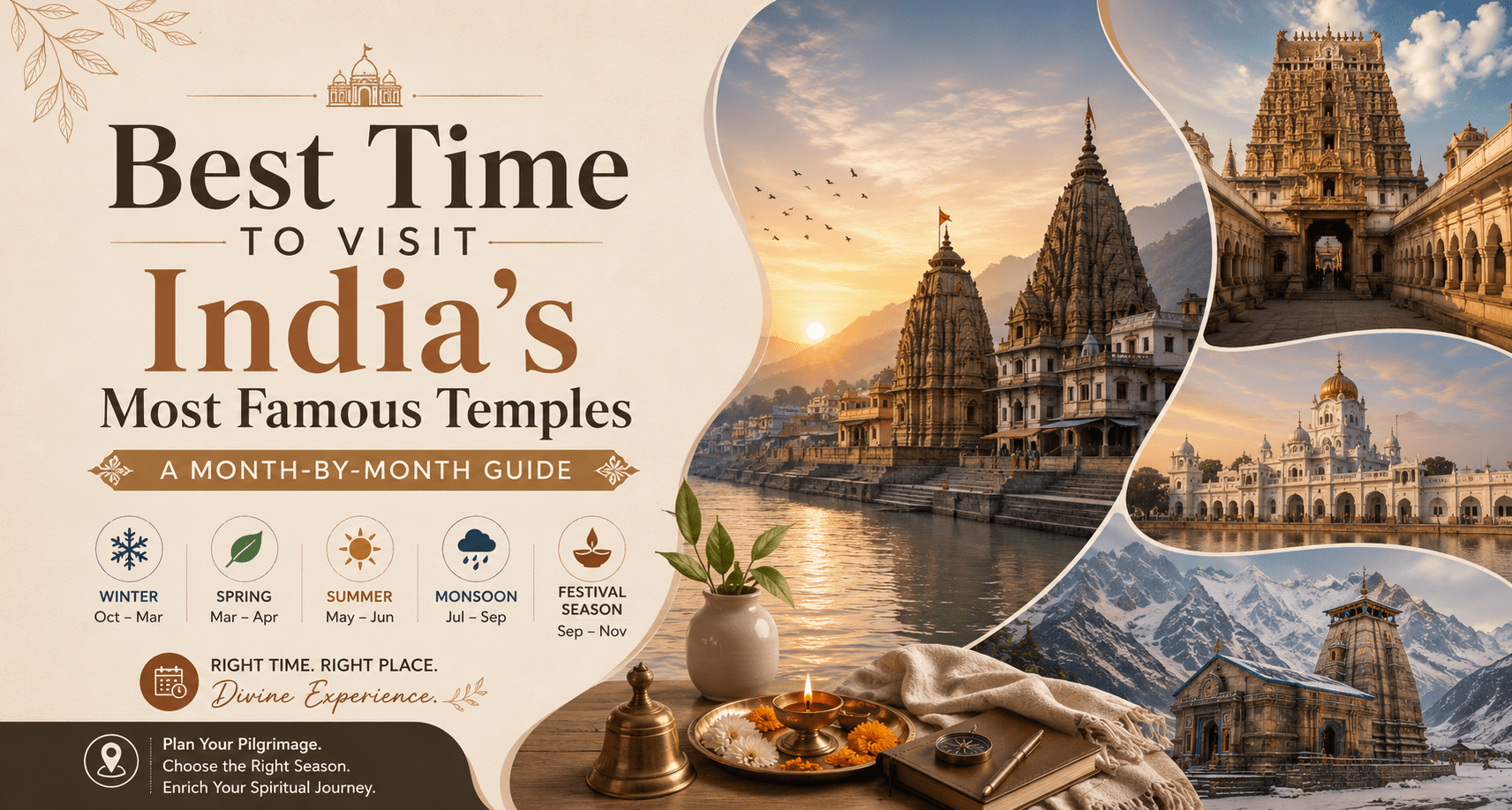
Best Time to Visit India's Most Famous Temples
Best Time to Visit India's Most Famous Temples: Discover the ideal months and seasons for temple pilgrimages across India, from Himalayan shrines to South Indian temples, with practical travel tips.
Read more
Char Dham Yatra: History, Significance & Temple Traditions
Explore the history, significance and temple traditions of Char Dham Yatra, including Badrinath, Dwarka, Jagannath Puri and Rameswaram, plus essential travel tips.
Read more