

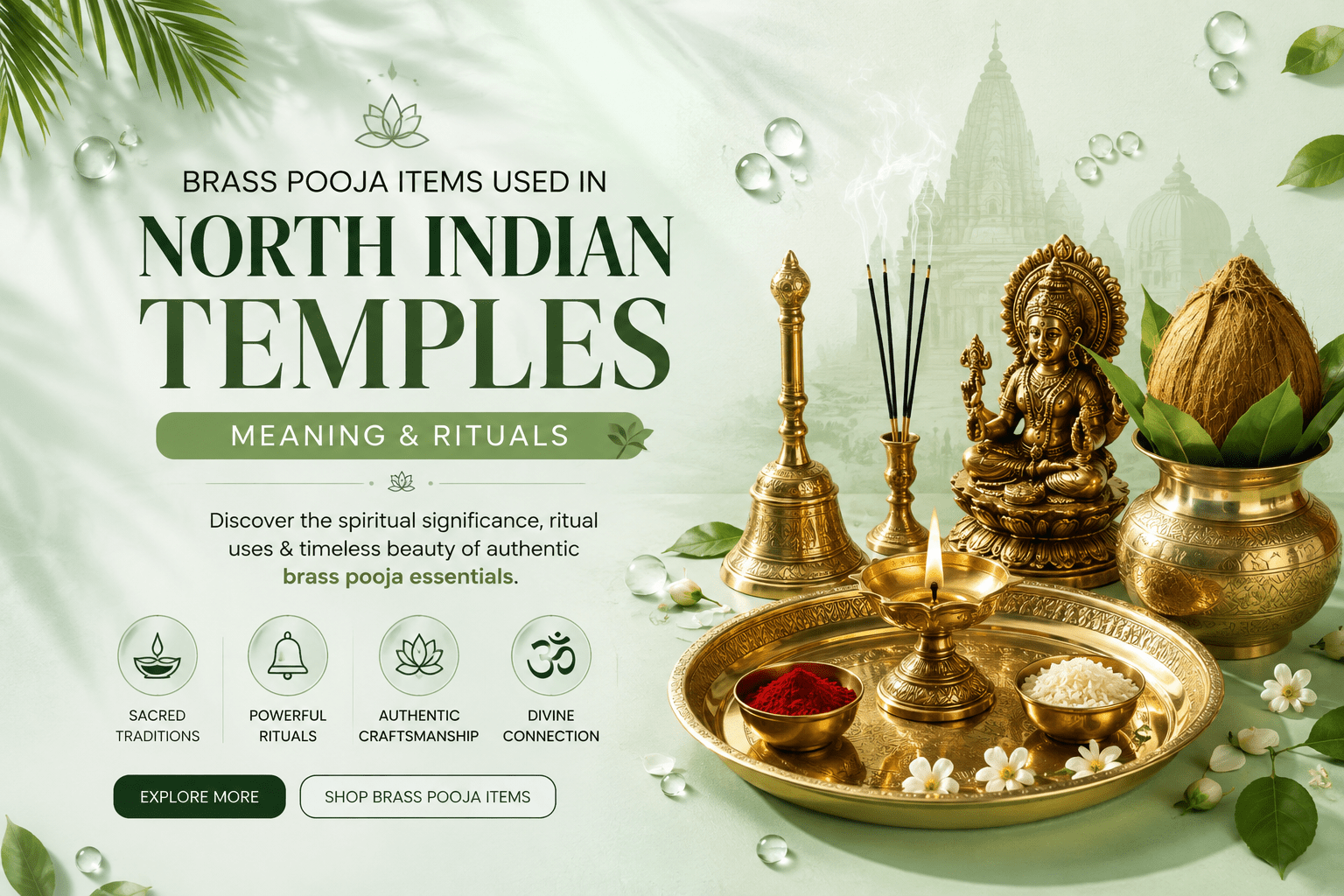
Brass Pooja Items Used in North Indian Temples: Meaning & Rituals | Royal Stuffs
Introduction
Walk into any North Indian temple, and one of the first things you'll notice is the warm golden glow of brass pooja items. From intricately crafted diyas illuminating the sanctum to resonating temple bells, sacred kalash, and beautifully sculpted idols, brass has been an integral part of Hindu worship for centuries. These timeless pieces are more than ritual accessories—they represent purity, devotion, prosperity, and a deep connection between the devotee and the divine.
The use of brass in temple rituals is rooted in ancient Hindu traditions and continues to be cherished in modern worship. Its durability, natural luster, and symbolic significance make it the preferred metal for daily pooja, festive celebrations, and grand temple ceremonies across North India. Whether it is the rhythmic ringing of a brass bell during the aarti or the lighting of an Akhand Diya, every brass item carries a spiritual purpose and enriches the worship experience.
For devotees, bringing these sacred traditions into their homes is a meaningful way to preserve India's rich cultural heritage. A thoughtfully arranged home temple with authentic brass pooja essentials creates an atmosphere of peace, positivity, and reverence while honoring centuries-old customs.
In this comprehensive guide, we'll explore the essential brass pooja items used in North Indian temples, their spiritual meanings, practical uses in daily rituals, care and maintenance tips, and expert advice on choosing authentic handcrafted pieces. Whether you're setting up a new mandir, upgrading your pooja collection, or simply curious about the significance of these sacred objects, this guide will help you make informed choices while embracing the timeless beauty of brass.
 (Peaceful North Indian temple with handcrafted brass diya and brass bell creating a serene atmosphere for daily worship.)
What Are Brass Pooja Items Used in North Indian Temples?
Brass pooja items are sacred ritual objects used in Hindu temples for daily worship, aarti, abhishek, and festivals. Common brass temple items include:
-
Brass Diya
-
Brass Kalash
-
Brass Bell (Ghanti)
-
Brass Aarti Thali
-
Brass Idols
-
Brass Panchpatra
-
Brass Lota
-
Brass Incense Holder
Why?
This increases your chances of winning Google's Featured Snippet.
1.Why Brass Holds a Sacred Place in North Indian Temples
Brass has been an inseparable part of North Indian temple traditions for centuries. From the soft glow of an oil lamp during the morning mangala aarti to the resonating sound of a temple bell during evening prayers, brass is present in nearly every sacred ritual. Its widespread use is not merely a matter of tradition—it reflects deep spiritual beliefs, cultural heritage, and practical advantages that have been passed down through generations.
In Hinduism, every object used in worship carries symbolic meaning, and the material from which it is made is equally important. Brass, an alloy of copper and zinc, is regarded as an auspicious metal that represents purity, positivity, strength, and divine energy. It is believed to create a spiritually uplifting atmosphere, making it the preferred choice for pooja items used in temples and home mandirs alike.
One of the key reasons brass is favored in North Indian temples is its exceptional durability. Unlike many other materials, brass withstands daily use, repeated cleaning, exposure to oil lamps, incense, flowers, and holy water without losing its beauty or structural integrity. This makes it ideal for temples where rituals are performed multiple times a day.
Beyond its durability, brass is admired for its warm golden sheen, which symbolizes light, prosperity, and the presence of the divine. When illuminated by the flame of a diya, brass reflects a radiant glow that enhances the spiritual ambiance of the temple, creating an atmosphere of devotion and serenity.
Traditional temple artisans have also preferred brass because it can be intricately handcrafted into elegant diyas, temple bells, idols, kalash, and aarti thalis. These handcrafted pieces preserve India's rich artistic heritage while serving as functional objects of worship.
Many devotees also believe that using brass during worship helps maintain the sanctity of rituals. Whether offering sacred water from a brass kalash, ringing a brass bell before prayers, or lighting a brass diya during aarti, each act is seen as a way of inviting positive energy and expressing reverence toward the divine.
Today, these centuries-old traditions continue in both grand temples and home shrines. Families who wish to recreate the peaceful and sacred atmosphere of North Indian temples often choose authentic handcrafted brass pooja items, bringing timeless traditions into their daily worship while preserving India's spiritual and cultural legacy.
What Hindu Scriptures Say About Brass in Worship
The importance of brass in Hindu worship is deeply rooted in India's spiritual traditions. While different scriptures describe rituals in their own way, they consistently emphasize the use of clean, durable, and auspicious metals for sacred ceremonies. Over centuries, brass became one of the most widely accepted materials for temple worship because of its practicality, beauty, and association with purity.
Traditional Hindu texts such as the Agni Purana discuss the significance of ritual worship, sacred vessels, lamps, and offerings made with properly consecrated utensils. The Skanda Purana, which contains detailed descriptions of temple traditions and pilgrimage practices, highlights the importance of maintaining sanctity in every aspect of worship, including the objects used during rituals. Similarly, the Garuda Purana emphasizes cleanliness, devotion, and proper ritual practices, principles that have influenced the use of brass pooja items in temples for generations.
Ancient architectural and ritual traditions described in Vastu Shastra also encourage the use of auspicious metals in sacred spaces. Brass, with its warm golden appearance and durability, naturally became the preferred choice for crafting diyas, bells, kalash, aarti thalis, and deity idols used in temples across North India.
Although temple customs may vary from one region to another, the underlying belief remains the same: sacred objects should reflect purity, respect, and devotion. This is why handcrafted brass pooja items continue to be trusted by temples and households alike, preserving traditions that have been followed for centuries.
Quick Fact:
Many traditional temple rituals followed today are inspired by practices that have been preserved through Hindu scriptures, temple traditions, and generations of skilled artisans.
Did You Know?
Many of North India's oldest temples continue to use brass diyas, bells, kalash, and aarti thalis that have inspired generations of artisans. Their enduring presence is a testament to brass's unmatched combination of beauty, strength, and sacred significance.
2.The History of Brass in Hindu Temple Worship
The story of brass in Hindu temple worship dates back thousands of years and is deeply intertwined with India's spiritual and artistic heritage. Long before modern manufacturing techniques existed, skilled metal artisans crafted brass vessels, lamps, bells, and idols by hand for temples, royal courts, and sacred ceremonies. These handcrafted creations were valued not only for their durability but also for their ability to preserve the sanctity and grandeur of religious rituals.
Ancient Hindu temples across North India were designed as places where architecture, devotion, and craftsmanship came together. Every object used in worship—from the brass kalash placed at the temple entrance to the diya illuminating the sanctum—was carefully chosen to reflect reverence and spiritual symbolism. Over time, brass became one of the most trusted metals for temple rituals because it could withstand daily use while retaining its beauty for generations.
Temple traditions also played an important role in preserving India's rich metalworking heritage. Families of artisans passed their skills from one generation to the next, using age-old techniques to create finely detailed brass idols, temple bells, aarti thalis, incense holders, and decorative lamps. Many of these traditional crafting methods continue to be practiced today, ensuring that every handcrafted brass pooja item carries the essence of India's cultural legacy.
Across centuries, brass has remained a constant presence in some of North India's most revered temples. Whether during the rhythmic chanting of Vedic hymns, the lighting of an evening aarti, or grand festival celebrations, brass pooja items have always played a central role in creating an atmosphere of devotion and spiritual harmony.
Even today, despite the availability of modern materials, temples continue to rely on brass because of its timeless appeal, resilience, and sacred association with Hindu worship. Its enduring presence reflects a tradition that values authenticity, craftsmanship, and the preservation of ancient customs.
For many devotees, bringing handcrafted brass pooja items into their home mandir is a way of continuing this centuries-old tradition. Every brass diya lit, every bell rung, and every offering made in a brass vessel becomes a meaningful connection to the rituals practiced in North Indian temples for generations.
Heritage Insight:
The brass pooja items seen in temples today are inspired by centuries of Indian craftsmanship. Each handcrafted piece represents not only a sacred object of worship but also the enduring legacy of artisans who have preserved these traditional metalworking techniques through generations.
How Traditional Brass Pooja Items Are Handcrafted
Every handcrafted brass pooja item tells a story of patience, precision, and centuries-old craftsmanship. Long before modern machines became common, skilled Indian artisans created temple bells, diyas, kalash, idols, and ritual vessels entirely by hand. Many of these traditional techniques continue to be practiced today, ensuring that each brass creation carries the authenticity and character of India's rich metalworking heritage.
The process begins with carefully selected brass, which is melted at high temperatures and poured into handcrafted molds using traditional casting methods. Once the metal cools, artisans carefully remove the raw casting and begin refining its shape. Each piece is then hand-filed, engraved, and polished to achieve smooth edges, intricate patterns, and a radiant golden finish.
For deity idols and decorative temple accessories, the detailing requires exceptional skill. Every ornament, facial expression, floral motif, and sacred symbol is meticulously carved to preserve the artistic beauty and spiritual significance of the piece.
Before reaching devotees, each brass pooja item undergoes careful inspection to ensure durability, balance, and craftsmanship. This attention to detail is one of the reasons handcrafted brass items continue to be treasured in temples and homes for generations.
Choosing handcrafted brass over mass-produced alternatives not only brings timeless elegance to your home mandir but also supports the artisans who continue to preserve India's centuries-old craft traditions.
3. Famous North Indian Temples That Use Brass Pooja Items
Across North India, brass has remained an essential part of temple worship for centuries. From ancient pilgrimage sites to renowned spiritual destinations, handcrafted brass pooja items continue to play an important role in daily rituals and festive celebrations.
Here are a few iconic temples where traditional brass accessories are commonly used during worship:
Kashi Vishwanath Temple (Varanasi)
One of the holiest Shiva temples in India, Kashi Vishwanath is known for its elaborate aartis, where brass diyas, temple bells, kalash, and ritual vessels are used throughout the day.
Kedarnath Temple (Uttarakhand)
Situated in the Himalayas, Kedarnath follows centuries-old Shaivite traditions. Brass lotas, bells, diyas, and kalash are integral to Abhishek and daily worship rituals.
Badrinath Temple (Uttarakhand)
Dedicated to Lord Vishnu, Badrinath Temple uses beautifully crafted brass lamps, bells, and ceremonial vessels during daily prayers and major festivals.
Banke Bihari Temple (Vrindavan)
Famous for its vibrant Krishna worship, this temple uses traditional brass diyas, aarti thalis, and bells during devotional singing and evening aarti.
Mahakaleshwar Temple (Ujjain)
Although located in Central India, Mahakaleshwar follows many North Indian temple traditions. Brass vessels are extensively used during the famous Bhasma Aarti and other daily rituals.
These temples continue to inspire artisans and devotees alike, reinforcing the timeless connection between brass craftsmanship and Hindu worship.
3.Why North Indian Temples Prefer Brass for Rituals
Walk into almost any traditional North Indian temple, and you'll notice that most sacred objects—from the diya and kalash to the bell and aarti thali—are made of brass. This isn't a coincidence. The choice of brass is rooted in centuries of religious tradition, practical wisdom, and exceptional craftsmanship that continues to influence temple worship today.
 (Traditional handcrafted brass pooja items displayed inside a North Indian temple with natural sunlight and heritage architecture.)
1. A Symbol of Purity and Auspiciousness
In Hindu traditions, the materials used during worship are believed to influence the sanctity of rituals. Brass has long been associated with purity, prosperity, and positive energy, making it a preferred choice for sacred ceremonies. Its warm golden appearance reflects light beautifully, symbolizing divine illumination and the victory of knowledge over darkness.
2. Built to Withstand Daily Temple Rituals
Unlike many other materials, brass is incredibly durable. Temple rituals involve frequent use of oil, ghee, water, flowers, incense, and sacred offerings throughout the day. Brass resists wear and maintains its strength even after years of regular use, making it ideal for temples where worship takes place from dawn to dusk.
3. Enhances the Spiritual Ambience
The gentle glow of polished brass under the light of oil lamps creates a serene and devotional atmosphere inside temples. Whether it's a row of brass diyas during evening aarti or a beautifully crafted brass bell hanging at the entrance, these sacred objects contribute to the temple's peaceful and uplifting environment.
4. Ideal for Traditional Craftsmanship
Brass is highly valued by artisans because it can be intricately shaped into detailed idols, lamps, bells, and ritual vessels. This allows craftsmen to create exquisite designs that reflect India's rich artistic heritage while preserving traditional temple aesthetics.
5. Easy to Maintain for Generations
Although brass develops a natural patina over time, it can be restored with simple cleaning methods. This makes it practical for temples, where pooja items are cleaned regularly and passed down through generations without losing their beauty or functionality.
6. A Timeless Tradition That Continues Today
Even in the modern era, when many alternative materials are available, North Indian temples continue to rely on brass because it combines beauty, durability, and spiritual significance. The same tradition is followed by countless families who choose handcrafted brass pooja items for their home mandirs, keeping centuries-old customs alive in everyday worship.
Brass vs. Other Materials for Temple Rituals
|
Feature |
Brass |
Stainless Steel |
Copper |
|
Traditional use in temples |
✔ Widely preferred |
✖ Rarely used |
✔ Used for selected rituals |
|
Spiritual significance |
★★★★★ |
★★☆☆☆ |
★★★★☆ |
|
Durability |
Excellent |
Excellent |
Very Good |
|
Decorative appeal |
Rich golden finish |
Modern appearance |
Reddish metallic finish |
|
Ideal for handcrafted designs |
Excellent |
Limited |
Good |
|
Common temple applications |
Diyas, bells, idols, kalash, aarti thalis |
Utility vessels |
Kalash, lota, water vessels |
Quick Fact:
While copper is often used for storing holy water and specific ritual vessels, brass remains the preferred metal for most temple essentials, including diyas, bells, idols, aarti thalis, and decorative lamps because of its durability, elegant appearance, and long-standing place in Hindu worship traditions.
4.Essential Brass Pooja Items Used in North Indian Temples
Brass has been an integral part of temple worship for centuries, with every pooja item serving a distinct spiritual and ritualistic purpose. From welcoming devotees with the sound of a brass bell to illuminating the sanctum with sacred lamps, these timeless objects help create a divine atmosphere while preserving the rich traditions of Hindu worship.
Below are the most commonly used brass pooja items found in North Indian temples, along with their significance and role in daily rituals.
 (Essential handcrafted brass pooja items including a diya, pooja thali, kalash, bell, incense holder, and ritual accessories.)
1. Brass Kalash
The Brass Kalash is one of the most sacred vessels in Hindu worship. Filled with holy water and adorned with mango leaves and a coconut, it symbolizes creation, prosperity, abundance, and the presence of divine energy. In North Indian temples, the kalash is placed during important ceremonies, yajnas, temple inaugurations, and major festivals.
It is also used for storing Gangajal or sanctified water that is sprinkled during rituals to purify the surroundings and bless devotees.
Spiritual Significance
-
Represents prosperity and abundance.
-
Symbolizes the universe and the source of life.
-
Used to invoke the presence of deities during rituals.
2. Brass Diya (Oil Lamp)
A Brass Diya is the heart of every temple ritual. Lit with ghee or sesame oil, it signifies the triumph of light over darkness and knowledge over ignorance. During the morning and evening aarti, rows of glowing brass diyas create a serene and spiritually uplifting atmosphere.
Common varieties used in temples include:
-
Akhand Diya
-
Panchmukhi Diya
-
Peacock Diya
-
Hanging Diya
-
Deepalakshmi Diya
Spiritual Significance
-
Symbolizes divine light and wisdom.
-
Removes negativity and invites positive energy.
-
Essential for daily worship and festival celebrations.
3. Brass Aarti Thali
The Brass Aarti Thali is used to perform one of the most important rituals in Hindu worship—Aarti. It usually contains a diya, camphor, incense sticks, flowers, rice grains, kumkum, turmeric, and prasad.
The circular movement of the aarti thali before the deity signifies devotion, gratitude, and surrender to the divine.
Spiritual Significance
-
Represents offering light to the deity.
-
Brings devotees together during collective worship.
-
Used in daily prayers and festive ceremonies.
4. Brass Temple Bell (Ghanti)
The sound of a Brass Ghanti marks the beginning of worship in almost every North Indian temple. Ringing the bell is believed to announce one's arrival before the deity and create an atmosphere of devotion by minimizing external distractions.
Temple bells are often engraved with sacred symbols or deities, reflecting their spiritual importance.
Spiritual Significance
-
Marks the beginning of worship.
-
Creates a peaceful and focused environment.
-
Symbolizes awakening the mind for prayer.
5. Brass Idols (Murtis)
Beautifully handcrafted Brass Idols of deities such as Lord Ganesha, Goddess Lakshmi, Lord Shiva, Lord Vishnu, Goddess Durga, and Lord Hanuman are the centerpiece of temple worship. Their detailed craftsmanship reflects devotion and preserves centuries-old artistic traditions.
These idols are worshipped daily with flowers, incense, lamps, and sacred offerings.
Spiritual Significance
-
Represents the divine presence.
-
Serves as the focal point of worship.
-
Inspires devotion and meditation.
6. Brass Panchpatra & Achmani
The Panchpatra and Achmani are essential ritual utensils used for holding and offering sanctified water during pooja ceremonies. Priests use the spoon (Achmani) to distribute holy water while reciting sacred mantras.
Spiritual Significance
-
Used for ritual purification.
-
Represents cleanliness and spiritual discipline.
-
Essential during Vedic ceremonies and daily temple worship.
7. Brass Pooja Lota
A Brass Lota is commonly used for storing holy water during temple rituals. It is used for Abhishek, offering water to deities, and various purification ceremonies.
Spiritual Significance
-
Symbolizes purity and devotion.
-
Used for sacred water offerings.
-
Important during festivals and daily worship.
8. Brass Incense Holder (Agarbatti Stand)
The fragrance of incense is an essential part of temple worship. A Brass Incense Holder securely holds incense sticks while allowing the fragrant smoke to spread throughout the temple.
Spiritual Significance
-
Represents purification of the surroundings.
-
Creates a calm and devotional atmosphere.
-
Symbolizes prayers rising toward the divine.
9. Brass Camphor Holder
During Aarti, camphor is burned as an offering to the deity. A Brass Camphor Holder is specially designed to safely hold the burning camphor while it is waved before the deity.
Spiritual Significance
-
Represents surrender of the ego.
-
Symbolizes complete devotion.
-
Used during daily and festive aarti.
10. Brass Deepam Stand
A Brass Deepam Stand holds multiple oil lamps and is often placed inside temple sanctums or at entrances. During festivals, these stands illuminate the temple with rows of glowing flames.
Spiritual Significance
-
Represents divine illumination.
-
Creates a sacred ambience.
-
Used during special temple celebrations.
11. Brass Hanging Lamps
Suspended from temple ceilings or mandap entrances, Brass Hanging Lamps combine elegance with spirituality. They provide continuous illumination and are especially prominent during festivals and evening prayers.
Spiritual Significance
-
Welcomes divine blessings.
-
Symbolizes eternal light.
-
Enhances the beauty of temple architecture.
12. Brass Prasad Bowls
Small Brass Prasad Bowls are used to offer sweets, fruits, dry fruits, and sacred food to the deity before distributing it among devotees.
Spiritual Significance
-
Represents gratitude and sharing.
-
Used for offering Naivedya.
-
Symbolizes divine blessings received as Prasad.
Pro Tip for Readers:
If you're creating a home mandir inspired by traditional North Indian temples, start with the essentials—a brass diya, kalash, bell, aarti thali, incense holder, and your chosen deity's brass idol. These timeless pieces bring both spiritual significance and the elegance of temple traditions into your daily worship.
5.The Spiritual Significance of Every Brass Pooja Item
Every brass pooja item used in North Indian temples carries a deeper meaning beyond its physical purpose. While these sacred objects are essential for performing rituals, they also symbolize spiritual values such as purity, devotion, wisdom, prosperity, and the eternal connection between the devotee and the divine.
Understanding the symbolism behind these temple essentials enriches the worship experience, transforming everyday rituals into meaningful acts of faith.
 (Comparison of handcrafted brass, copper, and silver pooja items highlighting their traditional appearance and craftsmanship.)
Brass Kalash – The Vessel of Life and Prosperity
The Brass Kalash is considered one of the most auspicious symbols in Hinduism. Filled with holy water and topped with mango leaves and a coconut, it represents the universe, abundance, fertility, and the presence of divine energy.
During temple ceremonies, the kalash signifies the invitation of gods and goddesses to bless the ritual. It also symbolizes purity, making it an essential part of temple inaugurations, yajnas, weddings, and major festivals.
Represents:
-
Creation and life
-
Prosperity and abundance
-
Divine blessings
Brass Diya – The Light of Knowledge
Lighting a Brass Diya is one of the oldest traditions in Hindu worship. The flame represents the victory of light over darkness, wisdom over ignorance, and hope over despair.
As the diya burns, it reminds devotees to remove negativity from their lives and walk the path of truth and righteousness. This is why temples begin and conclude important rituals with the lighting of sacred lamps.
Represents:
-
Knowledge and wisdom
-
Positivity
-
Divine illumination
Brass Temple Bell – Awakening the Mind
The ringing of a Brass Ghanti marks the beginning of worship and encourages devotees to focus their minds on prayer.
Its resonating sound is believed to create a sacred atmosphere by minimizing distractions and preparing the mind for meditation and devotion.
Represents:
-
Spiritual awakening
-
Focus and mindfulness
-
Divine presence
Brass Aarti Thali – An Offering of Devotion
The Brass Aarti Thali is used to offer light, fragrance, flowers, and prayers to the deity. Rotating the thali in a circular motion symbolizes the cycle of life and complete surrender to the divine.
It is one of the most visually beautiful moments in temple worship, bringing devotees together in collective prayer.
Represents:
-
Gratitude
-
Devotion
-
Surrender to God
Brass Idols – A Symbol of Divine Presence
Beautifully crafted Brass Idols serve as the focal point of worship in temples and home mandirs. They provide devotees with a tangible form through which they can express faith, meditate, and seek blessings.
Each deity carries unique symbolism:
-
Lord Ganesha – Wisdom and new beginnings
-
Goddess Lakshmi – Wealth and prosperity
-
Lord Shiva – Transformation and inner strength
-
Lord Vishnu – Protection and preservation
-
Goddess Durga – Courage and victory over evil
-
Lord Hanuman – Devotion, strength, and fearlessness
Brass Panchpatra & Achmani – Purification and Discipline
The Panchpatra and Achmani are used to hold and offer holy water during rituals.
They remind devotees that spiritual worship begins with inner and outer purity, emphasizing discipline, cleanliness, and respect for sacred traditions.
Represents:
-
Purity
-
Spiritual discipline
-
Sacred cleansing
Brass Lota – Offering Sacred Water
A Brass Lota is used during Abhishek and other rituals involving holy water.
Water itself symbolizes life, purification, and renewal, while the brass vessel represents devotion and respect in offering it to the deity.
Represents:
-
Purification
-
Life
-
Reverence
Brass Incense Holder – Purifying the Environment
The fragrant smoke rising from incense sticks symbolizes prayers ascending toward the heavens.
Using a Brass Incense Holder during worship creates a calm atmosphere that encourages meditation and spiritual focus.
Represents:
-
Purity
-
Positive vibrations
-
Peaceful surroundings
Brass Camphor Holder – Letting Go of the Ego
Burning camphor is one of the most symbolic acts in Hindu worship. Camphor burns completely without leaving residue, representing the dissolution of the ego before the divine.
A Brass Camphor Holder safely holds the flame during aarti while preserving this meaningful ritual.
Represents:
-
Selflessness
-
Humility
-
Complete surrender
Brass Deepam Stand – Eternal Divine Light
A Brass Deepam Stand holds multiple oil lamps, creating a radiant display during temple ceremonies and festivals.
The many flames symbolize the spread of knowledge, hope, and divine blessings among devotees.
Represents:
-
Enlightenment
-
Prosperity
-
Spiritual awakening
Brass Hanging Lamps – Guiding Every Devotee
Traditionally suspended at temple entrances or inside prayer halls, Brass Hanging Lamps welcome devotees with warmth and light.
They symbolize guidance, reminding every visitor that faith illuminates life's journey.
Represents:
-
Guidance
-
Divine protection
-
Eternal light
Brass Prasad Bowls – Sharing Divine Blessings
Offering food to the deity before distributing it as Prasad is a cherished Hindu tradition.
Brass bowls are used because they are durable, elegant, and considered suitable for sacred offerings.
The sharing of prasad reflects gratitude, generosity, and the belief that divine blessings should be shared with everyone.
Represents:
-
Gratitude
-
Sharing
-
Divine grace
Why Understanding the Symbolism Matters
When devotees understand the meaning behind each brass pooja item, worship becomes far more than a daily ritual—it becomes a mindful spiritual experience. Every diya that is lit, every bell that is rung, and every offering placed before the deity serves as a reminder of timeless values such as faith, humility, compassion, and devotion.
Whether these sacred objects are used in a centuries-old North Indian temple or a peaceful home mandir, they continue to preserve India's rich spiritual heritage while inspiring generations to connect with the divine through meaningful rituals.
6.How Brass Pooja Items Are Used in Daily Temple Rituals
The daily worship conducted in North Indian temples follows a sacred rhythm that has been preserved for generations. From the first light of dawn to the final evening aarti, every ritual is performed with devotion using carefully chosen brass pooja items. Each object has a specific purpose, helping priests conduct ceremonies with reverence while creating a spiritually uplifting atmosphere for devotees.
Understanding how these brass essentials are used throughout the day offers a deeper appreciation of their importance in Hindu temple traditions.
Morning Rituals (Mangala Aarti)
The day in most North Indian temples begins before sunrise with the Mangala Aarti, a ceremony dedicated to awakening and welcoming the deity.
The temple is first cleaned and purified before sacred rituals begin. A priest fills a brass kalash with holy water and uses it for purification rituals around the sanctum. Fresh flowers are arranged, incense is lit, and a brass diya is illuminated to symbolize the arrival of divine light.
The ringing of the brass temple bell marks the beginning of worship, inviting devotees to gather and focus their minds on prayer.
Brass Items Used
-
Brass Kalash
-
Brass Diya
-
Brass Temple Bell
-
Brass Incense Holder
-
Brass Panchpatra & Achmani
Abhishek (Sacred Bathing Ceremony)
Many temples perform Abhishek, where the deity is ceremonially bathed with sacred substances such as water, milk, honey, curd, and Panchamrit.
A brass lota or brass kalash is used to pour these offerings with care while Vedic mantras are chanted. After the ritual, the deity is adorned with fresh garments, flowers, and ornaments.
This ceremony symbolizes purification, renewal, and devotion.
Brass Items Used
-
Brass Kalash
-
Brass Pooja Lota
-
Brass Panchpatra
-
Brass Achmani
Offering Naivedya (Sacred Food)
After the deity has been worshipped, food offerings known as Naivedya are presented.
Fresh fruits, sweets, dry fruits, and cooked dishes are placed in brass prasad bowls or on a brass pooja thali before the deity. After prayers, these offerings become Prasad, which is distributed among devotees as a symbol of divine blessings.
Brass Items Used
-
Brass Prasad Bowls
-
Brass Aarti Thali
Midday Worship
Many temples perform a second round of prayers during the afternoon.
Priests light incense once again, offer flowers, chant sacred hymns, and perform smaller rituals before the deity. Brass utensils continue to be used because they are durable enough for repeated daily ceremonies while maintaining their elegance.
Brass Items Used
-
Brass Incense Holder
-
Brass Diya
-
Brass Bell
Evening Aarti
The Evening Aarti is one of the most cherished moments in temple worship.
As the sun sets, rows of glowing brass diyas and deepam stands illuminate the temple. The priest waves a beautifully decorated brass aarti thali before the deity while devotees sing devotional hymns together.
The continuous ringing of the brass bell, the fragrance of incense, and the gentle glow of oil lamps create an atmosphere filled with peace, devotion, and spiritual energy.
For many devotees, this is the most emotionally uplifting ritual of the day.
Brass Items Used
-
Brass Diya
-
Brass Deepam Stand
-
Brass Aarti Thali
-
Brass Camphor Holder
-
Brass Temple Bell
Special Festival Rituals
During festivals such as Diwali, Navratri, Janmashtami, Mahashivratri, and Ram Navami, temples are beautifully decorated with additional brass lamps, hanging diyas, decorative urlis, and ceremonial vessels.
Grand aartis are performed using larger brass lamps with multiple wicks, while sacred water is stored in ornate brass kalash for elaborate rituals. Brass bells ring continuously as thousands of devotees participate in prayers, creating a truly divine atmosphere.
These occasions showcase the beauty and grandeur of traditional brass craftsmanship at its finest.
Brass Items Commonly Used During Festivals
-
Brass Hanging Lamps
-
Brass Deepam Stand
-
Brass Kalash
-
Brass Diyas
-
Brass Temple Bells
-
Brass Aarti Thalis
-
Brass Idols
A Typical Day of Temple Worship at a Glance
Time of Day |
Ritual |
Primary Brass Pooja Items Used |
Early Morning |
Mangala Aarti |
Brass Diya, Kalash, Bell, Incense Holder |
Morning |
Abhishek |
Brass Lota, Kalash, Panchpatra, Achmani |
Midday |
Naivedya Offering |
Brass Prasad Bowls, Aarti Thali |
Afternoon |
Daily Prayers |
Brass Diya, Bell, Incense Holder |
Evening |
Sandhya Aarti |
Brass Aarti Thali, Deepam Stand, Camphor Holder, Bell |
Festivals |
Special Ceremonies |
Brass Diyas, Kalash, Hanging Lamps, Idols, Temple Bells |
Bringing Temple Traditions Home
You don't need a large temple to experience the serenity of these rituals. A thoughtfully arranged home mandir with a brass diya, kalash, bell, aarti thali, incense holder, and your chosen deity's brass idol can recreate the peaceful atmosphere of a traditional North Indian temple.
Choosing handcrafted brass pooja items not only enhances your daily worship but also helps preserve India's centuries-old traditions of temple craftsmanship and devotion.
7.Brass Pooja Items Used During Major Hindu Festivals
While brass pooja items are an essential part of daily temple worship, their importance becomes even more prominent during major Hindu festivals. North Indian temples come alive with beautifully decorated sanctums, elaborate rituals, devotional music, and rows of glowing brass lamps. Each festival has its own traditions, but one element remains constant—the use of sacred brass pooja essentials to honor the deities with reverence and devotion.
Here are some of the major festivals where brass pooja items play a significant role.
Diwali – The Festival of Lights
Diwali is one of the grandest celebrations in Hinduism, symbolizing the victory of light over darkness and good over evil. Temples are illuminated with hundreds of brass diyas, creating a breathtaking golden glow.
Priests perform elaborate Lakshmi and Ganesha Pooja using brass kalash, aarti thalis, bells, incense holders, and camphor holders. Devotees also decorate their home temples with brass lamps to invite prosperity and positivity.
Brass Items Commonly Used
-
Brass Diyas
-
Brass Lakshmi & Ganesha Idols
-
Brass Aarti Thali
-
Brass Kalash
-
Brass Temple Bell
Navratri – Honoring Goddess Durga
During the nine sacred nights of Navratri, temples dedicated to Goddess Durga witness continuous worship and devotional singing. A beautifully decorated brass kalash is installed at the beginning of the festival as a symbol of divine energy and abundance.
Morning and evening aartis are performed using brass lamps, while brass bells resonate throughout the temple.
Brass Items Commonly Used
-
Brass Kalash
-
Brass Durga Idol
-
Brass Diya
-
Brass Bell
-
Brass Incense Holder
Janmashtami – Celebrating Lord Krishna
Janmashtami marks the birth of Lord Krishna and is celebrated with devotion across North India. Temples are adorned with flowers, lights, and traditional decorations.
Brass vessels are used during Abhishek of Lord Krishna with milk, curd, honey, and sacred water. Brass diyas and aarti thalis are used during midnight celebrations.
Brass Items Commonly Used
-
Brass Krishna Idol
-
Brass Lota
-
Brass Panchpatra
-
Brass Diya
-
Brass Aarti Thali
Mahashivratri – Worship of Lord Shiva
Mahashivratri is dedicated to Lord Shiva and is observed with fasting, chanting, and night-long prayers.
Devotees perform Jal Abhishek on the Shiva Lingam using brass lotas and kalash filled with holy water, milk, and Panchamrit. Brass bells and diyas remain central to the worship throughout the night.
Brass Items Commonly Used
-
Brass Kalash
-
Brass Lota
-
Brass Bell
-
Brass Diya
-
Brass Panchpatra
Ram Navami – Birth of Lord Rama
On Ram Navami, temples celebrate the birth of Lord Rama with devotional songs, scripture recitations, and special poojas.
Priests use brass aarti thalis, diyas, and kalash while offering flowers, fruits, and sweets to the deity. Brass bells announce the beginning of each prayer session.
Brass Items Commonly Used
-
Brass Ram Darbar Idol
-
Brass Diya
-
Brass Bell
-
Brass Aarti Thali
-
Brass Prasad Bowl
Hanuman Jayanti – Celebrating Lord Hanuman
Hanuman temples across North India attract thousands of devotees on Hanuman Jayanti. Special prayers, Sundar Kand recitations, and aartis are performed using traditional brass pooja items.
Offerings of flowers, vermilion, and laddoos are placed in brass thalis before being distributed as prasad.
Brass Items Commonly Used
-
Brass Hanuman Idol
-
Brass Diya
-
Brass Bell
-
Brass Prasad Bowl
-
Brass Aarti Thali
Ganesh Chaturthi
Although celebrated more prominently in western India, Ganesh Chaturthi is also observed in many North Indian temples and homes.
Brass idols of Lord Ganesha are worshipped with flowers, modaks, incense, and glowing diyas. The aarti is performed using a brass thali while temple bells create a vibrant devotional atmosphere.
Brass Items Commonly Used
- Brass Ganesha Idol
- Brass Diya
- Brass Aarti Thali
- Brass Bell
- Brass Incense Holder
Festival-wise Brass Pooja Items at a Glance
|
Festival |
Main Brass Pooja Items |
|
Diwali |
Brass Diyas, Lakshmi-Ganesha Idols, Aarti Thali, Kalash |
|
Navratri |
Brass Kalash, Durga Idol, Diya, Bell |
|
Janmashtami |
Brass Krishna Idol, Lota, Panchpatra, Diya |
|
Mahashivratri |
Brass Kalash, Lota, Bell, Panchpatra |
|
Ram Navami |
Brass Ram Darbar Idol, Diya, Aarti Thali |
|
Hanuman Jayanti |
Brass Hanuman Idol, Bell, Prasad Bowl |
|
Ganesh Chaturthi |
Brass Ganesha Idol, Diya, Incense Holder |
Keeping Festival Traditions Alive with Brass
Festivals are more than celebrations—they are an opportunity to strengthen faith, bring families together, and preserve India's spiritual heritage. Using authentic handcrafted brass pooja items during these auspicious occasions not only enhances the beauty of rituals but also carries forward traditions that have been followed in North Indian temples for centuries.
Whether you're preparing for Diwali, Navratri, Janmashtami, Mahashivratri, or any other Hindu festival, investing in quality brass pooja essentials ensures that every prayer is performed with authenticity, elegance, and devotion.
8.How to Choose Authentic Brass Pooja Items
Choosing the right brass pooja items is about more than aesthetics—it's about investing in pieces that honor tradition, withstand years of daily worship, and become a cherished part of your family's spiritual journey. Whether you're setting up a new home mandir or replacing old temple accessories, selecting authentic, well-crafted brass essentials ensures both beauty and lasting value.
Here are the key factors to consider before making your purchase.
 (Customer examining a handcrafted brass pooja thali with intricate engraving in a premium Indian handicraft store.)
1. Look for Genuine Brass
The first step is to ensure that the pooja item is made from solid brass rather than brass-plated metal or inexpensive alloys. Authentic brass has a rich golden hue, feels sturdy in hand, and develops a natural patina over time, which can be easily restored with proper cleaning.
A genuine brass item not only lasts longer but also retains its traditional appearance after years of regular use.
Tip: Reputable sellers clearly mention the material, weight, and craftsmanship of their products.
2. Check the Weight and Build Quality
Authentic brass pooja items usually have a solid, well-balanced feel. Lightweight pieces may indicate thinner metal or inferior construction.
Before buying, examine:
-
The thickness of the brass.
-
Smooth edges without sharp finishes.
-
Stable bases for diyas and idols.
-
Strong handles on bells and aarti thalis.
Well-crafted brass products are designed to withstand daily rituals without bending or becoming unstable.
3. Choose Handcrafted Designs
One of the greatest strengths of brass pooja items is the artistry behind them. Handcrafted pieces often feature intricate carvings, traditional motifs, floral patterns, and finely detailed deity sculptures that reflect India's centuries-old metalworking traditions.
Each handcrafted item has its own unique character, making it more meaningful than mass-produced alternatives.
4. Buy According to Your Worship Needs
Every household follows different pooja traditions, so choose brass items that match your daily rituals.
For a basic home temple, consider:
-
Brass Diya
-
Brass Bell (Ghanti)
-
Brass Kalash
-
Brass Aarti Thali
-
Brass Incense Holder
-
Brass Panchpatra & Achmani
-
Brass Idol of your chosen deity
If you celebrate festivals frequently, you may also add:
-
Brass Hanging Lamps
-
Brass Deepam Stand
-
Brass Prasad Bowls
-
Decorative Brass Urlis
Buying only what you regularly use helps create a functional and uncluttered prayer space.
5. Pay Attention to Craftsmanship
A high-quality brass pooja item should demonstrate excellent craftsmanship.
Look for:
-
Symmetrical designs.
-
Fine engraving and detailing.
-
Smooth polished surfaces.
-
Secure joints and handles.
-
Balanced construction.
These details indicate careful workmanship and contribute to the item's durability and elegance.
6. Choose the Right Size
The size of your brass pooja items should complement your prayer space.
-
Compact diyas and bells are ideal for small home mandirs.
-
Medium-sized aarti thalis and kalash work well for everyday worship.
-
Larger brass idols and deepam stands are perfect for spacious prayer rooms or festive occasions.
Selecting appropriately sized items ensures both convenience and visual harmony.
7. Consider Ease of Maintenance
Brass naturally develops a soft patina over time, but regular cleaning keeps it looking radiant.
Choose products with:
-
Smooth surfaces that are easy to clean.
-
Durable finishes suitable for everyday use.
-
Sturdy construction that tolerates repeated polishing.
Avoid products with excessive coatings that may peel or diminish the authentic appearance of brass.
8. Buy from a Trusted Brand
The authenticity of your brass pooja items depends greatly on where you purchase them. Choosing a trusted brand ensures better material quality, traditional craftsmanship, and reliable customer support.
When shopping, look for:
-
Transparent product descriptions.
-
Clear dimensions and weight.
-
High-quality product images.
-
Positive customer reviews.
-
Secure packaging for delicate items.
For those who value traditional craftsmanship and timeless designs, Royal Stuffs offers a thoughtfully curated collection of handcrafted brass pooja essentials inspired by India's rich temple heritage. From elegant diyas and temple bells to beautifully crafted idols and aarti thalis, every piece is designed to bring authenticity and devotion into your home.
Quick Buying Checklist
Before purchasing, ask yourself:
✔ Is it made from genuine solid brass?
✔ Does it have a sturdy, well-balanced construction?
✔ Is the craftsmanship detailed and traditional?
✔ Is the size suitable for my home temple?
✔ Will it be used regularly in my daily rituals?
✔ Is it easy to clean and maintain?
✔ Am I buying from a trusted and reliable brand?
If the answer to all these questions is yes, you're likely choosing a brass pooja item that will remain a treasured part of your family's worship for years to come.
How to Identify Fake Brass Pooja Items
With the growing popularity of brass décor and pooja accessories, it's important to distinguish genuine brass from brass-plated or imitation products. Choosing authentic brass ensures better durability, traditional craftsmanship, and long-term value.
|
Feature |
Genuine Brass |
Brass-Plated Products |
|
Weight |
Heavy and solid |
Lightweight |
|
Finish |
Rich golden tone |
Bright artificial shine |
|
Durability |
Lasts for decades |
Coating may wear off |
|
Maintenance |
Can be polished repeatedly |
Finish may fade after cleaning |
|
Craftsmanship |
Intricate hand detailing |
Often machine-made |
Simple Tips Before Buying
✔ Check the product weight.
✔ Read the material description carefully.
✔ Look for handcrafted detailing rather than identical machine patterns.
✔ Purchase from trusted brands with transparent product information.
✔ Avoid products that seem unusually inexpensive compared to solid brass items.
Investing in genuine brass pooja items ensures you're purchasing pieces that can be used for daily worship and passed down through generations.
9.How to Clean and Maintain Brass Pooja Items
Brass pooja items are more than decorative objects—they are sacred companions in daily worship. With regular use, exposure to oil, ghee, incense, flowers, and moisture can cause brass to lose its natural shine and develop a darker patina. While this aging process is completely natural, proper care helps preserve the beauty, durability, and elegance of your brass pooja essentials for generations.
Fortunately, maintaining brass is simple and requires only a few traditional cleaning methods.
 (Hands cleaning handcrafted brass pooja items with fresh lemon and salt to restore their natural shine.)
Why Regular Cleaning Is Important
Cleaning brass pooja items isn't just about appearance. It helps:
-
Preserve the natural golden shine of brass.
-
Remove oil, soot, and incense residue.
-
Prevent long-term tarnishing.
-
Maintain hygiene for daily worship.
-
Increase the lifespan of handcrafted brass products.
Many temples clean their brass pooja items regularly to ensure they remain ready for daily rituals and special occasions.
Daily Cleaning Tips
If you use your brass pooja items every day, a quick wipe after each prayer can make a big difference.
Best Practices
-
Wipe the item with a soft, dry microfiber cloth.
-
Remove leftover oil from diyas after every use.
-
Empty water from brass kalash and lotas once the ritual is complete.
-
Keep brass items completely dry before storing them.
These small habits prevent dirt and moisture from building up over time.
Traditional Natural Cleaning Methods
For generations, Indian households have relied on natural ingredients to restore the shine of brass without using harsh chemicals.
Lemon and Salt
One of the most popular methods is rubbing a mixture of fresh lemon juice and a small amount of salt onto the brass surface.
Steps:
-
Cut a lemon in half.
-
Sprinkle a little salt on the lemon.
-
Gently rub the brass surface.
-
Rinse with clean water.
-
Dry immediately with a soft cloth.
This method effectively removes tarnish and restores the natural golden finish.
Tamarind Paste
Tamarind contains natural acids that help dissolve oxidation.
Apply tamarind paste to the brass item, let it sit for a few minutes, gently scrub with a soft cloth, rinse thoroughly, and dry completely.
This traditional method is commonly used for larger brass vessels and temple accessories.
Gram Flour (Besan), Lemon, and Turmeric
A paste made from besan, lemon juice, and a pinch of turmeric is another time-tested home remedy.
Apply the paste, allow it to sit for a few minutes, gently scrub, rinse, and dry. This method cleans brass while helping maintain its warm, polished appearance.
Avoid Harsh Chemicals
Although commercial brass cleaners are available, harsh chemicals and abrasive cleaners can damage the finish and intricate carvings of handcrafted brass pooja items.
Avoid using:
-
Steel wool
-
Hard wire brushes
-
Strong acids
-
Bleach
-
Abrasive scouring pads
Instead, use soft cotton cloths or gentle brushes for detailed carvings.
Proper Storage Tips
How you store your brass pooja items is just as important as how you clean them.
To keep them in excellent condition:
-
Store them in a clean, dry place.
-
Avoid prolonged exposure to moisture.
-
Wrap rarely used items in a soft cotton cloth.
-
Keep heavy items separate to prevent scratches.
-
Clean and dry every item before storing it after festivals.
Proper storage helps prevent oxidation and preserves the craftsmanship of each piece.
Caring for Brass Diyas
Brass diyas require extra attention because they come into direct contact with oil, ghee, and soot.
After every use:
-
Remove leftover oil.
-
Wash gently with mild soap if needed.
-
Dry thoroughly before relighting.
-
Clean accumulated soot around the wick holder regularly.
A well-maintained brass diya burns brighter and retains its elegant appearance for years.
Caring for Brass Idols
Brass idols often feature intricate carvings that require gentle cleaning.
Use a soft brush or microfiber cloth to remove dust from fine details. Avoid excessive rubbing, especially on engraved areas.
For idols used in daily worship, wipe them regularly to prevent residue from flowers, sandalwood paste, or kumkum from accumulating.
How Often Should You Clean Brass Pooja Items?
|
Brass Item |
Recommended Cleaning Frequency |
|
Brass Diya |
After every use |
|
Brass Bell |
Once every 1–2 weeks |
|
Brass Kalash |
After each ritual |
|
Brass Aarti Thali |
Weekly or after festivals |
|
Brass Idols |
Dust weekly; deep clean monthly |
|
Brass Panchpatra & Achmani |
After every use |
|
Brass Lota |
After every use |
A Little Care Goes a Long Way
Brass has been trusted in North Indian temples for centuries because of its durability and timeless beauty. With simple cleaning habits and proper maintenance, your brass pooja items can continue to shine through countless daily prayers, festivals, and family traditions.
At Royal Stuffs, every handcrafted brass pooja item is created to become a lasting part of your spiritual journey. With the right care, these timeless pieces can be treasured and passed down from one generation to the next, preserving both their beauty and the traditions they represent.
10.Common Mistakes to Avoid While Using Brass Pooja Items
Brass pooja items are designed to last for generations, but only when they are used and maintained correctly. Many people unknowingly make small mistakes that can reduce the lifespan of these sacred items or diminish their traditional beauty. By avoiding these common errors, you can preserve the elegance, functionality, and spiritual significance of your brass pooja essentials.
1. Buying Brass-Plated Instead of Solid Brass
One of the most common mistakes is purchasing brass-plated products that only resemble authentic brass. While they may look attractive initially, the coating can wear off over time, revealing the base metal underneath.
How to Avoid It
-
Buy from trusted brands.
-
Check the product description for solid brass construction.
-
Compare the weight—genuine brass is noticeably heavier than plated alternatives.
2. Ignoring Regular Cleaning
Many people wait until brass becomes heavily tarnished before cleaning it. Over time, accumulated oil, soot, incense residue, and dust can dull the finish and make cleaning more difficult.
How to Avoid It
-
Wipe brass items with a soft cloth after use.
-
Deep clean them periodically using natural cleaning methods.
-
Remove leftover oil from diyas after every prayer.
3. Using Harsh Chemical Cleaners
Strong acids, bleach, or abrasive cleaners may provide quick results, but they can damage the natural finish and intricate carvings of handcrafted brass items.
How to Avoid It
Choose gentle, traditional cleaning methods such as lemon, tamarind, or mild soap with a soft cloth.
4. Leaving Water or Oil Inside Brass Vessels
Brass kalash, lotas, and diyas are frequently used with water, ghee, or oil. Leaving liquids inside them for extended periods can lead to stains and unnecessary wear.
How to Avoid It
-
Empty and rinse the vessel after each ritual.
-
Dry it thoroughly before storing it.
-
Never store brass items while they are damp
5. Choosing the Wrong Size for Your Home Temple
Large temple-style brass items may overwhelm a compact home mandir, while very small items may look out of place in a spacious prayer room.
How to Avoid It
Select brass pooja items that complement the size of your prayer space and suit your daily worship needs.
6. Using Decorative Pieces for Ritual Worship
Some brass products are designed primarily for decoration rather than regular ritual use. Using purely decorative items during daily worship may not be practical.
How to Avoid It
Choose brass pooja items specifically crafted for religious rituals, with stable designs and durable construction suitable for everyday use.
7. Improper Storage
Stacking brass items carelessly or storing them in humid places can lead to scratches, tarnishing, or moisture damage.
How to Avoid It
-
Store brass items in a dry, clean place.
-
Wrap delicate pieces in a soft cotton cloth.
-
Keep heavier items separate to prevent scratches.
8. Overlooking Craftsmanship
Beautiful brass pooja items are not just functional—they are works of traditional Indian craftsmanship. Choosing poorly finished products with rough edges or weak construction can affect both their appearance and longevity.
How to Avoid It
Look for:
-
Fine detailing
-
Smooth finish
-
Balanced construction
-
Traditional handcrafted designs
-
Quality craftsmanship from trusted artisans
9. Buying Only for Appearance
Many buyers focus solely on design without considering how the item will be used. A beautiful pooja item should also be practical, durable, and suitable for your daily rituals.
How to Avoid It
Before purchasing, ask yourself:
-
Will I use this regularly?
-
Is it easy to maintain?
-
Does it fit my worship routine?
-
Is it made from genuine brass?
10. Not Investing in Quality
Brass pooja items often become family heirlooms, passed down through generations. Choosing low-quality products simply because they are inexpensive may lead to frequent replacements.
Investing in authentic handcrafted brass pooja items ensures you receive products that combine traditional craftsmanship, lasting durability, and timeless beauty—qualities that reflect the spirit of temple worship and can be cherished for years.
Quick Checklist Before You Buy
Before purchasing brass pooja items, remember to:
✔ Choose genuine solid brass.
✔ Buy from a trusted brand or artisan.
✔ Inspect the craftsmanship and finish.
✔ Select the right size for your prayer space.
✔ Follow regular cleaning and maintenance.
✔ Store brass items in a dry, safe place.
✔ Invest in quality pieces designed for long-term use.
By avoiding these common mistakes, you'll not only preserve the beauty of your brass pooja items but also honor the traditions they represent, ensuring they remain a meaningful part of your family's spiritual practices for generations.
11.Why Choose Royal Stuffs for Authentic Brass Pooja Items
Brass pooja items are more than ritual essentials—they are symbols of faith, tradition, and devotion that become a part of your family's spiritual journey. Choosing the right craftsmanship ensures these sacred pieces remain beautiful and functional for years to come.
At Royal Stuffs, we are committed to preserving India's rich heritage by offering authentic handcrafted brass pooja items that combine traditional artistry with exceptional quality. Every piece is thoughtfully designed to bring the timeless elegance of North Indian temples into your home mandir.
Authentic Brass Craftsmanship
Our collection is crafted by skilled artisans who have inherited generations of metalworking expertise. From intricately carved diyas and temple bells to beautifully detailed idols and aarti thalis, every product reflects the craftsmanship and cultural heritage that make brass pooja items truly special.
Premium Quality Brass
Quality is at the heart of every Royal Stuffs creation. We focus on durable, well-finished brass that is designed for everyday worship while maintaining its beauty over time. Whether you perform daily pooja or celebrate grand festivals, our brass essentials are built to last.
Inspired by Traditional Temple Designs
Many of our brass pooja items draw inspiration from the timeless aesthetics found in North Indian temples. Traditional motifs, elegant carvings, and classic silhouettes ensure that each piece brings a sense of authenticity and reverence to your prayer space.
A Complete Collection for Your Home Temple
Whether you're setting up a new mandir or expanding your existing collection, Royal Stuffs offers a wide range of handcrafted brass essentials, including:
-
Brass Diyas
-
Brass Idols
-
Brass Temple Bells
-
Brass Aarti Thalis
-
Brass Kalash
-
Brass Panchpatra & Achmani
-
Brass Incense Holders
-
Brass Deepam Stands
-
Brass Decorative Urlis
-
Brass Hanging Lamps
Everything you need to create a peaceful, traditional, and spiritually enriching home temple can be found in one place.
To complete the look of your sacred space, you can also explore our collection of Brass Decorative Items, including decorative urlis, lamps, figurines, and handcrafted accents that beautifully complement traditional pooja setups. s
Perfect for Daily Worship and Festive Celebrations
From your morning prayers to grand celebrations like Diwali, Navratri, Janmashtami, Mahashivratri, and Ram Navami, our handcrafted brass pooja items are designed to complement every sacred occasion with elegance and authenticity.
A Meaningful Gift for Every Occasion
Handcrafted brass pooja items also make thoughtful gifts for life's most cherished milestones. They are ideal for:
-
Housewarming ceremonies
-
Weddings
-
Festivals
-
Anniversaries
-
Religious celebrations
-
Return gifts
-
Spiritual milestones
A beautifully crafted brass diya or idol is more than a gift—it's a blessing that can be treasured for generations.
Preserve Tradition with Royal Stuffs
Every handcrafted brass pooja item from Royal Stuffs carries the spirit of India's rich temple traditions. By choosing authentic brass over mass-produced alternatives, you're not only investing in superior craftsmanship but also supporting the artisans who keep these centuries-old techniques alive.
Whether you're seeking a radiant brass diya for your daily prayers, an elegant temple bell, a sacred kalash, or a beautifully sculpted brass idol, Royal Stuffs offers timeless pieces that help transform your home into a space of peace, devotion, and spiritual harmony.
Bring the Sacred Tradition Home
Explore Royal Stuffs' collection of handcrafted brass pooja items and experience the beauty of authentic Indian craftsmanship. Create a home mandir inspired by the grandeur of North Indian temples and celebrate every prayer with elegance, devotion, and tradition.
Create Your Own Temple-Inspired Home Mandir
You don't need a grand temple to experience the serenity of traditional Hindu worship. With a thoughtfully arranged home mandir and a few essential brass pooja items, you can create a peaceful space that reflects the timeless traditions of North Indian temples.
Essential Brass Items for a Home Temple
-
Brass Idol – The spiritual centerpiece of your mandir.
-
Brass Diya – For daily morning and evening aarti.
-
Brass Kalash – Symbolizing prosperity and purity.
-
Brass Bell (Ghanti) – To begin every prayer with devotion.
-
Brass Aarti Thali – For offering light, flowers, and incense.
-
Brass Incense Holder – To create a calm and fragrant atmosphere.
To recreate the ambiance of traditional North Indian temples, consider adding Brass Wall Decor such as Om wall hangings, Swastik symbols, temple bells, or sacred motifs. These decorative pieces bring warmth, elegance, and a spiritual touch to your prayer room.
Simple Home Mandir Layout.
Keep the mandir clean, well-lit, and decorated with fresh flowers. You can also enhance your prayer space with elegant Brass Home Decor pieces such as decorative urlis, lamps, and traditional accents that complement your home mandir while preserving a timeless aesthetic.
12.Frequently Asked Questions (FAQs)
1. Why are brass pooja items used in North Indian temples?
Brass pooja items are widely used in North Indian temples because they are durable, aesthetically pleasing, and deeply rooted in Hindu traditions. Items such as brass diyas, bells, kalash, and idols have been an integral part of temple rituals for centuries and continue to be preferred for daily worship and major festivals.
2. Which brass pooja items are essential for a home temple?
A basic home mandir typically includes:
-
Brass Diya
-
Brass Bell (Ghanti)
-
Brass Kalash
-
Brass Aarti Thali
-
Brass Incense Holder
-
Brass Panchpatra & Achmani
-
Brass Idol of your chosen deity
These essentials are sufficient for performing daily prayers and special occasions.
3. How do I identify authentic brass pooja items?
Authentic brass pooja items are usually heavier than plated alternatives, have a rich golden finish, and feature sturdy craftsmanship. Purchasing from trusted brands like Royal Stuffs ensures you receive genuine handcrafted brass products designed for long-term use.
4. Are brass pooja items suitable for daily worship?
Yes. Brass is one of the most durable metals used in Hindu worship and is ideal for everyday rituals. With regular cleaning and proper care, brass diyas, bells, kalash, and idols can remain beautiful and functional for many years.
5. How should I clean brass pooja items at home?
You can clean brass pooja items using traditional household ingredients such as lemon and salt, tamarind paste, or a mixture of gram flour (besan) and lemon juice. After cleaning, rinse thoroughly and dry the item with a soft cloth to maintain its natural shine.
6. Do brass pooja items lose their shine over time?
Yes. Brass naturally develops a patina due to exposure to air, moisture, oil, and incense. This is a normal process and does not affect the quality of the metal. Regular cleaning can easily restore its original golden appearance.
7. Which brass pooja item should I buy first?
If you're setting up a new home mandir, start with the essentials:
-
Brass Diya
-
Brass Bell
-
Brass Kalash
-
Brass Aarti Thali
-
Brass Idol
You can gradually expand your collection with items like hanging lamps, deepam stands, and decorative brass urlis.
8. Can brass pooja items be gifted?
Absolutely. Handcrafted brass pooja items make meaningful gifts for housewarming ceremonies, weddings, anniversaries, festivals, and other religious occasions. They symbolize blessings, prosperity, and good fortune, making them thoughtful keepsakes for loved ones.
9. Why do temples prefer brass over stainless steel?
Brass has a long-standing association with Hindu worship and traditional temple rituals. Its timeless appearance, excellent durability, and ability to be crafted into intricate religious designs make it a preferred choice for diyas, bells, kalash, idols, and aarti thalis, whereas stainless steel is generally used for everyday utility purposes.
10. Where can I buy authentic handcrafted brass pooja items online?
For those looking for premium-quality brass pooja essentials inspired by traditional Indian craftsmanship, Royal Stuffs offers a curated collection of handcrafted brass diyas, idols, temple bells, kalash, aarti thalis, and other pooja accessories designed for daily worship and festive celebrations.
 (Elegant home temple with handcrafted brass pooja essentials, lit diya, fresh flowers, and a peaceful spiritual atmosphere.)
13.Conclusion
Brass has remained at the heart of North Indian temple traditions for centuries, symbolizing devotion, purity, and timeless craftsmanship. From the gentle glow of a brass diya during the morning aarti to the resonant sound of a temple bell echoing through sacred halls, every brass pooja item serves a meaningful purpose in Hindu worship.
These sacred essentials are more than ritual objects—they are a reflection of India's rich spiritual heritage. Whether it's a kalash representing abundance, a diya signifying the triumph of light over darkness, or a beautifully crafted idol inspiring daily devotion, each piece helps create an atmosphere of peace, reverence, and divine connection.
Bringing these traditions into your home allows you to experience the serenity and authenticity of temple worship every day. Pair your handcrafted brass pooja essentials with thoughtfully chosen Brass Home Decor and Brass Wall Decor to create a prayer space that reflects the timeless beauty of North Indian temples. By choosing authentic handcrafted brass pooja items, you not only enhance your spiritual practices but also support the artisans who continue to preserve India's centuries-old metalworking traditions.
At Royal Stuffs, we take pride in offering premium handcrafted brass pooja essentials that blend traditional craftsmanship with enduring quality. Whether you're creating a new home mandir, celebrating a festival, or searching for a meaningful gift, our collection is designed to help you honor tradition with elegance and authenticity.
Explore our handcrafted brass pooja collection and bring the timeless beauty of North Indian temple traditions into your home—one sacred ritual at a time.
Read more

Complete Guide to Hindu Pooja Rituals & Daily Worship
Discover the meaning, history, and step-by-step process of Hindu pooja with this complete guide. Learn about essential pooja items, brass pooja accessories, daily worship rituals, Vastu tips, and p...
Read more
Big Brass Diyas for Home & Puja: Types, Uses & Buying Guide
Discover the beauty and tradition of big brass diyas for home and puja. Explore different types, uses, buying tips, care instructions, and ideas for choosing the perfect brass diya for everyday wor...
Read more