

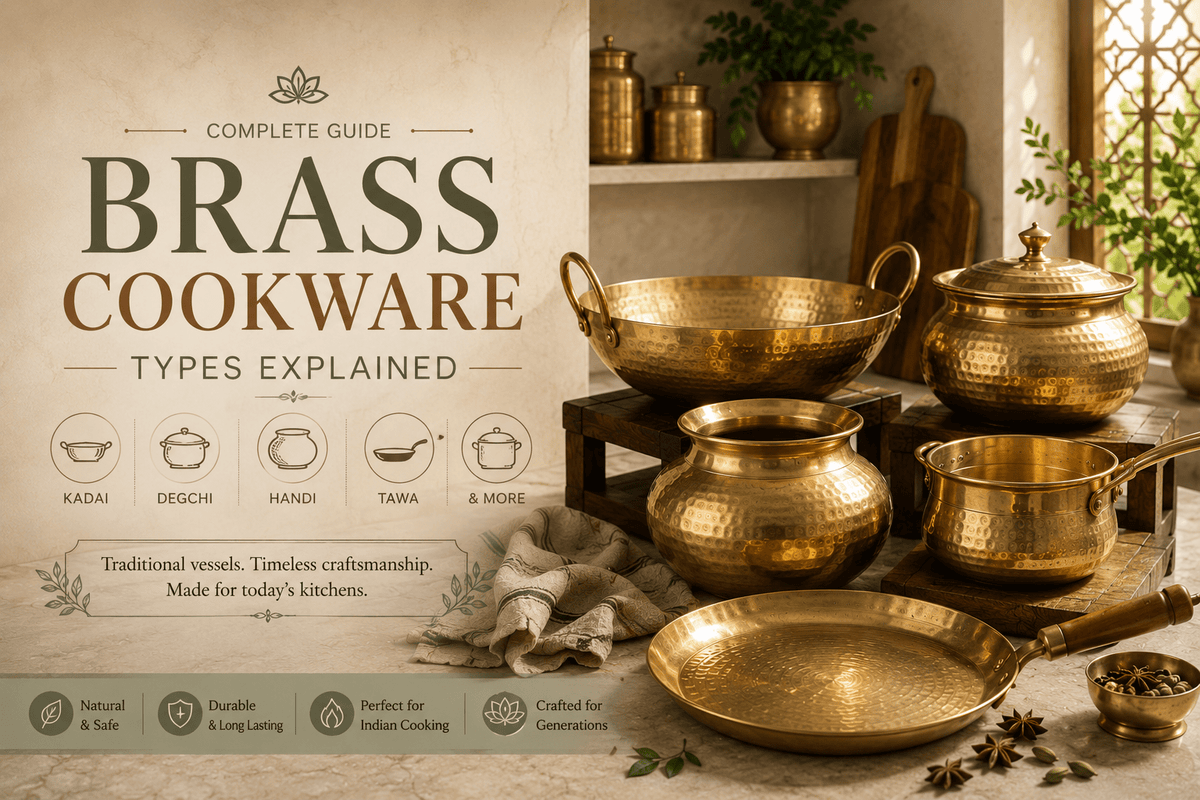
Brass Cookware Types Explained: Kadai, Degchi, Handi, Tawa & Traditional Cooking Vessels
Brass cookware has been part of Indian kitchen traditions for generations. From cooking vessels used for festive meals to serving pieces preserved as family heirlooms, brass has a distinctive place in India's culinary heritage.
But when you start exploring traditional brass cookware, you may come across names such as kadai, degchi, handi, tawa, patila and cooking pots. Each vessel has a different shape, capacity and traditional purpose.
Understanding these differences can make it easier to choose the right brass cookware for your kitchen. from traditional cooking vessels to specialized pieces designed for particular preparations.
In this guide, we explore the most common types of traditional brass cooking vessels, what they are used for, how they differ and what to consider before buying them.
Table of Contents
-
What Is Brass Cookware?
-
Why Brass Cookware Is Important in Indian Kitchens
-
Types of Brass Cookware
-
Brass Kadai
-
Brass Degchi
-
Brass Handi
-
Brass Tawa
-
Brass Patila and Cooking Pots
-
Brass Parat
-
How to Choose the Right Brass Cookware
-
Brass Cookware for Traditional and Modern Kitchens
-
Care and Maintenance
-
FAQs
-
Conclusion
What Is Brass Cookware?
Brass cookware refers to traditional kitchen vessels made primarily from brass, a metal alloy commonly associated with copper and zinc.
Indian artisans have historically worked with brass to create cooking, serving and storage vessels in a variety of shapes. If you are new to the material itself, our guide What Is Brass? explains its composition, characteristics, uses and place in Indian heritage. The design of each vessel developed around particular kitchen tasks and regional cooking traditions.
Today, brass cookware is valued not only for its traditional character but also for its craftsmanship and distinctive appearance.
However, not every brass vessel is designed for every type of cooking. Understanding the individual cookware type is therefore important before purchasing.
Why Brass Cookware Is Important in Indian Kitchens

(Traditional brass cookware including kadai, degchi, handi, tawa, patila and parat)
Traditional Indian kitchens have always used different vessels for different culinary tasks. The shape, depth, handles and capacity of a cooking vessel could influence how food was prepared and served.
Brass cookware became part of this heritage because it was durable, workable for artisans and visually distinctive.
Beyond functionality, traditional brass vessels can also represent:
-
Indian culinary heritage
-
Regional craftsmanship
-
Family traditions
-
Festive cooking
-
Traditional serving practices
-
Handcrafted metalwork
For a modern home, brass cookware can therefore be both a functional kitchen item and a connection to traditional Indian craftsmanship. For a broader comparison of India's traditional kitchen metals, read our guide to Brass vs Copper vs Kansa
Types of Brass Cookware
Here are some of the traditional brass cookware forms you may encounter:
| Brass Cookware | Traditional Use | Typical Design |
|---|---|---|
| Brass Kadai | Sautéing, frying and cooking | Wide and deep |
| Brass Degchi | Rice, gravies and one-pot dishes | Deep, rounded vessel |
| Brass Handi | Slow-style cooking and festive dishes | Rounded body with narrow opening |
| Brass Tawa | Flat cooking applications | Broad, flat surface |
| Brass Patila | Boiling and general cooking | Tall, deep vessel |
| Brass Cooking Pot | Various traditional preparations | Depends on regional design |
| Brass Parat | Mixing and food preparation | Wide and shallow |
Let's look at each in more detail.
These vessels are part of a much broader tradition of Indian metalware. Our guide to Traditional Indian Metal Utensils explores how different metal vessels became part of India's kitchen heritage.
Brass Kadai

(Handcrafted brass kadai for traditional Indian cooking)
A brass kadai is one of the most recognizable traditional Indian cooking vessels.
Its wide opening and deep body make the kadai suitable for cooking preparations that require stirring or tossing. Traditionally, kadai-style vessels have been used for a variety of Indian dishes.
If you are exploring traditional cooking vessels, you can also browse Royal Stuffs’ brass kadai collection to compare available shapes and sizes.
A brass kadai may be particularly appealing to people looking for:
-
Traditional Indian cookware
-
Handcrafted kitchen vessels
-
Heritage-style cookware
-
Decorative cookware for a traditional kitchen
When choosing one, pay attention to its diameter, depth, construction and finish.
For a larger family, a deeper or wider kadai may be more practical, while a smaller kadai can be suitable for limited-quantity preparation.
Brass Degchi

(Traditional brass handi and degchi cooking vessels)
A degchi is a deep traditional Indian cooking vessel, generally associated with preparations such as rice, gravies and other dishes cooked in larger quantities.
Its depth provides useful capacity while the rounded profile reflects traditional Indian cookware design.
A brass degchi can be considered when you want a vessel with:
-
Greater cooking capacity
-
A deep cooking chamber
-
Traditional styling
-
A heritage-inspired kitchen aesthetic
The right size depends on how many people you normally cook for and whether the vessel is intended for everyday use, festive preparation or traditional serving.
For more traditional cooking-vessel options, explore our brass cooking pots and related cookware collection.
Brass Handi
The handi is another classic Indian vessel known for its rounded body and traditional cooking form.
Handi-style vessels are strongly associated with Indian culinary traditions and are often used for dishes prepared slowly or served in a traditional manner.
Its rounded shape gives it a distinctive appearance, making a brass handi particularly attractive for heritage kitchens and traditional dining settings.
When choosing a brass handi, consider:
-
Capacity
-
Diameter
-
Depth
-
Handle design
-
Weight
-
Overall craftsmanship
A well-made handi can also become a visually striking piece when displayed in a traditional kitchen or dining area.
Brass Tawa

(Traditional brass tawa with wooden handle for Indian cooking)
A brass tawa has a fundamentally different shape from deep cooking vessels. It features a broad, relatively flat cooking surface.
Traditional tawa designs are associated with flatbread and other preparations that require a broad surface.
If you're considering a brass tawa, look at:
-
Cooking surface diameter
-
Thickness
-
Weight
-
Handle design
-
Surface finish
-
Compatibility with your cooking setup
Because cooking requirements vary significantly between households, it is important to understand the manufacturer's recommended use before purchasing or using a brass tawa.
Brass Patila and Traditional Cooking Pots
A patila is generally a deeper, straight-sided cooking vessel used for boiling, heating and preparing different foods.
Traditional brass cooking pots may vary considerably in shape and size depending on regional craftsmanship.
They can be useful for people who want to bring traditional metalware into:
-
Heritage kitchens
-
Festive cooking
-
Traditional Indian households
-
Cultural displays
-
Special-occasion dining
The main factors to consider are capacity, construction, weight and intended use.
Brass Parat
A brass parat is a wide, shallow traditional vessel commonly associated with food preparation and mixing.
Unlike a kadai or degchi, a parat is not primarily a deep cooking vessel. Its broad surface makes it useful for tasks such as preparing dough or mixing ingredients.
For households interested in traditional Indian kitchenware, a brass parat can complement deeper cooking vessels while adding a strong heritage element to the kitchen. Explore our brass parat options to find a traditional piece suited to your kitchen and food-preparation needs.
How to Choose the Right Brass Cookware
Choosing brass cookware should begin with purpose rather than appearance alone.
1. Decide What You Want to Prepare
Think about your regular cooking requirements.
For example:
-
Deep preparations → consider a degchi or handi
-
Stirring and sautéing → consider a kadai
-
Flat cooking → consider a tawa
-
Boiling and general preparation → consider a patila
-
Mixing and dough preparation → consider a parat
2. Choose the Right Size
Capacity matters just as much as design.
A smaller vessel may be suitable for individual or small-family portions, while larger cookware can make more sense for family meals or festive cooking.
Avoid buying a large traditional vessel simply because it looks impressive if you do not have a practical use for its capacity.
3. Examine Construction Quality
Look closely at:
-
Metal thickness
-
Joint quality
-
Handles
-
Rim finishing
-
Surface consistency
-
Overall weight
-
Artisan workmanship
Good craftsmanship should be visible in the construction rather than only in the appearance.
4. Understand the Finish
Brass cookware may have different finishes, from relatively smooth surfaces to more visibly handcrafted textures.
The finish you choose is largely a matter of aesthetic preference, but it should also be consistent with the intended use and care requirements.
5. Check Intended Use and Lining
This is particularly important.
Before purchasing brass cookware for food preparation, check the manufacturer's instructions regarding cooking, food contact, lining and compatible foods.
Some brass vessels may be intended primarily for serving or display rather than direct cooking. Product-specific instructions should always take priority.
Brass Cookware for Traditional and Modern Kitchens

(Traditional brass cookware styled in a modern Indian kitchen)
You do not need to have a completely traditional kitchen to appreciate brass cookware.
A single handcrafted brass vessel can introduce a heritage element into a modern kitchen , especially when paired with traditional brass dinnerware for serving.
For example, you could combine:
-
A brass kadai with contemporary cookware
-
A traditional handi with modern serving ware
-
Brass serving vessels with everyday dinnerware
-
A brass parat with a modern baking setup
-
Brass cookware with wooden kitchen accessories
This creates a balance between Indian heritage and contemporary kitchen design.
For festive occasions, brass cookware can also contribute to a more traditional presentation of food.
How to Care for Brass Cookware

(Gentle care and cleaning of traditional brass cookware)
Brass requires regular care to maintain its appearance.
General care practices include:
-
Follow the manufacturer's cleaning instructions.
-
Avoid harsh abrasive cleaners unless specifically recommended.
-
Dry the vessel thoroughly after washing.
-
Store brass cookware in a dry location.
-
Avoid leaving unsuitable foods or liquids in brass vessels for prolonged periods.
-
Follow specific instructions for any interior lining.
-
Polish the exterior only when appropriate for the product's finish.
The exact care method can vary depending on whether the vessel is plain brass, lined, lacquered, polished or handcrafted with a particular finish. For a more detailed maintenance routine, see our guide on how to clean and care for brass utensils.
Frequently Asked Questions
Is brass cookware suitable for every type of cooking?
No. Suitability depends on the specific vessel, its construction, any lining and the manufacturer's intended-use instructions. Always check product-specific guidance before cooking with brass.
What is the difference between a brass kadai and a brass handi?
A brass kadai is generally wider and deeper with an open shape suited to stirring and cooking, while a handi usually has a more rounded body and traditional deep-vessel design.
What is a brass degchi used for?
A brass degchi is a deep cooking vessel traditionally associated with preparations such as rice, gravies and other dishes that benefit from a deeper cooking chamber.
What is a brass parat used for?
A brass parat is a wide, shallow traditional vessel commonly used for mixing ingredients and preparing dough.
How do I choose the size of brass cookware?
Choose according to the quantity of food you normally prepare, the number of people you cook for and the vessel's intended purpose.
Is handcrafted brass cookware different from mass-produced cookware?
Handcrafted brass cookware can show individual artisan characteristics, including variations in finish and detailing. The quality should ultimately be judged by construction, material, intended use and workmanship.
Can brass cookware be used in a modern kitchen?
Yes. Brass cookware can complement modern kitchens while adding traditional Indian character. However, always follow the manufacturer's instructions regarding how and where a specific vessel should be used.
Conclusion

(Traditional Indian brass cookware representing generations of kitchen heritage)
Traditional brass cookware comes in many forms, and each vessel has its own purpose and character.
A brass kadai offers a wide, deep cooking form. A degchi provides greater depth for traditional preparations. A handi brings a distinctive rounded design, while a tawa offers a broad cooking surface. Patilas, cooking pots and parats complete the range of traditional Indian kitchen vessels.
The best choice depends on your cooking requirements, household size, preferred design and the manufacturer's guidance for safe use.
At Royal Stuffs, traditional metalware represents more than a kitchen product—it reflects the craftsmanship and cultural heritage behind India's long-standing relationship with brass and other traditional metals. Explore more practical guides in our Product Intelligence Hub to understand traditional metalware, cookware and handcrafted kitchen products.
If you're exploring traditional cookware for your home, understanding the different vessel types is the first step toward choosing pieces that are practical, meaningful and suited to your kitchen.
Explore More from Royal Stuffs
Discover traditional brass cookware, handcrafted kitchenware and other Indian metalware designed around India's rich craft traditions.
You can also explore related Royal Stuffs guides on brass, copper and traditional Indian metalware to learn more about their history, characteristics and care.
Read more
Pure Copper Water Bottles for Modern Lifestyles | Traditional Elegance Meets Everyday Living
Learn why pure copper water bottles are becoming essential lifestyle accessories for modern homes, offices, and travel routines.
Read more
Best Brass Utensils for Indian Cooking: A Complete Buying Guide
Discover the best brass utensils for Indian cooking, from kadai and degchi to tawa, patila and parat. Learn how to choose the right brass cookware based on design, quality, cooking needs and tradit...
Read more