

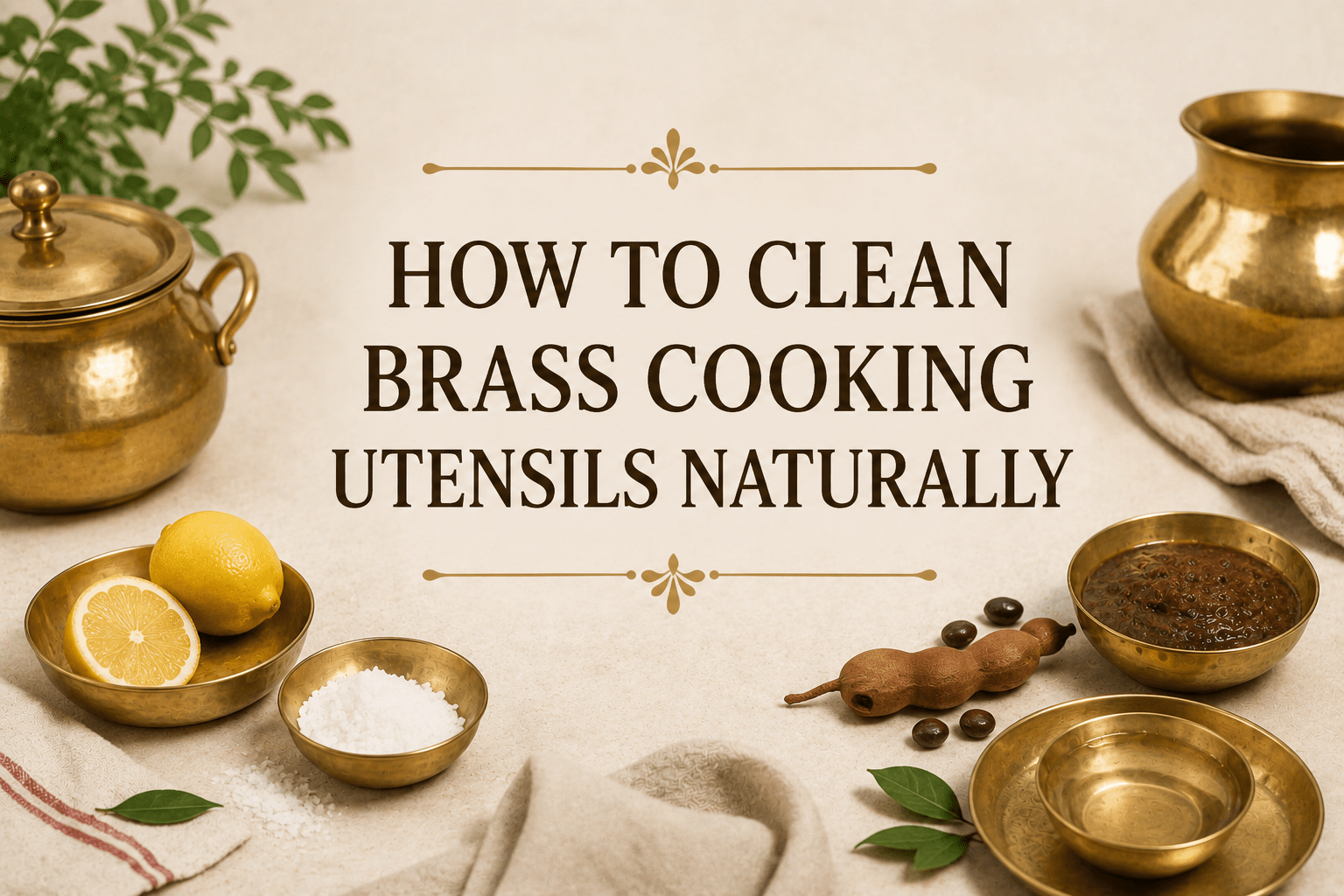
How to Clean Brass Cooking Utensils Naturally | Easy Brass Care Guide
Introduction
Brass cooking utensils have been a treasured part of Indian kitchens for generations. Their elegant golden appearance, handcrafted beauty, and traditional charm make them a favorite among homeowners who appreciate heritage-inspired kitchenware.
Over time, brass utensils may lose some of their natural shine due to regular use and exposure to air. Fortunately, maintaining their beauty doesn't require expensive products or complicated techniques. Natural household ingredients can help keep brass utensils looking clean and attractive.
In this guide, we'll explore how to clean brass cooking utensils naturally using simple methods that have been followed in Indian homes for years.
Why Regular Cleaning Is Important
Proper cleaning helps:
-
Maintain the natural shine of brass
-
Preserve its elegant appearance
-
Protect handcrafted detailing
-
Extend product lifespan
-
Keep utensils looking beautiful for years
A simple cleaning routine can make a significant difference in preserving traditional brass cookware.
Natural Ways to Clean Brass Utensils
Lemon and Salt Method
One of the most common traditional cleaning methods involves lemon and salt.
Steps:
-
Cut a lemon in half.
-
Sprinkle a small amount of salt on the surface.
-
Gently rub the brass utensil.
-
Rinse thoroughly with water.
-
Dry immediately with a soft cloth.
This method is widely used in Indian households to refresh brass utensils naturally.
Tamarind Paste Cleaning
Tamarind has traditionally been used to clean brass kitchenware.
Steps:
-
Prepare a thick tamarind paste.
-
Apply it evenly on the brass surface.
-
Leave it for a few minutes.
-
Gently wipe with a soft cloth.
-
Rinse and dry thoroughly.
This simple method helps maintain the appearance of brass cookware.
Vinegar and Salt Solution
A mild vinegar and salt mixture is another popular natural cleaning option.
Steps:
-
Mix vinegar with a small amount of salt.
-
Apply gently using a soft cloth.
-
Wipe carefully.
-
Rinse with clean water.
-
Dry completely.
Always use gentle pressure to protect handcrafted detailing.
Use Soft Cleaning Materials
When cleaning brass utensils, choose:
-
Soft cotton cloths
-
Microfiber cloths
-
Non-abrasive sponges
Avoid:
-
Steel wool
-
Metal scrubbers
-
Harsh brushes
-
Abrasive cleaning pads
Gentle cleaning helps preserve the finish and craftsmanship.
Dry Immediately After Washing
Proper drying is one of the most important maintenance habits.
After cleaning:
-
Wipe completely dry
-
Remove all moisture
-
Allow airflow if needed
-
Store only when dry
This helps maintain the appearance of brass utensils over time.
Store Brass Utensils Correctly
Good storage practices include:
-
Keeping utensils in a dry place
-
Avoiding excessive humidity
-
Wrapping delicate items in soft cloth
-
Storing carefully to prevent scratches
Proper storage helps preserve their beauty and finish.
Why Natural Cleaning Methods Are Preferred
Many homeowners prefer natural cleaning methods because they:
-
Are easy to use
-
Use common household ingredients
-
Support traditional maintenance practices
-
Help preserve handcrafted surfaces
-
Avoid harsh chemicals
These methods have been trusted across generations.
Explore Royal Stuffs Brass Collections
Royal Stuffs offers a premium collection of handcrafted brass kitchenware inspired by India's rich artisan traditions.
Brass Kitchen Utensils
https://royalstuffs.com/collections/brass-kitchen-utensils
Brass Cookware
https://royalstuffs.com/collections/brass-cookware
Discover beautifully crafted brass products designed for traditional and modern homes.
Complete Your Traditional Kitchen Collection
You can also explore:
Brass Dinner Sets
https://royalstuffs.com/collections/brass-dinner-sets
Kansa Dinner Sets
https://royalstuffs.com/collections/kansa-dinner-sets
Copper Water Bottles
https://royalstuffs.com/collections/copper-water-bottles
Together, these collections create a complete heritage-inspired kitchen experience.
Frequently Asked Questions (FAQ)
What is the best natural cleaner for brass utensils?
Lemon and salt are among the most popular traditional cleaning methods used in Indian homes.
Can tamarind be used to clean brass?
Yes, tamarind paste has traditionally been used for cleaning brass utensils.
Should brass utensils be dried after cleaning?
Absolutely. Always dry brass utensils thoroughly after washing.
Can I use harsh chemicals on brass cookware?
Gentle and natural cleaning methods are generally preferred to protect the finish and craftsmanship.
Where can I buy premium brass kitchen utensils online?
You can explore handcrafted collections at Royal Stuffs.
Final Thoughts
Learning how to clean brass cooking utensils naturally helps preserve their timeless beauty and traditional appeal. Simple household ingredients such as lemon, salt, tamarind, and vinegar can help maintain brass cookware while honoring traditional care methods passed down through generations. With proper cleaning, drying, and storage, handcrafted brass utensils can continue to enhance Indian kitchens for years to come.
Read more
How to Maintain Brass Cooking Utensils Properly | Complete Care Guide
Discover easy ways to clean, store, and maintain brass cooking utensils while preserving their shine, beauty, and traditional appeal.
Read more
Premium Brass Kitchenware for Luxury Homes | Timeless Elegance for Modern Living
Enhance your luxury home with premium handcrafted brass kitchenware that combines timeless elegance, artisan craftsmanship, and traditional charm.
Read more