

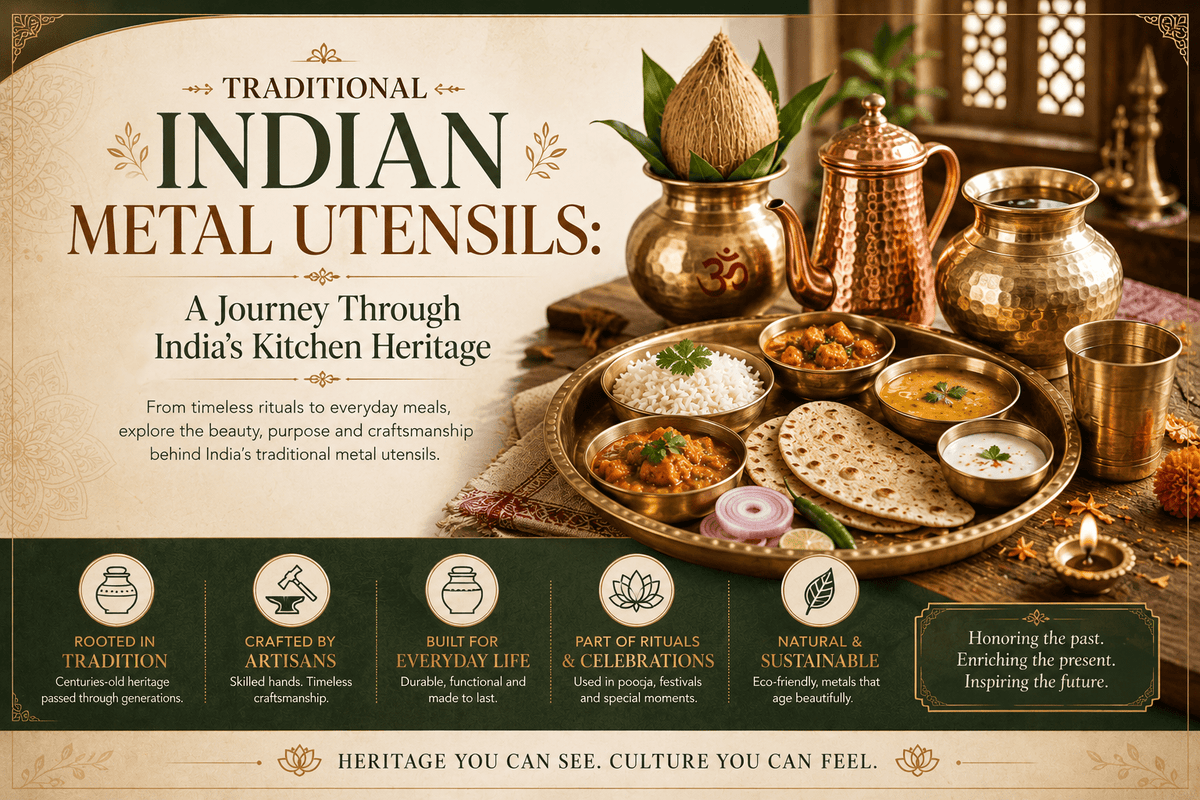
Traditional Indian Metal Utensils: A Journey Through India's Kitchen Heritage
Indian kitchens have always been more than places where food is prepared. They are spaces where food, family, craftsmanship and tradition come together.
For generations, Indian households have used carefully crafted utensils made from metals such as brass, copper, Kansa, bronze and iron. These vessels served practical purposes—from cooking and serving to dining and storing—while some also played important roles in pooja, festivals and traditional ceremonies.
A thali, lota or kalash was therefore more than a household object. Its shape, material and craftsmanship often reflected the practical needs and cultural traditions of the people who used it.
Today, traditional Indian metal utensils are finding renewed appreciation. Modern homes are bringing handcrafted vessels into contemporary kitchens, dining spaces and interiors, creating a connection between Indian heritage and modern living.
So, what are the most important traditional Indian metal utensils, what were they used for, and why do they still matter?
Let's explore the story behind India's kitchen heritage.
What Are Traditional Indian Metal Utensils?

(Traditional Indian metal utensils including brass thali, Kansa bowls and copper lota)
Traditional Indian metal utensils include cookware, dinnerware, serving vessels, storage containers and ritual objects traditionally made from materials such as brass, copper, Kansa, bronze and iron.
Their designs and names can vary across different regions of India. Local food habits, customs, available materials and metalworking traditions all influenced the development of these utensils.
They were commonly used for:
-
Cooking food
-
Serving meals
-
Dining
-
Carrying and storing water
-
Preparing ingredients
-
Religious rituals
-
Festivals and ceremonies
-
Everyday household activities
What makes traditional metalware especially interesting is its combination of function and craftsmanship. A vessel could be practical enough for everyday use while featuring hammered textures, engraved details, curved forms or hand-finished surfaces.
Traditional Indian Utensil Names and Their Uses
Indian kitchenware has an impressive vocabulary. Many traditional utensils remain familiar today, while others are closely associated with particular regions or traditional practices.
| Traditional Utensil | Common Use | Traditional Materials |
|---|---|---|
| Thali | Dining and serving meals | Brass, Kansa |
| Katori | Serving dal, curry and other foods | Brass, Kansa, Copper |
| Lota | Carrying and storing water | Brass, Copper |
| Kalash | Pooja and ceremonies | Brass, Copper |
| Handi | Cooking and preparing food | Various metals |
| Degchi | Cooking and food preparation | Various metals |
| Glass/Tumbler | Drinking | Brass, Copper, Kansa |
| Parat | Mixing and preparing ingredients | Traditional metals |
| Serving Bowl | Serving food | Brass, Copper, Kansa |
| Pooja Thali | Religious rituals | Brass, Copper |
These utensils were not designed randomly. Their shapes and sizes developed around specific household requirements, making traditional Indian kitchenware both practical and culturally distinctive.
1. Thali: The Heart of Traditional Indian Dining

(Traditional Indian metal thali with katoris and vegetarian meal`)
Few utensils represent Indian dining as strongly as the thali.
A thali is a large plate or platter used to serve a complete meal, often accompanied by smaller bowls known as katoris.
A traditional thali may hold:
-
Dal
-
Vegetables
-
Rice
-
Roti
-
Pickles
-
Chutneys
-
Curd
-
Sweets
Brass and Kansa thalis are particularly associated with traditional Indian dining. Today, handcrafted [brass dinnerware] can bring this traditional dining aesthetic into contemporary homes.
More than a convenient serving plate, the thali creates a sense of balance, variety and togetherness around a meal.
2. Katori: The Traditional Serving Bowl
The katori is a small bowl used for serving individual portions of food.
It can hold dal, curry, vegetables, curd, chutneys or desserts. Several katoris are often arranged around a thali to create an organized dining setup.
Traditional metal katoris can be made from brass, Kansa, copper and other materials, depending on the design and tradition. For those building a traditional dining setup, [brass kitchen utensils] can also complement individual bowls, serving pieces and dinnerware.
Its simple form demonstrates an important principle of traditional Indian kitchenware: every utensil had a purpose.
3. Lota: A Classic Indian Water Vessel
The lota is a rounded traditional vessel historically associated with carrying and storing water.
Its compact, curved form made it practical for household use, while brass and copper versions became recognizable parts of Indian metalware.
The lota is a good example of how an everyday household object can become a cultural symbol while retaining its practical character.
4. Kalash: A Vessel With Cultural Significance

(Traditional Indian copper lota and brass kalash vessels)
The kalash holds a particularly important place in Indian traditions.
It is commonly associated with:
-
Pooja
-
Festivals
-
Religious ceremonies
-
Traditional rituals
-
Decorative arrangements
Brass and copper kalash vessels are especially common in traditional settings.
The kalash demonstrates how Indian metal craftsmanship extends beyond everyday kitchenware into spiritual and ceremonial traditions.
5. Handi: A Traditional Cooking Vessel
The handi is a rounded cooking vessel traditionally associated with Indian cuisine.
Its form has been used for preparing different foods, with the design varying according to regional cooking traditions and intended use.
Traditional handi-inspired cookware continues to influence modern kitchenware while retaining its connection to Indian culinary heritage.
6. Degchi: Designed for Everyday Cooking
A degchi is a deep cooking or preparation vessel traditionally used for preparing food.
Its generous capacity makes it practical for family meals and larger quantities of cooking.
Like many traditional Indian utensils, its design reflects practical household requirements rather than decoration alone.
7. Traditional Metal Glasses and Tumblers
Metal glasses and tumblers have been part of Indian households for generations.
Brass, copper and Kansa drinking vessels remain popular among people who appreciate their distinctive appearance and traditional character.
A handcrafted metal glass can add a strong sense of heritage to even a contemporary dining table.
The Metals Behind Traditional Indian Kitchenware

(Brass copper and Kansa utensils in a traditional Indian kitchen)
Traditional Indian utensils are closely connected to the metals from which they are made. Each material has its own appearance, characteristics and traditional applications.
Brass
Brass has a distinctive yellow-golden appearance and has been widely used in Indian household objects, pooja items, cookware, servingware and décor.
Its warm colour makes it particularly attractive for traditional and festive settings.
For a detailed introduction, read [What Is Brass? A Complete Beginner's Guide to Brass Metal].
Copper
Copper is recognized by its characteristic reddish-orange colour.
It has a long history in Indian vessels, including lotas, kalash, water vessels and other traditional household objects.
Learn more about this metal in [What Is Copper? A Complete Beginner's Guide to Copper Metal].
Kansa
Kansa has a distinctive warm golden-brown appearance and is strongly associated with traditional Indian tableware.
It is particularly recognized in thalis, bowls, glasses and serving vessels.
Explore its history and characteristics in [What Is Kansa? A Complete Beginner's Guide to Kansa Metal].
Bronze and Other Traditional Metals
Bronze and iron have also played important roles in India's metalworking heritage.
The choice of material depended on factors such as regional traditions, intended use, availability and craftsmanship.
This variety is one reason Indian metalware has such a rich visual and functional history.
How Traditional Indian Metal Utensils Were Used
Traditional utensils were deeply connected to everyday household life. They were not simply decorative objects—they were used, cleaned, maintained and often passed through generations.
Cooking
Traditional cooking vessels were used to prepare foods such as rice, dal, vegetables, curries and sweets. Different shapes and capacities suited different preparation methods.
Dining
Thalis, katoris, glasses and serving bowls created structured dining arrangements. The presentation of food was an important part of the meal, and traditional metalware naturally contributed to the experience.
Serving
Large bowls, trays and serving vessels were used to bring food from the kitchen to the dining area while adding visual character to the table.
Water and Household Use
Vessels such as lotas and traditional water containers served practical household purposes and became recognizable forms of Indian metalware.
Pooja and Rituals
Diyas, kalash, bells and pooja thalis demonstrate another side of Indian metalware—the connection between craftsmanship, tradition and spiritual practices.
From Sheet to Vessel: The Craft Behind Indian Metalware
(Indian artisan shaping a traditional metal utensil by hand)
A traditional metal vessel begins with raw material, but it becomes a finished object through skill, patience and craftsmanship.
Depending on the product and technique, traditional metalworking can involve:
Cutting → Heating → Hammering → Shaping → Joining → Engraving → Polishing → Finishing
An artisan gradually works the metal into its desired form using appropriate tools and techniques.
Hammer marks, subtle texture variations and differences in finishing may remain visible on handcrafted products. These details can be part of the character of handmade metalware.
Unlike a machine-produced vessel with a highly uniform surface, a handcrafted piece can carry visible traces of the process through which it was created.
That connection between artisan and object is one of the defining qualities of traditional Indian metalware. Discover more handcrafted Indian metalware from [Royal Stuffs], inspired by India's traditional craftsmanship and designed for modern homes.
Traditional Metalware vs Modern Kitchenware
Modern kitchenware offers convenience, variety and easy availability. So why are traditional metal utensils still relevant?
Because many modern consumers also value:
-
Handcrafted character
-
Distinctive design
-
Durability
-
Cultural connection
-
Reusability
-
Traditional craftsmanship
-
Timeless aesthetics
This does not mean traditional utensils are automatically better than modern cookware. They offer a different experience and design language.
A handcrafted brass bowl can sit alongside contemporary cookware. A Kansa thali can become part of a family meal. A copper vessel can add warmth and character to a modern kitchen.
The old and new can coexist naturally.
Why Traditional Indian Metal Utensils Still Matter
The renewed interest in traditional metalware is not simply about nostalgia.
It is also about reconnecting with objects that have a visible relationship with Indian craftsmanship and culture.
A brass diya can become part of a festival tradition.
A Kansa thali can make an everyday meal feel more intentional.
A handcrafted copper vessel can connect a modern home with a much longer tradition of Indian metalworking.
These objects demonstrate that traditional kitchenware can have value beyond basic function.
They can carry memory, craftsmanship and cultural identity.
From Artisan Workshop to Modern Home
Traditional utensils no longer need to exist only in traditional homes.
They can work beautifully alongside:
-
Modern wooden kitchens
-
Minimalist dining tables
-
Contemporary interiors
-
Neutral colour palettes
-
Modern servingware
-
Natural materials
A handcrafted metal object can introduce warmth and texture into a simple modern setting.
This creates a design language that feels both Indian and contemporary.
Traditional metalware can therefore be preserved not only by storing it, but by continuing to use and appreciate it.
How to Choose Traditional Indian Metal Utensils
If you're planning to introduce traditional metalware into your home, consider these factors.
1. Start With the Purpose
Decide whether you need the utensil for cooking, dining, serving, pooja, décor or water storage.
2. Understand the Material
Know whether you're buying brass, copper, Kansa, bronze or another metal.
For a direct comparison, read [Brass vs Copper vs Kansa: Understanding the Differences].
3. Check Construction
Look for appropriate thickness, sturdy construction and a finish suitable for the intended purpose.
4. Consider the Craftsmanship
Handcrafted pieces may show subtle variations in shape, texture or finish. These can be natural characteristics of handmade production.
5. Check Care Requirements
Different metals and finishes can require different maintenance. Always follow the manufacturer's care instructions.
6. Buy According to Intended Use
A decorative vessel is not necessarily designed for cooking or food storage.
Always check the product's intended use and specifications before purchasing.
Caring for Traditional Metal Utensils
Traditional metalware can remain beautiful for years when cared for properly.
Simple habits include:
-
Follow the manufacturer's cleaning instructions.
-
Avoid harsh cleaning methods unless specifically recommended.
-
Dry utensils thoroughly after washing.
-
Store them in a dry environment.
-
Use suitable polishing methods when required.
-
Avoid using products outside their intended purpose.
Traditional metals can also naturally change appearance over time.
Brass may develop deeper golden or antique tones, copper can develop darker tones and patina, while Kansa may develop deeper golden-brown surface character.
For many owners, these changes become part of the story and individuality of the object.
Brass, Copper or Kansa: Which Should You Choose?
There is no single winner. The right choice depends on your intended use and personal preference.
Brass is appealing for its golden traditional appearance and is widely associated with pooja items, décor, servingware and suitable cookware.
Copper is known for its reddish-orange appearance and long association with traditional vessels such as lotas and water containers.
Kansa is particularly appealing for traditional dining, including thalis, bowls and servingware.
For a detailed comparison, explore [Brass vs Copper vs Kansa: Understanding the Differences].
Ultimately, consider purpose, construction, craftsmanship, care requirements and intended use rather than choosing a metal based on appearance alone.
Why Handcrafted Metalware Has a Story

(Close-up of handcrafted Indian brass copper and Kansa metalware)
One of the most distinctive qualities of traditional handmade utensils is their sense of individuality.
A handcrafted vessel can show:
-
Hammer marks
-
Subtle texture variations
-
Engraved details
-
Small differences in finishing
-
Evidence of the artisan's technique
These characteristics can make each piece feel slightly different.
The utensil becomes more than something functional. It becomes a small representation of the craft tradition from which it came.
That is one of the strongest reasons traditional Indian metalware continues to deserve a place in modern homes.
Frequently Asked Questions
What are traditional Indian metal utensils?
Traditional Indian metal utensils include cookware, dinnerware, serving vessels, water vessels and ritual objects traditionally made from materials such as brass, copper, Kansa, bronze and iron.
What are some traditional Indian utensil names?
Common examples include thali, katori, lota, kalash, handi, degchi, parat and traditional metal glasses or tumblers.
What is a thali used for?
A thali is a large plate or platter used to serve a complete Indian meal, often accompanied by several small bowls called katoris.
What is a lota?
A lota is a rounded traditional vessel historically associated with carrying and storing water and other household uses.
What is a kalash used for?
A kalash is commonly associated with pooja, festivals, ceremonies and traditional rituals. Brass and copper are commonly used for such vessels.
What metals are traditionally used for Indian utensils?
Brass, copper, Kansa, bronze and iron have all played roles in Indian metalware traditions. The choice of material varies according to purpose and regional craft traditions.
Are traditional metal utensils suitable for modern kitchens?
Many can be, provided the specific product is designed for the intended use. Always check the manufacturer's product information and care instructions.
Are small variations normal in handcrafted utensils?
Yes. Handmade pieces can have subtle variations in texture, shape and finish because of the artisan's production process.
Which is better for traditional dining: brass or Kansa?
Both can be suitable depending on the product and personal preference. Kansa is particularly associated with traditional thalis and diningware, while brass has a broader range of traditional household and decorative applications.
Conclusion
Traditional Indian metal utensils tell the story of a kitchen culture built around utility, craftsmanship and tradition.
From the humble lota to the carefully arranged thali, from brass diyas to copper vessels and Kansa tableware, these objects have occupied important places in Indian homes for generations.
Their value isn't only in the metal from which they are made.
It lies in their forms, functions, craftsmanship and cultural connections.
Today, traditional metalware is finding a new place in modern homes—not as a replacement for everything modern, but as a meaningful way to bring Indian heritage into everyday life.
A handcrafted utensil can cook a meal, serve a family, decorate a room or become part of a festival.
And when we continue using these objects, we aren't simply preserving old kitchenware.
We're keeping a piece of India's living craft heritage in use.
Read more
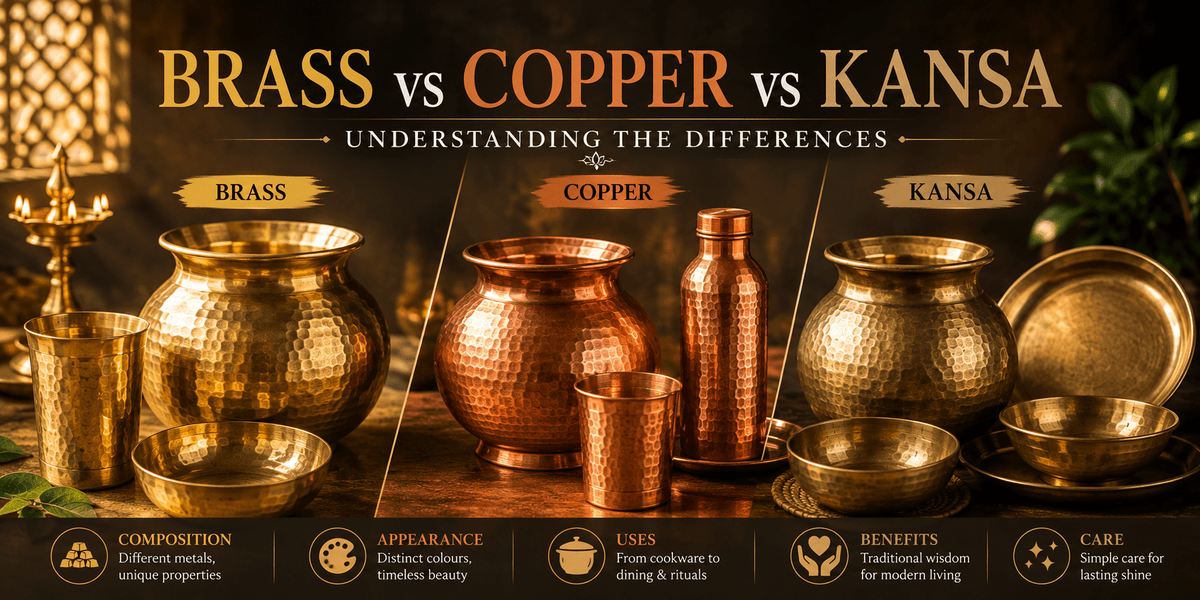
Brass vs Copper vs Kansa: Understanding the Differences
Brass, copper and Kansa each have unique properties, colours and traditional uses. Compare their differences and discover which metal is best for dining, pooja, décor and everyday use.
Read more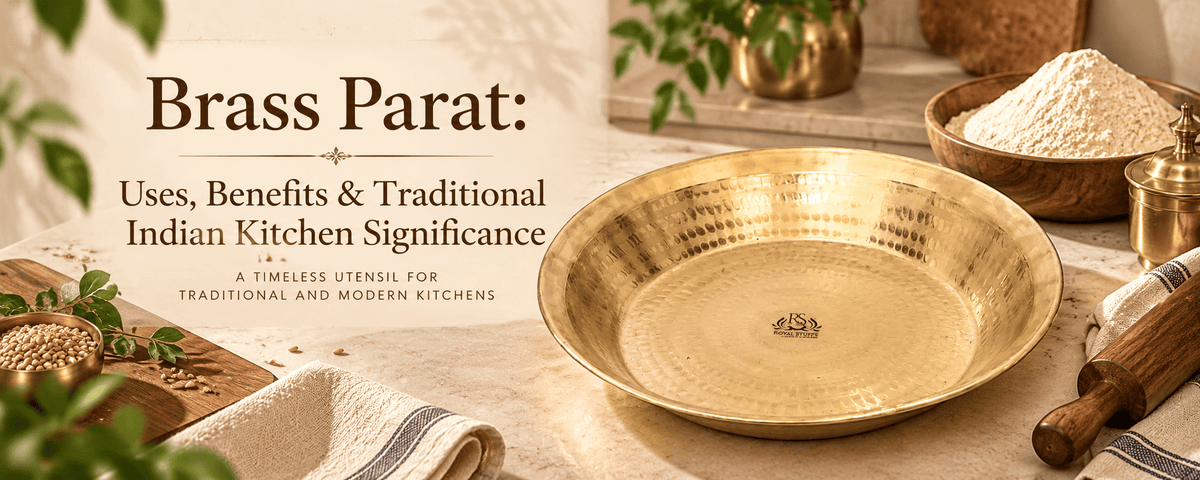
Brass Parat: Uses, Benefits & Traditional Indian Kitchen Significance
A brass parat is a timeless Indian kitchen essential traditionally used for kneading atta, preparing dough and mixing ingredients. Discover its uses, benefits, traditional significance, buying tips...
Read more