

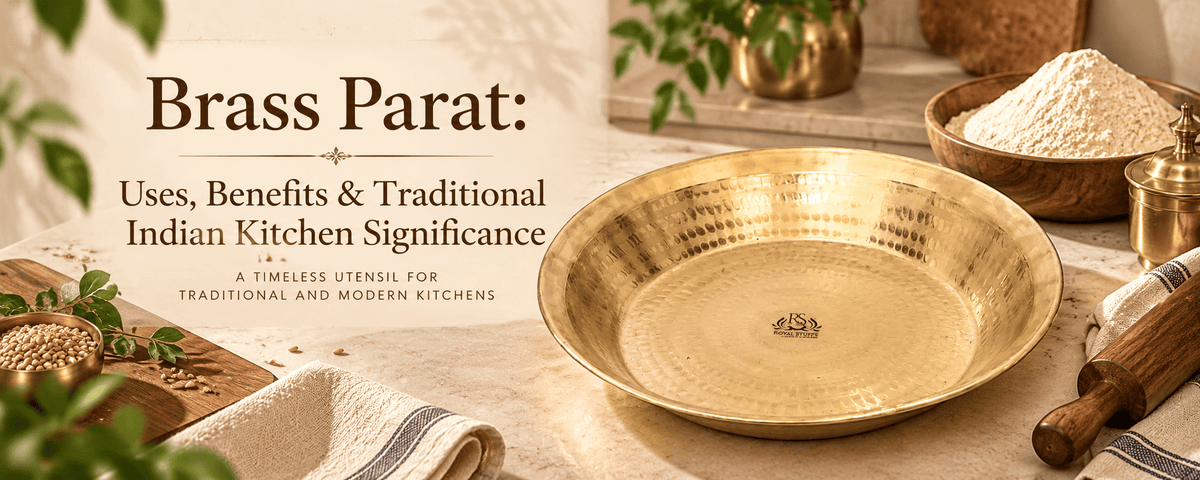
Brass Parat: Uses, Benefits & Traditional Indian Kitchen Significance
In a traditional Indian kitchen, some utensils are valued not only for their usefulness but also for the memories and rituals associated with them. The brass parat is one such timeless kitchen essential. Wide, sturdy and beautifully crafted, a brass parat has traditionally been used for preparing dough, mixing ingredients, kneading flour and handling large quantities of food.
Before modern stainless-steel and plastic mixing bowls became common, metal parats were a familiar sight in Indian households. Their generous surface area made everyday preparation easier, while the warm golden appearance of brass added a distinctly traditional character to the kitchen.
Today, brass parats are experiencing renewed interest among homeowners who appreciate handcrafted Indian cookware and heritage-inspired kitchens. But what makes a brass parat special, and how can it be used in a modern kitchen?
Let's explore its uses, benefits, traditional significance, buying considerations and care requirements.
Table of Contents
-
What Is a Brass Parat?
-
Traditional Significance of Brass Parat in Indian Kitchens
-
Common Uses of a Brass Parat
-
Benefits of Using a Brass Parat
-
Brass Parat vs Stainless Steel Mixing Bowl
-
How to Choose the Right Brass Parat
-
How to Care for a Brass Parat
-
Can You Use a Brass Parat Every Day?
-
Brass Parat for Traditional and Modern Kitchens
-
Frequently Asked Questions
-
Final Thoughts
What Is a Brass Parat?
A brass parat is a wide, shallow Indian kitchen vessel traditionally made from brass. Unlike a deep mixing bowl, a parat has a broad base and open shape, making it particularly convenient for kneading and mixing.
Traditional parats can vary in size, thickness, shape and craftsmanship, and a handcrafted hammered brass parat can be a practical choice for traditional dough preparation. Some feature smooth surfaces, while handcrafted versions may display subtle hammer marks or artisanal detailing.
The wide design is especially practical when working with flour. It provides enough room to combine ingredients, add water gradually and knead without making a mess.
For buyers, it is important to check the manufacturer's material specifications and whether the particular product is intended for food preparation and contact.
Traditional Significance of Brass Parat in Indian Kitchens

(Traditional Indian kitchen featuring a handcrafted brass parat and brass utensils)
The parat has a strong connection with everyday Indian cooking. For generations, families have used wide metal vessels to prepare atta, roti, puri, paratha and other dough-based foods.
In many traditional households, preparing dough was a regular part of family meals. A large parat made it easier to knead enough dough for several family members at once.
Brass also has a strong place in Indian metalcraft. Handcrafted brass kitchenware reflects the skills of traditional artisans who shape, finish and polish metal utensils for household use.
This combination of functionality and craftsmanship is one reason a brass parat remains meaningful today. It also makes the parat a natural part of a wider collection of traditional brass kitchen utensils used for cooking and food preparation. It is not simply another mixing vessel; it represents an older style of Indian kitchen preparation.
Common Uses of a Brass Parat
A traditional brass parat can be surprisingly versatile. Some of its most common uses include:

(Brass parat used for kneading atta in a traditional Indian kitchen)
1. Kneading Atta
The most familiar use of a parat is kneading wheat flour for roti and chapati. Its broad surface gives you plenty of room to work the dough comfortably.
2. Preparing Paratha and Puri Dough
A brass parat can also be used when preparing dough for parathas, puris and other Indian breads. The wide shape makes mixing flour with water, spices or other ingredients convenient.
3. Mixing Ingredients
The vessel can be useful for mixing larger quantities of dry or suitable food ingredients during meal preparation.
4. Preparing Festive Foods
During festivals, family gatherings and celebrations, larger quantities of ingredients may need to be prepared together. A traditional parat can provide the space needed for such preparation.
5. Traditional Kitchen Display
When not in use, a beautifully crafted brass parat can also become part of a heritage-inspired kitchen display. Its golden surface pairs naturally with other traditional Indian utensils.
If you are building a traditional kitchen setup, it can also be paired with handcrafted brass cookware for a coordinated heritage kitchen.
Benefits of Using a Brass Parat
1. Wide Surface for Easy Kneading
The biggest practical advantage of a parat is its shape. Its broad and shallow design provides ample working space, making it easier to knead dough compared with a narrow or deep container.
2. Strong Traditional Appeal
A brass parat instantly adds an Indian heritage aesthetic to a kitchen. Its warm metallic finish can complement brass cookware, copper utensils, wooden accessories and traditional kitchen décor.
3. Durable Metal Construction
Quality brass kitchenware is designed to be sturdy and reusable. Unlike disposable or lightweight plastic mixing containers, a well-made brass parat can become a long-term kitchen item when properly maintained.
4. Suitable for Large-Batch Preparation
The larger sizes are particularly useful when preparing dough for several people. This makes a brass parat practical for families, festive cooking and occasions when larger quantities of food are prepared.
5. Handcrafted Character
Traditional brass utensils can have small variations in texture and finish, particularly when crafted using artisan techniques. These details can give each parat a distinctive appearance.
If you are interested in the material itself, read our guide to what brass is and how it is used in Indian heritage craftsmanship
Brass Parat vs Stainless Steel Mixing Bowl

(Brass parat compared with a stainless steel mixing bowl)
Both brass and stainless steel can have a place in an Indian kitchen, but they offer different experiences.
| Feature | Brass Parat | Stainless Steel Bowl |
|---|---|---|
| Appearance | Warm golden finish | Silver metallic finish |
| Traditional appeal | High | Moderate |
| Shape | Usually wide and shallow | Often deeper |
| Dough preparation | Excellent with broad surface | Depends on bowl design |
| Craftsmanship | Often artisan-inspired | Commonly machine-produced |
| Maintenance | Requires more care | Generally easier |
| Kitchen aesthetic | Heritage-inspired | Contemporary and practical |
If convenience and minimal maintenance are your main priorities, stainless steel may be the easier choice. For a broader comparison of traditional brass and modern kitchen materials, explore our guide to brass vs stainless steel cookware and utensils
If you value traditional craftsmanship, visual character and Indian kitchen heritage, a brass parat offers something distinctly different.
How to Choose the Right Brass Parat
Before buying a brass parat, consider how you intend to use it. You can also explore other handcrafted brass kitchen essentials if you want to build a traditional preparation setup.
Check the Size
Choose a size according to your family's requirements. A smaller parat may work well for occasional preparation, while a larger one is more suitable for family-sized batches of dough.
Look at the Construction
Check the thickness, rim, base and overall finish. A sturdy construction is particularly important for a vessel that will be used for kneading.
Verify the Material
Look for clear information about the brass composition and manufacturing process. Avoid relying solely on vague descriptions such as "traditional metal."
Check Food-Use Information
Make sure the product is specifically intended for food preparation or food contact and follow the manufacturer's instructions.
Consider the Finish
Smooth polished brass offers a different appearance from a hand-hammered or artisanal finish. Choose according to your kitchen style and maintenance preference.
How to Care for a Brass Parat

(Cleaning and caring for a handcrafted brass parat with a soft cotton cloth)
Proper maintenance helps preserve the appearance of brass kitchenware. For more detailed maintenance advice, see our guide on how to clean brass cooking utensils naturally.
After use, clean the parat according to the manufacturer's recommended instructions. Use a mild cleaning method and avoid harsh abrasive materials that can scratch the surface.
For dough preparation, clean the vessel soon after use rather than allowing food residue to remain for an extended period.
Rinse thoroughly and dry the parat completely before storing it. Moisture left on the surface can affect the appearance of brass over time.
Brass naturally develops changes in appearance with use and exposure to air. Some people appreciate this evolving patina, while others prefer to maintain a brighter finish through periodic polishing.
If your brass parat has a special coating, lining or finish, always follow the care instructions provided by the manufacturer instead of using a generic brass-cleaning method. You can also read our broader brass cookware care guide for practical cleaning and maintenance tips.
Can You Use a Brass Parat Every Day?

(Brass parat with freshly kneaded dough for everyday Indian cooking)
A brass parat can be incorporated into regular kitchen preparation when the specific product is designed for food use and maintained according to its care instructions.
However, everyday suitability depends on the product's construction, finish and manufacturer's recommendations.
For many households, a brass parat may be particularly useful for:
-
Weekend cooking
-
Preparing roti and paratha dough
-
Family meals
-
Festival preparations
-
Traditional Indian cooking
-
Large-batch food preparation
It can also be used alongside modern stainless-steel cookware rather than replacing every utensil in the kitchen.
Brass Parat for Traditional and Modern Kitchens

(Handcrafted brass parat styled in a modern Indian kitchen)
You don't need a completely traditional kitchen to enjoy a brass parat.
In a modern Indian kitchen, it can serve as a functional preparation vessel while also adding a heritage-inspired touch. Pair it with wooden rolling pins, brass kitchen utensils, copper cookware or neutral kitchen accessories for a cohesive traditional look.
For festive occasions, a polished brass parat can also become part of the visual presentation of the cooking space.
The appeal lies in its ability to combine old-world craftsmanship with modern kitchen functionality.
Frequently Asked Questions
What is a brass parat used for?
A brass parat is traditionally used for kneading atta, preparing roti and paratha dough, mixing ingredients and handling larger quantities of food during cooking.
Is a brass parat good for kneading dough?
Its wide, shallow shape makes a parat particularly convenient for kneading dough because it provides a generous working surface.
Can a brass parat be used every day?
It can be used regularly when the particular product is intended for food preparation and is maintained according to the manufacturer's care instructions.
How do you clean a brass parat?
Use a mild cleaning method recommended by the manufacturer, rinse thoroughly and dry completely. Avoid harsh abrasive scrubbers that can damage the finish.
What size brass parat should I buy?
Choose the size based on your household and typical quantity of dough or ingredients you prepare. Larger families may prefer a wider parat.
Final Thoughts
The brass parat represents one of the most practical forms of traditional Indian kitchenware. Its broad shape makes it useful for kneading atta, preparing Indian breads and handling larger quantities of ingredients, while its warm golden appearance brings unmistakable heritage character to the kitchen.
For modern homeowners, choosing a brass parat is not simply about replacing a stainless-steel bowl. It is about bringing traditional Indian craftsmanship, functionality and visual character into everyday cooking.
Whether displayed in a traditional kitchen or used regularly for preparing family meals, a well-crafted brass parat can remain a meaningful and practical part of the Indian kitchen for years to come.
Read more
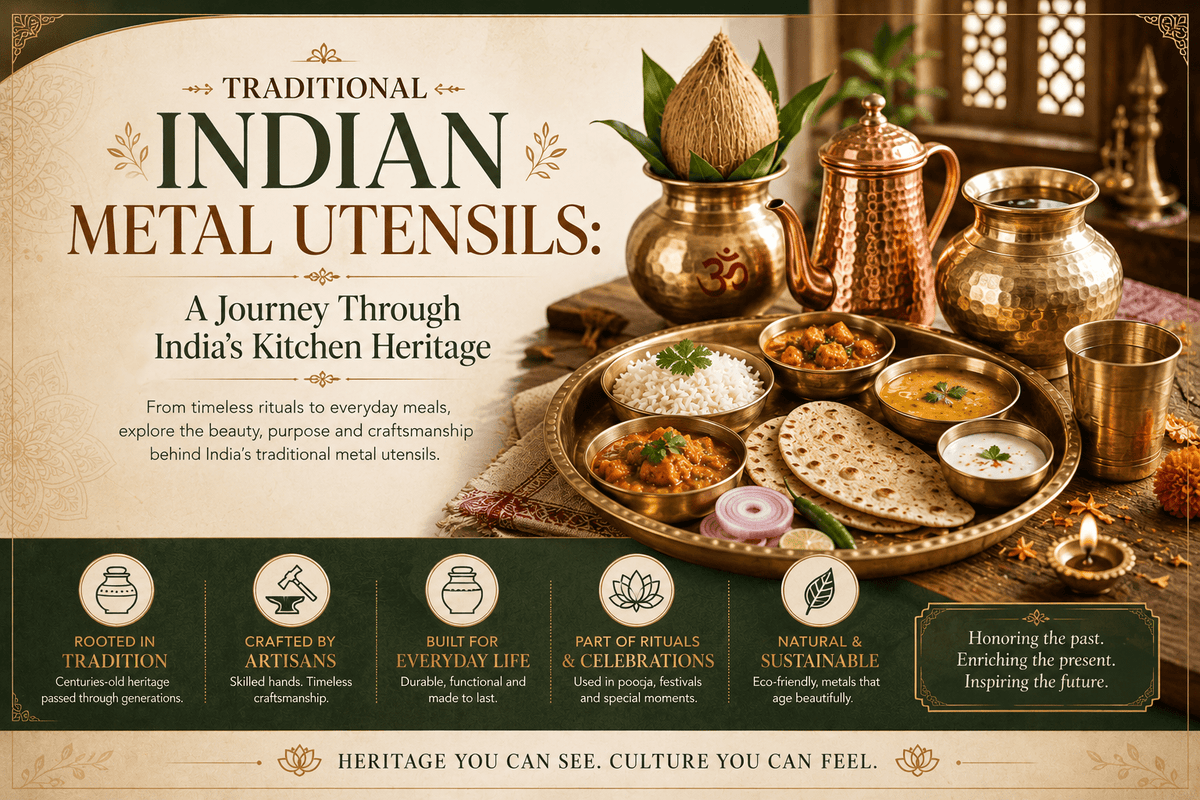
Traditional Indian Metal Utensils: A Journey Through India's Kitchen Heritage
Discover the rich heritage of traditional Indian metal utensils, from thalis and lotas to brass, copper and Kansa vessels. Explore their uses, craftsmanship and enduring place in modern Indian kitc...
Read more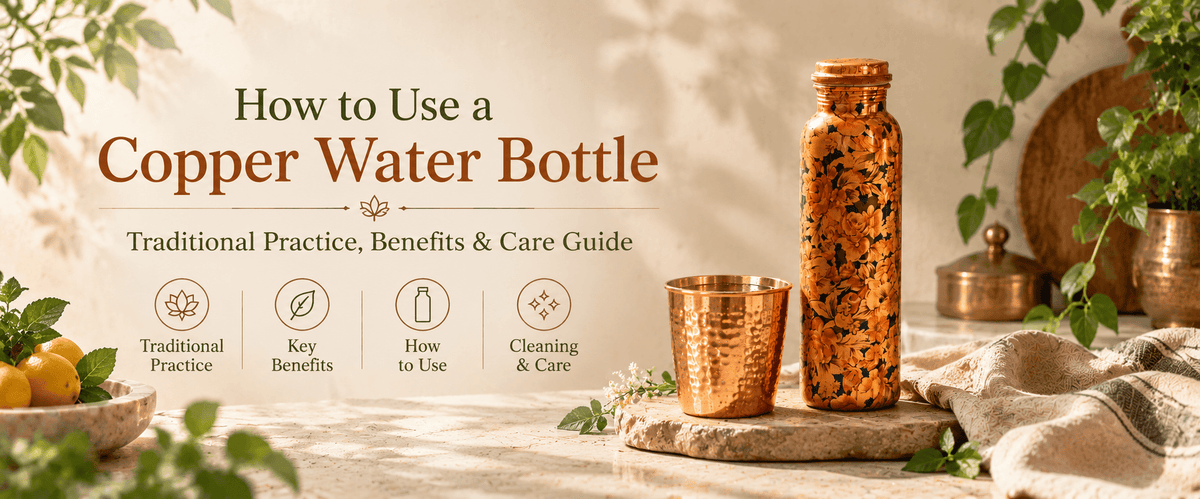
How to Use a Copper Water Bottle: Traditional Practice, Benefits & Care Guide
Learn how to use a copper water bottle correctly, understand the traditional practice of Tamra Jal, explore its benefits, and follow simple care and cleaning tips for everyday use.
Read more