

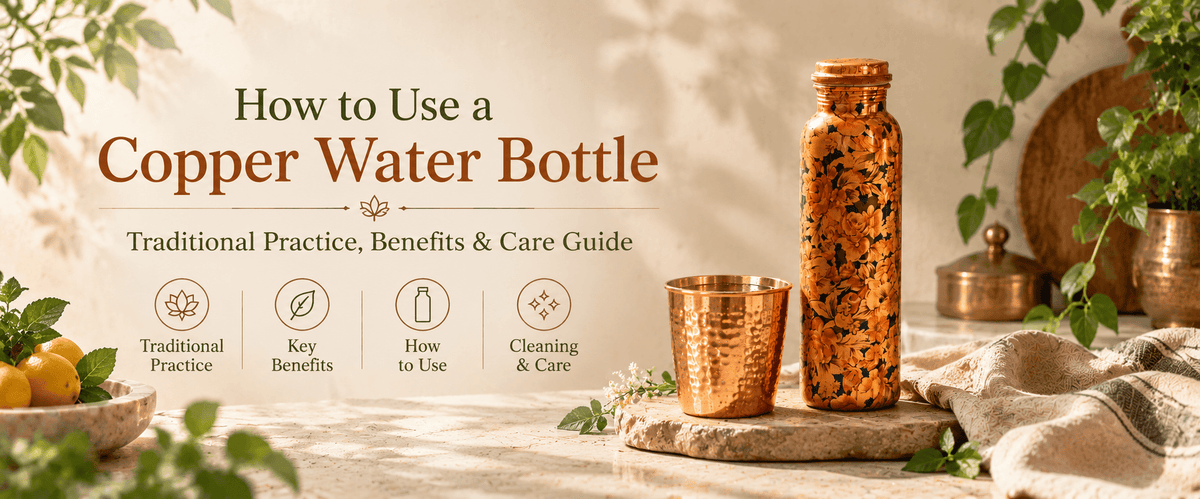
How to Use a Copper Water Bottle: Traditional Practice, Benefits & Care Guide
For generations, copper water bottles have been part of traditional Indian households. Known as Tamra Jal, water stored in a copper vessel has a long association with Indian wellness traditions and everyday routines. Today, copper bottles have also become popular among people looking for traditional alternatives to modern plastic and metal drinkware.
But using a copper water bottle correctly is important. How long should water be stored? Can you keep every type of drink in it? How often should it be cleaned? And what is the traditional significance of drinking water stored in copper?
This guide explains how to use a copper water bottle, its traditional benefits, proper storage practices and essential care tips so you can use your bottle responsibly and maintain its natural beauty.
What Is a Copper Water Bottle?

(Handcrafted copper water bottle with matching copper tumbler in a traditional Indian kitchen)
A copper water bottle is a drinking vessel made primarily from copper and designed for storing and carrying water. Traditional Indian copper vessels have been used for generations, particularly for storing drinking water.
Modern copper water bottles come in different shapes, sizes and finishes, from simple everyday bottles to handcrafted hammered designs.. Some are completely plain, while others feature hammered textures, engraved patterns or handcrafted details.
Unlike stainless steel or plastic bottles, copper develops a distinctive appearance over time. With regular use, its surface may become darker or develop natural patina. This is a normal characteristic of copper and can be managed through appropriate cleaning.
When purchasing one, always check that the product is specifically designed for drinking-water storage and follow the manufacturer's instructions.
What Is Tamra Jal?

(Copper water bottle used for traditional Tamra Jal water storage)
Tamra Jal refers to water traditionally stored in a copper vessel. The practice has roots in Indian traditions, where copper vessels were commonly used for storing water in homes.
The traditional idea is simple: water is kept in a copper vessel for a period of time and consumed afterward.
Copper is known to have antimicrobial properties, which is one reason copper vessels have historically attracted attention for water storage. To understand the material itself and its place in traditional Indian metalware, you can also explore our guide to what copper is and its traditional uses. However, traditional practices should not be confused with medical treatment, and drinking copper-stored water should not be considered a cure for diseases or health conditions.
The safest approach is to use a purpose-made copper water bottle according to its care and usage instructions.
How to Use a Copper Water Bottle Correctly
Using a copper water bottle is simple, but a few habits can help maintain both the bottle and the quality of your drinking experience.
1. Fill It With Plain Drinking Water
The best use for a traditional copper water bottle is plain drinking water.
Fill the bottle with clean drinking water and close the lid securely. Avoid using the bottle as a container for juices, carbonated drinks, milk, smoothies or other acidic beverages unless the manufacturer specifically states that it is suitable for them.
2. Allow the Water to Rest
Traditionally, water is stored in copper vessels for several hours before consumption. Many people incorporate this practice into their overnight routine by filling the bottle in the evening and drinking the water the following morning.
There is no need to keep water stored indefinitely. Freshly prepared drinking water is generally preferable.
3. Drink the Water Normally
Once the water has been stored according to the product's recommended usage instructions, it can be transferred to a glass or consumed directly from the bottle.
If the water develops an unusual taste, smell or appearance, discard it and clean the bottle before using it again.
4. Refill With Fresh Water
After drinking the stored water, rinse the bottle if necessary and refill it with fresh drinking water.
Avoid leaving stagnant water inside a copper bottle for extended periods.
Traditional Benefits of Copper Water

(Copper water bottle styled with fresh herbs and natural elements for a traditional wellness setting)
Copper has an important place in traditional Indian utensils and household practices, from water vessels and drinkware to other handcrafted copperware. The interest in copper water comes partly from the metal's naturally occurring properties.
Traditional Water-Storage Practice
Storing water in copper vessels is an established Indian household practice. For many families, using copper is also a way of maintaining a connection with traditional kitchen and wellness customs.
Naturally Antimicrobial Metal
Copper is known to possess antimicrobial properties. Copper surfaces can inhibit the survival of certain microorganisms under appropriate conditions. However, this should not be interpreted as a guarantee that copper-stored water is sterile or safe regardless of its source.
Always start with safe, potable drinking water.
Traditional Wellness Connection
Copper water is often associated with Ayurveda and traditional Indian wellness practices. For modern users, the appeal may be as much about preserving a familiar cultural practice as it is about choosing a reusable metal drinking vessel.
When Is the Best Time to Drink Copper Water?
There is no universally established medical requirement that copper water must be consumed at a particular time.
However, traditionally, many people prefer drinking water that has been stored overnight in a copper vessel in the morning.
If you follow this practice, focus on consistency and moderation rather than treating copper water as a therapeutic remedy.
For everyday hydration, your main priority should remain adequate intake of safe drinking water throughout the day.
What Should You Not Store in a Copper Bottle?

(Copper water bottle with plain water beside acidic drinks not intended for copper storage)
A copper bottle should generally be reserved for plain water, unless the manufacturer specifically permits other beverages.
Avoid storing:
-
Lemon water
-
Fruit juices
-
Carbonated drinks
-
Milk
-
Buttermilk
-
Smoothies
-
Alcoholic beverages
-
Highly acidic drinks
Acidic and reactive liquids can interact with copper and may affect the metal or the beverage.
This is one of the most important rules when learning how to use a copper water bottle.
How to Clean a Copper Water Bottle

(Cleaning a hammered copper water bottle with a soft cloth in an Indian kitchen)
Proper care is essential for maintaining a copper bottle. For a more detailed step-by-step routine, see our guide on how to clean and maintain copper water bottles.
Step 1: Empty the Bottle
After use, empty any remaining water rather than allowing it to sit inside for long periods.
Step 2: Rinse Thoroughly
Rinse the inside with clean water to remove any remaining residue.
Step 3: Use a Gentle Cleaning Method
Use a soft sponge or cloth and a mild cleaning solution recommended for copper. Avoid aggressive scrubbing that can leave scratches on the surface.
Traditional cleaning methods may include natural ingredients such as lemon and salt, but their suitability can depend on the bottle's finish. If your bottle has a special coating or decorative treatment, follow the manufacturer's instructions instead.
Step 4: Dry Completely
This step is often overlooked. After washing, dry the bottle thoroughly inside and outside before storing or refilling it.
Step 5: Polish When Needed
Copper naturally changes appearance with use. If you prefer a brighter finish, periodic polishing can restore some of its original shine.
A darker surface or developing patina does not necessarily mean the bottle is damaged.
How Often Should You Clean a Copper Water Bottle?

(Copper water bottle drying upside down on a cotton towel after cleaning)
A copper water bottle should be cleaned regularly rather than left unwashed between uses.
A practical routine is:
-
Empty it after use.
-
Rinse it regularly.
-
Clean it thoroughly as recommended by the manufacturer.
-
Dry it completely.
-
Polish periodically if you want to maintain a brighter appearance.
Do not use steel wool, harsh abrasive cleaners or aggressive chemicals unless specifically recommended for your particular bottle.
Copper Water Bottle vs Modern Bottles
Copper and stainless steel bottles each have different characteristics. If you're comparing the two specifically, see our detailed guide to copper water bottles vs stainless steel bottles.
| Feature | Copper Bottle | Stainless Steel Bottle | Glass Bottle |
|---|---|---|---|
| Traditional Indian appeal | High | Moderate | Low |
| Material character | Naturally develops patina | Usually remains consistent | Transparent |
| Everyday water storage | Suitable when intended for it | Suitable | Suitable |
| Maintenance | Requires regular care | Generally easy | Generally easy |
| Reusable | Yes | Yes | Yes |
| Best for | Traditional water-storage practice | General everyday use | Taste-neutral drinking |
The right choice ultimately depends on your lifestyle, preferences and how much maintenance you are comfortable with.
How to Choose a Copper Water Bottle
If you're planning to buy one, consider these points: If you're looking for a wider range of options, explore our collection of handcrafted copper water bottles before choosing a size, shape or finish.
Check the Construction
Look for sturdy construction, a secure lid and a comfortable shape for everyday handling.
Verify the Material
Choose a product with clear information about its copper material and intended use.
Consider the Capacity
Smaller bottles are convenient for carrying, while larger bottles can be useful for home use.
Look at the Finish
Plain, polished and hammered copper bottles offer different aesthetics and maintenance requirements.
Check Care Instructions
A quality product should provide clear instructions for cleaning, storage and suitable beverages.
Is a Copper Water Bottle Suitable for Everyday Use?
Yes, a copper water bottle can be incorporated into an everyday routine when it is designed for drinking water and used according to the manufacturer's instructions.
Its appeal combines practical reusability with the cultural heritage of traditional Indian water storage.
However, it should not replace medical treatment, and copper-stored water should not be viewed as a cure or guaranteed solution for health conditions.
Frequently Asked Questions
Can you drink water from a copper bottle every day?
A copper bottle can be used regularly for plain drinking water when the product is intended for this purpose and properly maintained.
How long should water stay in a copper bottle?
Traditional practices often involve storing water for several hours or overnight. Follow the manufacturer's specific instructions rather than storing water indefinitely.
Can I put lemon water in a copper bottle?
It is best to avoid lemon water and other acidic beverages unless the manufacturer specifically says the bottle is suitable for them.
How do I clean a copper water bottle?
Use a gentle cleaning method recommended for copper, rinse thoroughly and dry the bottle completely. Avoid harsh abrasives.
Why does my copper bottle turn dark?
Copper naturally reacts with air and moisture, which can cause its surface to darken or develop patina over time. This is a normal characteristic of copper.
Is copper water a replacement for medical treatment?
No. Copper-stored water is a traditional practice and should not be considered a treatment or cure for medical conditions.
Final Thoughts
Learning how to use a copper water bottle is mostly about keeping the practice simple: use it for plain drinking water, follow the manufacturer's storage recommendations, clean it regularly and keep it completely dry between uses.
Beyond its practical use, a copper bottle carries a connection to traditional Indian household practices and metal craftsmanship. If you want to bring this tradition into your everyday routine, explore our collection of copper drinkware for handcrafted bottles, glasses and other traditional water vessels.
Its warm appearance, reusable construction and distinctive character make it an appealing addition to a modern lifestyle while preserving an element of Indian heritage.
When used responsibly, a well-crafted copper water bottle can become a meaningful part of your everyday drinkware collection—bringing together tradition, craftsmanship and practical everyday use.
Read more
Brass Parat: Uses, Benefits & Traditional Indian Kitchen Significance
A brass parat is a timeless Indian kitchen essential traditionally used for kneading atta, preparing dough and mixing ingredients. Discover its uses, benefits, traditional significance, buying tips...
Read more
Copper Glass vs Stainless Steel Glass: Which Is Better for Drinking Water?
Copper glass vs stainless steel glass—which is better for drinking water? Compare their material, traditional use, durability, cleaning, appearance and everyday suitability to choose the right glas...
Read more