

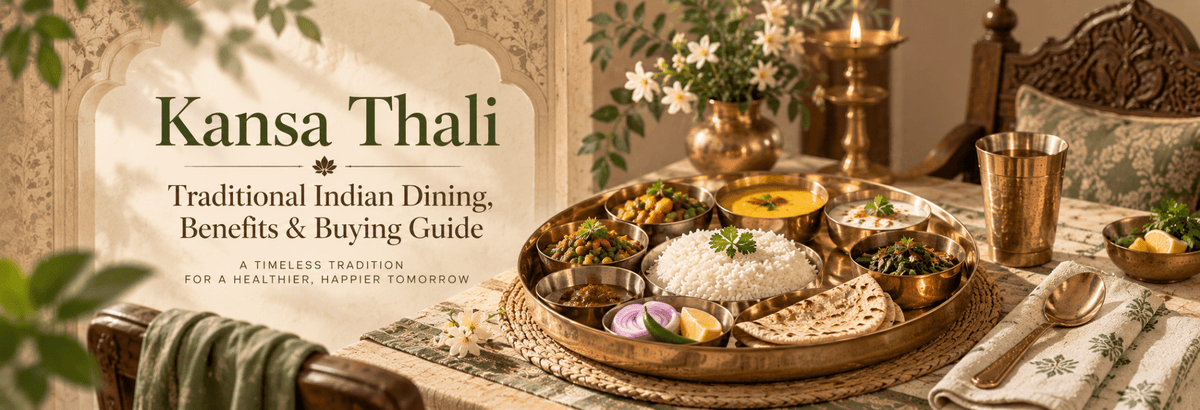
Kansa Thali: Traditional Indian Dining, Benefits & Buying Guide
A Kansa thali is more than a traditional Indian dinner plate. Made from Kansa, a bronze alloy traditionally associated with copper and tin, it brings together the beauty of handcrafted metalware, Indian dining traditions and timeless craftsmanship.
For generations, Indian households have used metal thalis to serve complete meals, festive food and special-occasion dishes. Today, Kansa dinnerware is becoming popular again among people who appreciate traditional tableware and want to bring a heritage-inspired feel to their dining experience.
But choosing a Kansa thali involves more than selecting a beautiful design. The material composition, craftsmanship, size, weight, finish, food-use suitability and care requirements should all be considered.
In this guide, we explore what a Kansa thali is, its role in traditional Indian dining, its benefits, how it compares with stainless steel and what to check before buying one.
What Is a Kansa Thali?

(Handcrafted Kansa thali with traditional Indian meal)
A Kansa thali is a traditional Indian dining plate made from Kansa, a bronze alloy generally associated with copper and tin.
A classic Kansa thali usually includes a large plate along with smaller bowls, known as katoris. These bowls can be used for serving dal, vegetables, curries, rice, chutneys, curd, sweets and other accompaniments.
Kansa has a distinctive warm bronze-golden appearance. Traditional pieces may feature handcrafted surfaces, subtle hammer marks and individually finished details that give each thali its own character.
Because compositions and manufacturing methods can vary, always check the product specifications and manufacturer's instructions before purchasing or using Kansa dinnerware.
Kansa Thali in Traditional Indian Dining

(`Kansa thali arranged in a traditional Indian dining setting`)
The Indian thali represents much more than a plate. It reflects a traditional way of presenting a complete meal.
A typical Indian meal may include rice, dal, vegetables, roti, curry, chutney, pickle, curd and sweets. A thali provides an organized way to serve these different dishes together while creating an attractive and balanced presentation.
Kansa adds a distinctive traditional character to this experience.
Its warm metallic tone works beautifully with brass spoons, copper vessels, wooden accessories and natural cotton textiles. Whether used for a family meal or a festive gathering, a Kansa thali can make traditional food presentation feel especially special.
Benefits of Choosing a Kansa Thali

(Kansa thali serving rice dal curry roti and traditional Indian foods)
1. Traditional Indian Heritage
Kansa has a long association with India's traditional metalworking and household utensils. This broader tradition of Indian metal utensils is explored in our guide to Traditional Indian Metal Utensils.
Choosing a Kansa thali allows you to bring some of this heritage into a modern dining setting. For people interested in Indian craftsmanship, the material itself can be an important part of the dining experience.
2. Distinctive Appearance
Unlike the bright silver appearance of stainless steel, Kansa has a naturally warm bronze tone.
Its understated metallic finish works particularly well with traditional interiors, wooden dining tables and other handcrafted Indian utensils.
3. Beautiful Meal Presentation
A thali makes it easy to present several components of a meal together.
The large plate and accompanying bowls provide dedicated spaces for dal, sabzi, rice, curries, chutneys and desserts. This makes Kansa particularly appealing to people who enjoy traditional Indian meals and elaborate food presentation.
4. Durable Metalware
Well-made metal dinnerware can provide long-term use when properly maintained.
A quality Kansa thali should feel sturdy and well balanced. Its actual durability depends on factors such as alloy composition, thickness, construction and manufacturing quality.
5. Handcrafted Character
Many traditional Kansa products showcase artisan techniques. Hammering, shaping and polishing can create subtle variations across the surface.
These small details make handcrafted Kansa different from completely uniform, mass-produced dinnerware.
6. Ideal for Festive Dining
The warm bronze appearance of Kansa makes it especially attractive for festivals, family celebrations and traditional gatherings.
It pairs naturally with brass diyas, copper serving vessels, flowers and traditional Indian table settings.
Does Eating in Kansa Have Health Benefits?
Kansa utensils are often promoted online with various health-related claims. However, these claims should be approached carefully rather than assuming that every Kansa thali provides specific medical or nutritional benefits.
The more established reasons to choose Kansa include its traditional heritage, craftsmanship, distinctive appearance, durability and dining experience.
The exact composition and finish of a Kansa product also matter. Always follow the manufacturer's food-use and care instructions. If you are comparing traditional Indian metals more broadly, our guide to Brass vs Copper vs Kansa explains the key differences between these materials.
Kansa should therefore be appreciated primarily as traditional dinnerware rather than treated as a substitute for medical or nutritional advice.
What Foods Can Be Served in a Kansa Thali?
Depending on the manufacturer's recommendations, a Kansa thali can be used to present many components of a traditional Indian meal.
A typical arrangement may include:
-
Rice
-
Dal
-
Seasonal sabzi
-
Roti or paratha
-
Curries
-
Chutney
-
Pickle
-
Curd
-
Sweets
-
Fresh fruits
For strongly acidic, salty or reactive foods, check the manufacturer's guidance before prolonged contact. Different alloys, finishes and manufacturing methods can affect food compatibility.
For more traditional serving ideas, you can also explore our brass dinnerware collection.
Do not automatically assume that every traditional metal thali is suitable for every type of food.
Kansa Thali vs Stainless Steel Thali

(Kansa thali compared with stainless steel thali)
| Feature | Kansa Thali | Stainless Steel Thali |
|---|---|---|
| Material | Traditional bronze alloy | Stainless steel |
| Appearance | Warm bronze-golden tone | Bright silver finish |
| Heritage appeal | Strong | Moderate |
| Craftsmanship | Often handcrafted | Usually uniform |
| Meal presentation | Traditional and elegant | Practical |
| Maintenance | Requires specific care | Generally easier |
| Character | Artisan variations possible | More consistent |
The right choice depends on your priorities.
Stainless steel is generally convenient and easy to maintain, while Kansa appeals to buyers looking for traditional craftsmanship and a distinctive dining experience. For another perspective on traditional Indian tableware, explore our brass dinnerware collection
How to Choose the Right Kansa Thali

(ifferent sizes of handcrafted Kansa thalis for traditional dining)
Before buying a Kansa thali, consider these factors:
1. Check the Material
Look for clear information about the material and composition. A reliable seller should provide product specifications rather than simply describing an item as traditional bronze.
2. Examine the Construction
Check the thickness, weight, edges and overall finishing. A well-made thali should feel stable and comfortable to handle.
3. Check What the Set Includes
Kansa thali sets can vary significantly, just as traditional Indian dinnerware can differ in material, construction and design. Some contain only a large plate, while others include several bowls and matching spoons.
Always check the exact number and size of pieces included.
4. Choose the Right Size
Consider how you normally serve meals. A compact thali can work well for individual dining, while larger designs may be better suited to elaborate meals and festive occasions.
5. Consider the Finish
Kansa may have a polished, brushed or handcrafted finish. Choose one that suits your dining style and understand how that particular finish should be maintained.
6. Read the Care Instructions
Traditional metalware can require more attention than stainless steel. The same principle applies to other traditional metal utensils, where the right cleaning method helps preserve the finish and craftsmanship. Understand the recommended cleaning method, food-use guidance and storage requirements before buying.
How to Clean and Maintain a Kansa Thali

(Cleaning and maintaining a handcrafted Kansa thali)
Proper care can help preserve the appearance and condition of your Kansa dinnerware.
After use, clean the thali using a gentle method recommended by the manufacturer. Avoid harsh abrasive materials that could scratch or change the finish.
Dry the thali thoroughly before storing it. Avoid leaving food residue or moisture on the surface for extended periods.
Kansa can naturally change in appearance over time because of exposure to air, moisture, handling and cleaning. This can become part of the character of traditional metalware.
Always give priority to the care instructions supplied with your particular Kansa thali.
Is Kansa Thali Good for Everyday Use?
A Kansa thali can be used for everyday dining when the specific product is designed for food use and maintained according to the manufacturer's instructions.
However, it may require more care than stainless steel.
For people who enjoy traditional Indian dining and appreciate handcrafted metalware, Kansa can be an excellent addition to everyday meals. Those who prioritize minimal maintenance may find stainless steel more convenient.
The choice ultimately depends on your lifestyle, dining habits, aesthetic preferences and willingness to maintain traditional metalware.
Kansa Thali for Festive and Traditional Occasions

(Kansa thali styled for a traditional Indian festive meal)
A Kansa thali can become especially meaningful during traditional meals and celebrations.
Imagine a festive table arranged with a Kansa thali filled with fragrant rice, dal, seasonal vegetables, roti, chutneys and sweets. Brass serving spoons, copper vessels, flowers and natural cotton textiles complete the setting. For complementary traditional tableware, explore our brass dinner sets
The result is more than food presentation—it creates a dining experience inspired by India's relationship with food, craftsmanship and hospitality.
Kansa dinnerware can therefore work beautifully for festivals, family gatherings, weddings, ceremonies and special dinners.
Frequently Asked Questions
What is a Kansa thali?
A Kansa thali is a traditional Indian dining set made from Kansa, a bronze alloy generally associated with copper and tin. It usually consists of a large plate and smaller bowls.
Is Kansa the same as bronze?
Kansa is a traditional Indian form of bronze generally associated with a copper-tin alloy. Exact composition can vary, so check the manufacturer's specifications.
Is Kansa thali good for everyday use?
Yes, a Kansa thali can be used for everyday dining when it is specifically made for food use and maintained according to the manufacturer's instructions.
What can you serve in a Kansa thali?
Depending on the product's food-use guidance, you can serve traditional meal components such as rice, dal, vegetables, roti, curries, chutneys and sweets.
Does Kansa have health benefits?
Kansa is traditionally valued as metalware, but broad health claims should not be treated as established medical benefits. Its primary appeal is its heritage, craftsmanship, appearance and dining experience.
How do you clean a Kansa thali?
Use gentle cleaning methods appropriate for the specific product and avoid harsh abrasive materials. Dry the thali thoroughly after washing.
Does Kansa change colour?
Yes. Traditional metal surfaces can naturally change in appearance because of air, moisture, handling and cleaning.
Is Kansa better than stainless steel?
Neither is universally better. Stainless steel generally offers easier maintenance, while Kansa provides traditional craftsmanship and a distinctive heritage dining experience.
Final Thoughts
A Kansa thali brings together traditional Indian dining, metal craftsmanship and the beauty of heritage tableware.
“Its warm bronze appearance, sturdy construction and classic thali format make it an appealing choice for anyone who wants to introduce traditional character to the dining table. If you are exploring different Indian metalware styles, you can also read our guide to Brass vs Copper vs Kansa.
However, choosing the right Kansa thali means looking beyond appearance. Consider the material composition, craftsmanship, size, food-use suitability, included pieces and maintenance requirements before buying.
Whether used for everyday meals or special celebrations, a well-made Kansa thali can turn an ordinary dining experience into a meaningful connection with India's rich culinary and artisanal heritage.
Read more
Copper Degchi: Traditional Indian Cooking Pot, Uses & Buying Guide
Discover the traditional copper degchi, its uses in Indian cooking, the importance of tin lining, care tips and what to check before buying a copper cooking pot.
Read more
Kansa Plate: Uses, Benefits, Care & How to Choose One
Discover the traditional Kansa plate, its uses and benefits, how to care for it, and what to consider when choosing one for everyday or festive Indian dining.
Read more