
Article: Kansa Plate: Uses, Benefits, Care & How to Choose One
%0AA%20Kansa%20plate%20is%20a%20traditional%20Indian%20piece%20of%20metalware%20that%20brings%20together%20practical%20dining,%20handcrafted%20artistry%20and%20culinary%20...)

Kansa Plate: Uses, Benefits, Care & How to Choose One

(Handcrafted Kansa plate arranged with a traditional Indian meal)
A Kansa plate is a traditional Indian piece of metalware that brings together practical dining, handcrafted artistry and culinary heritage. With its warm bronze-golden appearance and sturdy construction, a Kansa plate can add a distinctly traditional character to everyday meals and festive dining.
Unlike a complete Kansa thali, which usually includes a large plate with multiple bowls, a Kansa plate focuses on the main serving surface. It can be used for presenting Indian meals, snacks and festive foods, depending on the product's intended use.
Today, Kansa plates appeal to people looking for alternatives to conventional stainless steel dinnerware and those who appreciate traditional Indian craftsmanship.
However, choosing the right plate involves more than appearance. Material composition, thickness, finish, size, craftsmanship, food-use suitability and care requirements should all be considered.
In this guide, we'll explore Kansa plate uses, benefits, care tips and what to look for before buying one.
What Is a Kansa Plate?
A Kansa plate is a traditional Indian plate made from Kansa, a bronze alloy generally associated with copper and tin.
Kansa has historically been used to make household utensils and dining vessels. Depending on the artisan and manufacturing method, a Kansa plate may have a smooth polished surface, subtle hammering or decorative handcrafted details.
A plate can be used independently or as part of a larger Kansa dinnerware collection.
Because composition, finish and manufacturing methods can vary, always check the manufacturer's specifications and food-use instructions before using a particular Kansa plate.
Kansa Plate in Traditional Indian Dining
Indian dining has long featured metal plates and bowls for serving complete meals. A large plate provides a practical foundation for arranging rice, dal, vegetables, roti, curries and accompaniments.
A Kansa plate adds a warm bronze tone to this traditional presentation.
Picture a freshly prepared Indian meal served on a handcrafted metal plate with small bowls of dal and curry, a traditional spoon and a natural cotton napkin. The setting feels connected to Indian dining heritage while remaining suitable for a contemporary home.
Kansa plates can also be used during festive meals, family gatherings and special occasions, where traditional presentation becomes part of the dining experience.
They can also be paired with other traditional pieces such as brass dinnerware to create a coordinated Indian dining setting.
Common Uses of a Kansa Plate

(Kansa plate used for serving rice dal roti curry and traditional Indian foods)
A Kansa plate can serve several dining and serving purposes when the particular product is intended for food use.
1. Everyday Indian Meals
A Kansa plate can provide a traditional setting for meals such as rice, dal, vegetables, roti and suitable accompaniments. Its broad surface makes it convenient for arranging several components together.
2. Festive Dining
During festivals and family celebrations, a Kansa plate can complement traditional food while adding handcrafted character to the table.
3. Serving Snacks and Sweets
Depending on the manufacturer's recommendations, Kansa plates can also be used for presenting snacks, sweets and other suitable foods.
4. Traditional Meal Presentation
A standalone Kansa plate can recreate part of the traditional thali experience without requiring a complete set. Small bowls can be arranged around it for dal, curry, vegetables or accompaniments.
5. Special Family Occasions
A handcrafted Kansa plate can also be brought out for family gatherings, traditional ceremonies and celebrations where heritage-inspired tableware adds character to the setting.
Benefits of Choosing a Kansa Plate
Traditional Indian Craftsmanship
Kansa has a strong connection with India's traditional metalworking heritage. Handcrafted pieces may show subtle variations in texture and finishing, giving each plate individual character. Learn more about India's broader metalware tradition in our guide to Traditional Indian Metal Utensils.
Warm Bronze-Golden Appearance
Kansa has a distinctive warm metallic tone that creates a softer, more traditional appearance than bright stainless steel. It pairs naturally with wood, cotton textiles, brass utensils and other Indian tableware.
Durable Metal Construction
A well-made Kansa plate can provide long-term use when properly handled and maintained. Durability depends on factors such as material composition, thickness, construction and finishing.
Versatile Dining Style
A Kansa plate can work with both traditional and contemporary dining arrangements. It can be used for a simple family meal or styled with matching bowls and traditional accessories for festive occasions.
Heritage-Inspired Table Setting
For a traditional Indian dining space, Kansa can become a natural focal point. Its warm finish works particularly well alongside brass, copper, wood, flowers and natural fabrics.
Does Eating on a Kansa Plate Have Health Benefits?
Kansa dinnerware is sometimes associated with various health claims. However, broad claims about specific medical or nutritional benefits should be approached carefully.
The practical reasons to choose Kansa include its traditional heritage, craftsmanship, distinctive appearance, durability and dining experience.
The exact composition and finish of a product also matter. If you want to understand how Kansa compares with other traditional metals, read our guide to Brass vs Copper vs Kansa. Always follow the manufacturer's instructions regarding food use, cleaning and maintenance.
A Kansa plate should therefore be appreciated as traditional metalware rather than treated as a substitute for medical or nutritional advice.
What Foods Can Be Served on a Kansa Plate?
Food compatibility depends on the particular Kansa product and the manufacturer's recommendations.
A traditional meal may include:
-
Rice
-
Dal
-
Vegetables
-
Roti or paratha
-
Suitable curries
-
Chutney
-
Pickle
-
Sweets
-
Fruits
-
Dry snacks
For foods that are strongly acidic, salty or otherwise reactive, check the manufacturer's guidance before prolonged contact.
For readers exploring other traditional tableware options, our traditional Indian dinnerware collection offers another way to create a heritage-inspired dining setup.
Do not assume that every Kansa plate is suitable for every type of food simply because it is made from traditional metal.
Kansa Plate vs Stainless Steel Plate

(Kansa plate compared with a stainless steel plate)
| Feature | Kansa Plate | Stainless Steel Plate |
|---|---|---|
| Material | Traditional bronze alloy | Stainless steel |
| Appearance | Warm bronze-golden tone | Bright silver |
| Heritage appeal | Strong | More modern |
| Craftsmanship | Often handcrafted | Generally uniform |
| Dining style | Traditional and elegant | Practical and functional |
| Maintenance | Requires specific care | Generally easier |
| Character | Possible artisan variations | Consistent appearance |
Neither material is universally better. For a more traditional dining setup, you can also explore brass dinner sets, which offer another handcrafted metalware option for Indian meals.
Stainless steel is generally easier to maintain and highly practical, while Kansa appeals to buyers who value traditional craftsmanship, heritage aesthetics and a distinctive dining experience.
How to Choose the Right Kansa Plate
Before buying a Kansa plate, consider these factors:
1. Check the Material Composition
Look for clear information about what the plate is made from. A reliable product description should provide material details rather than relying only on terms such as "traditional bronze."
2. Consider Thickness and Weight
A quality plate should feel sturdy and balanced. Make sure the weight is comfortable for the intended users, particularly if the plate will be handled frequently.
3. Choose the Right Size
Consider how you intend to use the plate. A smaller Kansa plate may work well for snacks or lighter meals, while a larger design provides more room for a complete Indian meal.
4. Examine the Finish
Kansa plates may have polished, matte, hammered or decorative surfaces. Choose a finish that suits your dining style and check how it should be maintained.
5. Check Food-Use Suitability
Make sure the product is specifically intended for food use. Read the manufacturer's recommendations regarding suitable foods, cleaning and maintenance.
6. Look at the Craftsmanship
Examine the rim, surface, edges and overall construction. Handcrafted variations can be part of the appeal, but the plate should still be well finished and comfortable to use.
If you prefer a complete traditional dining arrangement rather than a standalone plate, you can also explore a Kansa thali.
How to Clean and Maintain a Kansa Plate

(Cleaning and caring for a handcrafted Kansa plate with a soft cloth)
Proper maintenance can help preserve the appearance of your Kansa plate.
After use, clean it using a gentle method recommended by the manufacturer. Avoid aggressive abrasive materials that could scratch or alter the surface.
Do not leave food residue or moisture sitting on the plate for extended periods. Wash it appropriately and dry it thoroughly before storing.
Kansa can naturally change in colour and appearance over time because of air, moisture, handling and cleaning. This gradual change can become part of the character of traditional metalware.
If your plate has a special finish or decorative detailing, follow the manufacturer's care instructions rather than applying a generic cleaning method.
Is a Kansa Plate Good for Everyday Use?
A Kansa plate can be used for everyday dining when it is specifically made for food use and cared for according to the manufacturer's instructions.
It generally requires more attention than stainless steel. However, for people who appreciate traditional Indian dining and handcrafted products, using Kansa regularly can make everyday meals feel more connected to Indian culinary heritage.
If convenience and minimal maintenance are the highest priorities, stainless steel may be the more practical choice.
Kansa Plate for Gifting and Special Occasions

(Kansa plate styled for a traditional Indian festive meal)
A beautifully crafted Kansa plate can also make a thoughtful traditional gift.
Its heritage character makes it suitable for housewarmings, weddings, anniversaries, festive gifting and family milestones.
A Kansa plate can be presented on its own or paired with matching bowls, spoons or other traditional metalware to create a more complete gift.
For gifting, consider the finish, craftsmanship, presentation and packaging along with the functional specifications.
Frequently Asked Questions
What is a Kansa plate?
A Kansa plate is a traditional Indian dining plate made from Kansa, a bronze alloy generally associated with copper and tin.
Is Kansa the same as bronze?
Kansa is traditionally considered a form of Indian bronze, generally associated with a copper-tin alloy. Exact composition can vary, so check the manufacturer's specifications.
Can you eat directly from a Kansa plate?
Yes, when the particular product is designed and approved for food use. Always follow the manufacturer's food-use instructions.
What foods can be served on a Kansa plate?
Depending on the manufacturer's guidance, suitable foods may include rice, dal, vegetables, roti, curries, snacks and sweets.
Is Kansa better than stainless steel?
Neither is universally better. Stainless steel is generally easier to maintain, while Kansa offers traditional craftsmanship, distinctive appearance and heritage appeal.
How do you clean a Kansa plate?
Use gentle cleaning methods recommended for the specific product. Avoid harsh abrasives and dry the plate thoroughly after washing.
Does Kansa change colour over time?
Yes. Traditional metal surfaces can naturally change in appearance because of air, moisture, handling and cleaning.
Is a Kansa plate good for gifting?
Yes. A handcrafted Kansa plate can be a thoughtful gift for housewarmings, weddings, festivals and other special occasions.
Final Thoughts

(Happy Indian family enjoying a traditional festive meal together on handcrafted Kansa and brass dinnerware)
A Kansa plate combines traditional Indian dining with the beauty of handcrafted metalwork. Its warm bronze-golden appearance, sturdy construction and heritage character make it a distinctive alternative to conventional dinnerware.
Whether you want one for everyday Indian meals, festive dining or traditional gifting, choose based on more than appearance.
Consider its material composition, size, thickness, craftsmanship, finish, food-use suitability and care requirements before buying.
For those who appreciate India's culinary and artisanal traditions, a Kansa plate can become more than a piece of dinnerware. It can be a simple, functional way to bring the warmth of Indian heritage to the modern dining table.
Read more
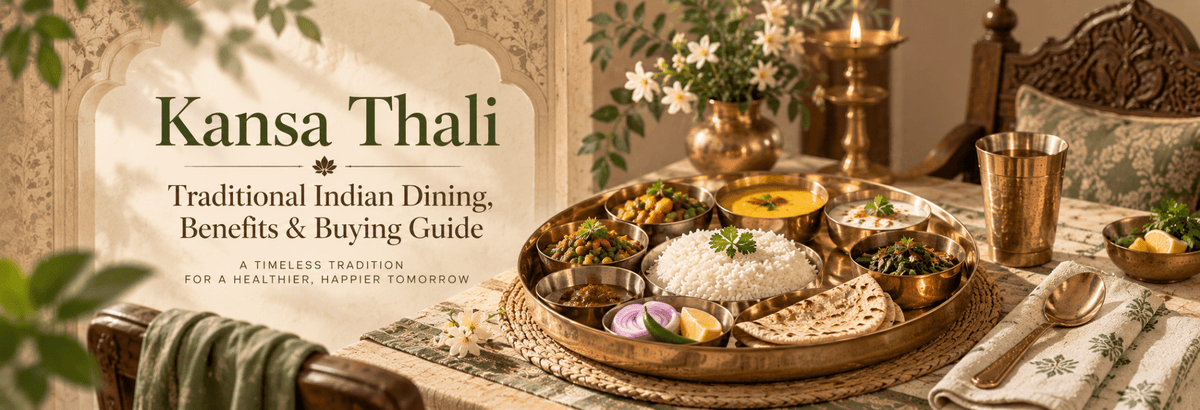
Kansa Thali: Traditional Indian Dining, Benefits & Buying Guide
Discover the beauty of Kansa thali for traditional Indian dining, including its heritage, benefits, food-use considerations, care tips and buying guide.
Read more