

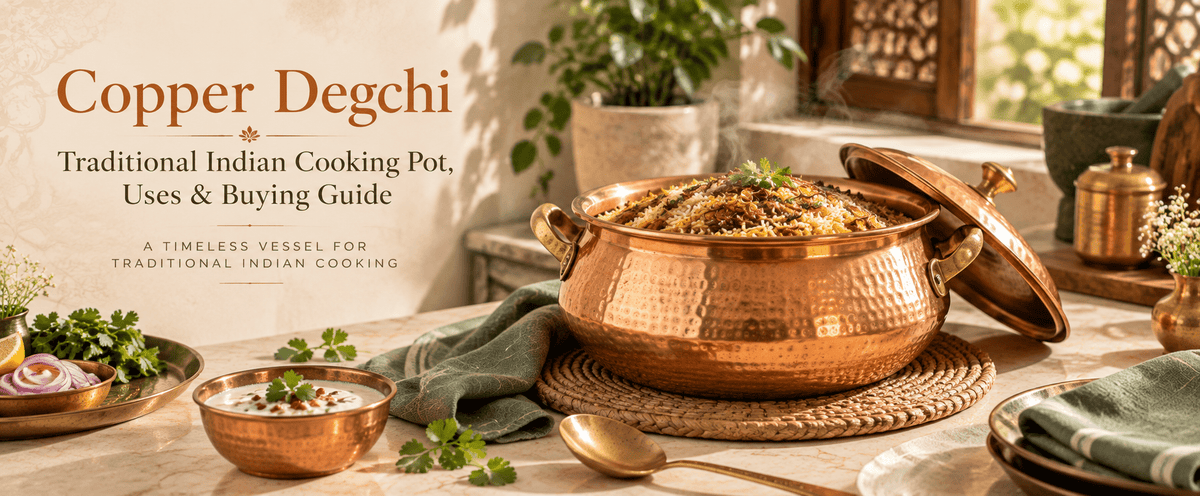
Copper Degchi: Traditional Indian Cooking Pot, Uses & Buying Guide
A copper degchi is more than a traditional cooking vessel—it is a beautiful reflection of India's long-standing metalworking and culinary heritage. With its warm reddish finish, deep shape and handcrafted character, the copper degchi brings traditional copper cookware into the modern Indian kitchen.
Used for cooking and serving, the degchi has traditionally been valued for its practical shape and generous capacity. Today, handcrafted copper degchis are also popular among people who appreciate heritage cookware, artisan craftsmanship and traditional dining.
However, choosing the right copper degchi requires more than looking at its appearance. Its construction, interior lining, size, intended use, food compatibility and maintenance requirements all matter.
In this guide, we explore what a copper degchi is, how it is used, why tin lining matters and what to look for before buying one.
What Is a Copper Degchi?

(Handcrafted copper degchi in a traditional Indian kitchen)
A copper degchi is a deep, rounded Indian cooking or serving vessel traditionally made from copper. Its shape provides enough room for preparing foods that require stirring, simmering or cooking in larger quantities.
Copper is well known for its ability to conduct heat efficiently, which is one reason it has historically been used for cookware. Traditional copper cooking vessels can range from deep cooking pots to copper bowls and serving pieces.
The construction can differ between vessels. Some copper degchis are designed specifically for cooking, while others may be intended primarily for serving or decorative purposes. Always check the manufacturer's specifications before using a particular vessel for food preparation.
Copper Degchi in Traditional Indian Cooking

(Copper degchi used for traditional Indian cooking)
Indian kitchens have long featured vessels made from materials such as copper, brass and other traditional metals. These utensils were shaped according to the requirements of everyday cooking, storage and serving.
The deep body of a degchi makes it practical for dishes that need space for simmering and mixing. Its traditional form also allows it to move naturally from the kitchen to the dining table when the vessel is designed for both cooking and serving.
Handcrafted copper cookware can also showcase the work of skilled metal artisans. Hammered surfaces, shaped rims and subtle variations in finishing can give individual vessels their distinctive appearance.
For people who enjoy combining traditional kitchenware with contemporary interiors, a copper degchi can provide both functional character and a strong connection to Indian heritage.
Common Uses of a Copper Degchi
A copper degchi can be used for shallow or open-pan cooking, a copper kadai may be a more suitable traditional vessel. Traditional cooking and serving purposes, provided the particular vessel is constructed and recommended for that use.
1. Cooking Rice and Pulao
The deep shape of a degchi makes it convenient for preparing rice-based dishes when the vessel is designed for cooking. It provides enough space for rice and other ingredients to cook without excessive crowding.
2. Preparing Dal
Dal is a staple in many Indian households, and the generous depth of a degchi can be useful when preparing family-sized portions. The shape provides room for simmering and stirring.
3. Cooking Curries
A properly constructed and appropriately lined copper degchi can be used for suitable curry preparations. Its broad opening makes stirring easier, while the deep body provides good capacity.
4. Preparing Slow-Cooked Dishes
Traditional Indian cooking often involves simmering food over controlled heat. A suitable copper degchi can complement this cooking style while adding a heritage feel to the kitchen.
5. Serving Food
Some copper degchis can also be used as attractive serving vessels. Their warm metallic appearance works particularly well for festive meals, family gatherings and traditional-inspired dining.
Why Is Tin Lining Important?

(Copper degchi with silver-toned tin-lined interior)
One of the most important things to understand before buying copper cookware is interior lining.
Copper can react with certain foods, particularly acidic ingredients. Traditional copper cooking vessels may therefore have a protective tin lining, also called kalai, between the food and the copper surface.
The lining is an important consideration when selecting a copper degchi intended for cooking.
Before buying, check:
-
Whether the interior is lined
-
What material is used for the lining
-
Whether the vessel is specifically designed for cooking
-
Which foods are recommended
-
How the lining should be maintained
-
Whether the manufacturer provides specific care instructions
You should not assume that every copper vessel is suitable for cooking or for every type of food.
If a tin lining becomes significantly worn or damaged, the vessel may require professional assessment or relining before continued cooking use.
Benefits of Choosing a Traditional Copper Degchi
Traditional Craftsmanship
Handcrafted copper cookware reflects the skills of traditional metal artisans. Hammered surfaces and carefully finished details can make each vessel visually distinctive.
Distinctive Appearance
Copper has a naturally warm reddish-golden tone that adds character to both traditional and contemporary kitchens.
Efficient Heat Conductivity
Copper is recognized for its efficient heat conductivity, one of its defining properties as a cookware material.
Versatile Presentation
When a vessel is designed for both cooking and serving, a copper degchi can transition from the kitchen to the dining table beautifully.
Heritage-Inspired Kitchen Style
Copper cookware pairs naturally with brass utensils, wooden accessories, natural fabrics and traditional Indian dinnerware, making it a good fit for heritage-inspired kitchens and dining spaces.
Copper Degchi vs Stainless Steel Pot

(Copper degchi and stainless steel cooking pot comparison)
Copper and stainless steel provide different cookware experiences. The right choice depends on your priorities.
| Feature | Copper Degchi | Stainless Steel Pot |
|---|---|---|
| Appearance | Warm reddish copper tone | Silver metallic finish |
| Heritage appeal | Strong traditional character | More modern |
| Heat conductivity | Excellent | Lower than copper |
| Interior | May be tin-lined | Generally stainless steel |
| Maintenance | Requires more care | Usually easier |
| Craftsmanship | Often handcrafted | Commonly machine-made |
| Dining presentation | Traditional and decorative | Mainly functional |
If you prefer convenience and minimal maintenance, stainless steel may be more practical. If you value handcrafted design and traditional Indian cookware, a copper degchi offers a very different experience.
Who Is a Copper Degchi Best For?
A copper degchi can be a good choice for:
-
People who appreciate traditional Indian cookware
-
Buyers interested in handcrafted kitchenware
-
Families preparing larger quantities of food
-
Those who enjoy heritage-inspired dining
-
Homeowners creating a traditional or Indian-style kitchen
-
People looking for cookware that can also make an attractive serving piece
The most important factor is choosing a vessel that matches your intended use and following its specific care and food-use instructions.
How to Choose the Right Copper Degchi

(Different sizes of handcrafted copper degchi for choosing the right pot)
Before purchasing a copper cooking pot, consider these important factors.
1. Check the Construction
Look for clear information about the copper material, thickness and craftsmanship. A well-made vessel should feel sturdy and substantial.
2. Check the Interior Lining
If you intend to cook with the degchi, carefully check whether it has an appropriate interior lining and what foods it is designed to accommodate.
3. Choose the Right Capacity
Think about how much food you normally prepare.
A smaller degchi may work well for regular family meals, while larger capacities can be useful for guests, celebrations and festive cooking.
4. Examine the Handles
If the vessel has handles, make sure they are firmly attached and practical to use. Sturdy construction becomes particularly important with larger vessels.
5. Look at the Finish
Copper naturally changes appearance over time. Some buyers prefer a polished finish, while others appreciate the character that develops as copper ages.
6. Consider Maintenance
Copper generally requires more care than many modern cookware materials. Understand the cleaning, drying and storage requirements before purchasing.
If you're looking for a traditional vessel for your kitchen, explore our copper degchi and check its capacity, construction, interior lining and care information before choosing.
How to Clean and Maintain a Copper Degchi

(Cleaning and maintaining a traditional copper degchi with a soft cloth)
Proper care can help preserve the appearance and condition of a copper degchi.
Use gentle cleaning methods and avoid harsh abrasive scrubbers that can scratch the surface.
If your vessel has a tin lining, take extra care with the interior. Aggressive scrubbing can damage the lining.
After washing, dry the degchi thoroughly before storing it. Keep it in a dry place and avoid placing heavy utensils inside if they could scratch the surface.
Copper can naturally develop changes in colour and patina over time. This is part of the material's character, but the exact cleaning method should depend on the finish and construction of your vessel.
Most importantly, follow the manufacturer's care instructions, especially when the degchi has a tin-lined interior.
Is a Copper Degchi Good for Everyday Cooking?
A copper degchi can be suitable for everyday cooking when the specific vessel is designed for cooking and is used according to the manufacturer's instructions.
Before using one regularly, pay attention to its:
-
Interior lining
-
Food compatibility
-
Heating instructions
-
Cleaning requirements
-
Overall construction
If your priority is easy maintenance, stainless steel may be more convenient. If you enjoy traditional craftsmanship and want to bring the character of Indian heritage cookware into your kitchen, a copper degchi can be an appealing choice.
Copper Degchi for Traditional Indian Dining
One of the most attractive qualities of a copper degchi is its ability to connect cooking with presentation.
Picture a traditional dining table with a copper degchi filled with rice or a freshly prepared dish, surrounded by copper bowls, brass spoons, traditional thalis and soft cream or sage-green textiles.
The warm copper tones create an inviting dining environment while reflecting India's traditional approach to serving food.
For this reason, copper degchis can be particularly suitable for festive meals, family gatherings, celebrations and heritage-inspired dining spaces.
Frequently Asked Questions
What is a copper degchi?
A copper degchi is a deep, traditionally shaped Indian cooking or serving vessel made from copper. Its design makes it suitable for preparing or serving various dishes, depending on its construction.
Can you cook in a copper degchi?
Some copper degchis are specifically designed for cooking, while others are intended for serving or decorative use. Always check the manufacturer's product specifications before cooking.
What is a tin-lined copper degchi?
A tin-lined copper degchi has a protective tin layer on the interior. This lining helps create a barrier between food and the copper surface.
What is kalai?
Kalai traditionally refers to the process of applying a tin lining to the inside of copper or brass utensils.
Can acidic food be cooked in an unlined copper degchi?
Unlined copper should not automatically be considered suitable for acidic foods. Ingredients such as tomatoes, citrus and vinegar can react with copper. Follow the manufacturer's food-use guidance.
How do you clean a copper degchi?
Use gentle cleaning methods and avoid abrasive scrubbing. If the degchi has a tin lining, take particular care with the interior to avoid damaging it.
Does a copper degchi change colour?
Yes. Copper can naturally develop changes in colour and patina due to air, moisture, handling and cleaning.
What size copper degchi should I buy?
Choose a capacity according to the quantity of food you normally prepare. Larger sizes are useful for family gatherings and entertaining.
Is a copper degchi better than stainless steel?
Neither is universally better. Copper offers traditional craftsmanship and excellent heat conductivity, while stainless steel is generally easier to maintain. Your choice should depend on your intended use and preferences.
Final Thoughts

(Copper degchi centerpiece on a traditional Indian dining table)
A copper degchi brings together traditional Indian cookware design, practical form and the beauty of handcrafted metalwork. Its deep shape, warm copper finish and heritage character make it an attractive addition to a traditional or contemporary kitchen.
However, buying copper cookware should involve more than choosing a beautiful vessel. Consider the construction, interior lining, capacity, intended use, food compatibility and maintenance requirements before making your decision.
For those who appreciate handcrafted cookware and India's rich culinary traditions, a well-made copper degchi can become more than a kitchen vessel. It can be a functional piece of heritage that brings traditional character to everyday cooking and dining.
Read more
Copper Bowls: Uses, Benefits, Care & Traditional Indian Kitchen Practices
Discover the uses, benefits and care of copper bowls while exploring their place in traditional Indian kitchens. Learn how to choose, use and maintain handcrafted copper bowls for everyda...
Read more
Kansa Thali: Traditional Indian Dining, Benefits & Buying Guide
Discover the beauty of Kansa thali for traditional Indian dining, including its heritage, benefits, food-use considerations, care tips and buying guide.
Read more