

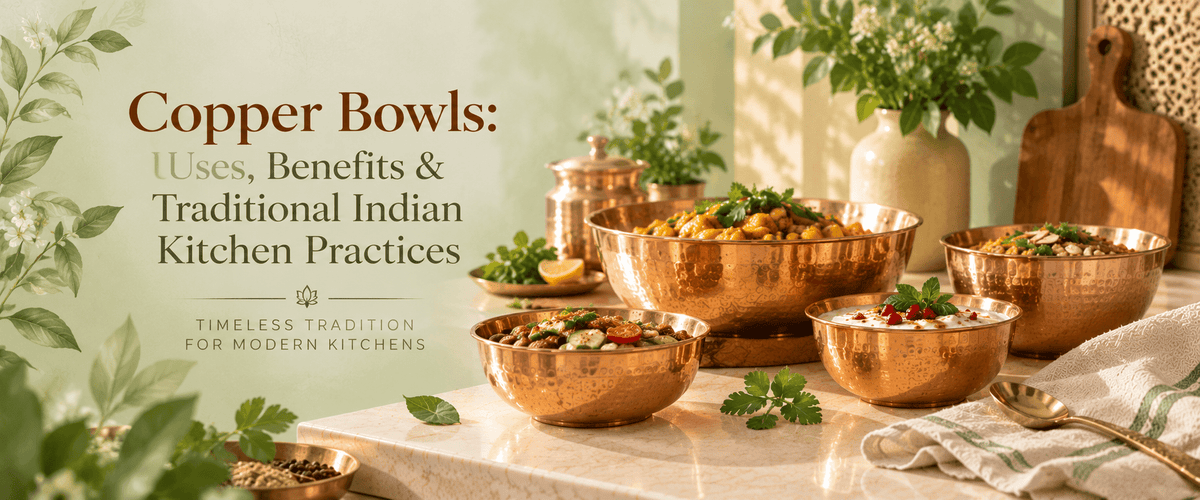
Copper Bowls: Uses, Benefits, Care & Traditional Indian Kitchen Practices
Copper bowls have a distinctive place in traditional Indian kitchens. Known for their warm reddish-golden appearance and connection with Indian metal craftsmanship, copper utensils have been used for generations for serving, preparing, storing, and presenting food.
Today, copper bowls are finding their way into modern homes not only because of their traditional appeal but also because they bring a handcrafted character to everyday dining and kitchen spaces.
However, using copper kitchenware requires some understanding. Not every food is suitable for direct contact with unlined copper, and proper cleaning and maintenance are important for preserving the metal.
In this guide, we explore copper bowl uses, benefits, traditional Indian kitchen practices, food considerations, cleaning methods, and buying tips so you can make a more informed choice.
Table of Contents
-
What Are Copper Bowls?
-
Why Copper Bowls Are Used in Traditional Indian Kitchens
-
Common Uses of Copper Bowls
-
Benefits of Copper Bowls
-
Copper Bowls in Traditional Indian Kitchen Practices
-
What Foods Can You Put in a Copper Bowl?
-
Foods to Avoid in Unlined Copper Bowls
-
Copper Bowl vs Brass Bowl
-
How to Clean and Care for Copper Bowls
-
How to Choose a Copper Bowl
-
Frequently Asked Questions
-
Final Thoughts
What Are Copper Bowls?

(Handcrafted copper bowls arranged in a traditional Indian kitchen)
A copper bowl is a kitchen or serving vessel made from copper or copper-based construction. Copper is valued for its distinctive colour, workability, and long history in Indian metalware.
Traditional Indian copper utensils may be handcrafted, hammered, polished, or shaped by skilled artisans. These finishing techniques can give individual pieces subtle variations that contribute to their handmade character.
Copper bowls can be used for appropriate food preparation and serving, but their suitability depends on whether the cooking or food-contact surface is lined or unlined. Always check the manufacturer's specifications before using a copper vessel with a particular food.
For a broader introduction to copper and its place in Indian metalware, you can connect this article to your copper education content.
Copper bowls are part of a wider range of copper kitchenware designed around traditional Indian metal craftsmanship.
Why Copper Bowls Are Used in Traditional Indian Kitchens
Copper has been associated with Indian household utensils for generations. Before modern stainless steel became widespread, Indian kitchens commonly used different metals for different purposes.
Copper vessels were valued for their durability, distinctive appearance, and craftsmanship.
A copper bowl also adds something visually different to the dining table. Its natural reddish-golden tone can complement traditional Indian servingware, brass utensils, wooden accessories, and handcrafted dinnerware.
This connection between Indian kitchen heritage and modern dining is one reason copper kitchenware continues to appeal to homeowners who appreciate traditional craftsmanship.
Common Uses of Copper Bowls

(Copper bowls used for serving salad, dry fruits, vegetables and herbs)
The exact use of a copper bowl depends on its construction and whether it has a suitable lining.
1. Serving Food
Copper bowls for cooking can be useful for appropriate food preparation and serving when their construction and food-contact surface are suitable.
They work particularly well for traditional dining settings, festive meals, and heritage-inspired table arrangements.
2. Serving Dry Foods
Suitable dry foods and ingredients can be presented in copper bowls, making them useful for traditional kitchen and dining setups.
3. Food Presentation
The warm colour of copper creates an attractive contrast with colourful Indian dishes. Copper bowls can therefore be used as part of an elegant dining presentation.
4. Kitchen and Dining Décor
Even when not being used directly with food, handcrafted copper bowls can add warmth and traditional character to kitchen shelves, dining tables, or display arrangements.
5. Traditional Occasions
Copper utensils can also complement traditional Indian celebrations and ceremonial settings where metalware forms part of the overall presentation.
The key is to distinguish between decorative use, serving use, and direct food-contact use.
Benefits of Copper Bowls
Traditional Craftsmanship
One of the biggest attractions of copper bowls is their connection with Indian metalworking traditions. Handcrafted pieces can feature hammered textures, hand finishing, and subtle variations that give each item an individual appearance.
Distinctive Appearance
Copper develops a natural patina over time. Depending on exposure to air, moisture, handling, and cleaning, its surface may gradually change in colour.
For many people, this changing appearance is part of the charm of traditional copperware.
Durable Material
Copper is a long-used material for household metalware. A well-made copper bowl can become a long-lasting addition to a kitchen or dining collection when it is used and maintained appropriately.
Heritage-Inspired Dining
Copper bowls can bring a traditional Indian aesthetic to contemporary dining. They pair naturally with brass, kansa, wood, ceramic, and other materials commonly used in heritage-inspired table settings.
Important: Copper should not be treated as automatically suitable for every food simply because it is a traditional material. Food compatibility depends on the vessel's construction and lining.
Traditional copper utensils can also bring the same handcrafted character to other parts of the kitchen.
Copper Bowls in Traditional Indian Kitchen Practices

(Traditional Indian meal served in handcrafted copper bowls)
Traditional Indian kitchens often used different metals according to regional customs, cooking methods, and household practices.
Copper was particularly associated with utensils and vessels valued for their craftsmanship and practical characteristics.
Today, copper bowls can preserve part of this visual and cultural tradition while fitting into modern kitchens.
For a contemporary home, a copper bowl can serve two purposes: it can be a functional serving piece when appropriate, while also reflecting the craftsmanship and material traditions of Indian metalware.
This makes copper kitchenware particularly appealing to people who want their everyday dining space to have a stronger connection with Indian heritage.
What Foods Can You Put in a Copper Bowl?
This depends on whether the copper bowl is lined or unlined.
For an unlined copper bowl, you should not assume that every food is suitable for direct contact. Manufacturer guidance should always take priority.
For lined copperware, the lining provides a different food-contact surface, and its care requirements may also differ.
Before using a copper bowl, check:
-
Whether it is lined or unlined
-
What the interior lining material is
-
The manufacturer's recommended uses
-
Whether acidic or reactive foods should be avoided
-
How the vessel should be cleaned
If you're interested in expanding beyond bowls, explore our copper cookware collection for traditional cooking vessels designed for appropriate kitchen use.
When there is uncertainty, follow the product-specific instructions rather than relying on generic copper-care advice.
Foods to Avoid in Unlined Copper Bowls

(Copper bowl with suitable foods and acidic ingredients shown separately)
Unlined copper can react with certain foods, particularly acidic or reactive ingredients.
Therefore, avoid assuming that foods such as tomatoes, citrus-based preparations, vinegar-containing foods, or other acidic ingredients are suitable for prolonged contact with unlined copper.
If you want to serve or prepare such foods in copperware, check whether the vessel has an appropriate food-safe lining and follow the manufacturer's instructions.
This is one of the most important considerations when buying copper bowls for kitchen use.
Copper Bowl vs Brass Bowl

(Handcrafted copper and brass bowls shown side by side)
Copper and brass are both traditional Indian metals, but they have different appearances and material compositions.
| Feature | Copper Bowl | Brass Bowl |
|---|---|---|
| Appearance | Reddish-golden | Yellow-golden |
| Traditional use | Kitchen and serving vessels | Kitchen, serving and household utensils |
| Craftsmanship | Often hammered or handcrafted | Often hammered or handcrafted |
| Surface change | Can develop copper patina | Can develop brass patina |
| Food suitability | Depends on lining and construction | Depends on lining and construction |
| Best appeal | Warm copper heritage | Classic golden brass heritage |
Neither should automatically be considered better. The right choice depends on the intended use, construction, lining, maintenance requirements, and aesthetic preference.
If you are comparing traditional metals for cooking and serving, explore our brass cookware collection as well.
How to Clean and Care for Copper Bowls

(Gentle cleaning and care essentials for a handcrafted copper bowl)
Proper care helps maintain the appearance of copper kitchenware.
Clean Gently
Use a soft cloth or non-abrasive sponge and follow the manufacturer's recommended cleaning method.
Avoid Harsh Scrubbing
Aggressive scrubbing can scratch or alter the surface finish.
Take Care With Lined Bowls
If your copper bowl has a protective lining, avoid cleaning methods that could damage that lining.
Dry Thoroughly
After washing, dry the bowl completely to reduce moisture-related surface changes.
Store Properly
Keep copper bowls in a dry location and avoid stacking them in a way that could scratch or dent their surfaces.
How to Choose a Copper Bowl
Before purchasing a copper bowl, consider:
-
Material: Check what the bowl is made from.
-
Lining: Determine whether the interior is lined or unlined.
-
Intended use: Decide whether you need it for serving, food preparation, or décor.
-
Craftsmanship: Look for clean shaping and well-finished edges.
-
Size: Choose a capacity appropriate for your intended use.
-
Care requirements: Understand how the surface and lining should be maintained.
-
Manufacturer information: Choose a product with clear specifications and care instructions.
A beautiful copper bowl should also be practical and appropriate for the way you intend to use it.
If you're looking for handcrafted options, explore our copper bowls to compare available designs and sizes.
Frequently Asked Questions
Are copper bowls good for kitchen use?
Copper bowls can be useful for appropriate kitchen and serving purposes, but their suitability depends on construction, lining, and the food being used.
Can I put food directly in a copper bowl?
It depends on whether the bowl is lined or unlined and what food you are using. Always follow the manufacturer's food-contact recommendations.
Can acidic foods be stored in copper bowls?
Acidic foods should not be assumed to be suitable for prolonged contact with unlined copper. Check the manufacturer's instructions.
Do copper bowls change colour?
Yes. Copper can naturally develop changes in colour and patina due to exposure to air, moisture, handling, and cleaning.
How do I clean copper bowls?
Use gentle cleaning methods recommended for the specific product. Avoid abrasive cleaning, particularly when the bowl has a protective lining.
Are copper bowls better than brass bowls?
Neither is universally better. Copper and brass have different appearances, characteristics, construction options, and traditional uses.
Can copper bowls be used for decoration?
Yes. Handcrafted copper bowls can work beautifully as decorative pieces in kitchens, dining rooms, and traditional home interiors.
Final Thoughts

(Handcrafted copper bowls styled in a modern Indian dining setting)
Copper bowls combine the visual warmth of copper with the craftsmanship and heritage of traditional Indian metalware.
They can be used for appropriate serving and kitchen purposes, while also adding a distinctive handcrafted element to modern dining spaces.
The most important consideration is to understand the bowl's construction, lining, intended use, food compatibility, and care requirements before using it.
When chosen thoughtfully and maintained properly, a copper bowl can become more than a kitchen utensil—it can be a practical piece of Indian metalware heritage that fits naturally into the modern home.
If you're looking for handcrafted options, explore our copper bowls to compare available designs and sizes.
Read more
Brass Cooker: What to Know Before Buying Traditional Brass Cookware
Discover what to know before buying a traditional brass cooker. Learn about brass construction, Kalai lining, cooker size, safety, maintenance, craftsmanship, and how to choose the right brass pres...
Read more
Copper Degchi: Traditional Indian Cooking Pot, Uses & Buying Guide
Discover the traditional copper degchi, its uses in Indian cooking, the importance of tin lining, care tips and what to check before buying a copper cooking pot.
Read more