

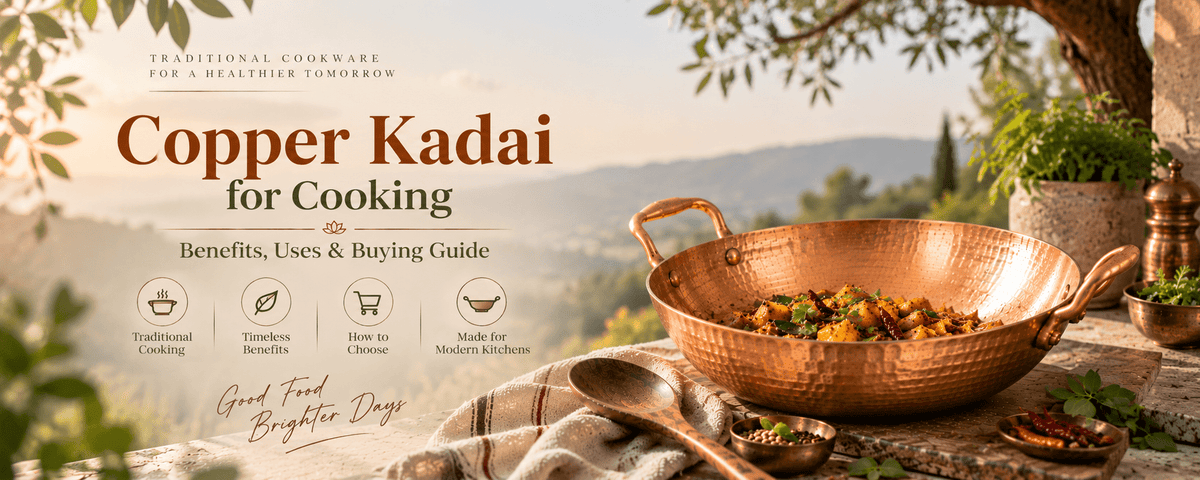
Copper Kadai for Cooking: Benefits, Uses & Buying Guide
Copper has been part of Indian household culture for generations. From traditional water vessels and lotas to cooking and serving utensils, the warm reddish tone of copper has long been associated with skilled metal craftsmanship and everyday kitchen traditions.
Among these traditional vessels, the copper kadai stands out for its distinctive appearance, excellent heat conductivity and connection to heritage cooking.
But choosing copper cookware is different from choosing an ordinary kitchen pan. The construction, lining, thickness, intended use and care requirements all matter.
So, is a copper kadai suitable for your kitchen? What can you cook in it? What should you check before buying one? And how should it be maintained?
This guide explains everything you need to know before choosing a copper kadai for cooking.
What Is a Copper Kadai?

(Handcrafted copper kadai used for traditional Indian cooking)
A copper kadai is a traditional Indian cooking vessel made primarily from copper, usually designed with a broad cooking surface, curved sides and sturdy handles.
Its shape makes it suitable for several Indian cooking techniques, including sautéing, simmering, frying and preparing gravies.
Copper is particularly valued for its ability to conduct heat efficiently. This means a copper vessel can respond relatively quickly to changes in heat compared with metals that conduct heat less efficiently.
Traditional copper cookware can also feature handmade details such as hammered surfaces, hand-shaped handles and subtle variations that reflect the work of the artisan.
However, copper cookware is not simply about appearance.
The construction of the vessel is extremely important.
Many copper cooking vessels are lined on the inside with another food-contact metal, such as tin, because bare copper can react with certain acidic foods.
If you are considering a copper kadai for regular cooking, always check the manufacturer's instructions regarding its lining, compatible foods and cooking methods.
If you're exploring traditional copper cookware for your kitchen, browse our copper kadai collection to compare available designs and sizes.
Why Is Copper Used in Traditional Indian Cooking?
Copper has several physical characteristics that help explain its long history in household utensils.
It is:
-
Highly workable
-
A good conductor of heat
-
Durable when properly maintained
-
Visually distinctive
-
Suitable for traditional metalworking
-
Highly recyclable
These characteristics helped copper become part of India's long-standing metalware tradition.
Copper's role in Indian households extends beyond cookware. Traditional vessels have also included water pots, lotas, serving vessels and ceremonial objects.
This combination of practical material properties and cultural importance has helped copperware remain relevant even as modern stainless steel, aluminium and non-stick cookware became widespread.
A copper kadai is only one part of the wider tradition of copper cookware. Explore our copper cookware collection for other traditional kitchen vessels.
Benefits of Using a Copper Kadai
1. Excellent Heat Conductivity
One of the best-known characteristics of copper is its high thermal conductivity.
A copper vessel can transfer heat efficiently across its surface, making temperature management an important part of its appeal.
For cooking techniques where controlled heating matters, this can be useful.
However, the actual cooking performance also depends on the kadai's thickness, construction, lining and the heat source being used.
2. Useful for Traditional Indian Cooking
A copper kadai can complement several traditional cooking methods.
Depending on its construction and manufacturer's instructions, it may be used for:
-
Sautéing
-
Stir-frying
-
Simmering
-
Preparing gravies
-
Cooking certain vegetable dishes
-
Preparing traditional recipes
The broad shape of a kadai also provides useful surface area for stirring and tossing ingredients.
3. Distinctive Handmade Appearance
Copper has an unmistakable reddish-golden appearance that develops character over time.
Handcrafted copper kadais may feature:
-
Hammered surfaces
-
Hand-shaped curves
-
Artisan-made handles
-
Subtle variations in finish
-
Natural patina
These details make each piece feel less like an industrial kitchen appliance and more like a traditional object made by skilled metalworkers.
4. Long-Lasting Kitchenware
Copper can remain useful for many years when properly cared for.
Unlike disposable kitchen products, a well-maintained copper vessel can become a long-term part of a household kitchen.
Traditional metal vessels are also sometimes passed between generations, making cookware part of a family's material heritage.
5. Recyclable Material
Copper is highly recyclable, which adds another dimension to its long-term value.
At the end of its useful life, copper can be recovered and processed into new copper products rather than simply becoming waste.
This makes copper an interesting material from a resource-efficiency perspective. For a broader look at the traditional use of copper utensils, read our guide to Benefits of Using Copper Utensils.
What Can You Cook in a Copper Kadai?
A copper kadai can be useful for many Indian cooking preparations, but the suitability depends heavily on the vessel's interior lining.
For example, a properly lined copper kadai may be used for preparations such as:
Vegetable Preparations
The broad shape works well for sautéing and stir-frying vegetables.
Gravies and Curries
A kadai's curved sides make stirring and combining ingredients convenient.
Slow-Cooked Preparations
Some copper vessels can be used for controlled simmering, provided the construction and lining are appropriate.
Traditional Indian Recipes
From everyday sabzi preparations to regional recipes, the kadai shape remains one of the most recognizable forms of Indian cookware.
Important: Always follow the manufacturer's instructions about compatible ingredients. Particularly acidic foods should not be cooked in bare copper unless the cookware is specifically designed and approved for that use.
For smaller preparations and serving, you can also explore traditional copper bowls designed for Indian kitchens.
Copper Kadai vs Other Copper Cookware
Not every copper cooking vessel serves the same purpose.
| Copper Cookware | Common Use |
|---|---|
| Copper Kadai | Sautéing, frying, gravies and everyday cooking |
| Copper Degchi | Rice, curries and larger preparations |
| Copper Handi | Slow cooking and traditional dishes |
| Copper Saucepan | Smaller quantities and liquid preparations |
| Copper Tawa | Flatbreads and shallow cooking |
Choosing the right vessel depends on what you cook most often.
If you regularly prepare curries, sabzi, fried foods or larger family meals, a kadai can be one of the more versatile options.
If you're deciding between traditional metals, our guide to Brass vs Copper vs Kansa explains the key differences between these materials.
What to Check Before Buying a Copper Kadai

(Handcrafted copper kadai showing traditional shape and sturdy handles)
Buying copper cookware should involve more than simply looking at the colour or weight.
1. Check the Interior Lining
This is one of the most important considerations.
Ask whether the kadai has a tin lining or another food-contact lining, and understand what foods and cooking methods the manufacturer recommends.
Do not assume that every copper kadai is suitable for every type of food.
2. Look at the Copper Construction
A well-made vessel should feel sturdy rather than excessively thin or flimsy.
Pay attention to:
-
Overall thickness
-
Shape consistency
-
Handle attachment
-
Rim finishing
-
Interior construction
-
Surface quality
For handcrafted cookware, small variations can be part of the artisan character, but structural weakness should not be confused with handmade craftsmanship.
3. Check the Handles
Handles should be securely attached and comfortable enough for the intended use.
Traditional copper kadais may feature side handles, while other designs may use different handle configurations.
Choose a shape that works with your cooking style and storage space.
4. Consider the Size
Think about the quantity of food you normally prepare.
A smaller copper kadai can be suitable for everyday portions, while a larger one may be more practical for family meals or entertaining.
Avoid choosing a very large kadai simply because it looks impressive if it will be difficult to handle or store.
5. Understand the Care Requirements
Copper cookware requires more attention than many modern kitchen materials.
Before purchasing, understand:
-
How the lining should be maintained
-
Which cleaning products are suitable
-
Whether abrasive scrubbers should be avoided
-
How the exterior should be polished
-
Whether the cookware can be used on your preferred stove
Knowing these details beforehand will help protect your investment.
Copper Kadai for Indian Cooking: Is It Right for You?

(Close-up of hammered handcrafted copper kadai texture)
A copper kadai can be a good choice if you value traditional cookware, efficient heat conductivity and handcrafted metalware.
It is particularly appealing for people who want their kitchenware to combine function, craftsmanship and Indian heritage.
However, copper cookware is not completely maintenance-free.
If you want cookware that can simply be placed in the dishwasher or cleaned with aggressive products, copper may require more care than you're looking for.
On the other hand, if you appreciate traditional materials and don't mind following proper care instructions, a copper kadai can become a distinctive and long-lasting addition to your kitchen.
Copper kadais are part of a much larger Indian tradition of metal cookware and household vessels. Explore our guide to Traditional Indian Metal Utensils to learn more.
How to Care for a Copper Kadai

(Copper kadai with natural cleaning cloth for cookware care)
Proper care helps preserve both the appearance and functionality of copper cookware.
Clean After Use
Allow the vessel to cool before cleaning it.
Use a soft sponge or cloth and a gentle cleaning method recommended by the manufacturer.
Avoid Harsh Abrasives
Aggressive scrubbing can damage the surface or interior lining.
Avoid steel wool and abrasive cleaners unless the manufacturer specifically recommends them.
Dry Thoroughly
After washing, dry the kadai completely with a soft cloth.
Leaving moisture on the surface for long periods can contribute to staining or changes in appearance.
Maintain the Lining
If your copper kadai has a tin lining, monitor its condition over time.
If the lining becomes significantly worn or damaged, stop using the vessel for food preparation until it has been professionally assessed or relined as appropriate.
Expect Natural Changes
Copper naturally changes appearance with exposure to air, moisture and use.
A darker or less uniform exterior does not necessarily mean the cookware is damaged. Patina can be part of copper's natural aging process.
Copper Kadai and Traditional Kitchen Heritage
There is something special about traditional metal cookware that modern mass-produced kitchenware doesn't always capture.
A handcrafted copper kadai carries evidence of material, process and workmanship.
The hammered surface may show the marks of the artisan.
The shape reflects generations of vessel-making traditions.
And the way the cookware sits within an Indian kitchen connects it to a much broader history of cooking, family meals and regional food culture.
Copper therefore has value beyond its physical properties.
It represents a material tradition that continues to evolve for contemporary kitchens.
Copper Kadai Buying Checklist
Before purchasing, ask yourself these questions:
✓ Is the kadai suitable for cooking?
✓ Does it have an appropriate food-contact lining?
✓ What foods can safely be prepared in it?
✓ Is the construction sturdy enough for regular use?
✓ Are the handles securely attached?
✓ Is the size suitable for my household?
✓ Are care instructions clearly provided?
✓ Is the cookware compatible with my cooking setup?
✓ Does the craftsmanship justify the price?
These simple checks can help you make a more informed purchase.
Frequently Asked Questions
Is copper kadai good for cooking?
Copper is an excellent conductor of heat and has a long history in traditional cookware. However, whether a particular copper kadai is suitable for cooking depends on its construction and interior lining. Always follow the manufacturer's instructions.
Can you cook acidic food in a copper kadai?
Bare copper can react with acidic foods. Therefore, acidic ingredients should not be cooked in unlined copper unless the cookware is specifically designed and approved for that purpose. A suitable food-contact lining is important.
Is a copper kadai suitable for Indian cooking?
A properly constructed copper kadai can be suitable for various Indian cooking techniques, including sautéing, simmering and preparing gravies. Its suitability depends on the lining and manufacturer's recommendations.
How do you clean a copper kadai?
Use a gentle cleaning method appropriate for the vessel's construction and lining. Avoid harsh abrasives, and always dry the kadai thoroughly after washing.
Does copper cookware change colour?
Yes. Copper naturally develops changes in colour and patina through exposure to air, moisture and regular use. This is a normal characteristic of the material.
Is a heavier copper kadai better?
Weight alone does not determine quality. Construction, thickness, lining, handle attachment and workmanship should all be considered when evaluating copper cookware.
How long can a copper kadai last?
A well-made copper kadai can remain useful for many years when properly maintained. Its lifespan depends on construction, frequency of use, lining condition and care.
What should I check when buying a copper kadai?
Check the copper construction, interior lining, thickness, handles, size, intended cooking uses, care requirements and manufacturer's instructions before buying.
Final Thoughts
A copper kadai for cooking brings together several qualities that make traditional Indian cookware special: efficient heat conductivity, distinctive material character, craftsmanship and heritage.
But the best copper kadai isn't simply the one that looks the most beautiful.
Look for sound construction, an appropriate food-contact lining, secure handles, suitable size and clear care instructions.
With the right choice and proper maintenance, a copper kadai can become more than another kitchen vessel—it can be a functional piece of Indian metalworking heritage that earns its place in the modern kitchen.
If you're exploring traditional metal cookware, discover the Copper Cookware Collection and learn more about the different vessels available for Indian kitchens.
Read more
Brass Kadai: Traditional Cooking, Benefits & How to Choose One
Discover the traditional uses, benefits and key features of a brass kadai. Learn how to choose the right brass kadai for Indian cooking and care for it properly.
Read more
Brass Cooker: What to Know Before Buying Traditional Brass Cookware
Discover what to know before buying a traditional brass cooker. Learn about brass construction, Kalai lining, cooker size, safety, maintenance, craftsmanship, and how to choose the right brass pres...
Read more