

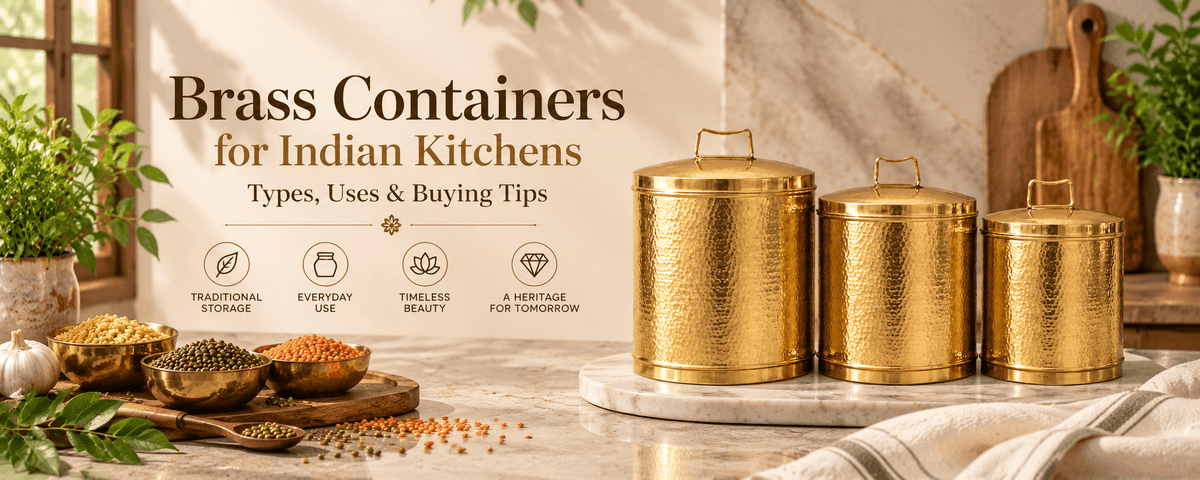
Brass Containers for Indian Kitchens: Types, Uses & Buying Tips
Brass containers have been a familiar part of traditional Indian kitchens for generations. Their warm golden appearance, sturdy construction, and handcrafted character make them useful not only for suitable storage but also for serving, organizing, and decorating a heritage-inspired kitchen.
Today, brass containers for Indian kitchens are becoming popular again among homeowners who want to combine traditional Indian craftsmanship with modern kitchen styling. From small spice jars to larger storage vessels, they can add both function and character to your space.
However, brass containers are not all made for the same purpose. A decorative container, a dry-storage jar, and a food-contact vessel may have different constructions and care requirements.
So, which types of brass containers are available, what can you use them for, and what should you check before buying one? Let's explore everything you need to know.
What Are Brass Containers?
Brass containers are vessels made from brass, an alloy primarily consisting of copper and zinc. Brass has traditionally been used to make a wide range of Indian household items, including kitchenware, storage vessels, serving utensils, and religious accessories.
Traditional brass kitchen containers may have polished, antique, hammered, engraved, or embossed finishes. Some feature fitted lids, decorative rims, or handcrafted detailing that gives each piece a distinctive appearance.
Their use should always match their intended design. A container made specifically for food storage should not be treated the same way as a decorative brass vessel.
For a broader look at India's metalware traditions, explore our guide to Traditional Indian Metal Utensils.
Why Use Brass Containers in an Indian Kitchen?

(Brass containers arranged in a traditional Indian kitchen)
Traditional Indian kitchens relied heavily on durable, reusable household materials. Brass became a familiar choice for many kitchen and household vessels because of its strength, distinctive appearance, and long-standing place in Indian craftsmanship.
In a modern kitchen, brass containers can serve two purposes at once: practical organization and traditional décor.
They can be used to:
-
Organize suitable dry ingredients
-
Store certain kitchen essentials
-
Keep spices neatly arranged
-
Display traditional kitchenware
-
Complement brass serving and dining pieces
-
Add warmth to open shelves and countertops
The golden tone of brass also pairs naturally with wood, cream stone, terracotta, cotton textiles, and other traditional Indian design elements.
For shoppers looking to build a traditional kitchen setup, brass kitchen utensils can complement brass containers while bringing a consistent heritage-inspired look to the kitchen.
Types of Brass Containers for Indian Kitchens

(Different types of brass containers for Indian kitchen storage and serving)
Different brass containers are suited to different purposes. Understanding the difference can help you choose the right one.
1. Brass Storage Containers
Brass storage jars are among the most versatile options for a traditional kitchen. Depending on their construction and intended use, they can be suitable for storing certain dry ingredients and kitchen essentials.
Choose containers with secure lids if your priority is organized pantry storage.
2. Brass Spice Containers
Small brass jars can be used to create an attractive traditional spice-storage arrangement.
Their compact size makes them suitable for individual spices or dry seasonings when the specific container is intended for food storage.
They can also be styled together on a kitchen shelf or traditional spice station.
3. Brass Grain and Dry-Food Containers
Larger vessels can be useful for suitable dry ingredients such as:
-
Rice
-
Lentils
-
Pulses
-
Dry grains
-
Certain flour and pantry ingredients
Always check the manufacturer's instructions before storing food. The fact that a vessel is made from brass does not automatically mean it is suitable for every food-storage application.
4. Brass Containers for Serving
Some brass vessels are designed primarily for serving rather than long-term storage.
They can be paired with brass dinnerware to create a coordinated traditional Indian dining setup.
5. Brass Pooja Containers
Small brass containers are also commonly used for religious and ceremonial purposes. These pieces may hold pooja accessories or be incorporated into traditional prayer arrangements.
Their decorative detailing can make them attractive additions to a home mandir as well as a traditional interior.
6. Decorative Brass Containers
Not every brass container needs to be functional kitchen storage.
Decorative brass containers can be placed on:
-
Open kitchen shelves
-
Dining consoles
-
Sideboards
-
Display cabinets
-
Entryway tables
These pieces are especially useful when creating an Indian heritage-inspired interior.
Common Uses of Brass Containers

(Handcrafted brass containers for storing Indian spices and dry ingredients)
The best use depends on the construction and intended purpose of the container.
Dry Storage
Food-grade containers specifically designed for dry storage may be suitable for certain grains, pulses, and other dry ingredients.
Spice Organization
Small containers can help keep suitable dry spices organized while giving the kitchen a traditional appearance.
Kitchen Décor
Brass jars and vessels can turn open shelves into attractive displays instead of purely functional storage spaces.
Serving
Purpose-made brass serving containers can complement traditional meals and brass dinner sets.
Traditional Home Styling
Brass containers can also be incorporated into dining rooms, pooja spaces, and other areas where Indian craftsmanship is part of the décor.
Can You Store Food in Brass Containers?

(Brass containers with dry foods in a traditional Indian kitchen)
This is an important consideration when buying brass containers for kitchen use.
Not every brass container is suitable for food storage. Food compatibility depends on the vessel's material composition, construction, interior finish or lining, the type of food, and the manufacturer's instructions.
Dry, non-reactive foods may be appropriate for containers specifically designed for dry-food storage. However, acidic or highly reactive foods require additional caution.
Avoid assuming that an unlined brass container is appropriate for prolonged storage of foods such as:
-
Pickles
-
Tomato-based preparations
-
Lemon or citrus-based foods
-
Vinegar-based foods
-
Other acidic or reactive preparations
If a brass container has a tin lining or another food-compatible interior, follow the manufacturer's specific instructions regarding its intended use and cleaning.
When purchasing, look for clear information stating whether the container is intended for food contact, dry storage, serving, or decorative use.
If you're comparing different traditional metals for kitchen and dining use, this guide to brass vs copper vs Kansa can help you understand their key differences and typical applications.
Benefits of Brass Containers
1. Traditional Indian Appeal
Brass connects the modern kitchen with India's long tradition of handcrafted metalware.
2. Warm Golden Appearance
The natural golden tone of brass adds warmth to kitchen shelves, countertops, and dining spaces.
3. Durable Construction
Quality brass containers can be sturdy and long-lasting when used appropriately and maintained properly.
4. Reusable Design
A well-made brass container can become a long-term household item rather than a disposable storage solution.
5. Handcrafted Character
Handmade brassware can feature subtle variations, hammered textures, and decorative details that give each piece an individual character.
6. Functional and Decorative
Depending on the design, brass containers can combine useful storage with traditional home styling.
Brass Containers vs Stainless Steel Containers

(Brass containers compared with stainless steel kitchen containers)
| Feature | Brass Containers | Stainless Steel Containers |
|---|---|---|
| Appearance | Warm golden finish | Cool silver finish |
| Style | Traditional and heritage-inspired | Modern and minimalist |
| Craftsmanship | Often handcrafted | Usually machine manufactured |
| Durability | Durable with proper care | Highly durable |
| Maintenance | Requires more attention | Generally easier |
| Food use | Depends on construction and intended use | Generally versatile |
| Decorative appeal | High | Moderate |
| Best for | Traditional storage, serving and décor | Everyday practical storage |
Neither material is universally better. Your choice should depend on how you intend to use the container, food compatibility, maintenance requirements, and your preferred kitchen style.
If you're comparing traditional Indian metals more broadly, see our guide to Brass vs Copper vs Kansa.
How to Choose the Right Brass Container
Before buying a brass container, consider these seven factors.
1. Define the Purpose
Decide whether you need the container for dry storage, spices, serving, pooja, or décor.
2. Check Food-Use Suitability
If you plan to store food, confirm that the particular product is designed for food contact.
3. Inspect the Interior
Check whether the container is plain brass, lined, or finished with another interior treatment. This can affect how it should be used and maintained.
4. Choose the Right Size
Small containers work well for spices and smaller quantities, while larger vessels are more practical for dry ingredients.
5. Check the Lid and Construction
A well-fitted lid, sturdy walls, smooth edges, and stable base are useful indicators when evaluating a storage container.
6. Choose a Suitable Finish
Polished brass offers a brighter appearance, while antique and hammered finishes provide a more rustic, handcrafted look.
7. Look for Quality Craftsmanship
Look for clean edges, secure construction, consistent finishing, and appropriate thickness. Small variations may naturally occur in genuinely handcrafted pieces.
You can also explore brass kitchen utensils when building a coordinated traditional kitchen collection.
How to Clean and Maintain Brass Containers
Brass naturally develops changes in appearance over time. Some people prefer to maintain its bright golden finish, while others enjoy the deeper character that develops with age.
For routine care:
-
Empty the container before cleaning.
-
Use a soft cloth or sponge.
-
Avoid abrasive scrubbers.
-
Follow the manufacturer's recommended cleaning method.
-
Dry the container completely after washing.
-
Store it in a dry environment.
-
If it has a lining or special finish, use only compatible cleaning methods.
-
Avoid aggressive polishing that could damage engraved or finished surfaces.
Gentle, regular maintenance is generally preferable to harsh cleaning.
Frequently Asked Questions
Are brass containers good for Indian kitchens?
Yes. Brass containers can be useful for suitable storage, serving, organization, and décor, provided the particular vessel is used according to its intended purpose.
Can I store rice in a brass container?
A brass container specifically designed for food storage may be suitable for dry rice. Always check the manufacturer's instructions before use.
Can I store spices in brass containers?
Suitable dry spices can be stored in containers specifically designed for food storage. Check the product's intended use and interior construction.
Can I store pickle in a brass container?
Do not assume that an unlined brass container is suitable for pickles. Pickles can be acidic and may react with certain metal surfaces. Follow the manufacturer's food-use instructions.
Are all brass containers food-safe?
No. Food suitability depends on the construction, lining or finish, intended use, and manufacturer's guidance.
Do brass containers need polishing?
Polishing is primarily related to appearance. If you prefer a bright golden finish, periodic polishing may be useful, but follow the appropriate care instructions for the particular container.
Are handmade brass containers better?
Handcrafted containers can offer distinctive textures and traditional craftsmanship. However, quality should also be judged by construction, material, finish, functionality, and intended use.
Final Thoughts

(Indian mother using a traditional brass storage container in a warm kitchen)
Brass containers for Indian kitchens offer a beautiful way to combine traditional craftsmanship with practical organization and heritage-inspired décor.
From spice jars and dry-storage vessels to serving pieces and decorative containers, there are many ways to introduce brass into a contemporary kitchen.
The most important thing is to choose according to purpose. Before buying, check the material, construction, size, interior finish, food-use suitability, and care requirements.
A beautifully crafted brass container isn't simply a storage vessel—it can become part of the visual character of your kitchen. With the right choice and proper care, it can bring the warmth of traditional Indian metalware into your home for years to come.
Read more
Brass Plates for Eating: Benefits, Uses & How to Choose the Right One
Discover the benefits and uses of brass plates for eating, how they fit into traditional Indian dining, and what to consider when choosing the right brass plate for your home.
Read more
Brass Plates for Eating: Benefits, Uses & How to Choose the Right One
Discover the benefits of brass plates for eating, their traditional uses, different types, and practical tips for choosing, using, and caring for the right brass plate.
Read more