

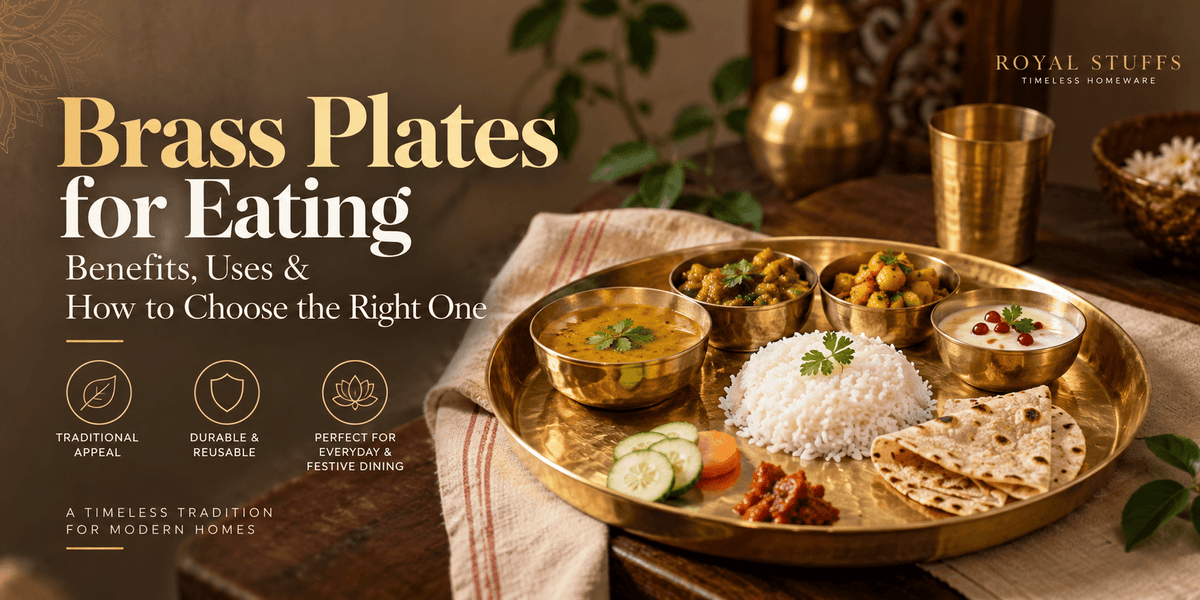
Brass Plates for Eating: Benefits, Uses & How to Choose the Right One
For generations, Indian dining has been about more than simply eating a meal. The choice of utensils, the way food is served, and the traditions followed around the dining table have all been part of India's rich household culture. Among the materials traditionally used for Indian utensils, brass holds a special place.
A brass plate for eating brings together traditional craftsmanship, durability and timeless Indian aesthetics. From everyday meals to festive thalis, brass plates have been used to serve foods such as rice, dal, vegetables, roti and sweets.
Today, brass dinnerware is finding its way back into modern kitchens. But with different sizes, designs and finishes available, choosing the right plate requires more than simply picking the most attractive one.
This guide explores the benefits, uses, types and care of brass plates for eating, along with practical tips for choosing quality brass dinnerware.
Table of Contents
-
What Is a Brass Eating Plate?
-
Why Were Brass Plates Traditionally Used in India?
-
Benefits of Brass Plates for Eating
-
What Foods Can You Serve on Brass Plates?
-
Types of Brass Plates
-
Brass vs Stainless Steel Plates
-
How to Choose the Right Brass Plate
-
How to Care for Brass Plates
-
FAQs
What Is a Brass Eating Plate?
Brass plates may be simple and polished or feature handcrafted details such as hammered textures, embossed patterns and raised borders. Brass has been used in Indian households for generations to create plates, bowls, glasses, serving vessels and other traditional utensils.
Brass plates may be simple and polished or feature handcrafted details such as hammered textures, embossed patterns and raised borders.
Depending on the design, a brass plate can be used for everyday dining, traditional thalis, festive meals, serving or gifting.
If you are buying one specifically for eating, always check that the product is intended for food use and follow the manufacturer's care instructions.
Why Were Brass Plates Traditionally Used in India?

(Traditional Indian meal served on a handcrafted brass thali plate)
Before stainless steel became the dominant material in Indian kitchens, households commonly used brass, copper, bronze and kansa utensils.
Brass was valued for its sturdy construction, attractive golden appearance and versatility. Traditional brass utensils were often carefully maintained and passed from one generation to the next.
A brass thali also complemented the way traditional Indian meals were served. Multiple dishes could be arranged together, creating a complete and visually appealing meal.
This connection with traditional dining is one reason brass dinnerware continues to appeal to people who want to bring an element of Indian heritage into contemporary homes.
Benefits of Brass Plates for Eating

(Handcrafted brass dinnerware including plate bowls spoon and glass)
1. Traditional and Timeless Appearance
The warm golden tone of brass gives the dining table a distinctive traditional character.
A brass plate can make everyday Indian food look especially inviting and is particularly attractive during festive meals and family gatherings.
2. Durable and Reusable
Brass is a durable metal, and a well-made plate can remain part of your kitchen for many years when properly cared for.
Unlike disposable dinnerware, brass plates are designed for repeated use, making them suitable for households that prefer long-lasting products.
3. Beautiful Food Presentation
The golden surface of brass creates an appealing contrast with colourful Indian dishes.
Rice, dal, sabzi, roti, sweets, fruits and traditional snacks all stand out beautifully against brass dinnerware.
4. Ideal for Traditional Indian Meals
A brass plate works naturally with the traditional Indian thali format.
You can pair it with matching katoris, spoons and glasses to create a coordinated dining setup that combines function with heritage.
5. Suitable for Special Occasions
Brass plates are particularly well suited to:
-
Festive meals
-
Weddings
-
Family gatherings
-
Housewarming celebrations
-
Traditional dinners
-
Pooja-related meals
-
Diwali and other cultural celebrations
They can also make thoughtful gifts for people who appreciate Indian craftsmanship and traditional homeware.
6. Long-Term Value
A quality brass plate can become more than ordinary dinnerware. With proper maintenance, it can remain useful for years and potentially become a meaningful family keepsake.
What Foods Can You Serve on Brass Plates?

(Traditional Indian food served on a brass eating plate)
Brass plates made for food use are well suited to many traditional meals, including:
-
Rice and dal
-
Dry vegetables
-
Roti and paratha
-
Idli and dosa
-
Fruits
-
Sweets
-
Dry snacks
-
Traditional thali meals
However, highly acidic or sour foods should be handled carefully with unlined brass. Ingredients such as lemon, tamarind, vinegar and tomato can interact with brass, particularly when food is left sitting in the vessel for an extended period.
For this reason, always check the manufacturer's instructions for your particular plate and avoid assuming that every brass plate is suitable for every type of food. For general guidance on maintaining food-use brassware, see our guide to cleaning brass utensils.
Types of Brass Plates
Plain Brass Plates
Simple designs are ideal for people who want understated traditional dinnerware that can work across different occasions.
Hammered Brass Plates
Hammered textures give the surface a handcrafted appearance and add visual interest to the dining table.
Embossed Brass Plates
These plates feature decorative motifs or patterns and are especially suitable for festive dining, gifting and traditional settings.
Brass Thali Plates
Designed around the Indian thali concept, these plates provide space for arranging multiple dishes and can be paired with smaller brass bowls.
Decorative Brass Plates
Some brass plates are made primarily for display or serving rather than eating. Always check the product description before using a decorative piece for direct food contact.
For more traditional serving and dining options, explore our brass dinnerware collection.
Brass vs Stainless Steel Plates

(Brass eating plate compared with a stainless steel dinner plate)
Both materials have their advantages.
| Feature | Brass | Stainless Steel |
|---|---|---|
| Traditional appeal | High | Moderate |
| Appearance | Warm golden tone | Silver finish |
| Durability | High with proper care | High |
| Maintenance | Requires more care | Easier |
| Festive presentation | Excellent | Good |
| Traditional dining | Excellent | Common |
If convenience and minimal maintenance are your priorities, stainless steel may be the easier choice.
If you value traditional Indian aesthetics, craftsmanship and heritage, brass can offer a more distinctive dining experience.
If you're also comparing traditional metals for your kitchen, read our guide to brass vs copper utensils.
How to Choose the Right Brass Plate
Before purchasing a brass plate for eating, consider these factors.
Check the Material
Look for clear information about the material and construction. A trustworthy seller should provide accurate product specifications.
Choose the Right Size
Consider the type of meals you usually serve. A medium-sized plate may be practical for everyday dining, while a larger thali-style plate can be better for meals with several dishes.
Consider Weight and Comfort
Brass is naturally heavier than lightweight materials. Choose a plate that feels substantial but remains comfortable to handle.
Check the Finish
Brass plates may have polished, antique, matte, hammered or embossed finishes. Select one according to your preferred appearance and maintenance routine.
Confirm Food-Use Suitability
This is essential. A decorative brass plate is not automatically suitable for eating. Confirm that the specific product is manufactured for food use.
Look at Craftsmanship
Check the edges, surface and overall construction. Handcrafted pieces may have subtle variations that reflect their individual character.
How to Care for Brass Plates
Brass requires a little more attention than stainless steel, but proper care can help maintain its appearance.
Clean after use: Don't leave food residue sitting on the plate for long periods.
Use gentle cleaning: A soft cloth or non-abrasive sponge is preferable to harsh abrasive materials.
Dry thoroughly: Wipe the plate completely after washing to help maintain its finish.
Polish when needed: Brass naturally develops patina over time. If you prefer a bright golden appearance, occasional polishing may be appropriate. Always follow the manufacturer's recommended method for food-contact brassware.
For more detailed maintenance advice, you can also explore our guide on how to clean brass utensils.
Frequently Asked Questions
Are brass plates good for eating?
Brass plates specifically manufactured for food use can be suitable for eating and serving. Always follow the manufacturer's care and usage instructions.
Can I eat rice and dal on a brass plate?
Yes. Rice, dal, vegetables and roti are commonly associated with traditional brass dining. Avoid leaving acidic foods in unlined brass for prolonged periods.
Can brass plates be used every day?
Yes, provided the plate is intended for food use and is cleaned and maintained properly.
Do brass plates need polishing?
Brass naturally develops patina. Polishing is optional and mainly depends on whether you prefer a bright or naturally aged appearance.
Are brass plates dishwasher safe?
Do not assume they are. Check the manufacturer's instructions. Hand washing is generally preferable for maintaining traditional brassware.
Are brass plates a good gift?
Yes. A handcrafted brass plate can be a meaningful gift for weddings, housewarmings, festivals and traditional home collections.
Final Thoughts
A brass plate for eating is more than traditional dinnerware. It brings together Indian heritage, craftsmanship and practical reusability in a form that can work beautifully in modern homes.
Whether you use one for everyday meals, festive thalis or special occasions, choosing the right brass plate means paying attention to material quality, food-use suitability, size, craftsmanship and care requirements.
If you appreciate traditional Indian dining and handcrafted metalware, a well-made brass plate can be a timeless addition to your kitchen—one that connects today's dining table with generations of Indian craftsmanship.
Explore the Royal Stuffs Brass Dinnerware Collection to discover traditional brass plates, bowls, glasses and other handcrafted dining essentials.
Read more
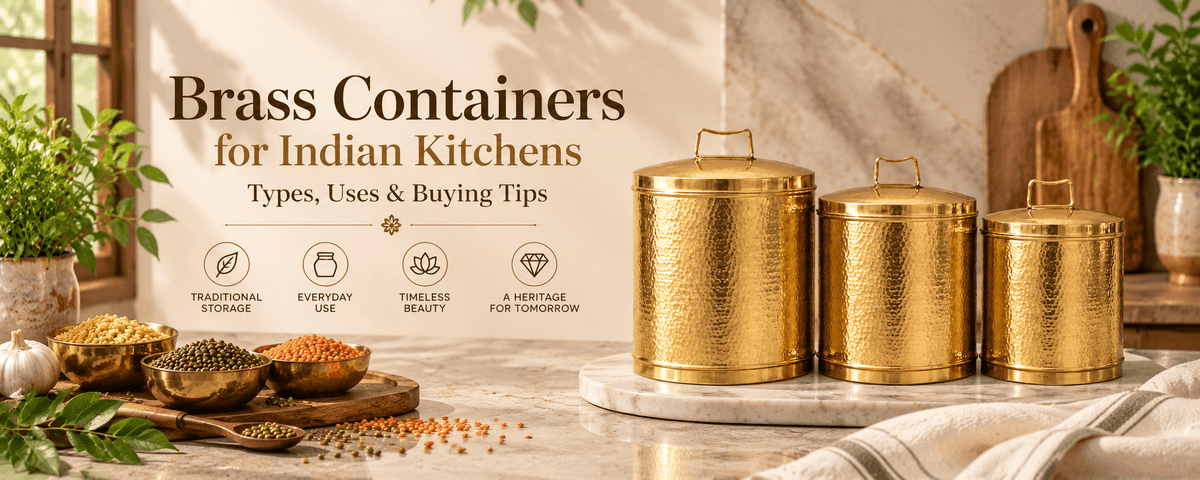
Brass Containers for Indian Kitchens: Types, Uses & Buying Tips
Discover brass containers for Indian kitchens, including their types, everyday uses, food-storage considerations, care tips and practical buying advice.
Read more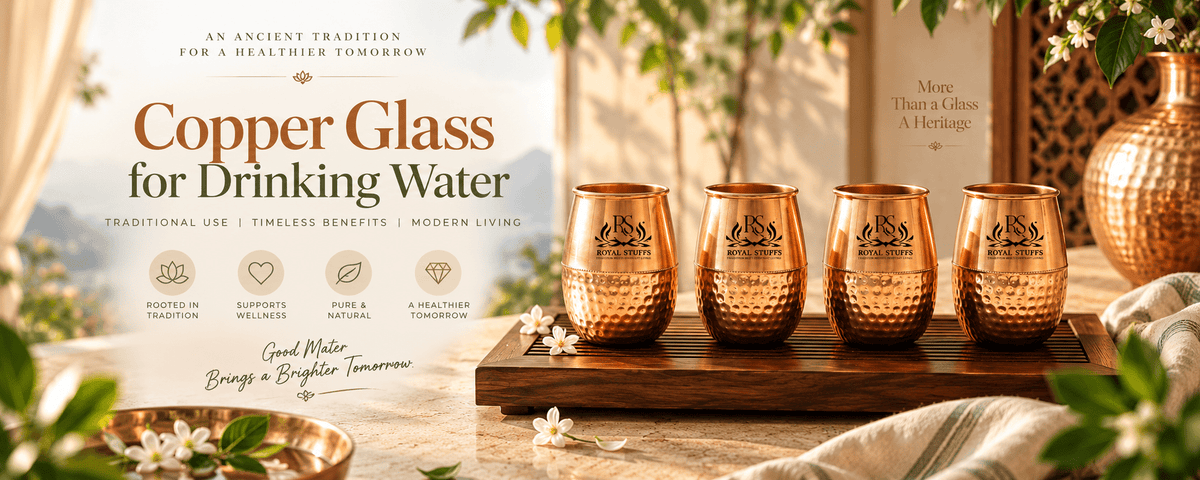
Copper Glass for Drinking Water: Traditional Use, Benefits & Care Guide
Discover the traditional use of copper glasses for drinking water, potential benefits, safe usage tips, cleaning methods, and how to choose the right copper glass for your home.
Read more