

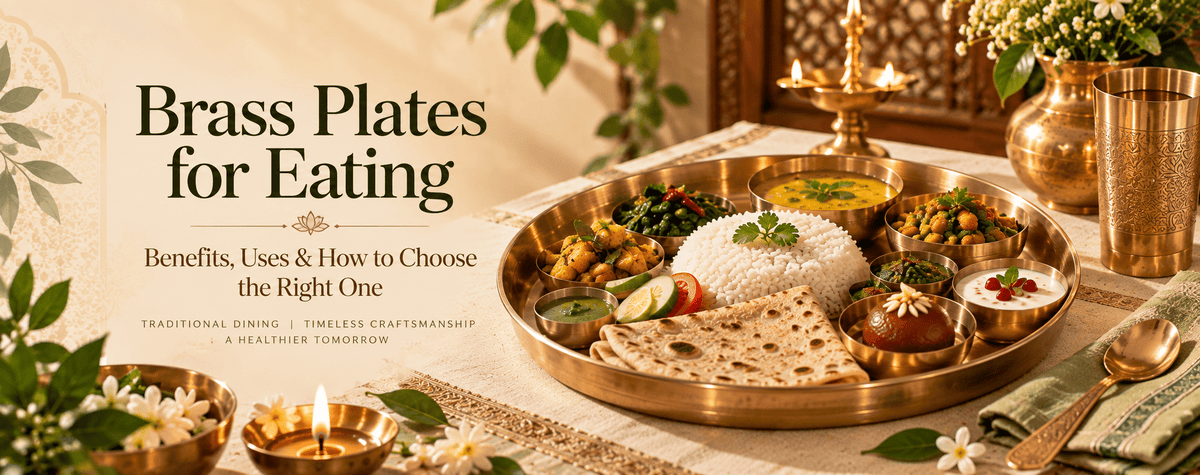
Brass Plates for Eating: Benefits, Uses & How to Choose the Right One
A brass plate is more than a traditional piece of Indian dinnerware—it brings warmth, craftsmanship, and a timeless connection to Indian dining culture. For generations, brass utensils have been used in Indian homes for serving meals, festive occasions, religious gatherings, and special family dinners.
Today, brass plates for eating are finding their way back into modern dining spaces because of their distinctive golden appearance and handcrafted character. Whether you want a traditional thali setup or simply want to add brass dinnerware to your home, a well-made brass plate can make an everyday meal feel more special.
But not every brass plate is designed in the same way. Material composition, construction, finish, food compatibility, and care requirements are important when choosing one.
This guide explores the benefits, uses, care, and buying considerations for brass plates so you can make a more informed choice.
Table of Contents
-
What Is a Brass Plate?
-
Why Were Brass Plates Used Traditionally?
-
Benefits of Brass Plates for Eating
-
Common Uses of Brass Plates
-
What Foods Can You Serve on a Brass Plate?
-
Brass Plate vs Stainless Steel Plate
-
How to Choose the Right Brass Plate
-
How to Clean and Maintain Brass Plates
-
Are Brass Plates Safe for Eating?
-
FAQs
-
Final Thoughts
What Is a Brass Plate?

(Handcrafted traditional Indian brass plate with hammered metal texture)
A brass plate is a traditional eating or serving plate made from brass, an alloy primarily composed of copper and zinc. Brass has a naturally warm golden appearance that gives traditional Indian dinnerware its distinctive character.
Handcrafted brass plates may feature hammered textures, engraved details, raised edges, or polished surfaces. Some are designed as simple everyday plates, while others form part of a larger brass thali set with bowls, spoons, and serving pieces.
The construction and finish can vary considerably, so it is important to check the product specifications before purchasing a brass plate for regular food use.
Why Were Brass Plates Used Traditionally?

(Traditional Indian meal served on a handcrafted brass plate)
Brass has a long history in Indian households. Traditional metal utensils were valued for their durability and were commonly used for cooking, serving, dining, and religious purposes.
A brass plate was particularly suited to the traditional Indian meal format, where rice, dal, vegetables, breads, accompaniments, and sweets could all be arranged together.
Beyond functionality, brass also became associated with celebrations and ceremonial dining because of its warm metallic appearance. This long-standing tradition is part of the broader history of traditional Indian metal utensils, which have played an important role in Indian kitchens and dining customs. Even today, a beautifully arranged brass thali can instantly create a traditional Indian dining atmosphere.
Benefits of Brass Plates for Eating

(Close-up of handcrafted brass plate showing durable metal construction and texture)
1. Traditional Indian Heritage
One of the biggest attractions of a brass plate is its connection to Indian kitchen and dining traditions. Using traditional metalware can bring an element of cultural heritage into a contemporary home.
2. Distinctive Golden Appearance
Brass has a naturally warm golden tone that looks different from stainless steel or other modern dinnerware. Its appearance can make even a simple meal feel more thoughtfully presented.
3. Durable Metal Construction
A properly made brass plate can be sturdy and long-lasting. Unlike fragile ceramic dinnerware, a well-constructed metal plate is designed to withstand regular handling.
Its durability also makes brass dinnerware suitable for households looking for reusable alternatives to disposable serving products.
4. Excellent for Traditional Meal Presentation
Indian meals often include several components served together. The broad surface of a brass plate makes it suitable for arranging rice, roti, vegetables, accompaniments, and other foods in an organised traditional presentation.
5. Handcrafted Character
Many traditional brass plates are made using artisanal metalworking techniques. Hammer marks, subtle variations, and handcrafted detailing can give each piece its own character.
This makes handcrafted brass dinnerware particularly appealing to people who appreciate Indian craftsmanship.
6. Suitable for Festive Dining
Brass plates can create an elegant setting for festivals, family gatherings, weddings, traditional celebrations, and special dinners.
Paired with brass bowls, spoons, glasses, and serving vessels, they can create a cohesive heritage-inspired table.
Paired with brass bowls, spoons, glasses, and brass dinner sets, they can create a cohesive heritage-inspired table.
Common Uses of Brass Plates
Brass plates aren't limited to one type of meal. Depending on their design and manufacturer instructions, they can be used for:
-
Everyday traditional meals
-
Indian thali meals
-
Family lunches and dinners
-
Festive dining
-
Wedding and ceremonial meals
-
Serving snacks and sweets
-
Traditional food presentation
-
Special family occasions
-
Decorative dining arrangements
For regular food use, always choose a brass plate specifically intended for eating or serving and follow its care and food-use instructions.
Brass plates are also naturally complemented by other traditional pieces of brass cookware and serving ware, helping create a coordinated Indian kitchen and dining setup.
What Foods Can You Serve on a Brass Plate?

(Traditional Indian foods arranged on a brass plate for dining)
A brass plate can be used to present many traditional foods, but food compatibility matters.
Common meal components include:
-
Steamed rice
-
Dal
-
Roti and paratha
-
Dry vegetable preparations
-
Cooked vegetables
-
Sweets
-
Fruits
-
Snacks
-
Non-acidic accompaniments
However, brass can react with certain acidic or strongly reactive foods. Foods containing ingredients such as tomato, lemon, tamarind, vinegar, or other acidic components may require additional consideration.
For this reason, don't assume that every unlined brass plate is suitable for every food. Check whether the particular plate is food-safe and whether it has an appropriate lining or finish for the intended use.
Brass Plate vs Stainless Steel Plate

(Brass plate compared with stainless steel plate for Indian dining)
| Feature | Brass Plate | Stainless Steel Plate |
|---|---|---|
| Appearance | Warm golden finish | Silver metallic finish |
| Style | Traditional and heritage-inspired | Modern and practical |
| Craftsmanship | Often handcrafted | Usually machine manufactured |
| Meal presentation | Strong traditional appeal | Simple and functional |
| Maintenance | Requires more care | Generally easier |
| Weight | Often heavier | Usually lighter |
| Best suited for | Traditional dining and special occasions | Everyday convenience |
Neither material is automatically better for every household. The right choice depends on your preferred style, maintenance routine, food-use requirements, and budget.
If you're also comparing traditional metals more broadly, our guide to brass vs copper vs Kansa explains the key differences between these materials.
How to Choose the Right Brass Plate
Before buying brass plates for eating, consider these factors.
1. Check the Material
Look for clear information about the brass composition and construction. Avoid products where the material description is unclear.
2. Check Food-Use Suitability
A decorative brass plate and a plate intended for eating are not necessarily the same. Confirm that the product is specifically made for food contact.
3. Consider Lining or Finish
Some brass utensils may have a protective or food-contact lining depending on their intended use. Check the product description and manufacturer's instructions rather than assuming all brass plates have the same construction.
4. Choose the Right Size
For a complete Indian meal, choose a plate large enough to accommodate rice, breads, vegetables, and small bowls without becoming overcrowded.
Smaller brass plates may be more suitable for snacks, sweets, or serving purposes.
5. Look at Thickness and Weight
A good eating plate should feel sturdy without being unnecessarily difficult to handle. Heavier construction can provide a substantial traditional feel, but practicality matters for everyday use.
6. Consider the Finish
You can find polished, antique-style, hammered, engraved, and textured brass plates. Choose a finish that matches your dining style and maintenance preferences.
7. Look for Quality Craftsmanship
Pay attention to smooth edges, even construction, stable bases, and consistent finishing. Handcrafted pieces may have minor variations, which are often part of their artisanal character.
If you're building a complete traditional kitchen collection, you can also explore our range of brass kitchen utensils.
How to Clean and Maintain Brass Plates

(Gentle cleaning and care of a handcrafted brass plate)
Proper care helps maintain the appearance of brass dinnerware.
-
Wash the plate according to the manufacturer's instructions.
-
Use a soft sponge or cloth rather than abrasive scrubbers.
-
Avoid harsh chemical cleaners unless specifically recommended.
-
Dry the plate thoroughly after washing.
-
Store it in a dry place.
-
Follow any special instructions provided for lined or coated surfaces.
-
Avoid prolonged contact with foods that are unsuitable for the particular brass construction.
If the plate has a lining or special finish, avoid aggressive polishing that could damage it.
Are Brass Plates Safe for Eating?
Brass plates can be suitable for eating when they are properly manufactured and specifically intended for food contact. However, brass is not a one-size-fits-all material for every food or use.
The safety and suitability of a particular plate depend on factors such as its composition, construction, lining or finish, and the manufacturer's intended use.
If you're purchasing a brass plate for regular dining, look for clear food-use information and care instructions. For acidic or strongly reactive foods, pay particular attention to the manufacturer's guidance.
This is especially important when comparing a decorative brass plate with a purpose-made eating plate.
FAQs About Brass Plates for Eating
Can you eat food directly on a brass plate?
Yes, if the plate is specifically manufactured and sold for food use. Always check the product's construction and manufacturer's instructions.
Are brass plates good for traditional Indian meals?
Yes. Their broad surface and traditional appearance make them particularly well suited to thali-style meal presentation and festive dining.
Can brass plates be used every day?
Some brass plates are designed for regular dining, while others are intended mainly for serving or decorative use. Check the specific product instructions before using one daily.
Do brass plates need special care?
Yes. Brass generally requires more care than stainless steel. Gentle cleaning, thorough drying, and following the manufacturer's care instructions can help maintain the finish.
Can I serve acidic food on a brass plate?
Don't assume that all brass plates are suitable for acidic foods. Ingredients such as tomato, lemon, tamarind, and vinegar can be reactive with certain metal surfaces. Check the specific plate's food-use guidance.
Are handcrafted brass plates better than machine-made plates?
Handcrafted plates can offer distinctive textures and artisanal character. However, quality depends on construction, material, finish, and intended use—not simply whether a piece is handmade.
Final Thoughts
A brass plate for eating brings together traditional Indian craftsmanship, distinctive design, and practical meal presentation. Its warm golden appearance can transform a simple dining table into a heritage-inspired setting, while its sturdy metal construction makes it appealing to those who appreciate long-lasting traditional dinnerware.
The most important step is choosing the right piece. Look beyond appearance and consider material, food-use suitability, construction, size, finish, and care requirements.
Whether you're creating a traditional thali at home, preparing a festive family meal, or adding handcrafted Indian dinnerware to your collection, a thoughtfully chosen brass plate can bring a timeless character to the dining experience.
Read more
Healthy Dinnerware Buying Guide: Everything You Need to Know
Learn how to choose healthy dinnerware with this complete buying guide. Compare brass, kansa, copper, ceramic, and modern dinnerware to find safe, durable, and timeless tableware for your home.
Read more
Brass Containers for Indian Kitchens: Types, Uses & Buying Tips
Discover brass containers for Indian kitchens, including their types, everyday uses, food-storage considerations, care tips and practical buying advice.
Read more