
Article: Kansa Dinnerware: Why Traditional Indian Families Still Choose Bell Metal

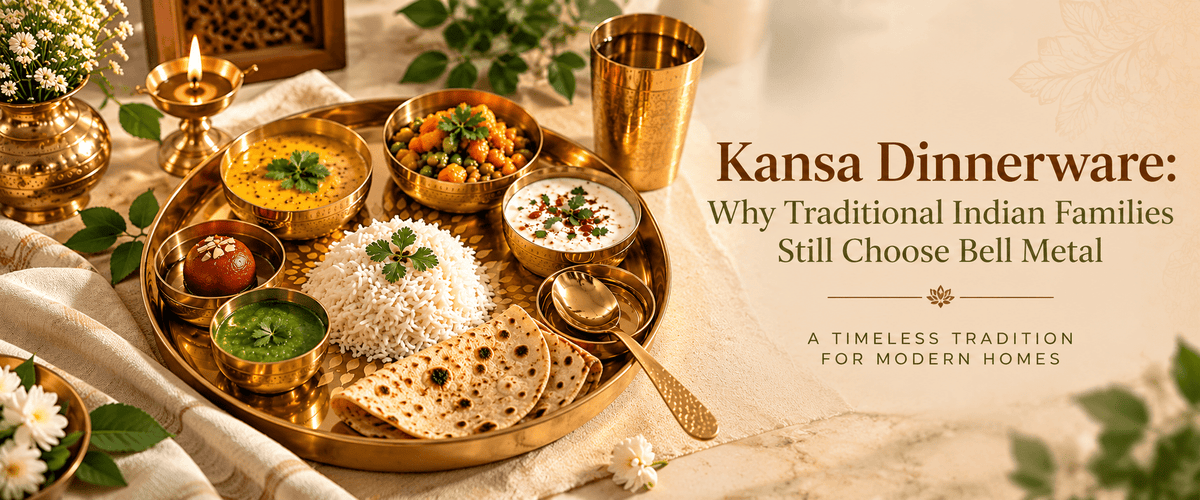
Kansa Dinnerware: Why Traditional Indian Families Still Choose Bell Metal
In many Indian homes, dining is more than simply serving food. The choice of utensils, the arrangement of a thali, and even the material of the plate can reflect generations of tradition. Among the oldest materials used for Indian dining is Kansa, commonly known as bell metal.
With its warm bronze-golden appearance and distinctive traditional character, Kansa dinnerware continues to find a place in modern homes. A Kansa thali can make an everyday meal feel connected to India's long-standing culinary traditions.
For families looking to bring this traditional dining style home, explore our collection of handcrafted Kansa dinner sets.
But why do traditional Indian families still choose Kansa dinnerware when stainless steel, ceramic, glass, and other modern options are widely available?
The answer lies in its heritage, craftsmanship, durability, appearance, and connection to traditional Indian dining.
What Is Kansa or Bell Metal?

(Traditional Kansa bell metal thali, bowls and utensils)
Kansa is a traditional Indian metal alloy generally associated with copper and tin. It is commonly referred to as bell metal because of its historical use in bells and other traditional metal objects.
For generations, artisans have shaped Kansa into household utensils, plates, bowls, serving vessels, and ceremonial objects. To understand its composition and traditional role in Indian metalcraft, explore our guide to what Kansa is and how it is traditionally made. The resulting dinnerware has a distinctive warm, muted golden-bronze appearance that sets it apart from both bright brass and contemporary stainless steel.
The exact composition and manufacturing method can vary between products and manufacturers. Therefore, when purchasing Kansa dinnerware, it is useful to check the seller's material specifications and intended food-contact use.
Why Did Kansa Become Part of Indian Dining?

(Traditional Indian meal served in Kansa thali and bowls)
Traditional Indian kitchens historically relied on locally crafted metal utensils that could be used repeatedly and maintained over many years. For a deeper look at how Kansa became part of India's metalworking and dining heritage, read our guide to the history of Kansa metal in India. Kansa became valued not only as a functional material but also as part of India's culinary and cultural heritage.
A traditional meal served in a Kansa thali creates a distinctly Indian dining experience. A large plate can hold rice, roti, vegetables, dal, and other dishes, while smaller Kansa bowls or katoris can be used for curries, chutneys, raita, sweets, and desserts.
For many families, using Kansa dinnerware today is therefore a way of keeping an old dining tradition relevant rather than simply choosing another type of plate. You can also explore our guide to the traditional benefits of eating in Kansa utensils.
5 Reasons Traditional Families Still Choose Kansa Dinnerware

(Handcrafted Kansa dinnerware with traditional hammered finish)
1. It Connects Dining With Indian Heritage
One of the biggest attractions of Kansa is its cultural connection.
Kansa utensils have been used in traditional Indian households for generations. Eating from a Kansa plate can bring a sense of familiarity and nostalgia, particularly for families who remember traditional metal utensils from their childhood homes.
Today, younger homeowners are also rediscovering this heritage through handcrafted dinnerware. A Kansa thali can make an everyday meal feel connected to India's long-standing culinary traditions.
2. Kansa Has a Distinctive Traditional Appearance
Kansa has a character that is difficult to reproduce with mass-produced modern dinnerware.
Its warm bronze tone works beautifully with Indian food and traditional table settings. Depending on the craftsmanship, Kansa dinnerware may feature smooth surfaces, hand-hammered textures, rounded edges, or subtle artisanal details.
Over time, the appearance of traditional metalware can also develop a natural patina. Some people appreciate this changing character because it gives the dinnerware a sense of age and individuality.
For those who enjoy heritage-inspired interiors and tablescapes, Kansa can be both functional dinnerware and a decorative element.
3. It Is Suitable for Traditional Thali-Style Dining
The design of Kansa dinnerware naturally complements the Indian thali format.
A typical Kansa dining arrangement may include:
-
One large Kansa plate or thali
-
Small Kansa bowls for dal and vegetables
-
A bowl for raita or chutney
-
A small serving bowl for sweets
-
A Kansa spoon
-
Additional serving utensils
This arrangement makes it easy to serve several dishes together without losing the visual appeal of a traditional Indian meal.
Kansa dinner sets can also be useful for festive lunches, family gatherings, traditional celebrations, and special meals where presentation matters.
Kansa vs Stainless Steel: Why Choose Traditional Bell Metal?

(Kansa dinnerware compared with stainless steel utensils)
Stainless steel remains one of the most popular materials for Indian kitchens because it is practical, easy to clean, and convenient for everyday use.
Kansa offers something different.
| Feature | Kansa Dinnerware | Stainless Steel |
|---|---|---|
| Appearance | Warm bronze-golden tone | Bright metallic finish |
| Traditional appeal | Very high | Moderate |
| Craftsmanship | Often artisan-made | Usually factory-produced |
| Dining style | Heritage and traditional | Practical and modern |
| Maintenance | Requires appropriate care | Generally easier |
| Table presentation | Rich and distinctive | Simple and functional |
The choice ultimately depends on your priorities. If convenience and low maintenance are the main considerations, stainless steel may be preferable. For a more detailed comparison, see our guide to Kansa vs stainless steel utensils.
If you value traditional Indian craftsmanship and heritage dining, Kansa offers a distinctive alternative.
Can Kansa Dinnerware Be Used Every Day?
Yes, Kansa dinnerware can be incorporated into regular dining when the particular product is intended for food use and maintained according to the manufacturer's instructions.
Some families use traditional metal dinnerware for everyday meals, while others reserve their Kansa thalis for weekends, festivals, family gatherings, or special occasions.
Before purchasing, pay attention to:
-
Material composition
-
Food-contact suitability
-
Thickness and weight
-
Surface finish
-
Manufacturing quality
-
Care instructions
It is also important to distinguish between Kansa intended for dining and decorative bell-metal objects. Not every traditional metal item is designed for food contact.
The Craftsmanship Behind Kansa Dinnerware
Another reason Kansa continues to attract buyers is its connection with traditional metalworking.
Depending on the product and artisan technique, Kansa vessels may be shaped, hammered, polished, and finished by skilled craftspeople. Small variations in texture or finish can be part of the character of handcrafted metalware rather than a defect.
This craftsmanship gives each piece a visual identity. If you are buying Kansa for the first time, learn how to identify authentic Kansa utensils before choosing a dinner set.
A well-made Kansa dinner set can therefore become more than a collection of utensils. It can represent Indian metalworking traditions while fitting naturally into a contemporary dining space.
How to Care for Kansa Dinnerware

(Cleaning and caring for traditional Kansa dinnerware)
Traditional metal dinnerware deserves appropriate care if you want it to retain its appearance.
After use, wash Kansa utensils with a mild cleaning solution and rinse them thoroughly. Avoid harsh abrasive scrubbers that may unnecessarily scratch the surface. For a more detailed maintenance routine, see our guide on how to clean Kansa dinnerware naturally.
Always dry the pieces properly after washing, particularly before storage. Keeping them completely dry helps maintain their finish and prevents unwanted marks caused by moisture.
For deeper cleaning or polishing, follow the manufacturer's recommended method. Traditional cleaning ingredients are sometimes used for metal utensils, but the safest approach is to use a method suitable for the specific Kansa product.
Also avoid assuming that every metal-cleaning technique is appropriate for every finish. If your Kansa dinnerware has a special coating or treatment, follow the care instructions provided by the maker.
How to Choose the Right Kansa Dinnerware
If you're buying Kansa dinnerware for your home, start by deciding how you intend to use it.
If you are comparing different designs and set sizes, our Kansa dinner set buying guide can help you make a more informed choice
For everyday family dining, choose a practical-sized thali with enough depth and space for multiple dishes. If you entertain guests frequently, consider a complete Kansa dinner set containing plates, bowls, spoons, and complementary serving pieces.
Look for:
-
Clearly stated material: Check that the product is actually described as Kansa or bell metal.
-
Food-contact suitability: Make sure it is intended for dining.
-
Good craftsmanship: Look for consistent finishing and sturdy construction.
-
Comfortable weight: Traditional metalware can be heavier than stainless steel.
-
Useful dimensions: Choose plate and bowl sizes according to your meals.
-
Care instructions: Understand how the manufacturer recommends cleaning and storing the pieces.
A reliable seller should provide clear product information rather than relying only on broad claims about traditional metals.
Kansa for Modern Indian Homes

(Kansa dinnerware styled for a modern Indian dining table)
Kansa does not have to belong exclusively to a traditional kitchen.
Its understated bronze tone works surprisingly well with modern table settings. Pair a Kansa thali with neutral linen, wooden serving boards, ceramic accents, or simple table décor for a contemporary heritage look.
It can also be introduced gradually. You might begin with a Kansa plate and bowls before investing in a complete dinner set.
This approach allows modern families to enjoy traditional metalware without completely changing their existing kitchen setup.
Explore our Kansa and traditional metal tableware collection to find pieces that work with both contemporary and heritage-inspired dining spaces.
Why Kansa Dinnerware Still Matters
The continued popularity of Kansa is not simply about nostalgia. It reflects a growing appreciation for craftsmanship, durable traditional materials, cultural identity, and meaningful dining rituals.
In an age of disposable and mass-produced products, a thoughtfully crafted Kansa plate or bowl can feel different. It has a visual history, an artisanal character, and a connection to generations of Indian households.
For families who appreciate traditional Indian dining, Kansa provides a way to bring that heritage to the modern table.
Final Thoughts
Kansa dinnerware remains popular because it combines traditional Indian heritage with distinctive craftsmanship and timeless table appeal. Its bell-metal character, warm appearance, and suitability for thali-style dining make it an interesting choice for both traditional and contemporary homes.
Whether you choose a complete Kansa dinner set or begin with a single thali and a few bowls, the goal is not simply to replace modern utensils. It is to bring a piece of India's dining heritage into everyday life.
When selected carefully and maintained according to the manufacturer's instructions, Kansa dinnerware can become a lasting part of family meals—connecting traditional Indian dining with the way we live today.
Read more

Brass Plates and Bowls: Traditional Indian Dining Made Timeless
Discover the timeless charm of brass plates and bowls in Indian dining. Learn about their traditional appeal, everyday uses, buying tips, care, and how brass dinnerware adds elegance to every meal.
Read more