

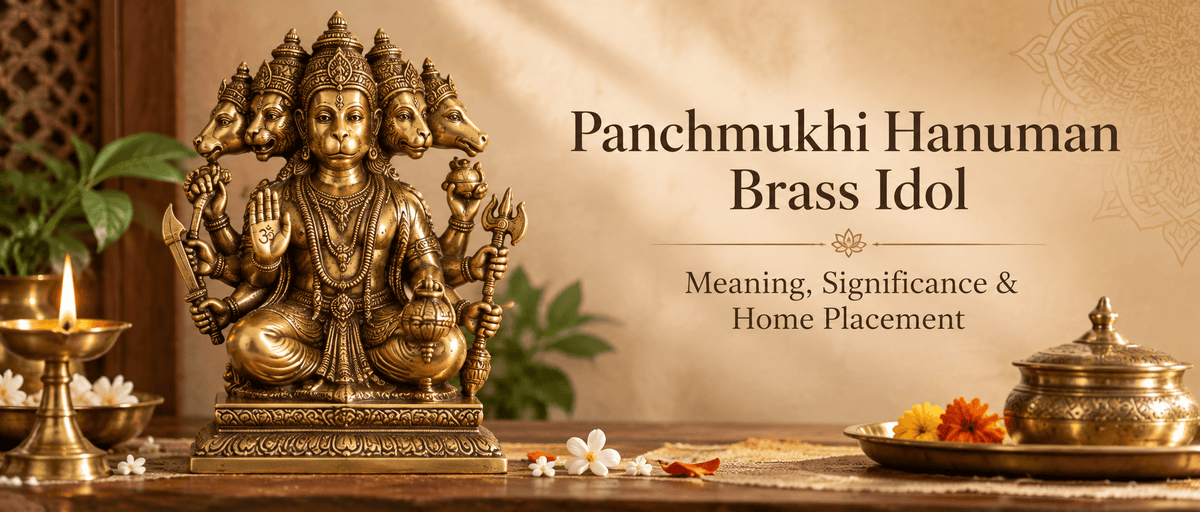
Panchmukhi Hanuman Brass Idol: Meaning, Significance & Home Placement
In Hindu tradition, Lord Hanuman is revered as a symbol of devotion, courage, strength and unwavering faith. Among his many representations, Panchmukhi Hanuman holds a particularly significant place because of his five sacred faces and the deeper symbolism associated with them.
A Panchmukhi Hanuman brass idol combines this powerful traditional representation with the timeless beauty of handcrafted brass. Whether placed in a home temple, prayer space or devotional corner, such an idol can become a meaningful part of a traditional Indian home.
Explore our collection of handcrafted brass Hanuman idols for traditional devotional pieces designed for home temples and prayer spaces.
But what do the five faces represent? Why is Panchmukhi Hanuman considered significant, and where should the idol be placed at home? This guide explores the traditional meaning, significance and practical considerations surrounding Panchmukhi Hanuman idols.
Table of Contents
-
What Is Panchmukhi Hanuman?
-
Meaning of the Five Faces of Panchmukhi Hanuman
-
Religious Significance of Panchmukhi Hanuman
-
Why Choose a Brass Panchmukhi Hanuman Idol?
-
Where to Place Panchmukhi Hanuman Idol at Home
-
Which Direction Should Panchmukhi Hanuman Face?
-
Places to Avoid When Placing the Idol
-
How to Care for a Brass Hanuman Idol
-
FAQs About Panchmukhi Hanuman Brass Idols
What Is Panchmukhi Hanuman?
The word Panchmukhi means “five-faced.” Panchmukhi Hanuman is traditionally depicted with five faces representing different divine forms and qualities. You can explore Panchmukhi Hanuman idols as part of a traditional home shrine or devotional collection.
The most commonly described five forms are Hanuman, Narasimha, Garuda, Varaha and Hayagriva. Each face carries its own symbolism and is associated with qualities such as courage, protection, strength, wisdom and the ability to overcome obstacles.
The Panchmukhi form is especially associated with protection and spiritual strength. Its distinctive five-faced representation makes it different from the more commonly seen single-faced Hanuman idol.
Meaning of the Five Faces of Panchmukhi Hanuman

(five faces of a traditional Panchmukhi Hanuman brass idol)
The five faces are central to understanding the symbolism of Panchmukhi Hanuman.
1. Hanuman Face
The central Hanuman face represents devotion, courage, strength and selfless service. Hanuman's unwavering devotion to Lord Rama is one of the most important themes associated with him.
This face can remind devotees of the value of humility, dedication and faith even in difficult circumstances.
2. Narasimha Face
The Narasimha face represents courage and protection. Lord Narasimha, the man-lion incarnation of Vishnu, is traditionally associated with the destruction of evil and the protection of devotees.
Its presence in Panchmukhi Hanuman symbolism is therefore connected with fearlessness and protection from adversity.
3. Garuda Face
Garuda, the divine eagle and vehicle of Lord Vishnu, is traditionally associated with speed, power and protection.
The Garuda aspect is also connected with overcoming harmful influences and moving beyond obstacles.
4. Varaha Face
The Varaha face represents strength, stability and protection. Varaha is the boar incarnation of Lord Vishnu and is traditionally associated with restoring balance and protecting the earth.
Symbolically, this form can represent resilience and the strength needed to overcome challenging situations.
5. Hayagriva Face
Hayagriva, traditionally depicted with a horse's head, is associated with knowledge, wisdom and learning.
These five symbolic forms are what make a Panchmukhi Hanuman brass idol particularly distinctive among traditional Hanuman murtis.
This aspect adds an intellectual and spiritual dimension to Panchmukhi Hanuman, reminding devotees of the importance of knowledge alongside physical and spiritual strength.
Religious Significance of Panchmukhi Hanuman

(Panchmukhi Hanuman brass idol in an Indian home temple)
The significance of Panchmukhi Hanuman is traditionally connected with a well-known episode in the Ramayana tradition involving Ahiravana, who had taken Lord Rama and Lakshmana to the underworld.
According to the popular account, Ahiravana's life was connected to five lamps positioned in different directions. To defeat him, Hanuman assumed the Panchmukhi form and extinguished the lamps simultaneously.
The story is one traditional explanation for the five-faced form and its association with protection, courage and overcoming powerful obstacles.
For devotees, the idol can therefore serve as a spiritual reminder of determination, devotion and the strength to face challenges with faith.
For a broader look at the role of traditional brass objects in worship, read our guide to brass pooja items used in North Indian temples.
Why Choose a Brass Panchmukhi Hanuman Idol?

(artisan craftsmanship of a handcrafted brass Hanuman idol)
Brass has a long association with Indian religious and household traditions. Its warm golden appearance, durability and ability to develop a natural patina make it particularly suited to traditional devotional objects.
A handcrafted brass idol can also showcase the skill of Indian metal artisans through its facial details, ornamentation and sculptural form.
Over time, brass develops changes in colour and surface character. Rather than treating every sign of age as a flaw, many traditional households appreciate this natural patina as part of the material's character.
For a broader selection of traditional devotional pieces, you can also explore brass pooja items from Royal Stuffs.
Where to Place Panchmukhi Hanuman Idol at Home

(Panchmukhi Hanuman idol placed respectfully in a home prayer space)
Placement should be approached with respect for your family's religious traditions and personal beliefs. In many Indian households, devotional idols are placed in a clean, peaceful and dedicated prayer area.
A home temple or pooja room is generally the most natural location for a Panchmukhi Hanuman idol. You can complete the prayer space with traditional essentials such as a brass pooja thali set, diya and other worship accessories.
If you do not have a separate prayer room, a clean shelf or dedicated devotional corner can also be used.
Consider these practical points:
-
Keep the idol on a clean and stable surface.
-
Place it at a respectful height rather than directly on the floor.
-
Keep the surrounding area uncluttered.
A handcrafted brass diya can also complement the altar while adding the traditional warmth of an oil lamp to the prayer space.
-
Avoid placing everyday household objects immediately around the idol.
-
Maintain cleanliness in the prayer space.
-
Position the idol according to your family's established puja tradition if you already follow one.
The intention and reverence with which a devotional space is maintained are often considered more important than simply following decorative rules.
Which Direction Should Panchmukhi Hanuman Face?
Direction-related guidance for Hindu idols can vary between traditions, temples, regional practices and Vastu interpretations. Therefore, there is no single universal rule that applies to every household.
If your family follows a particular puja tradition or Vastu practice, it is best to follow that established guidance. For a new home shrine, you may also consult a knowledgeable priest or Vastu practitioner if directional placement is especially important to you.
Rather than treating online placement advice as an absolute religious requirement, focus on creating a clean, peaceful and respectful space for worship.
Places to Avoid When Placing the Idol
A Panchmukhi Hanuman idol is generally better suited to a dedicated devotional area than casual household locations.
Avoid placing it:
-
Directly on the floor
-
In an unclean or cluttered area
-
Inside or immediately beside a bathroom
-
In a storage area surrounded by unrelated objects
-
Where the idol can easily be knocked over or damaged
The purpose is to preserve the dignity of the devotional space while protecting the handcrafted idol itself.
How to Care for a Brass Hanuman Idol

(gently cleaning a handcrafted brass Hanuman idol with a soft cloth)
Regular gentle care can help maintain the appearance of a brass idol.
For more detailed maintenance advice, you can also read our guide on how to clean brass cooking utensils naturally, which explains gentle brass-cleaning practices and ways to avoid damaging the surface.
Dust the surface with a soft, dry cotton or microfiber cloth. For deeper cleaning, use a mild brass-safe cleaning method and avoid harsh abrasives that could scratch engraved or sculpted details.
If the idol has a naturally aged finish that you appreciate, aggressive polishing may not be necessary. A soft patina can add character and preserve the traditional appearance of the piece.
After cleaning, make sure the idol is completely dry before returning it to the prayer space.
If your home temple includes several brass ritual pieces, our Pooja Accessories collection offers complementary traditional items for everyday worship.
FAQs About Panchmukhi Hanuman Brass Idols
What does Panchmukhi Hanuman mean?
Panchmukhi means “five-faced.” The five forms traditionally associated with the idol are Hanuman, Narasimha, Garuda, Varaha and Hayagriva.
What does Panchmukhi Hanuman symbolize?
Panchmukhi Hanuman is traditionally associated with qualities including courage, devotion, protection, strength, wisdom and overcoming obstacles.
Can I keep a Panchmukhi Hanuman idol at home?
Yes. Many devotees keep Hanuman idols in their home prayer spaces. The idol should be placed respectfully in a clean and dedicated devotional area.
Which direction is best for Panchmukhi Hanuman?
Directional guidance varies according to religious and Vastu traditions. Rather than treating one direction as universally mandatory, follow your family's tradition or seek guidance from a knowledgeable priest or practitioner.
Is brass good for a Hanuman idol?
Brass is traditionally used for many Indian devotional objects because it is durable, visually warm and well suited to detailed handcrafted work.
How should I clean a brass Hanuman idol?
Use a soft cloth for regular dusting and gentle, brass-safe cleaning when necessary. Avoid abrasive materials and excessive polishing, particularly if you want to preserve a natural aged finish.
Final Thoughts
A Panchmukhi Hanuman brass idol represents much more than an ornamental object. Its five faces bring together traditional symbolism associated with devotion, courage, protection, strength and wisdom.
When placed thoughtfully in a clean home prayer space, a handcrafted brass idol can become part of everyday devotional practice while also reflecting India's long tradition of metal craftsmanship.
For a home that values both spirituality and traditional artistry, Panchmukhi Hanuman remains a meaningful representation of faith, resilience and devotion.
If you are looking for a meaningful centerpiece for your home mandir, explore our handcrafted brass Hanuman idols and discover traditional designs created with Indian metalworking craftsmanship.
Read more
Big Brass Diyas for Home & Puja: Types, Uses & Buying Guide
Discover the beauty and tradition of big brass diyas for home and puja. Explore different types, uses, buying tips, care instructions, and ideas for choosing the perfect brass diya for everyday wor...
Read more
Brass Radha Krishna Murti: Symbolism, Significance & Home Décor Ideas
Discover the symbolism and significance of a brass Radha Krishna murti, along with traditional placement guidance, home décor ideas, buying tips and simple care advice.
Read more