

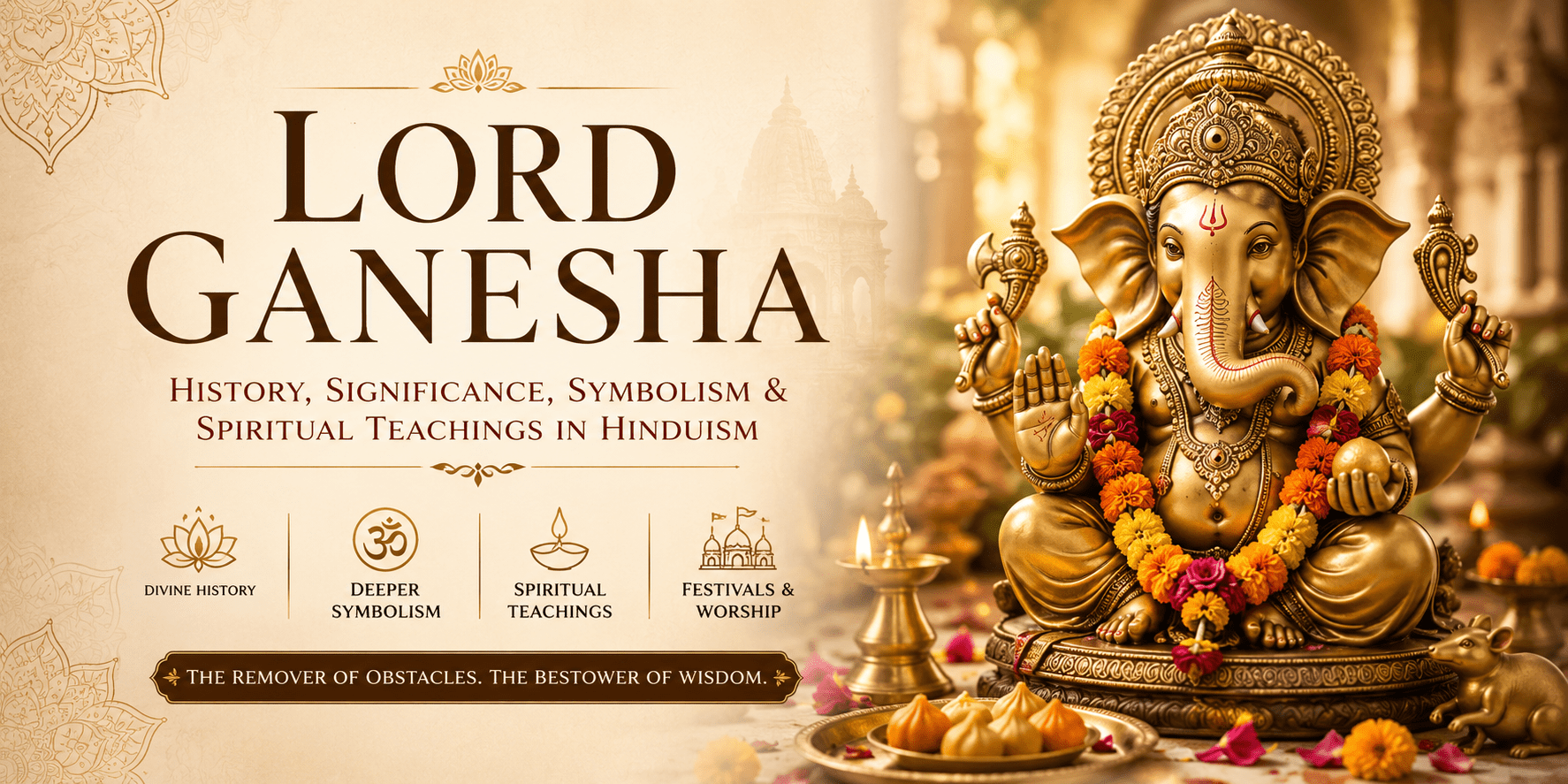
Lord Ganesha: History, Significance, Symbolism & Spiritual Teachings in Hinduism
Introduction
Lord Ganesha, also known as Ganpati, Vinayaka, and Vighnaharta, is one of the most beloved and widely worshipped deities in Hinduism. Recognizable by his elephant head and kind, compassionate expression, Lord Ganesha symbolizes wisdom, prosperity, new beginnings, and the removal of obstacles. Whether it's a housewarming ceremony, a wedding, the start of a business, or a student's first day of school, Hindus traditionally invoke Lord Ganesha's blessings before embarking on any important journey or endeavor.Many devotees also use traditional brass pooja items while offering prayers to Lord Ganesha, creating a sacred atmosphere for daily worship.
But Lord Ganesha is much more than the "Remover of Obstacles." Every aspect of his divine form—from his large ears and curved trunk to his broken tusk and tiny mouse companion—carries profound spiritual symbolism and timeless life lessons. His stories inspire millions to cultivate patience, humility, intelligence, and resilience in their daily lives.
Revered across India and in many parts of the world, Lord Ganesha holds a unique place in Hindu philosophy, art, and culture. Ancient scriptures, sacred festivals like Ganesh Chaturthi, and centuries-old traditions continue to celebrate his wisdom and compassionate nature, making him one of the most universally adored Hindu deities.
In this guide, we'll explore the history of Lord Ganesha, the fascinating story of his birth, the deeper symbolism behind his iconic form, his significance in Hinduism, major festivals dedicated to him, and practical ways to worship Lord Ganesha at home. Whether you're seeking spiritual knowledge or simply curious about Hindu traditions, this comprehensive guide will help you understand why Lord Ganesha continues to inspire devotion across generations.
📖 Quick Fact
Lord Ganesha is one of the few Hindu deities worshipped across all major Hindu traditions, including Shaivism, Vaishnavism, Shaktism, and Smartism. His universal appeal symbolizes wisdom, harmony, and auspicious beginnings.
1.Who Is Lord Ganesha?
 (Traditional brass Lord Ganesha idol symbolizing wisdom and prosperity.)
Lord Ganesha, also known as Ganapati, Vinayaka, Vighnaharta, and Gajanana, is one of the most revered and recognizable deities in Hinduism. As the son of Lord Shiva, the god of destruction and transformation, and Goddess Parvati, the goddess of power and devotion, Lord Ganesha represents the perfect balance of wisdom, strength, compassion, and humility.
Known as the God of Wisdom, Intelligence, Prosperity, and New Beginnings, Lord Ganesha is worshipped before the commencement of any important task or auspicious occasion. Whether it is a wedding, housewarming ceremony, business inauguration, examination, or religious ritual, devotees seek his blessings to remove obstacles and ensure success. This is why he is lovingly known as Vighnaharta, meaning "the remover of obstacles," and Siddhivinayaka, the bestower of success and fulfillment.
One of the most distinctive features of Lord Ganesha is his elephant head, which symbolizes wisdom, keen perception, and the ability to overcome challenges with intelligence rather than force. His large ears remind devotees to listen carefully, while his calm expression reflects inner peace and patience. Every aspect of his divine form carries a deeper spiritual meaning, making him not only a deity to worship but also a guide for leading a balanced and purposeful life.
Beyond religious worship, Lord Ganesha holds a special place in Indian culture, art, and literature. Keeping a Brass Ganesha Idol in a home temple is one of the most cherished traditions, symbolizing wisdom, prosperity, and auspicious beginnings. Students pray to him before examinations for knowledge and concentration, artists and musicians invoke his blessings before performances, and entrepreneurs seek his guidance before launching new ventures. His presence is believed to bring positivity, prosperity, and harmony to homes and workplaces alike.
|
Name |
Meaning |
|
Ganapati |
Lord of the Ganasha |
|
Vinayaka |
Supreme Leader |
|
Vighnaharta |
Remover of Obstacles |
|
Gajanana |
Elephant-Faced Lord |
|
Siddhivinayaka |
Bestower of Success |
Although deeply rooted in Hindu traditions, the reverence for Lord Ganesha extends far beyond India. He is worshipped in countries such as Nepal, Sri Lanka, Indonesia, Thailand, Cambodia, Mauritius, and Bali, reflecting his universal appeal as a symbol of wisdom, success, and good fortune. His teachings continue to inspire people from all walks of life, encouraging them to face life's challenges with patience, determination, and a positive mindset.
Today, Lord Ganesha remains one of the most beloved deities in the world, reminding us that true success begins with wisdom, humility, and faith. His timeless message encourages us to overcome obstacles not through power alone, but through knowledge, perseverance, and compassion.
Did You Know?
Lord Ganesha is one of the few Hindu deities worshipped across multiple traditions, including Shaivism, Vaishnavism, Shaktism, and Smartism. His universal significance makes him a symbol of unity, wisdom, and auspicious beginnings for millions of devotees worldwide.
2.The History of Lord Ganesha
The history of Lord Ganesha dates back thousands of years and is deeply rooted in Hindu philosophy, mythology, and sacred literature. Today, he is revered as the God of Wisdom, Prosperity, and New Beginnings, but his worship evolved gradually through ancient scriptures, regional traditions, and centuries of devotion.
One of the earliest references to the name "Ganapati" appears in the Rig Veda, one of the oldest sacred texts in Hinduism. In these early hymns, the term Ganapati referred to the "leader of groups" or "lord of the people." While scholars debate whether these verses specifically describe the elephant-headed deity worshipped today, they highlight the ancient origins of the title that later became synonymous with Lord Ganesha.
 (Ancient stone sculpture of Lord Ganesha in Indian temple architecture)
Timeline of Lord Ganesha Worship
-
1500–1200 BCE – Earliest references to Ganapati appear in the Rig Veda.
-
300–1000 CE – The Puranas narrate Lord Ganesha's birth, symbolism, and divine role.
-
4th–6th Century CE – Ganesha worship becomes widespread during the Gupta period.
-
1893 – Ganesh Chaturthi is popularized as a public festival by Bal Gangadhar Tilak.
-
Today – Lord Ganesha is worshipped by millions of devotees across the world.
As Hindu traditions evolved, Lord Ganesha emerged as a distinct and widely worshipped deity in texts such as the Puranas, including the Shiva Purana, Ganesha Purana, Mudgala Purana, and Skanda Purana. These scriptures narrate his divine birth, his role as the son of Lord Shiva and Goddess Parvati, and the spiritual significance of his elephant-headed form. They also establish him as the Vighnaharta—the remover of obstacles—and the deity who blesses devotees with wisdom, success, and prosperity.
By the Gupta period (4th–6th century CE), the worship of Lord Ganesha had become firmly established across India. Temples dedicated to him were built in different regions, and artists began depicting him in a variety of forms, each representing unique aspects of his divine nature. Kings, merchants, scholars, and ordinary families alike sought his blessings before important undertakings, reinforcing his role as the guardian of auspicious beginnings.
Over time, devotion to Lord Ganesha spread beyond India through cultural exchange, trade, and the expansion of Hindu and Buddhist traditions. Today, he is worshipped in countries such as Nepal, Sri Lanka, Indonesia, Thailand, Cambodia, Mauritius, and Bali, where his image symbolizes wisdom, protection, and good fortune. Although artistic styles and local customs may differ, the essence of Lord Ganesha remains the same—he is the compassionate deity who guides devotees through life's challenges.
The popularity of Ganesh Chaturthi, one of Hinduism's most celebrated festivals, further strengthened Lord Ganesha's place in Indian culture. Public celebrations became especially prominent during the late 19th century when freedom fighter Bal Gangadhar Tilak encouraged community-wide observances. By transforming the festival into a public event, he fostered unity and cultural pride during India's struggle for independence. Today, Ganesh Chaturthi is celebrated with immense devotion, vibrant processions, devotional music, and eco-friendly idol immersions across India and in many parts of the world.
Despite the passage of centuries, Lord Ganesha's significance has only grown stronger. His teachings continue to inspire people to approach life with intelligence, humility, patience, and perseverance. From ancient temples and sacred scriptures to modern homes and workplaces, Lord Ganesha remains a timeless symbol of wisdom, positivity, and the promise of new beginnings.
Did You Know?
Archaeological discoveries reveal that images of Lord Ganesha have been found across South and Southeast Asia, reflecting his enduring influence on art, culture, and spirituality for over a thousand years.
3.The Birth Story of Lord Ganesha
 (Goddess Parvati creating Lord Ganesha from sandalwood paste)
The birth of Lord Ganesha is one of the most cherished stories in Hindu mythology. More than just a tale of divine events, it teaches profound lessons about love, duty, obedience, forgiveness, and transformation. While different Hindu scriptures recount slight variations of the story, the version described in the Shiva Purana is the most widely known and revered.
According to the legend, Goddess Parvati wished to bathe in privacy while Lord Shiva was away. To guard the entrance to her chamber, she created a young boy from the sandalwood paste (or turmeric paste, according to some traditions) she had applied to her body. Breathing life into him, she declared him her son and instructed him not to allow anyone to enter until she gave permission.
The young boy faithfully obeyed his mother's command. When Lord Shiva returned to Mount Kailash and attempted to enter, Ganesha respectfully stopped him, unaware that he was speaking to his own father. Despite Shiva's repeated requests, Ganesha refused to move aside because he had promised to protect his mother.
Surprised by the boy's determination, Lord Shiva's attendants, known as the Ganas, tried to force their way through. However, the courageous young guardian defeated them all. The confrontation soon escalated into a fierce battle between the child and the mighty gods.
Realizing the seriousness of the situation, Lord Shiva himself entered the battlefield. In a moment of anger, he severed the boy's head with his divine trident. When Goddess Parvati emerged and saw her beloved son lying lifeless, she was overcome with grief and fury. Her sorrow shook the heavens, and she threatened to destroy the universe unless her son was restored to life.
To calm Parvati and restore cosmic balance, Lord Shiva immediately ordered his followers to bring back the head of the first living being they encountered facing north. They returned with the head of a young elephant. Shiva placed the elephant's head upon the boy's body and revived him with divine blessings.
Lord Shiva then embraced Ganesha as his own son and bestowed upon him extraordinary honors. He declared that Lord Ganesha would be worshipped before every god and before every auspicious ceremony, ensuring that no prayer, ritual, or important undertaking would begin without first seeking Ganesha's blessings. This divine proclamation established him as the Vighnaharta, the remover of obstacles, and the guardian of new beginnings.
The story also explains why Lord Ganesha is depicted with an elephant head—a symbol of wisdom, intelligence, strength, and compassion. Rather than being viewed as a punishment, the transformation represents spiritual evolution, teaching that true greatness comes from inner wisdom rather than outward appearance.
📖 Quick Fact
In Hindu philosophy, the elephant symbolizes wisdom, intelligence, patience, and strength. These qualities make Lord Ganesha an ideal guide for overcoming life's challenges with calmness and clarity.
Beyond its mythological significance, the birth story offers valuable life lessons. Ganesha's unwavering obedience to his mother highlights the importance of loyalty and duty. Goddess Parvati's love reflects the strength of maternal devotion, while Lord Shiva's actions demonstrate that even moments of conflict can lead to forgiveness, renewal, and greater purpose. Together, they remind us that life's greatest challenges often become the foundation for personal growth and spiritual awakening.
Today, devotees remember this sacred story not only during Ganesh Chaturthi but throughout the year as a symbol of faith, resilience, and divine grace. It continues to inspire millions to remain steadfast in their principles while embracing change with wisdom and humility.
Did You Know?
Another popular legend tells that Lord Ganesha broke one of his tusks to use it as a pen while writing the Mahabharata, as dictated by the sage Vyasa. This act symbolizes sacrifice, dedication, and the pursuit of knowledge above personal comfort.
4.Why Is Lord Ganesha Worshipped First?
 (Family performing Ganesh Puja before an auspicious ceremony)
Lord Ganesha is worshipped first because Lord Shiva declared him Prathama Pujya, the first deity to receive worship before every auspicious ceremony. Devotees believe his blessings remove obstacles, bring wisdom, and ensure success in new beginnings.
One of the most cherished traditions in Hinduism is beginning every auspicious occasion by worshipping Lord Ganesha. Whether it's a wedding, housewarming ceremony, business inauguration, festival, examination, or even a new project, devotees first seek Lord Ganesha's blessings before proceeding. This ancient practice symbolizes the belief that every successful journey should begin with wisdom, clarity, and divine guidance.
The title "Prathama Pujya", meaning the first deity to be worshipped, was bestowed upon Lord Ganesha by Lord Shiva. According to Hindu scriptures, after restoring Ganesha to life with an elephant's head, Lord Shiva declared that no prayer, ritual, or sacred ceremony would be complete unless Lord Ganesha was worshipped first. Since then, invoking Lord Ganesha has become an essential part of Hindu traditions.
Another popular legend beautifully highlights why Lord Ganesha earned this honor. Once, Lord Shiva and Goddess Parvati challenged their sons, Lord Ganesha and Lord Kartikeya, to race around the world. The winner would receive the privilege of being worshipped before all other deities.
While Lord Kartikeya immediately set off on his peacock to travel around the world, Lord Ganesha chose a different path. Understanding that his parents represented the entire universe, he simply circumambulated Lord Shiva and Goddess Parvati three times and offered them his respects. Deeply impressed by his wisdom and understanding, they declared Lord Ganesha the winner.
This story teaches one of Hinduism's most profound lessons: wisdom and devotion are greater than speed and physical strength. It reminds us that true intelligence lies in understanding the deeper meaning of life rather than merely completing a task.
The Spiritual Significance of Worshipping Lord Ganesha First
Beyond mythology, worshipping Lord Ganesha first has a deeper spiritual meaning. He is known as Vighnaharta, the remover of obstacles, because he helps devotees overcome both external and internal challenges.
External obstacles may include:
-
Delays in important work
-
Career or business challenges
-
Financial difficulties
-
Problems during travel or new ventures
More importantly, Lord Ganesha helps us overcome internal obstacles such as:
-
Fear and self-doubt
-
Ego and pride
-
Anger and impatience
-
Lack of focus
-
Negative thinking
By seeking his blessings before starting something new, devotees prepare themselves mentally and spiritually to face challenges with confidence and wisdom.
A Tradition That Continues Today
Even today, millions of people begin important milestones by remembering Lord Ganesha. His blessings are sought during:
-
Weddings and engagement ceremonies
-
Griha Pravesh (housewarming)
-
Business openings and office inaugurations
-
Buying a new home or vehicle
-
Starting a new job
-
School and college admissions
-
Examinations
-
Daily prayers and meditation
During these auspicious occasions, devotees traditionally perform rituals using a Brass Pooja Thali Set, along with brass diyas, kalash, bells, and other sacred accessories. These timeless pooja essentials enhance the spiritual atmosphere and help create a meaningful worship experience rooted in Indian tradition
During these auspicious occasions, devotees traditionally perform rituals using a Brass Pooja Thali Set along with brass diyas, kalash, bells, and other sacred accessories. These timeless pooja essentials enhance the spiritual atmosphere and help create a meaningful worship experience rooted in Indian tradition.
Many families also perform these rituals using traditional brass pooja items and pooja thali sets, creating a sacred atmosphere while seeking Lord Ganesha's blessings for a successful beginning.
Ultimately, worshipping Lord Ganesha first is more than a religious custom—it is a timeless reminder to begin every journey with faith, wisdom, humility, and a positive mindset. By placing knowledge before action and devotion before ambition, Lord Ganesha teaches us that every obstacle can become an opportunity for growth.
Did You Know? The sacred mantra "Om Gam Ganapataye Namah" is one of the most widely chanted Ganesha mantras. Devotees recite it before beginning important tasks, believing it brings clarity, confidence, and removes obstacles from their path.
5.The Different Names of Lord Ganesha and Their Meanings
Lord Ganesha is known by more than 108 sacred names, each reflecting a unique aspect of his divine personality, powers, and spiritual significance. These names are not merely titles—they represent the virtues and qualities that devotees seek to cultivate in their own lives. Across temples, scriptures, and daily prayers, Lord Ganesha is lovingly addressed by different names based on the occasion, region, or the blessings devotees seek.
Understanding these names helps us appreciate why Lord Ganesha is regarded as one of the most compassionate and universally worshipped deities in Hinduism.
 (108 names of Lord Ganesha infographic with sacred symbols)
Ganapati – Lord of the Ganas
The name Ganapati comes from the Sanskrit words Gana (group or community) and Pati (lord or master). It means "Lord of the Multitudes" or "Leader of the Divine Hosts."
According to Hindu tradition, Lord Shiva appointed Ganesha as the leader of his attendants, known as the Ganas. As Ganapati, he represents leadership, responsibility, and the ability to guide others with wisdom and fairness. This name reminds devotees that true leadership is built on humility, compassion, and sound judgment.
Vinayaka – The Supreme Guide
Vinayaka is one of Lord Ganesha's oldest and most revered names. It means "The Supreme Leader" or "The One Who Removes Obstacles Without a Master Above Him."
As Vinayaka, Lord Ganesha symbolizes independence, self-discipline, and the ability to overcome life's challenges through intelligence and perseverance. Many devotees invoke this name before starting new ventures, believing it brings clarity, confidence, and success.
Vighnaharta – The Remover of Obstacles
Perhaps the most popular name of Lord Ganesha is Vighnaharta, which literally means "Destroyer of Obstacles."
These obstacles are not limited to physical or material challenges. Lord Ganesha also helps devotees overcome inner barriers such as fear, ego, doubt, anger, greed, and negativity. This is why people pray to him before important life events, seeking his blessings for a smooth and successful journey.
Gajanana – The Elephant-Faced Lord
The name Gajanana combines the words Gaja (elephant) and Anana (face), meaning "The Elephant-Faced One."
The elephant is a symbol of wisdom, intelligence, patience, and immense strength. Just as an elephant can gently remove obstacles from its path, Lord Ganesha teaches us to overcome difficulties with calmness and thoughtful action rather than force or anger.
Ekadanta – The One with a Single Tusk
Ekadanta means "The One with a Single Tusk." This name refers to Lord Ganesha's distinctive appearance and carries a profound spiritual message.
According to one popular legend, Lord Ganesha broke one of his tusks to use it as a pen while writing the Mahabharata as Sage Vyasa dictated the epic. His willingness to sacrifice a part of himself for the pursuit of knowledge symbolizes dedication, commitment, and selflessness. It reminds us that great achievements often require personal sacrifice and unwavering focus.
Lambodara – The One with the Large Belly
The name Lambodara means "The One with the Large Belly." While it may seem like a simple physical characteristic, it carries deep symbolic meaning.
Lord Ganesha's large belly represents his ability to peacefully accept all of life's experiences—both joyful and difficult. It teaches devotees to remain balanced, patient, and content regardless of success or adversity. Spiritually, it also signifies abundance, prosperity, and the capacity to embrace the entire universe with compassion.
Siddhivinayaka – The Bestower of Success
Siddhivinayaka translates to "The Giver of Success and Fulfillment."
Students pray to Siddhivinayaka before examinations, entrepreneurs seek his blessings before launching businesses, and families worship him before important ceremonies. This name reflects Lord Ganesha's role in granting success through wisdom, perseverance, and righteous actions rather than mere luck.
Heramba – The Protector of the Weak
Another significant name is Heramba, meaning "Protector of the Helpless."
In this compassionate form, Lord Ganesha is depicted as a guardian who offers courage and protection to those facing fear, uncertainty, or hardship. It emphasizes that true strength lies in protecting others and acting with kindness.
More Than Names—Timeless Life Lessons
Each name of Lord Ganesha represents a virtue that inspires devotees to live with greater wisdom and purpose. Whether he is worshipped as Ganapati, Vinayaka, Vighnaharta, or Ekadanta, the underlying message remains the same: success is achieved through knowledge, humility, perseverance, and compassion.
These sacred names continue to resonate with millions of devotees around the world, reminding us that Lord Ganesha is not only a divine figure but also a timeless guide whose teachings remain relevant in every stage of life.
Did You Know?
Lord Ganesha is believed to have 108 sacred names, and many devotees recite the Ganesha Ashtottara Shatanamavali (108 Names of Ganesha) during prayers to seek blessings for wisdom, prosperity, protection, and success.
6.Symbolism of Lord Ganesha's Form
One of the reasons Lord Ganesha is revered across the world is the profound symbolism hidden within his divine form. Every feature of his appearance—from his elephant head and large ears to his broken tusk and tiny mouse companion—conveys timeless spiritual wisdom and practical life lessons. Rather than being symbolic decorations, these elements serve as reminders of the qualities we should cultivate to lead a balanced, meaningful, and successful life. (Symbolism of Lord Ganesha showing elephant head, ears, trunk, mouse and modak)
Let's explore the deeper meaning behind each aspect of Lord Ganesha's iconic form.
1. The Elephant Head – Wisdom and Intelligence
The elephant head is Lord Ganesha's most distinctive feature and symbolizes wisdom, intelligence, and clear thinking. Elephants are admired for their remarkable memory, patience, and ability to navigate obstacles with calm determination.
Spiritually, the elephant head teaches us to use our intellect before taking action. Instead of reacting impulsively, we should approach challenges with wisdom, foresight, and compassion. Lord Ganesha reminds us that true strength comes from making thoughtful decisions rather than relying on physical power alone.
Life Lesson: Think before you act, and let wisdom guide your decisions.
2. Large Ears – Listen More, Speak Less
Lord Ganesha's large ears symbolize the importance of active listening. They remind us to pay attention not only to the words of others but also to the wisdom hidden in life's experiences.
Good listeners learn more, understand different perspectives, and make better decisions. By listening with patience and an open mind, we can avoid misunderstandings and strengthen our relationships.
Life Lesson: Listen carefully, learn continuously, and speak thoughtfully.
3. Small Eyes – Focus and Concentration
Despite his large head and ears, Lord Ganesha's eyes are small and focused. They represent concentration, mindfulness, and inner vision.
In today's fast-paced world filled with distractions, maintaining focus has become more important than ever. Lord Ganesha encourages us to stay committed to our goals and remain attentive to what truly matters.
Life Lesson: Stay focused on your purpose and don't let distractions lead you away from your path.
4. The Long Trunk – Adaptability and Efficiency
An elephant's trunk is both powerful and incredibly flexible. It can uproot a tree or gently pick up a flower with equal ease.
Similarly, Lord Ganesha's trunk symbolizes adaptability, versatility, and practical intelligence. Life often presents unexpected challenges, and success depends on our ability to adjust while remaining true to our values.
Life Lesson: Be flexible in your approach and strong in your principles.
💬 Inspirational Thought
"True success begins when knowledge is guided by humility and purpose."
5. The Large Belly – Acceptance and Contentment
Lord Ganesha's round belly, represented by his name Lambodara, signifies the ability to peacefully accept all experiences—whether joyful or difficult.
It reminds devotees to absorb life's ups and downs without losing balance or positivity. Spiritually, the large belly also symbolizes abundance, generosity, and the capacity to embrace the universe with compassion.
Life Lesson: Accept life's experiences with patience, gratitude, and emotional balance.
6. The Broken Tusk – Sacrifice and Perseverance
Lord Ganesha's single tusk is one of his most meaningful symbols. According to legend, he broke his tusk to continue writing the Mahabharata when Sage Vyasa's pen broke, choosing duty over personal comfort.
The broken tusk teaches that great achievements often require sacrifice, determination, and unwavering commitment.
It also reminds us to let go of pride and perfectionism in pursuit of a higher purpose.
Life Lesson: Success belongs to those who remain committed, even when faced with challenges.
7. The Mouse (Mushak) – Mastering Desires
Lord Ganesha's vehicle, or vahana, is a small mouse named Mushak. At first glance, the pairing of a mighty deity with a tiny mouse may seem unusual, but it carries deep symbolism.
The mouse represents human desires, ego, and restless thoughts. Left uncontrolled, these desires can quietly grow and consume our peace of mind. By riding the mouse, Lord Ganesha demonstrates that wisdom and self-control should always govern our desires rather than the other way around.
Life Lesson: Master your desires before they begin to control you.
8. The Four Hands – Balance in Life
Lord Ganesha is often depicted with four arms, each holding a symbolic object or displaying a sacred gesture.
Common representations include:
-
Ankusha (Goad): Encourages us to move forward on the right path.
-
Pasha (Noose): Helps pull devotees away from ignorance and attachment.
-
Modak: Represents the sweetness of spiritual wisdom and the rewards of sincere effort.
-
Abhaya Mudra (Blessing Hand): Offers protection, reassurance, and divine guidance.
Together, the four hands remind us to balance action, discipline, knowledge, and compassion in our daily lives.
Life Lesson: True success comes from balancing strength with kindness and ambition with wisdom.
9. The Modak – The Sweet Reward of Wisdom
The modak, a traditional sweet offered to Lord Ganesha, symbolizes the joy and fulfillment that come from spiritual knowledge and righteous living.
Just as the sweet filling lies hidden within the dumpling, true happiness comes from inner growth rather than external possessions. This is why modaks are among the most cherished offerings during Ganesh Chaturthi and daily worship.
Life Lesson: The greatest rewards in life come from wisdom, devotion, and self-improvement.
10. The Lotus – Purity and Spiritual Growth
In many depictions, Lord Ganesha is shown holding or seated near a lotus flower. The lotus grows in muddy waters yet blossoms into a beautiful, untouched flower, making it a powerful symbol of purity, enlightenment, and spiritual awakening.
It teaches us to rise above negativity, remain grounded in our values, and continue growing regardless of our circumstances.
Life Lesson: No matter where life places you, strive to bloom with grace and integrity
A Divine Form Filled with Timeless Wisdom
Lord Ganesha's appearance is much more than a sacred icon—it is a visual guide to living a meaningful and balanced life. Every feature carries a lesson that encourages us to think wisely, listen patiently, stay focused, embrace change, overcome ego, and pursue our goals with determination and compassion.
Even in today's modern world, these teachings remain as relevant as ever. Many families also create peaceful prayer spaces with traditional brass home décor that reflects these timeless spiritual values. Whether we seek success in our careers, harmony in our relationships, or peace within ourselves, the symbolism of Lord Ganesha inspires us to overcome obstacles with wisdom rather than force.
Symbolism at a Glance
|
Symbol |
Spiritual Meaning |
Life Lesson |
|
Elephant Head |
Wisdom & Intelligence |
Think before you act |
|
Large Ears |
Listening & Learning |
Listen more, speak less |
|
Small Eyes |
Focus & Concentration |
Stay committed to your goals |
|
Long Trunk |
Adaptability |
Be flexible and resilient |
|
Large Belly |
Acceptance & Contentment |
Embrace life's experiences |
|
Broken Tusk |
Sacrifice & Dedication |
Persevere through challenges |
|
Mouse (Mushak) |
Control Over Desires |
Master your ego and impulses |
|
Four Hands |
Balance & Protection |
Live with discipline and compassion |
|
Modak |
Inner Happiness |
Seek wisdom over material pleasures |
|
Lotus |
Purity & Enlightenment |
Rise above negativity with grace |
Did You Know?
In Hindu philosophy, Lord Ganesha's entire form is considered a visual scripture. Every symbol, gesture, and attribute is designed to teach timeless values that help individuals achieve wisdom, harmony, and spiritual growth.
7.The Spiritual Teachings of Lord Ganesha
Beyond his divine appearance and inspiring stories, Lord Ganesha is revered as a spiritual teacher whose timeless wisdom continues to guide people in every stage of life. His teachings go beyond religious rituals, offering practical lessons on how to cultivate inner strength, make wise decisions, and live with compassion and purpose.
Whether you're navigating personal challenges, pursuing professional goals, or seeking spiritual growth, Lord Ganesha's principles remain as relevant today as they were thousands of years ago.
 (Lord Ganesha inspiring wisdom meditation and inner peace)
1. Wisdom Is Greater Than Strength
One of the most important lessons Lord Ganesha teaches is that wisdom always triumphs over physical strength. Many stories from Hindu mythology highlight how he solved complex problems through intelligence, patience, and thoughtful action rather than force.
In our daily lives, this reminds us to think carefully before making decisions. A calm and thoughtful mind often finds solutions where anger or haste only creates more obstacles.
Life Lesson: Success begins with wise decisions, not impulsive actions.
2. Every Obstacle Is an Opportunity to Grow
Lord Ganesha is lovingly known as Vighnaharta, the remover of obstacles. However, his teachings also remind us that obstacles are not always meant to be avoided—they often help us grow stronger, wiser, and more resilient.
Challenges teach patience, develop character, and prepare us for greater opportunities. Instead of fearing difficulties, Lord Ganesha encourages us to face them with faith and determination.
Life Lesson: View every challenge as a stepping stone toward personal growth.
3. Humility Is the Foundation of Greatness
Despite being one of the most powerful deities in Hinduism, Lord Ganesha is always depicted with a gentle smile and a humble nature. His greatness comes not from pride but from his willingness to serve, protect, and guide others.
True success is measured not only by achievements but also by kindness, respect, and gratitude. Humility allows us to learn continuously and build meaningful relationships.
Life Lesson: The higher you rise, the more grounded you should remain.
4. Listen Before You Speak
Lord Ganesha's large ears symbolize the importance of listening with patience and understanding. In today's fast-paced world, people often focus more on speaking than truly listening.
By listening carefully—to others, to nature, and to our inner voice—we gain wisdom, avoid misunderstandings, and make better decisions.
Life Lesson: Listening is one of the greatest forms of wisdom.
5. Stay Focused on Your Purpose
The small, attentive eyes of Lord Ganesha remind us to remain focused on our goals despite distractions. Whether pursuing education, building a career, or following a spiritual path, success requires consistency and determination.
Rather than chasing every opportunity, Lord Ganesha teaches us to identify what truly matters and dedicate ourselves wholeheartedly to it.
Life Lesson: Consistency and focus are the keys to lasting success.
6. Adapt to Change with Grace
Life is constantly changing, and Lord Ganesha's flexible trunk symbolizes the ability to adapt without losing balance. Just as an elephant uses its trunk for both delicate and powerful tasks, we too must learn to respond wisely to different situations.
Being adaptable doesn't mean compromising our values—it means finding new ways to overcome challenges while staying true to our principles.
Life Lesson: Embrace change as an opportunity rather than a setback.
7. Control Your Ego and Desires
Lord Ganesha's mouse, Mushak, represents human desires and the restless nature of the mind. By riding the mouse, Lord Ganesha demonstrates that wisdom should always guide our desires rather than letting them control us.
Uncontrolled ego and endless desires often lead to dissatisfaction, while self-discipline brings inner peace and lasting happiness.
Life Lesson: Master your desires before they begin to master you.
8. Knowledge Is the Greatest Wealth
Lord Ganesha is worshipped by students, teachers, artists, and scholars because he represents knowledge, creativity, and intellect. Unlike material possessions, knowledge continues to grow when shared and used wisely.
His role in writing the Mahabharata symbolizes dedication to learning and the pursuit of truth. It reminds us that education is a lifelong journey.
Life Lesson: Invest in knowledge—it is the one treasure that can never be taken away.
9. Balance Material Success with Spiritual Growth
Lord Ganesha blesses devotees with prosperity and success, but he also teaches that material wealth alone cannot bring lasting happiness. True fulfillment comes from balancing professional achievements with spiritual values such as compassion, gratitude, honesty, and self-awareness.
This balanced approach leads to a life filled with both external success and inner peace.
Life Lesson: Prosperity is most meaningful when guided by wisdom and integrity.
10. Begin Every Journey with Faith and Positivity
Every auspicious occasion in Hinduism begins with the worship of Lord Ganesha because every meaningful journey deserves a positive beginning. Whether you're starting a new job, moving into a new home, launching a business, or pursuing a personal dream, beginning with faith helps build confidence and clarity.
Lord Ganesha inspires us to replace fear with optimism and uncertainty with trust in our abilities.
Life Lesson: Every great achievement starts with a positive mindset and unwavering faith.
Timeless Wisdom for Everyday Life
The teachings of Lord Ganesha are not limited to temples or religious ceremonies—they offer practical guidance for everyday living. His wisdom encourages us to think before we act, remain humble in success, stay patient during challenges, and continue learning throughout life.
By embracing these values, we can overcome obstacles with confidence, strengthen our relationships, and lead a more balanced and purposeful life. This is why Lord Ganesha continues to inspire millions of devotees around the world, serving not only as a beloved deity but also as a timeless guide for personal and spiritual growth.
Did You Know?
Many students, entrepreneurs, artists, and professionals begin important projects by chanting "Om Gam Ganapataye Namah", seeking Lord Ganesha's blessings for wisdom, focus, and success. The mantra symbolizes the belief that the right mindset is the first step toward achieving any goal.
8.Lord Ganesha in Hindu Scriptures
Lord Ganesha occupies a unique and revered position in Hindu scriptures. While he is best known as the Remover of Obstacles and the God of Wisdom and New Beginnings, sacred texts reveal that his significance extends far beyond these roles. Various scriptures describe his divine birth, extraordinary wisdom, and the spiritual principles he represents, making him one of the most important deities in Hinduism.
Through the Vedas, Puranas, and epic literature, Lord Ganesha is portrayed as a compassionate guide who helps devotees overcome challenges, pursue knowledge, and walk the path of righteousness.
 (Ancient Hindu scriptures with Lord Ganesha illustration)
Lord Ganesha in the Vedas
The earliest reference to the title Ganapati is found in the Rig Veda, one of Hinduism's oldest sacred texts. The famous verse,
"Gananam Tva Ganapatim Havamahe..."
invokes Ganapati as the leader of divine beings and the lord of wisdom. While scholars differ on whether this hymn refers directly to the elephant-headed Lord Ganesha as worshipped today, it demonstrates that the title Ganapati has ancient Vedic roots and has long been associated with leadership, intellect, and divine guidance.
As Hindu philosophy evolved over the centuries, the identity of Ganapati became firmly connected with Lord Ganesha, who came to embody wisdom, auspicious beginnings, and the removal of obstacles.
Lord Ganesha in the Shiva Purana
The Shiva Purana contains one of the most detailed and widely accepted accounts of Lord Ganesha's birth.
It narrates how Goddess Parvati created Ganesha from the sandalwood (or turmeric) paste applied to her body and instructed him to guard her chamber. When Lord Shiva unknowingly encountered the young guardian, a confrontation led to Ganesha's beheading. Seeing Parvati's immense grief, Shiva restored him to life by placing an elephant's head on his body.
Most importantly, the Shiva Purana records Lord Shiva's divine blessing that Lord Ganesha would be worshipped before all other deities. This declaration established him as Prathama Pujya, the first deity invoked before every auspicious ritual, prayer, or ceremony.
Lord Ganesha in the Ganesha Purana
Dedicated entirely to Lord Ganesha, the Ganesha Purana explores his divine nature, teachings, and various manifestations.
The scripture describes different forms of Ganesha that appear in different ages (Yugas), each with a unique purpose of protecting righteousness and guiding humanity. It also highlights his role as the supreme source of wisdom, compassion, and spiritual enlightenment.
The Ganesha Purana emphasizes that true success comes not merely from material wealth but from self-discipline, knowledge, devotion, and righteous actions.
Lord Ganesha in the Mudgala Purana
The Mudgala Purana is another important scripture devoted to Lord Ganesha. It is especially known for describing eight principal incarnations (Ashta Avataras) of Ganesha.
Each incarnation defeats a symbolic demon representing a human weakness, such as:
-
Pride
-
Anger
-
Greed
-
Jealousy
-
Attachment
-
Ego
-
Delusion
-
Ignorance
These stories teach that the greatest obstacles are often within ourselves. By conquering negative emotions through wisdom and self-awareness, devotees can achieve both spiritual growth and inner peace.
Lord Ganesha in the Skanda Purana
The Skanda Purana, one of the largest Hindu scriptures, also praises Lord Ganesha as the guardian of sacred rituals and the remover of obstacles.
It explains why devotees invoke his blessings before pilgrimages, religious ceremonies, and acts of worship. The scripture reinforces the belief that remembering Lord Ganesha first ensures that every spiritual journey begins with clarity, protection, and divine grace.
Lord Ganesha and the Mahabharata
One of the most celebrated stories associated with Lord Ganesha comes from the epic Mahabharata.
According to tradition, the sage Vyasa sought someone capable of writing the epic as he dictated it. Lord Ganesha agreed, but only on the condition that Vyasa would recite the verses without pause. In return, Vyasa requested that Ganesha fully understand each verse before writing it.
During the writing, Ganesha's pen broke. Determined not to interrupt the composition, he broke off one of his own tusks and used it as a writing instrument.
This remarkable story symbolizes:
-
Dedication to knowledge
-
Self-sacrifice for a greater purpose
-
Concentration and discipline
-
Commitment to completing one's responsibilities
It is also the reason Lord Ganesha is often called Ekadanta, meaning "The One with a Single Tusk."
A Universal Symbol Across Hindu Traditions
One of the remarkable aspects of Lord Ganesha is that he is revered across nearly every major tradition within Hinduism. Whether followers worship Lord Shiva, Lord Vishnu, Goddess Durga, or other deities, Lord Ganesha is almost always invoked first.
This universal acceptance reflects his role as the deity who unites wisdom, humility, prosperity, and auspicious beginnings. His presence in temples, homes, scriptures, and daily prayers demonstrates that his teachings transcend sectarian boundaries and continue to inspire millions of devotees around the world.
The Timeless Message of the Scriptures
The stories of Lord Ganesha found in Hindu scriptures are much more than ancient legends—they are timeless lessons about wisdom, devotion, discipline, humility, and perseverance. From the Vedas to the Puranas and the Mahabharata, every scripture presents Lord Ganesha as a compassionate guide who encourages humanity to overcome obstacles through knowledge, righteous actions, and unwavering faith.
Even today, these sacred teachings continue to inspire people to begin every journey with confidence, seek wisdom before success, and remain humble in both victory and adversity.
Did You Know?
Although Lord Ganesha is most closely associated with Hinduism, his image and stories have also influenced Buddhist and Jain traditions. Ancient temples and sculptures dedicated to Ganesha can be found across India, Nepal, Sri Lanka, Indonesia, Cambodia, and Thailand, reflecting his enduring spiritual and cultural significance.
9.The Importance of Lord Ganesha in Daily Worship
For millions of Hindus around the world, worshipping Lord Ganesha is an integral part of daily spiritual practice. Revered as the God of Wisdom, Prosperity, and New Beginnings, Lord Ganesha is believed to bless devotees with clarity, confidence, and the strength to overcome obstacles. His worship is not limited to festivals like Ganesh Chaturthi; instead, many families begin each day by offering prayers to him, seeking his guidance in every aspect of life.
Daily worship of Lord Ganesha is more than a religious tradition—it is a way to cultivate a positive mindset, inner peace, and gratitude while inviting divine blessings into one's home and heart.
| (Daily Lord Ganesha worship using brass pooja items at home) |
Seeking Blessings Before Every New Beginning
One of the primary reasons devotees worship Lord Ganesha daily is his role as Vighnaharta, the remover of obstacles. Before starting a new task—whether it's going to work, attending classes, launching a business, or making an important decision—people pray to Lord Ganesha for wisdom and success.
This practice serves as a reminder to approach every challenge with patience, faith, and thoughtful preparation rather than fear or uncertainty.
Bringing Peace and Positivity into the Home
A home where Lord Ganesha is worshipped is traditionally believed to be filled with peace, harmony, and positive energy. Many families place a Ganesha idol or image in their home temple and begin the day by lighting a diya, offering fresh flowers, and chanting his sacred mantras.
These simple acts of devotion create a calm and spiritual atmosphere, encouraging family members to start the day with gratitude and optimism.
A Source of Wisdom for Students and Professionals
Lord Ganesha is widely regarded as the patron deity of knowledge, learning, and intellect. Students often seek his blessings before examinations or while beginning a new academic year, praying for concentration, memory, and confidence.
Similarly, professionals, entrepreneurs, artists, and writers worship Lord Ganesha before important meetings, creative projects, or business ventures. His blessings are believed to inspire clear thinking, better decision-making, and steady progress toward success.
Strengthening Faith During Difficult Times
Life is filled with unexpected challenges, and daily worship of Lord Ganesha provides emotional and spiritual strength to face them with courage. During moments of uncertainty, illness, financial difficulties, or personal setbacks, devotees turn to Lord Ganesha for comfort and guidance.
His teachings remind us that every obstacle carries an opportunity to learn, grow, and emerge stronger. This faith helps people remain hopeful and resilient even in the most difficult circumstances.
Encouraging Discipline and Mindfulness
Daily worship is also a practice of self-discipline. Setting aside a few moments each morning or evening for prayer, meditation, or chanting encourages mindfulness and inner reflection.
Even a simple ritual—such as lighting a lamp, offering a flower, or chanting "Om Gam Ganapataye Namah"—helps calm the mind and create a sense of balance before the demands of the day begin.
Teaching Values Across Generations
For many families, worshipping Lord Ganesha together is a cherished tradition passed down through generations. Children learn about Hindu culture, devotion, and moral values by participating in daily prayers with their parents and grandparents.
Stories of Lord Ganesha teach timeless virtues such as honesty, humility, respect for elders, perseverance, and compassion. These lessons help strengthen family bonds while preserving India's rich spiritual heritage.
Daily Worship Is About Inner Transformation
Although rituals are an important part of devotion, Hindu philosophy teaches that the true purpose of worship is inner transformation. Lord Ganesha inspires devotees to remove the obstacles within themselves—such as ego, fear, anger, greed, and ignorance.
By practicing kindness, patience, gratitude, and self-awareness, devotees honor Lord Ganesha not only through prayers but also through their actions. This makes daily worship a meaningful journey of personal and spiritual growth.
A Daily Reminder to Live with Wisdom
In today's fast-paced world, spending a few moments in prayer before Lord Ganesha offers a chance to pause, reflect, and reconnect with what truly matters. His presence reminds us to make thoughtful decisions, remain humble in success, and face life's challenges with courage and faith.
Whether through elaborate rituals or a simple heartfelt prayer, daily worship of Lord Ganesha encourages a life guided by wisdom, compassion, and positivity. It is this timeless relevance that continues to make him one of the most beloved and worshipped deities in Hinduism.
A beautifully crafted brass diya and other traditional pooja accessories make daily worship more meaningful and spiritually uplifting.
Did You Know?
Many devotees begin their day by chanting "Vakratunda Mahakaya Suryakoti Samaprabha, Nirvighnam Kuru Me Deva Sarva-Kaaryeshu Sarvada." This popular prayer seeks Lord Ganesha's blessings for the successful completion of all tasks and the removal of obstacles throughout the day.
10.Major Festivals Dedicated to Lord Ganesha
Lord Ganesha is worshipped throughout the year, but certain festivals are especially dedicated to celebrating his divine presence, wisdom, and blessings. These occasions bring together families and communities in prayer, devotion, and joyous celebration. While Ganesh Chaturthi is the most widely recognized festival, several other observances honor Lord Ganesha and hold great spiritual significance for devotees.
 (Grand Ganesh Chaturthi pandal, colorful decorations, devotees praying, flowers, lights, eco-friendly idol, festive atmosphere, realistic photography.)
1. Ganesh Chaturthi – The Grand Celebration of Lord Ganesha
Ganesh Chaturthi, also known as Vinayaka Chaturthi, is the most important festival dedicated to Lord Ganesha. Celebrated on the fourth day (Chaturthi) of the waxing moon (Shukla Paksha) in the Hindu month of Bhadrapada (August or September), it marks the birth of Lord Ganesha.
The festival typically lasts 10 days, beginning with the installation of beautifully decorated Ganesha idols in homes, temples, and public pandals. Devotees perform daily prayers (puja), sing devotional hymns (bhajans), chant mantras, and offer Lord Ganesha's favorite sweets, especially modak, along with durva grass, coconut, fruits, and flowers.
The celebrations conclude with Ganesh Visarjan, the ceremonial immersion of the idol in a river, lake, or sea. This ritual symbolizes the cycle of creation, preservation, and dissolution, reminding devotees that everything in life is temporary while the divine remains eternal.
Beyond its religious significance, Ganesh Chaturthi promotes community harmony, cultural traditions, and environmental awareness, with many devotees now choosing eco-friendly Ganesha idols to protect nature.
2. Sankashti Chaturthi – A Monthly Day of Devotion
Sankashti Chaturthi is observed every month on the fourth day after the full moon (Krishna Paksha Chaturthi). The word Sankashti means "freedom from difficulties," making this day especially significant for devotees seeking relief from challenges and obstacles.
Many people observe a day-long fast and worship Lord Ganesha in the evening after sighting the moon. Devotees believe that sincere prayers on Sankashti Chaturthi bring peace, prosperity, good health, and the strength to overcome hardships.
Among the monthly observances, Angarki Sankashti Chaturthi—when Sankashti falls on a Tuesday—is considered particularly auspicious and attracts large numbers of devotees to Ganesha temples.
3. Vinayaka Chaturthi – A Sacred Monthly Observance
While the annual festival is popularly called Ganesh Chaturthi, Vinayaka Chaturthi is also observed every month on the fourth day of the waxing moon (Shukla Paksha Chaturthi).
On this day, devotees offer prayers, light a diya, recite the Ganesha Atharvashirsha, and seek Lord Ganesha's blessings for wisdom, success, and new beginnings. Many families also prepare traditional offerings such as modak and laddoos as an expression of devotion.
4. Magha Ganesh Jayanti – Celebrating Lord Ganesha's Divine Manifestation
In several parts of India, particularly Maharashtra and Goa, devotees celebrate Magha Ganesh Jayanti, also known as Ganesh Jayanti, during the Hindu month of Magha (January–February).
Unlike Ganesh Chaturthi, which commemorates Lord Ganesha's birth according to popular tradition, Magha Ganesh Jayanti is observed in some traditions as the day of his divine manifestation. Temples organize special pujas, devotional singing, and community prayers to honor the occasion.
The Spirit Behind These Festivals
💬 Festival Reflection
"Festivals dedicated to Lord Ganesha remind us that faith becomes even more meaningful when celebrated together with family, community, and gratitude."
Although each festival has its own traditions and rituals, they all share a common message: to seek wisdom before action, remove obstacles with faith, and begin every journey with positivity.
These celebrations encourage devotees to:
-
Express gratitude for life's blessings.
-
Strengthen family and community bonds.
-
Practice generosity through charity and service.
-
Reflect on Lord Ganesha's teachings of wisdom, humility, and perseverance.
-
Preserve cultural and spiritual traditions for future generations.
Celebrating Lord Ganesha at Home
You don't have to wait for a major festival to honor Lord Ganesha. Many families celebrate these sacred occasions by:
-
Decorating the home temple with flowers.
-
Lighting brass diyas and incense.
-
Offering fresh fruits, modaks, and durva grass.
-
Chanting Ganesha mantras and performing aarti.
-
Reading stories from the Ganesha Purana or other sacred texts.
-
Spending time with family in prayer and reflection.
Simple acts of devotion performed with sincerity are considered just as meaningful as elaborate celebrations.
Homes and pandals are often decorated with elegant brass decorative items, creating a festive and devotional atmosphere throughout the celebrations.
Did You Know?
Ganesh Chaturthi was transformed into a large public festival in 1893 by freedom fighter Bal Gangadhar Tilak. He encouraged community celebrations to unite people during India's freedom movement, and the festival continues to symbolize devotion, cultural pride, and social harmony today.
11.How to Worship Lord Ganesha at Home
Worshipping Lord Ganesha at home is a beautiful way to invite wisdom, peace, prosperity, and positive energy into your life. While elaborate rituals are performed in temples and during festivals like Ganesh Chaturthi, daily worship at home can be simple, sincere, and deeply meaningful. In Hindu tradition, it is believed that Lord Ganesha values devotion and purity of heart more than grand offerings.
Whether you're beginning a new venture, celebrating a special occasion, or simply seeking spiritual guidance, here's a step-by-step guide to performing a simple Lord Ganesha Puja at home. (Essential brass pooja items for Lord Ganesha worship)
Step 1: Prepare the Puja Space
Choose a clean, quiet, and peaceful area in your home for worship. If you have a home temple, place the Lord Ganesha idol or picture there. Ensure the area is tidy and free from clutter, as cleanliness is considered an important part of Hindu worship.
Decorate the altar with fresh flowers, a clean cloth, and traditional puja items. A calm and sacred environment helps create the right mindset for prayer and meditation.
Step 2: Place the Lord Ganesha Idol
Place the idol or image of Lord Ganesha on the altar with reverence. Traditionally, it is recommended to position the idol facing east or west, allowing the devotee to face east or north while praying.
Many devotees prefer a brass Ganesha idol for their home temple because brass is considered auspicious in Hindu traditions. It is durable, timeless, and widely used in temples and homes for daily worship.
Step 3: Light a Diya and Incense
Light a diya (oil lamp) and incense sticks to begin the puja. The light of the diya symbolizes the removal of darkness and ignorance, while the fragrant incense creates a peaceful and devotional atmosphere.
As you light the lamp, take a few moments to calm your mind and focus on gratitude and positive intentions.
Step 4: Offer Flowers, Durva Grass, and Fruits
Offer fresh flowers to Lord Ganesha as a symbol of love and devotion. One of the most sacred offerings is durva grass (Bermuda grass), which is believed to be especially dear to him.
You can also offer:
-
Fresh fruits such as bananas, coconuts, and apples
-
Modak or laddoos, Lord Ganesha's favorite sweets
-
Betel leaves and betel nuts
-
Kumkum, turmeric, and sandalwood paste
These offerings symbolize gratitude and respect rather than material value.
Step 5: Chant Ganesha Mantras
Reciting sacred mantras is an important part of Ganesha worship. One of the most popular and powerful mantras is:
Om Gam Ganapataye Namah
Chant this mantra 11, 21, or 108 times, depending on your practice and available time.
You may also recite the prayer:
Vakratunda Mahakaya
Suryakoti Samaprabha
Nirvighnam Kuru Me Deva
Sarva-Kaaryeshu Sarvada
This prayer seeks Lord Ganesha's blessings for the successful completion of all tasks and the removal of obstacles.
💡 Quick Tip
Many devotees chant "Om Gam Ganapataye Namah" 21 or 108 times during daily worship, believing it brings wisdom, confidence, and removes obstacles from their path.
Step 6: Perform Aarti
After the prayers and mantra chanting, perform Ganesha Aarti by gently circling the lit diya before the idol in a clockwise direction while singing or listening to a traditional aarti.
Aarti symbolizes offering one's devotion and surrender to the divine. Family members often participate together, making it a cherished spiritual tradition.
Step 7: Offer Your Prayers
Close your eyes and offer heartfelt prayers to Lord Ganesha. Express gratitude for your blessings, seek guidance for your goals, and pray for the well-being of your family and loved ones.
Unlike formal rituals, sincere devotion is considered the most meaningful offering in Hindu philosophy.
Step 8: Distribute Prasad
Conclude the puja by offering the sweets and fruits to Lord Ganesha and then distributing them among family members as prasad.
Traditional brass serving bowls and pooja accessories are often used to distribute prasad during festivals and family ceremonies.
Receiving prasad symbolizes sharing divine blessings, joy, and prosperity with everyone present.
Best Time to Worship Lord Ganesha
Although Lord Ganesha can be worshipped at any time of the day, many devotees prefer:
-
Early morning (Brahma Muhurta or after sunrise) for a peaceful start to the day.
-
During sunrise or evening before lighting the household lamp.
-
Before beginning important work, such as starting a business, attending an interview, taking an examination, or moving into a new home.
Regular worship, even for a few minutes each day, is believed to strengthen faith and bring mental clarity.
Essential Items for a Simple Ganesha Puja
You don't need elaborate arrangements to worship Lord Ganesha. A few essential items are enough:
-
Lord Ganesha idol or picture
-
Brass or clay diya
-
Incense sticks
-
Fresh flowers
-
Durva grass
-
Kumkum and turmeric
-
Sandalwood paste
-
Fruits and coconut
-
Modak or laddoos
-
Clean water in a small vessel
-
A bell (optional)
Remember, devotion matters far more than the number of ritual items.
Worship with Faith, Not Perfection
The true essence of worship lies in faith, gratitude, and sincerity. Lord Ganesha teaches that a pure heart is more valuable than elaborate ceremonies. Even a simple daily prayer offered with genuine devotion can bring peace, confidence, and spiritual strength.
Whether you perform a detailed puja or simply light a lamp and chant his mantra, worshipping Lord Ganesha is a beautiful reminder to begin each day with wisdom, positivity, and hope.
Did You Know?
According to Hindu tradition, offering 21 blades of durva grass and 21 modaks to Lord Ganesha is considered especially auspicious. The number 21 symbolizes the offering of one's five senses, five organs of action, five vital energies, five elements, and the mind to the divine, representing complete devotion and surrender.
12.Choosing the Right Ganesha Idol for Your Home
A Lord Ganesha idol is more than a beautiful decorative piece—it is a symbol of wisdom, prosperity, protection, and positive energy. Choosing the right idol for your home is an important decision, as it reflects both your devotion and the spiritual atmosphere you wish to create. While there are many styles, materials, and postures available, the most important factor is selecting an idol that inspires faith and reverence.
Here are a few key points to consider when choosing a Lord Ganesha idol for your home.
 (Different styles of handcrafted brass Lord Ganesha idols)
1. Choose an Auspicious Material
Lord Ganesha idols are crafted from various materials, each with its own significance.
-
Brass: Durable, elegant, and considered highly auspicious for daily worship. Brass idols are commonly used in home temples because they retain their beauty for years and symbolize strength and prosperity.
-
Clay: Traditionally used during Ganesh Chaturthi, especially for eco-friendly celebrations, as they dissolve naturally during immersion.
-
Marble: Known for its serene appearance and often chosen for permanent home temples.
-
Wood: Offers a traditional and artistic look, making it suitable for decorative spaces.
For everyday worship, a brass Ganesha idol is one of the most preferred choices due to its timeless appeal and association with sacred rituals.
Explore Royal Stuffs' collection of handcrafted Brass Ganesha Idols, designed to bring timeless elegance and spiritual charm to your home temple.
2. Select the Right Posture
The posture of Lord Ganesha carries symbolic meaning and is often chosen based on the purpose of worship.
Sitting Ganesha (Lalitasana)
A seated Lord Ganesha represents peace, wisdom, stability, and prosperity. It is the most popular choice for home temples and is believed to bring harmony and positive energy to the household.
Best for: Daily worship and family well-being.
Standing Ganesha
A standing idol symbolizes energy, progress, and readiness for action. It inspires movement, growth, and success in personal and professional life.
Best for: Offices, businesses, or people starting new ventures.
Dancing Ganesha (Nritya Ganapati)
The dancing form of Lord Ganesha represents joy, creativity, celebration, and the balance between life and spirituality. It is especially loved by artists, musicians, and creative professionals.
Best for: Creative spaces and living rooms.
3. Look for a Calm and Pleasant Expression
The facial expression of Lord Ganesha plays an important role in creating a peaceful environment. Choose an idol with a gentle smile and calm appearance, as it symbolizes compassion, inner peace, and divine blessings.
A serene idol naturally enhances the spiritual atmosphere of your home.
4. Consider the Trunk Direction
Many devotees pay attention to the direction of Lord Ganesha's trunk.
-
Left-curved trunk: Considered the most suitable for homes because it symbolizes peace, simplicity, and auspiciousness.
-
Right-curved trunk: Associated with strict rituals and greater spiritual discipline. Such idols are traditionally worshipped according to specific customs.
-
Straight trunk: Represents balance between material and spiritual life.
For most households, a left-facing trunk is generally recommended for daily worship.
5. Choose the Appropriate Size
A Ganesha idol doesn't need to be very large to be spiritually significant. Select a size that suits your home temple or prayer space.
A medium-sized idol that fits comfortably on your altar often creates a balanced and peaceful appearance without overwhelming the space.
Remember, devotion matters far more than the size of the idol.
6. Where Should You Place the Idol?
According to traditional beliefs, the placement of the idol is also important.
-
Place the idol in a clean and peaceful prayer area.
-
Ideally, position it so that you face east or north while praying.
-
Keep the altar neat and free from unnecessary clutter.
-
Avoid placing the idol directly on the floor—use a clean wooden or metal platform instead.
-
Decorate the space with fresh flowers, a diya, and incense to create a sacred atmosphere.
7. Caring for Your Ganesha Idol
A Lord Ganesha idol should be cared for with respect.
Simple practices include:
-
Dusting and cleaning the idol regularly.
-
Offering fresh flowers and lighting a diya during worship.
-
Avoiding damaged or broken idols for daily worship.
-
Keeping the prayer area clean and organized.
Regular care reflects devotion and helps maintain a peaceful spiritual environment.
Buying Tip: Choose a Lord Ganesha idol crafted from high-quality brass if you're looking for a durable and timeless option for daily worship. Brass idols are widely regarded as auspicious and beautifully complement traditional home temples.
More Than an Idol—A Symbol of Faith
Choosing a Lord Ganesha idol is not about finding the most expensive or ornate design. It is about selecting a form that resonates with your faith and reminds you of Lord Ganesha's timeless teachings of wisdom, humility, courage, and compassion.
Whether you choose a traditional brass Ganesha idol for your home temple or a beautifully crafted decorative idol for your living space, its true purpose is to inspire positivity and strengthen your spiritual connection.
A thoughtfully chosen idol becomes more than a sacred object—it becomes a daily reminder to begin every journey with wisdom, overcome obstacles with patience, and live with gratitude.
Did You Know?
In many Hindu households, Lord Ganesha is placed near the entrance or in the home temple as a symbol of protection, prosperity, and auspicious beginnings. His presence is believed to welcome positive energy while encouraging wisdom and harmony within the home.
13.Interesting Facts About Lord Ganesha
Lord Ganesha is one of the most fascinating and beloved deities in Hinduism. Beyond his well-known role as the Remover of Obstacles, countless stories, traditions, and symbols make him unique among Hindu gods. From his elephant head to his role in writing one of the world's greatest epics, every aspect of Lord Ganesha's life carries a meaningful lesson.
Here are some interesting facts that highlight why Lord Ganesha continues to inspire millions of devotees around the world.
1. Lord Ganesha Is Worshipped Before Every Other Deity
One of the most remarkable facts about Lord Ganesha is that he is traditionally worshipped before any Hindu ritual, ceremony, or auspicious occasion. This honor was bestowed upon him by Lord Shiva after his resurrection, making him Prathama Pujya—the first deity to receive worship.
Whether it's a wedding, housewarming, festival, or business inauguration, devotees first seek Lord Ganesha's blessings for a successful beginning.
2. He Is Known by More Than 108 Sacred Names
Lord Ganesha has over 108 names, each reflecting a unique quality or divine attribute.
Some of the most popular names include:
-
Ganapati – Lord of the Ganas
-
Vinayaka – Supreme Leader
-
Vighnaharta – Remover of Obstacles
-
Ekadanta – One with a Single Tusk
-
Gajanana – Elephant-Faced Lord
-
Lambodara – The One with the Large Belly
-
Siddhivinayaka – Bestower of Success
Each name reminds devotees of a different spiritual lesson and aspect of his personality.
3. Lord Ganesha Wrote the Mahabharata
According to Hindu tradition, the sage Vyasa requested Lord Ganesha to write the Mahabharata as he dictated it.
When Ganesha's writing instrument broke during the narration, he broke one of his own tusks and continued writing without interruption. This act symbolizes dedication, sacrifice, and unwavering commitment to knowledge.
It is also the reason he is known as Ekadanta, meaning "The One with a Single Tusk."
📖 Quick Fact
Lord Ganesha is one of the few Hindu deities whose stories are found across multiple sacred texts, including the Rig Veda, Shiva Purana, Ganesha Purana, Mudgala Purana, Skanda Purana, and the Mahabharata.
4. The Mouse Is More Than Just His Vehicle
Lord Ganesha's vehicle, the tiny mouse Mushak, has deep symbolic meaning.
The mouse represents human desires, ego, and restless thoughts. Just as a mouse can quietly enter any place, uncontrolled desires can gradually take over our lives.
By riding the mouse, Lord Ganesha teaches that wisdom and self-control should always guide our desires, not the other way around.
5. Modak Is Lord Ganesha's Favorite Offering
Among all offerings, modak is considered Lord Ganesha's favorite sweet.
Its soft outer covering and sweet filling symbolize the idea that true happiness comes from inner wisdom rather than external pleasures. During Ganesh Chaturthi and daily worship, devotees lovingly offer modaks as a sign of devotion and gratitude.
6. Lord Ganesha Is Revered Beyond India
Although Lord Ganesha is deeply rooted in Hinduism, his influence extends far beyond India's borders.
He is worshipped in countries such as:
-
Nepal
-
Sri Lanka
-
Indonesia
-
Thailand
-
Cambodia
-
Mauritius
-
Bali
Ancient temples, sculptures, and artwork dedicated to Lord Ganesha reflect his enduring cultural and spiritual significance across Asia.
7. He Represents Both Knowledge and Prosperity
Unlike many deities associated with a single aspect of life, Lord Ganesha represents a harmonious combination of wisdom, intelligence, success, prosperity, and humility.
This is why students pray for knowledge, entrepreneurs seek business success, artists invoke creativity, and families worship him for peace and happiness.
8. His Entire Form Is Filled with Symbolism
Every feature of Lord Ganesha's appearance carries a spiritual lesson.
-
Elephant Head → Wisdom
-
Large Ears → Listen More
-
Small Eyes → Stay Focused
-
Long Trunk → Adaptability
-
Broken Tusk → Sacrifice
-
Mouse → Control Desires
-
Large Belly → Acceptance
-
Modak → Inner Happiness
His form serves as a visual guide for living a balanced and meaningful life.
9. Ganesh Chaturthi Is Celebrated Around the World
What began as a religious celebration in India has become a global festival.
Today, Ganesh Chaturthi is celebrated with devotion in countries including the United States, Canada, the United Kingdom, Australia, Singapore, and the United Arab Emirates, where Hindu communities come together to install idols, perform aarti, and celebrate Lord Ganesha's blessings.
The festival beautifully showcases India's rich cultural heritage on an international stage.
10. Lord Ganesha's Teachings Are Timeless
Perhaps the most inspiring fact about Lord Ganesha is that his teachings remain relevant even in the modern world.
He reminds us to:
-
Think before acting.
-
Stay humble despite success.
-
Learn continuously.
-
Adapt to change.
-
Control ego and desires.
-
Face challenges with courage.
-
Begin every journey with positivity.
These universal values make Lord Ganesha not only a revered deity but also a timeless guide for personal growth and spiritual development.
💬 Thought to Remember
"The greatest obstacle is often the one within ourselves. Lord Ganesha teaches us that wisdom, patience, and faith are the keys to overcoming it."
A Timeless Source of Inspiration
The stories and symbolism of Lord Ganesha continue to captivate devotees across generations. Every legend, sacred name, and divine attribute carries a lesson that inspires wisdom, resilience, compassion, and faith.
Whether worshipped in a grand temple, a family shrine, or remembered through a simple prayer, Lord Ganesha reminds us that the path to success begins with knowledge, humility, and the courage to overcome every obstacle.
Did You Know?
One of the most famous mantras dedicated to Lord Ganesha is "Om Gam Ganapataye Namah." It is chanted by millions of devotees around the world before starting new ventures, studying, traveling, or making important life decisions, seeking his blessings for wisdom, protection, and success.
14.Conclusion
 (Devotee offering prayers before Lord Ganesha at sunrise)
Lord Ganesha is far more than the beloved elephant-headed deity worshipped at the beginning of every auspicious occasion. He is a timeless symbol of wisdom, humility, perseverance, prosperity, and spiritual growth. From his inspiring birth story and profound symbolism to his teachings on overcoming obstacles and living with purpose, every aspect of Lord Ganesha's life offers valuable lessons that remain relevant in today's world.
His presence in Hindu scriptures, daily worship, and festivals like Ganesh Chaturthi reflects his enduring importance in both spiritual and cultural traditions. Whether we seek success in our careers, harmony in our homes, or peace within ourselves, Lord Ganesha reminds us that true progress begins with knowledge, patience, and faith.
The deeper we understand the symbolism behind his elephant head, broken tusk, mouse companion, and other divine attributes, the more we realize that Lord Ganesha is not just a deity to be worshipped but also a guide for living a balanced and meaningful life. His teachings encourage us to listen with empathy, think with wisdom, embrace change with courage, and face every challenge with determination.
By welcoming Lord Ganesha into our homes and hearts through sincere devotion, daily prayers, or simple acts of gratitude, we invite positive energy, clarity, and hope into our lives. Creating a peaceful prayer space with traditional brass pooja essentials can make your daily worship even more meaningful while preserving India's rich spiritual traditions. His blessings inspire us to begin every new journey with confidence and to overcome life's obstacles with patience and inner strength.
May Lord Ganesha, the eternal Vighnaharta and God of New Beginnings, bless you and your family with wisdom, prosperity, good health, and success in every endeavor.
॥ ॐ गं गणपतये नमः ॥
"Om Gam Ganapataye Namah" — May Lord Ganesha remove all obstacles and guide you toward a life filled with happiness, peace, and fulfillment.
Bring Home the Blessings of Lord Ganesha
Whether you're creating a peaceful home temple, celebrating Ganesh Chaturthi, or looking for a meaningful spiritual gift, choosing traditional brass pooja essentials can enrich your daily worship. Explore Royal Stuffs' handcrafted collection of Brass Ganesha Idols, Pooja Thalis, Diyas, and Home Temple Décor to celebrate India's timeless spiritual heritage.
15.Frequently Asked Questions (FAQs)
1. Who is Lord Ganesha?
Lord Ganesha is one of the most revered deities in Hinduism. He is the son of Lord Shiva and Goddess Parvati and is worshipped as the God of Wisdom, New Beginnings, Prosperity, and the Remover of Obstacles (Vighnaharta). Devotees seek his blessings before starting any important task or ceremony.
2. Why does Lord Ganesha have an elephant head?
According to the Shiva Purana, Lord Shiva accidentally beheaded Ganesha while he was guarding Goddess Parvati's chamber. To restore him to life, Shiva placed the head of a young elephant on Ganesha's body. The elephant head symbolizes wisdom, intelligence, strength, and compassion.
3. Why is Lord Ganesha worshipped before every Hindu ritual?
Lord Shiva blessed Ganesha with the honor of being Prathama Pujya, meaning the first deity to be worshipped before every auspicious occasion. Devotees believe that invoking Lord Ganesha first removes obstacles and ensures success in any new beginning.
4. What does Lord Ganesha symbolize?
Lord Ganesha symbolizes wisdom, knowledge, prosperity, humility, patience, and new beginnings. Every part of his form carries a deeper meaning, teaching valuable life lessons about overcoming challenges, controlling desires, and living with balance and compassion.
5. What is Lord Ganesha the god of?
Lord Ganesha is the God of Wisdom, Knowledge, Intelligence, Prosperity, Success, and New Beginnings. He is also known as the Remover of Obstacles and the patron deity of students, artists, writers, and entrepreneurs.
6. What are the different names of Lord Ganesha?
Lord Ganesha is known by many sacred names, including Ganapati, Vinayaka, Vighnaharta, Gajanana, Ekadanta, Lambodara, and Siddhivinayaka. Each name represents a different divine quality or spiritual significance.
7. Which direction should a Ganesha idol face at home?
Traditionally, it is considered auspicious to place a Lord Ganesha idol in a clean home temple facing east or west, allowing devotees to face east or north while praying. The idol should be placed on a raised platform and in a peaceful, clutter-free space.
8. Which material is best for a Ganesha idol?
Lord Ganesha idols are available in materials such as brass, marble, clay, and wood. For daily worship, brass Ganesha idols are widely preferred because they are durable, elegant, and considered auspicious in Hindu traditions. Clay idols are commonly used during Ganesh Chaturthi for eco-friendly celebrations.
9. What is Lord Ganesha's favorite offering?
Modak is believed to be Lord Ganesha's favorite sweet and is one of the most popular offerings during worship. Devotees also offer durva grass, coconuts, bananas, laddoos, flowers, and fruits as symbols of devotion and gratitude.
10. Which mantra is dedicated to Lord Ganesha?
One of the most powerful and widely chanted Ganesha mantras is:
"Om Gam Ganapataye Namah."
Devotees chant this mantra before beginning important work, examinations, business ventures, or daily prayers to seek Lord Ganesha's blessings for wisdom, protection, and success.
11. Can we keep more than one Ganesha idol at home?
Yes, many families keep more than one Ganesha idol, especially for decorative or devotional purposes. However, it's generally recommended to avoid overcrowding the prayer space and to keep the idols clean, respected, and placed thoughtfully in a dedicated area.
12. What is the significance of the mouse with Lord Ganesha?
The mouse, known as Mushak, is Lord Ganesha's vahana (vehicle). It symbolizes human desires, ego, and the restless mind. By riding the mouse, Lord Ganesha teaches that wisdom and self-control should guide our desires rather than allowing desires to control us.
Read more
Meaning and Significance of Ram Darbar in Hinduism
Discover the spiritual meaning and significance of Ram Darbar in Hinduism. Learn what Lord Ram, Goddess Sita, Lakshman, and Hanuman symbolize and why Ram Darbar is revered in home temples.
Read more
Sawan: The Sacred Month of Lord Shiva – History, Traditions & Spiritual Significance
Discover the spiritual significance of Sawan, the sacred month dedicated to Lord Shiva. Explore its history, timeless traditions, sacred rituals, and the deeper meaning behind one of Hinduism's mos...
Read more