

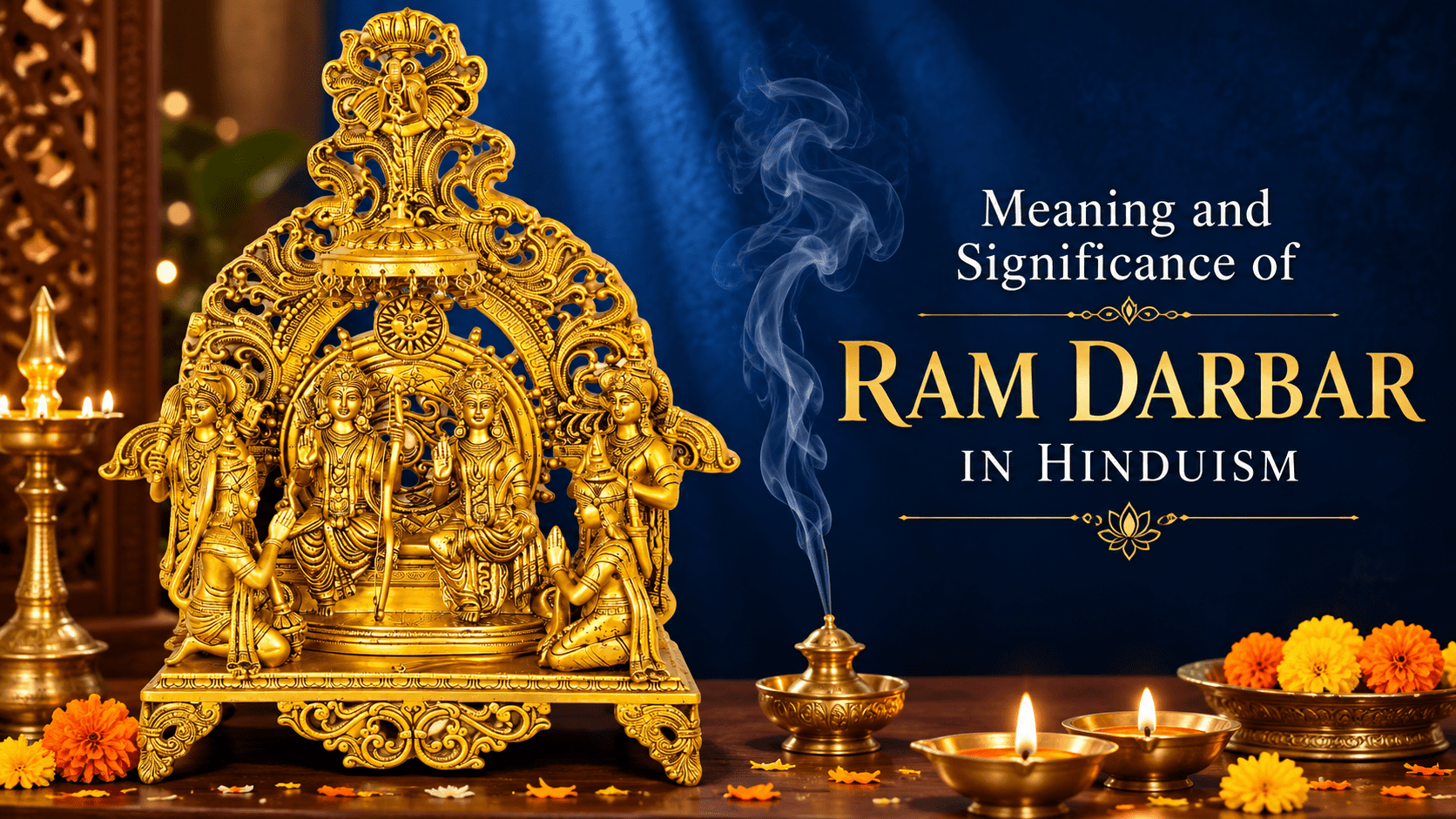
Meaning and Significance of Ram Darbar in Hinduism
Introduction
Ram Darbar is one of the most revered representations in Hinduism, symbolizing righteousness, devotion, family unity, and ideal leadership. It portrays Lord Ram, Goddess Sita, Lakshman, and Lord Hanuman together, each representing virtues that continue to inspire millions of devotees across generations.
More than a religious image, Ram Darbar reflects the values of truth, compassion, loyalty, courage, and selfless service. These timeless principles, beautifully illustrated through the lives of Lord Ram and his divine companions, remain deeply relevant even today. For this reason, Ram Darbar is commonly worshipped in homes, temples, and spiritual spaces throughout India.
Many devotees choose to place Ram Darbar in their home temple after understanding the ideal direction and placement explained in our Brass Ram Darbar Statue Vastu Guide: Direction & Placement. Whether during Ram Navami, Diwali, or regular prayers, Ram Darbar continues to hold a special place in Hindu tradition.
In this article, we explore the meaning of Ram Darbar, the symbolism behind each deity, and why this divine representation continues to inspire faith, devotion, and family values across generations.
What Does Ram Darbar Mean?
The word "Ram Darbar" literally translates to "The Royal Court of Lord Ram." In this divine representation, Lord Ram is shown seated or standing alongside Goddess Sita, his devoted brother Lakshman, and Lord Hanuman, his greatest devotee.
Unlike representations of individual deities, Ram Darbar emphasizes the importance of relationships, responsibilities, and harmony. It reminds devotees that true greatness is achieved through compassion, integrity, humility, and service to others.
The presence of all four divine figures together symbolizes the ideal balance between leadership, family values, loyalty, and devotion. Because of this, Ram Darbar is often regarded as a complete representation of an ideal life guided by dharma.
Lord Ram – The Embodiment of Dharma
Lord Ram is worshipped as Maryada Purushottam, meaning the ideal human who always upheld righteousness, truth, and moral values.
Throughout the Ramayana, Lord Ram demonstrated unwavering commitment to duty, even when faced with great personal sacrifice. His life teaches that true leadership is built upon honesty, compassion, courage, and responsibility.
For devotees, Lord Ram represents:
- Truth and righteousness
- Justice and fairness
- Compassion for all
- Respect for family values
- Duty towards society
- Humility despite power
These qualities make Lord Ram one of the most respected and beloved deities in Hinduism.
Goddess Sita – The Symbol of Purity and Strength
Standing beside Lord Ram is Goddess Sita, who represents grace, patience, courage, and unwavering faith.
Although she faced numerous hardships throughout her life, Sita remained steadfast in her principles and devotion. Her story continues to inspire millions by demonstrating resilience, dignity, and inner strength even during difficult circumstances.
In Hindu tradition, Goddess Sita symbolizes:
- Purity
- Compassion
- Patience
- Strength
- Dedication to family
- Unconditional love
Her presence in Ram Darbar reminds devotees that true strength often comes through patience, faith, and kindness.
Lakshman – The Ideal Brother and Loyal Companion
Lakshman devoted his life to serving Lord Ram with complete loyalty and selflessness. During Lord Ram's exile, Lakshman stood beside him without hesitation, protecting and supporting him throughout every challenge.
His unwavering commitment represents the importance of family, sacrifice, and responsibility.
Lakshman inspires devotees to value:
- Loyalty
- Discipline
- Selfless service
- Respect
- Duty towards loved ones
His role within Ram Darbar beautifully demonstrates the strength of family bonds built upon trust and dedication.
India Rama Durbar - Brass Statue,Height:23 Inch , Weight:25 Kg
Lord Hanuman – The Ultimate Symbol of Devotion
Lord Hanuman is one of the most worshipped deities in Hinduism because of his extraordinary devotion to Lord Ram.
Despite possessing immense strength and wisdom, Hanuman remained humble and dedicated solely to serving his Lord. His life teaches that true power is guided by humility, faith, and selfless service.
Devotees worship Lord Hanuman for:
- Courage
- Protection
- Devotion
- Strength
- Fearlessness
- Wisdom
His presence in Ram Darbar completes the divine representation by illustrating the highest form of bhakti (devotion).
Why Are All Four Deities Worshipped Together?
Ram Darbar is unique because it brings together four divine personalities who represent different yet complementary virtues.
Together they symbolize:
- Truth and righteousness through Lord Ram
- Love and compassion through Goddess Sita
- Loyalty through Lakshman
- Devotion through Lord Hanuman
Rather than focusing on individual qualities alone, Ram Darbar teaches that a balanced and meaningful life is built upon all these virtues working together.
Many families light traditional Brass Diyas during their daily prayers to create a peaceful devotional atmosphere.
Why Is Ram Darbar Important in Hindu Homes?
Many Hindu families choose to include Ram Darbar in their home temple because it represents an ideal household where love, respect, duty, and devotion exist together.
Daily prayers before Ram Darbar encourage family members to begin their day with gratitude and spiritual reflection. During festivals such as Ram Navami and Diwali, the Ram Darbar becomes the focal point of worship, bringing loved ones together in celebration and prayer.
Beyond its religious significance, Ram Darbar also represents the timeless cultural values that continue to shape Indian traditions and family life.
Spiritual Lessons We Learn from Ram Darbar
The teachings of Ram Darbar extend far beyond religious worship. Each deity represents qualities that help individuals lead a balanced, meaningful, and ethical life.
Lord Ram teaches us to uphold truth and righteousness even during difficult circumstances. Goddess Sita reminds us that patience, resilience, and compassion are powerful strengths. Lakshman inspires loyalty, discipline, and selfless service, while Lord Hanuman demonstrates that humility and unwavering devotion are among the greatest virtues a person can possess.
Together, these lessons encourage individuals to build stronger relationships, fulfill their responsibilities with sincerity, and approach life with faith and compassion. This timeless guidance is one of the reasons why Ram Darbar continues to inspire people across generations.
Importance of Ram Darbar in Daily Worship
For many Hindu families, worshipping Ram Darbar is an integral part of their daily spiritual routine. Beginning the day with prayers before Lord Ram and his divine family creates a sense of peace, gratitude, and positivity.
Many devotees perform daily rituals such as:
- Morning and evening prayers
- Lighting a diya
- Offering fresh flowers
- Chanting the name of Lord Ram
- Reading verses from the Ramayana
- Celebrating Ram Navami and other religious festivals
Regular worship not only strengthens one's spiritual connection but also encourages mindfulness and family participation in religious traditions.
To understand the spiritual blessings associated with worship, you can also read our guide on Benefits of Keeping a Brass Ram Darbar Idol at Home.
Why Brass Is Preferred for Ram Darbar Idols
Although Ram Darbar idols are available in various materials, brass has remained one of the most preferred choices in Indian households for centuries.
Traditional Significance
Brass has long been associated with Hindu worship and is commonly used for idols, diyas, bells, and other pooja accessories. Its enduring presence in temples and homes reflects its importance in Indian spiritual traditions.
Exceptional Durability
A well-crafted brass idol can retain its beauty for generations. Unlike many decorative materials, brass offers excellent strength and longevity, making it suitable for regular worship.
Timeless Beauty
The warm golden finish of brass enhances the divine appearance of Ram Darbar while complementing both traditional and contemporary home temples.
Handcrafted Excellence
Many premium brass idols are handcrafted by skilled Indian artisans who preserve traditional metalworking techniques. Their attention to detail ensures every idol reflects both artistic excellence and devotional significance.
Ram Darbar in Modern Homes
As lifestyles evolve, the role of home temples continues to remain important for many families. Even in modern apartments and compact homes, people create dedicated prayer corners where they can spend a few peaceful moments each day.
A thoughtfully placed Ram Darbar idol serves not only as a sacred object of worship but also as a reminder of timeless values such as honesty, compassion, discipline, and devotion.
Many families also choose Ram Darbar idols as meaningful gifts for weddings, housewarming ceremonies, anniversaries, and religious celebrations because they symbolize blessings, prosperity, and family harmony.
Regardless of the size of the home or the style of the interior, Ram Darbar continues to bring together spirituality, tradition, and Indian craftsmanship in a meaningful way.
Why Ram Darbar Continues to Inspire Generations
The story of Lord Ram has been passed down through generations for thousands of years. While times have changed, the values represented by Ram Darbar remain just as meaningful today.
In a fast-paced world, people continue to seek peace, guidance, and balance in their daily lives. Ram Darbar reminds us that lasting happiness is built upon honesty, respect, compassion, responsibility, and unwavering faith.
These universal values make Ram Darbar relevant not only as a sacred representation in Hinduism but also as a timeless source of inspiration for families around the world.
Conclusion
Ram Darbar is much more than a depiction of four revered figures from the Ramayana. It is a powerful symbol of righteousness, devotion, family unity, and moral values that continue to guide millions of devotees.
Lord Ram, Goddess Sita, Lakshman, and Lord Hanuman each represent qualities that inspire individuals to live with integrity, compassion, loyalty, and faith. Together, they remind us that true strength lies not only in courage but also in humility, responsibility, and devotion.
Whether worshipped in a grand temple or a simple home shrine, Ram Darbar continues to inspire peace, positivity, and spiritual growth. By understanding its deeper meaning and significance, devotees can strengthen their connection with these timeless teachings while preserving India's rich spiritual and cultural heritage.
Frequently Asked Questions
1. What is the meaning of Ram Darbar in Hinduism?
Ram Darbar refers to the divine court of Lord Ram, where he is depicted with Goddess Sita, Lakshman, and Lord Hanuman. Together they symbolize righteousness, devotion, family harmony, and ideal leadership.
2. Why is Ram Darbar worshipped?
Ram Darbar is worshipped because it represents truth, compassion, loyalty, courage, and unwavering devotion. Many devotees believe it inspires peace, harmony, and positive values within the family.
3. Who are the four deities in Ram Darbar?
Ram Darbar consists of Lord Ram, Goddess Sita, Lakshman, and Lord Hanuman. Each deity represents different virtues that together symbolize an ideal family and righteous living.
4. Why do people keep Ram Darbar in their home temple?
Many families place Ram Darbar in their home temple to create a peaceful devotional environment and to remember the teachings of Lord Ram and his divine family during daily worship.
5. Why are Brass Ram Darbar Idols popular?
Brass Ram Darbar Idols are valued for their durability, traditional significance, timeless beauty, and intricate handcrafted detailing, making them suitable for both worship and home décor.
Read more
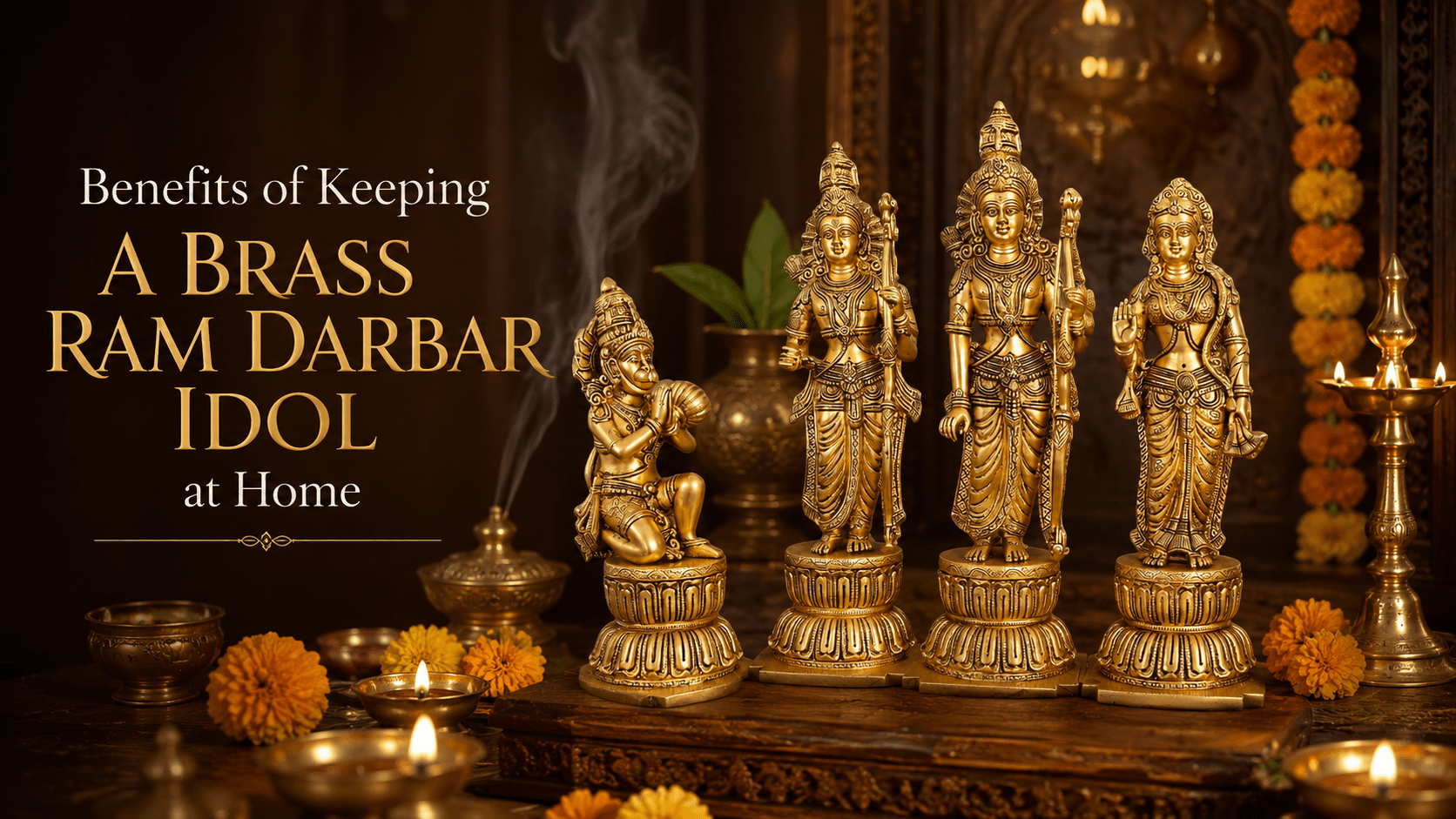
Benefits of Keeping a Brass Ram Darbar Idol at Home
Discover the spiritual significance and timeless benefits of keeping a handcrafted Brass Ram Darbar Idol at home. Learn how it promotes peace, family harmony, devotion, and creates a sacred atmosph...
Read more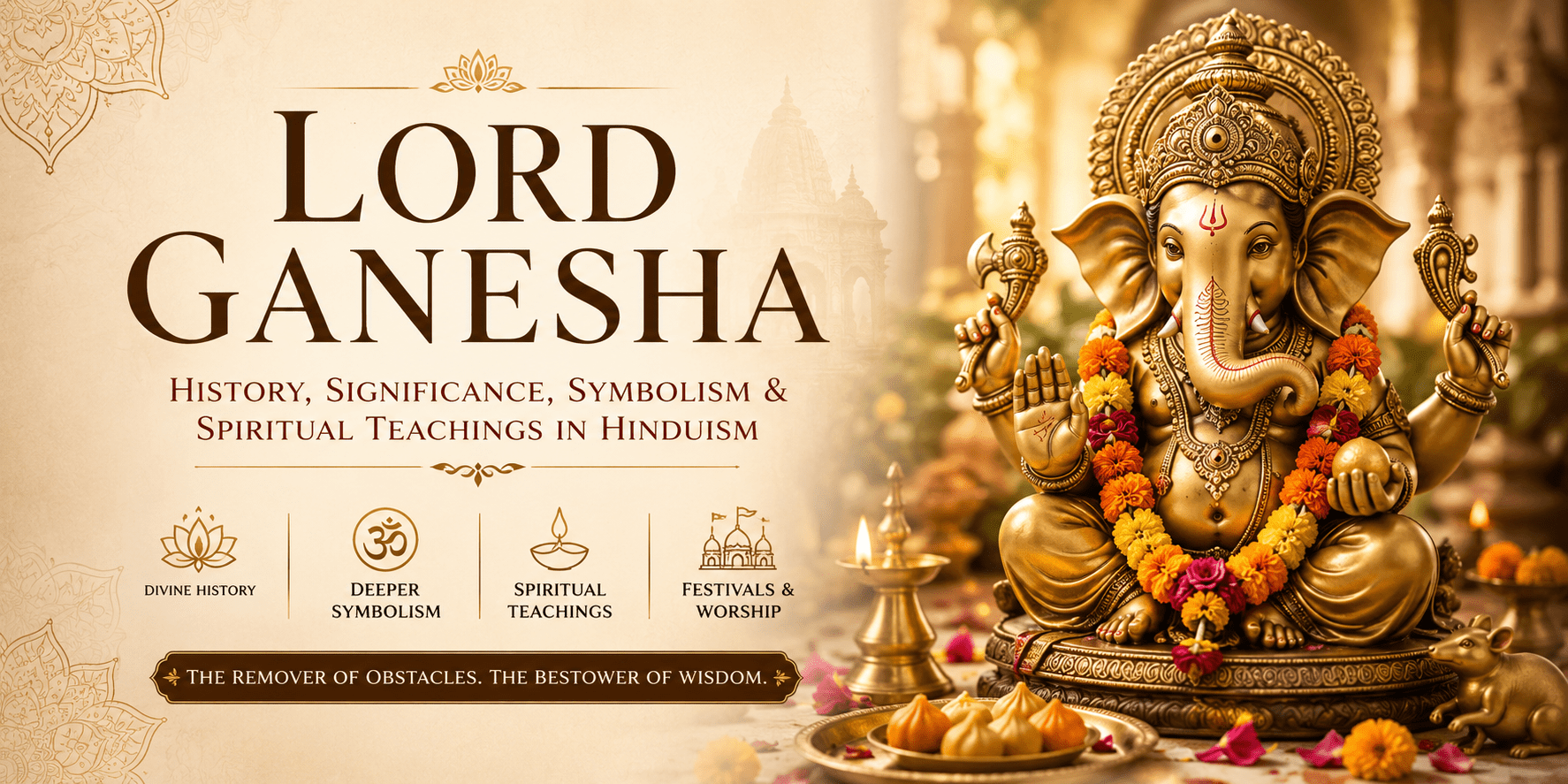
Lord Ganesha: History, Significance, Symbolism & Spiritual Teachings in Hinduism
Discover the inspiring history, symbolism, and spiritual teachings of Lord Ganesha. Learn about his birth, significance in Hinduism, sacred symbols, festivals, worship rituals, and timeless lessons...
Read more