
Article: Exploring Hindu Puja Tools: A Guide to Sacred Utensils & Ritual Items

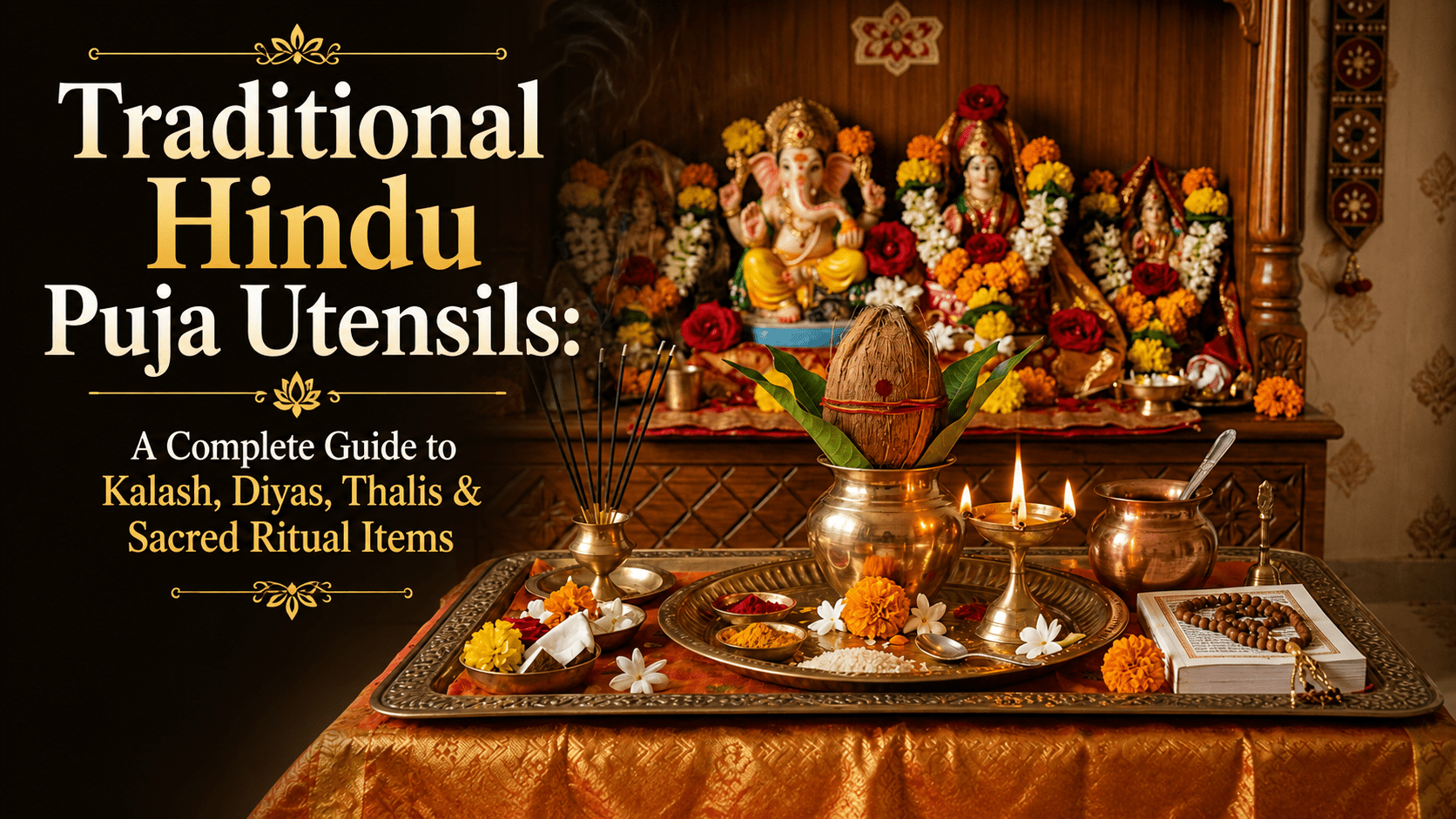
Exploring Hindu Puja Tools: A Guide to Sacred Utensils & Ritual Items
Table of Contents
1.What Are Traditional Hindu Puja Utensils?
2.Why Are Puja Utensils Important in Hindu Worship?
3.Kalash: The Sacred Vessel of Prosperity
4.Diyas: Lighting the Path of Devotion
5.Puja Thali: The Heart of Every Ritual
6.Brass, Copper & Kansa: The Metals Behind Sacred Traditions
7.Traditional Puja Utensils Used in Hindu Festivals
8.Essential Puja Items Every Hindu Home Should Have
.TL;DR
FAQ
9.Conclusion
Introduction
Step into a Hindu home during a festival, and you'll notice something remarkable. Before the prayers begin, before the incense fills the air, and before the lamps are lit, a collection of sacred objects quietly takes its place at the center of the ritual. A shining brass Kalash adorned with mango leaves, a beautifully arranged puja thali, a glowing diya, and a copper lota filled with water—each item tells a story that has been passed down through generations.
These traditional Hindu puja utensils are far more than ceremonial accessories. They represent devotion, prosperity, purity, and gratitude. For centuries, they have played an essential role in Hindu worship, helping devotees create a sacred connection with the divine. Whether it is a simple morning prayer at home or a grand celebration of Diwali, Navratri, Janmashtami, or Ganesh Chaturthi, these sacred ritual items remain at the heart of every ceremony.
What makes these objects so special is not just their craftsmanship but the meaning they carry. Every utensil used in worship has a purpose, a symbolism, and a story rooted in India's rich spiritual heritage. Crafted from metals such as Brass ,copper and kansa... these items have been treasured for generations for both their ritual significance and enduring beauty.
In this guide, we'll explore the most important Hindu puja utensils, uncover the fascinating stories behind them, and discover why they continue to hold a timeless place in homes and temples across India.
Quick Facts About Traditional Hindu Puja Utensils
-
Kalash symbolizes prosperity and divine energy.
-
Diyas represent light, wisdom, and positivity.
-
Puja Thali brings together essential worship items.
-
Brass, copper, and kansa are the most commonly used ritual metals.
-
These utensils are widely used during Diwali, Navratri, Janmashtami, and Ganesh Chaturthi.
1.What Are Traditional Hindu Puja Utensils?
Imagine preparing for a festival celebration with your family. Flowers are arranged, sweets are prepared, and prayers are about to begin. Yet, no ritual feels complete without the sacred utensils that accompany the worship.
Traditional Hindu puja utensils are the ritual objects used during prayers, festivals, and religious ceremonies. These include the Kalash, diya, puja thali, bell (ghanti), copper lota, incense holder, and various offering vessels. While they may appear simple at first glance, each one carries deep spiritual significance and serves a unique purpose during worship.
In Hindu tradition, these sacred ritual items are not treated as ordinary household objects. They are considered mediums through which prayers, offerings, and intentions are presented to the divine. A lit diya symbolizes the triumph of light over darkness, while a Kalash represents abundance and divine energy. Together, these traditional puja items create an atmosphere of devotion and help transform everyday spaces into sacred ones.
Did You Know?
The same craftsmanship can still be seen in modern handcrafted brass and kansa products .Ancient temple carvings and manuscripts depict puja utensils that closely resemble the Kalash, diyas, and ritual vessels still used in homes today, highlighting the remarkable continuity of India's spiritual traditions.
2. Why Are Puja Utensils Important in Hindu Worship?

Picture a Hindu festival morning. The fragrance of fresh flowers fills the air, devotional chants echo through the home, and family members gather around a beautifully prepared altar. Yet, before a single prayer is offered, sacred utensils such as the Kalash, diya, and puja thali are carefully arranged in their designated places. This tradition has been followed for centuries, and it highlights the important role puja utensils play in Hindu worship.
In Hinduism, every ritual is designed to create a deeper connection between the devotee and the divine. Traditional Hindu puja utensils serve as sacred mediums through which prayers, offerings, and intentions are presented to deities. They help transform an ordinary space into a spiritual environment where devotion, gratitude, and mindfulness can flourish.
Each utensil carries its own symbolism. A Kalash represents abundance and divine energy, a diya symbolizes the victory of light over darkness, while a puja thali brings together the essential elements used during worship. Together, these sacred ritual items create harmony and structure within religious ceremonies, ensuring that every offering is made with reverence and purpose.
Beyond their spiritual significance, puja utensils also reflect India's rich cultural heritage. Many of these items are crafted from brass, copper, and kansa—metals that have been valued for generations for their durability, beauty, and traditional importance. Their continued use in homes their continued and temples serves as a reminder that Hindu rituals are not merely practices but living traditions passed down from one generation to the next." as a reminder that Hindu rituals are not merely practices but living traditions passed down from one generation to the next.
Did You Know?
Ancient Hindu scriptures often describe worship as a combination of the five elements of nature—earth, water, fire, air, and space. Many traditional puja utensils symbolically represent these elements, making them an essential part of creating a complete and balanced ritual experience.
3.Kalash: The Sacred Vessel of Prosperity
Walk into a Hindu home during Navratri, a wedding ceremony, or a housewarming celebration, and you'll almost certainly find a beautifully decorated Kalash placed at the center of the ritual space. Adorned with fresh mango leaves and topped with a coconut, this sacred vessel is one of the most important traditional Hindu puja utensils and is considered a symbol of prosperity, purity, and divine blessings.
The word Kalash refers to a metal pot, traditionally crafted from brass or copper and filled with water. In Hindu tradition, it is believed to represent the source of life and creation. The water inside symbolizes purity and abundance, while the coconut and leaves signify growth, fertility, and positive energy. Together, they form what is known as the Purna Kalash, an auspicious symbol that welcomes divine presence into homes and sacred spaces.
What makes the Kalash truly remarkable is its presence across countless Hindu rituals and festivals. During Navratri, devotees perform Kalash Sthapana to mark the beginning of the nine-day celebration dedicated to Goddess Durga. In Diwali, the Kalash is placed near the altar to invite prosperity and blessings from Goddess Lakshmi. It also plays a central role in weddings, Griha Pravesh ceremonies, and temple rituals, symbolizing abundance and new beginnings.
Beyond its religious significance, the Kalash reflects India's rich cultural heritage. Ancient scriptures and temple carvings frequently depict this sacred vessel, highlighting its importance in spiritual practices for thousands of years. Even today, families continue to use brass and copper Kalash vessels during worship, preserving traditions that have been passed down through generations.
Did You Know?
The Kalash is often referred to as the "Purna Kumbha", which translates to "full vessel." In Hindu symbolism, a full Kalash represents prosperity, wisdom, and the infinite blessings of the divine. It is considered so auspicious that it is frequently used to welcome honored guests and mark important life events.
4.Diyas: Lighting the Path of Devotion

As evening approaches and the first diya is lit, a warm glow spreads across the home, creating an atmosphere of peace and devotion. This simple act, practiced for generations, is one of the most recognizable traditions in Hindu worship. Whether during daily prayers or grand celebrations like Diwali, diyas remain an essential part of traditional Hindu puja utensils.
The diya symbolizes the triumph of light over darkness and knowledge over ignorance. In Hindu philosophy, light is often associated with wisdom, truth, and divine guidance. Lighting a diya before prayers is believed to remove negativity and invite positive energy into the surroundings.
Traditionally, diyas are crafted from clay, brass, or copper. While clay diyas are widely used during festivals, brass diyas are especially valued for their durability and timeless beauty. Their elegant designs often become cherished family heirlooms passed down through generations.
Did You Know?
The Sanskrit word Deepa means "lamp" or "light." Ancient oil lamps similar to modern diyas have been discovered at archaeological sites across India, proving that this tradition has existed for thousands of years.
5.Puja Thali: The Heart of Every Ritual
Every Hindu ceremony begins with preparation, and at the center of that preparation is the puja thali. Carefully arranged with sacred items, the thali brings together everything needed for worship in one place.
A traditional puja thali often contains a diya, kumkum, turmeric, rice grains, flowers, incense sticks, and other Hindu worship accessories required for daily prayers and festival rituals.. Each item represents a different aspect of devotion and helps create a meaningful worship experience.
The importance of the puja thali becomes especially visible during festivals such as Raksha Bandhan, Karva Chauth, Janmashtami, and Ganesh Chaturthi. Family members gather around the thali as prayers and rituals are performed, making it a symbol of unity and tradition.
Beyond its practical role, the puja thali represents completeness. By bringing together the essential elements of worship, it reminds devotees that spirituality involves both intention and action.
Did You Know?
Many traditional puja thalis are handcrafted by artisans using brass and copper techniques that have been practiced for generations, preserving India's rich metalworking heritage.
6.Brass, Copper & Kansa: The Metals Behind Sacred Traditions

Long before stainless steel became common in Indian households, brass, copper, and kansa were the preferred metals for both worship and daily living. Their continued use in Hindu rituals reflects centuries of tradition and cultural wisdom.
Brass is often associated with positivity and durability,which is why brass puja utensils remain a preferred choice in homes and temples across India making it a popular choice for diyas, bells, and puja thalis. Copper is valued for its purity and is commonly used for Kalash vessels and lotas. Kansa, an alloy known in Ayurveda, has been treasured for generations for its traditional significance.
|
Metal |
Common Uses |
Traditional Significance |
|
Brass |
Diyas, Bells, Thalis |
Prosperity & Positivity |
|
Copper |
Kalash, Lota |
Purity & Sacred Energy |
|
Kansa |
Bowls, Plates |
Heritage & Wellness |
Did You Know?
Many ancient temples across India still use brass and copper ritual vessels that follow designs preserved for centuries.
7.Traditional Puja Utensils Used in Hindu Festivals

Travel across India during festival season, and you'll notice that while customs differ from region to region, traditional Hindu puja utensils remain at the heart of every celebration. From the glow of diyas during Diwali to the sacred Kalash used in Navratri, these ritual items help devotees express their faith and preserve age-old traditions.
|
Festival |
Common Puja Utensils |
Purpose |
|
Diwali |
Diya, Kalash, Puja Thali |
Welcoming Goddess Lakshmi and celebrating the triumph of light over darkness |
|
Navratri |
Kalash, Brass Lamp |
Invoking Goddess Durga and marking the beginning of the festival through Kalash Sthapana |
|
Ganesh Chaturthi |
Puja Thali, Copper Lota, Diya |
Offering prayers and aarti to Lord Ganesha |
|
Janmashtami |
Brass Bowls, Kalash, Ritual Vessels |
Decorating Krishna altars and performing devotional rituals |
|
Karva Chauth |
Puja Thali, Diya |
Performing prayers and moon-worship ceremonies |
These sacred puja items not only support religious practices but also strengthen family traditions and cultural identity. Their continued use across generations highlights the enduring importance of Hindu ritual items in festivals and celebrations throughout India.
Did You Know?
Many Hindu festivals involve specific traditional worship items that have remained largely unchanged for centuries, reflecting the remarkable continuity of India's spiritual and cultural heritage.
8. Essential Puja Items Every Hindu Home Should Have
While rituals may vary from family to family, certain traditional Hindu puja utensils are considered essential for every home temple:
-
Diya
-
Puja Thali
-
Copper Lota
-
Bell (Ghanti)
-
Incense Holder
These timeless items help create a sacred space for daily worship and festival celebrations while preserving the spiritual traditions that have guided generations
.The Legacy of India's Sacred Metal Crafts
Behind every beautifully crafted Kalash, diya, and puja thali lies a tradition that has been preserved for centuries by skilled artisans across India. Long before modern manufacturing, communities of metal craftsmen dedicated themselves to shaping brass, copper, and kansa into sacred ritual items used in homes and temples. Their techniques, passed down through generations, combined artistry with deep spiritual understanding, ensuring that each piece served both a practical and symbolic purpose.
Brass artisans meticulously crafted lamps and thalis, while copper craftsmen created Kalash vessels and lotas that became integral to Hindu worship. Many of these traditional methods continue to survive today, keeping alive a rich heritage that reflects India's cultural identity. By choosing handcrafted puja utensils, families not only preserve sacred rituals but also support the generations of artisans whose craftsmanship has helped carry these traditions forward through time.
Did You Know?
Many traditional brass and copper utensils used in Hindu worship today closely resemble designs depicted in ancient Indian temple carvings and historical manuscripts, showcasing the remarkable continuity of India's spiritual and artistic heritage.
TL;DR
-
Traditional Hindu puja utensils are sacred ritual items used in daily worship, festivals, and religious ceremonies.
-
The Kalash symbolizes prosperity, abundance, and divine blessings.
-
Diyas represent light, wisdom, positivity, and the victory of good over evil.
-
A Puja Thali brings together the essential elements needed for worship and offerings.
-
Brass, copper, and kansa have been preferred for centuries due to their spiritual, cultural, and traditional significance.
-
These sacred ritual items play an important role in festivals such as Diwali, Navratri, Janmashtami, and Ganesh Chaturthi.
-
Traditional metal crafts and artisan techniques have helped preserve India's rich spiritual heritage across generations.
-
Using authentic puja utensils helps maintain the sanctity of rituals while keeping timeless traditions alive.
FAQ
1. What are traditional Hindu puja utensils?
Traditional Hindu puja utensils are sacred ritual items used during prayers, festivals, and religious ceremonies. Common examples include the Kalash, diya, puja thali, copper lota, bell (ghanti), and incense holder. These items help create a sacred environment for worship and offerings.
2. Why is a Kalash considered sacred in Hinduism?
The Kalash symbolizes prosperity, abundance, purity, and divine energy. Filled with water and decorated with mango leaves and a coconut, it is used in many Hindu rituals to invoke blessings and mark auspicious beginnings.
3. Why are diyas important in Hindu worship?
Diyas represent light, wisdom, and positivity. Lighting a diya before prayers symbolizes the victory of knowledge over ignorance and is believed to invite divine blessings into the home.
4. What items are included in a traditional puja thali?
A traditional puja thali typically contains a diya, kumkum, turmeric, rice grains, flowers, incense sticks, camphor, and offerings for the deity. These Hindu worship accessories are arranged together to facilitate prayers and rituals.
5. Why are brass and copper used for puja utensils?
Brass and copper have been used for centuries in Hindu rituals due to their traditional, cultural, and spiritual significance. Many sacred puja items such as diyas, Kalash vessels, and lotas are crafted from these metals.
6. What are the essential puja items every Hindu home should have?
Some of the most important home temple essentials include a Kalash, diya, puja thali, copper lota, bell (ghanti), incense holder, and idols or images of deities. These traditional worship items help create a complete space for daily prayers.
7. Which festivals commonly use traditional Hindu puja utensils?
Traditional Hindu puja utensils are widely used during festivals such as Diwali, Navratri, Ganesh Chaturthi, Janmashtami, Raksha Bandhan, and Karva Chauth. Different Hindu ritual items are used depending on the festival and regional customs.
8. How do traditional puja utensils help preserve Indian heritage?
Many traditional Indian brassware and copper puja vessels are handcrafted using techniques passed down through generations. Their continued use supports artisan communities and helps preserve India's rich cultural and spiritual heritage.
9.What is Kalash Sthapana?
Kalash Sthapana is a sacred Hindu ritual performed at the beginning of Navratri. A decorated Kalash filled with water and topped with mango leaves and a coconut is स्थापित (installed) to invoke divine blessings and mark the start of the festival.
9.Conclusion
As festivals continue to bring families together and daily prayers remain a source of comfort, traditional Hindu puja utensils continue to connect the present with centuries of spiritual heritage. From the sacred Kalash to the humble diya, these timeless ritual items remind us that devotion is not only expressed through prayer but also through the traditions we preserve and pass on to future generations.
Read more
Complete Guide to Hindu Pooja Rituals & Daily Worship
Discover the meaning, history, and step-by-step process of Hindu pooja with this complete guide. Learn about essential pooja items, brass pooja accessories, daily worship rituals, Vastu tips, and p...
Read more