
Article: Old Brass Items: How to Identify, Restore & Style Traditional Brass Décor

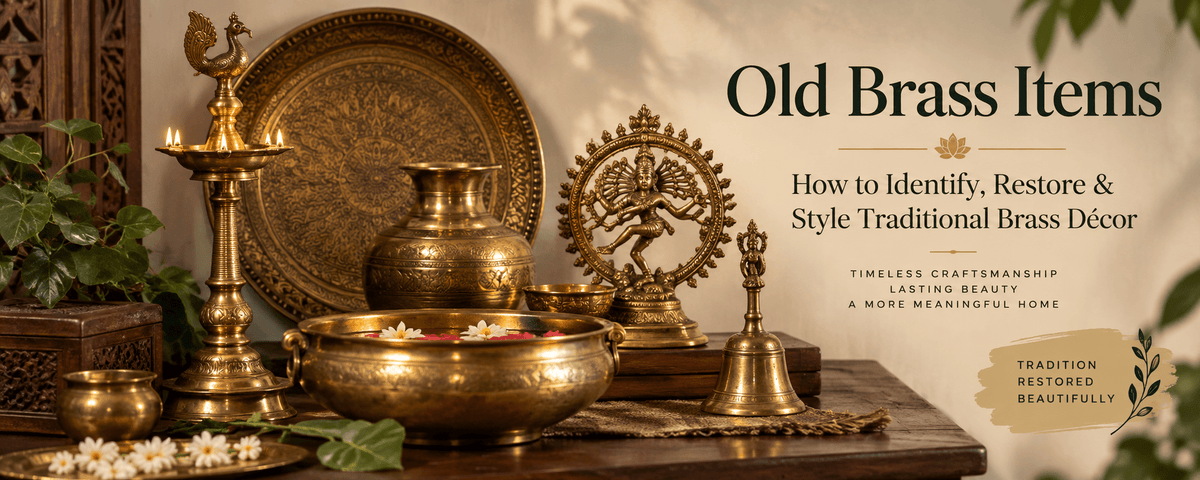
Old Brass Items: How to Identify, Restore & Style Traditional Brass Décor
Old brass items have a charm that modern décor often struggles to reproduce. Their warm golden tone, handcrafted details, aged surface and connection to Indian traditions can give a home a sense of character and history.
From traditional diyas and lotas to urli bowls, bells, trays, sculptures and decorative vessels, brass has been part of Indian homes for generations. Explore our collection of handcrafted brass home décor for traditional pieces that bring warmth and heritage into modern spaces.
If you have inherited an old brass item, discovered one at home or purchased a vintage-looking piece, you may wonder: How do you identify genuine brass, restore it safely and style it without losing its traditional character?
The good news is that an old brass item does not always need to look brand new to be beautiful. Its natural patina, small marks and signs of age can be part of its appeal.
This guide explains how to identify, clean, restore and style old brass items while preserving their traditional charm.
Table of Contents
-
What Are Old Brass Items?
-
How to Identify Genuine Brass
-
Old Brass vs Antique Brass
-
Why Does Brass Turn Dark?
-
How to Clean and Restore Old Brass
-
Restoration Mistakes to Avoid
-
How to Style Traditional Brass Décor
-
How to Maintain Brass Items
-
Frequently Asked Questions
What Are Old Brass Items?
Old brass items are traditional or vintage brass objects that have been used, stored or passed down over time. They may include household utensils, religious objects and decorative pieces.
Common examples include:
-
Brass diyas and oil lamps
-
Brass urli bowls
-
Brass bells and ghantis
-
Brass trays
-
Brass lotas and kalash
-
Brass containers
-
Brass sculptures and figurines
-
Brass candle holders
-
Decorative bowls and vessels
Many older pieces feature hand-engraved patterns, hammered textures, floral motifs, religious symbols or regional craftsmanship.
Over time, exposure to air, moisture and handling naturally changes the surface of brass, giving older pieces their distinctive appearance.
How to Identify Genuine Brass

(how to identify genuine old brass items)
Before restoring an old brass item, it is useful to determine whether it is actually brass.
Brass is an alloy primarily made from copper and zinc, although its exact composition can vary.
1. Look at the Colour
Genuine brass generally has a warm yellow-golden appearance. Depending on age and finish, it can range from bright gold to a deeper brownish-gold.
Colour alone, however, cannot prove that an item is brass because other metals can be plated or finished to resemble it.
2. Check Worn Areas
Examine edges, corners and areas where the surface has experienced wear. If a coating has worn away and a completely different metal appears underneath, the object may be plated rather than solid brass.
3. Examine the Craftsmanship
Older handcrafted brass pieces may show subtle variations, engraving marks, hammer marks or casting details. These characteristics can reflect traditional manufacturing techniques.
For valuable or potentially antique objects, visual inspection is not enough. A professional antique dealer, conservator or metal specialist can provide a more reliable assessment.
Old Brass vs Antique Brass: What Is the Difference?
Old brass simply refers to brass that has age or has been used for a long period.
Antique brass can refer to an older object with historical, artistic or collectible significance. Its value may depend on age, craftsmanship, provenance, rarity and condition.
The term “antique brass” can also describe a modern finish designed to imitate aged brass.
Therefore, an item can look antique without actually being an antique.
If you believe an old brass object has significant historical or monetary value, avoid aggressive polishing until it has been professionally assessed.
Why Does Brass Turn Dark Over Time?

(natural patina on old brass items)
One of the most attractive characteristics of old brass is its changing surface.
When brass comes into contact with air and moisture, its surface gradually reacts with the environment. Oils from handling and other environmental factors can also affect its appearance.
Over time, bright brass can become darker, duller or brownish. This aged surface is commonly known as patina.
Patina is not necessarily a sign of damage. On decorative objects, it can add depth and make engraved or sculpted details more noticeable.
For many collectors and décor enthusiasts, natural patina is part of the beauty of an old brass item.
How to Clean and Restore Old Brass

(cleaning and restoring an old brass item with a soft cloth)
Restoration does not always mean making an old brass piece look completely new. The goal should be to refresh its appearance while preserving its character.
Step 1: Remove Dust
Use a soft, dry microfiber cloth to remove dust from the surface, corners and engraved areas.
Step 2: Clean Gently
For ordinary brass décor suitable for washing, use lukewarm water and a mild dishwashing solution. Avoid soaking pieces with delicate attachments or materials that may be damaged by water.
Step 3: Use a Soft Brush
For engraved or textured brass, use a soft-bristled brush to reach recessed areas. Avoid aggressive scrubbing.
Step 4: Rinse and Dry
Remove soap residue with clean water and dry the object immediately with a soft cloth. Do not leave moisture sitting on the brass.
Step 5: Polish Only When Necessary
If you want a brighter finish, use a brass polish suitable for the object and follow the manufacturer's instructions. Always test the product on a small, inconspicuous area first.
For valuable antiques, delicate objects or pieces with lacquer, enamel, stones, wood or other attached materials, professional restoration is the safer option.
For more detailed maintenance advice, see our guide on how to clean brass utensils and keep brass looking beautiful with regular care.
Restoration Mistakes to Avoid

(before and after restoration of an old brass bowl)
A common mistake is assuming that stronger cleaning always produces better results.
Avoid using:
-
Steel wool or rough scouring pads
-
Excessive scrubbing
-
Strong chemicals without testing
-
Excessive polishing
-
Abrasive cleaning methods
Repeated aggressive polishing can alter the surface and reduce the character of detailed pieces.
Most importantly, do not treat a valuable antique like an ordinary brass utensil. If its age or value is uncertain, seek professional advice before attempting restoration.
How to Style Old Brass Items at Home

(`traditional brass decor styled in a modern Indian home`)
Old brass décor can work beautifully in traditional as well as contemporary interiors. The key is to use it thoughtfully rather than overcrowding a space.
1. Create a Traditional Pooja Corner
A brass diya, bell, kalash or other brass pooja items can add warmth to a pooja space. Combine brass with natural wood, cotton textiles and subtle traditional artwork.
2. Style a Brass Urli as a Centrepiece
A brass urli can become an elegant centrepiece on a console, coffee table or entrance table. Add flowers or floating diyas for a festive arrangement, or keep it simple for everyday décor.
3. Decorate the Entryway
A traditional brass bowl, diya, bell or sculpture can make an entrance feel welcoming. One statement piece is often more effective than filling the entire console.
4. Combine Brass with Wood
Brass and wood naturally complement one another. Place an old brass object on a wooden console, shelf or sideboard for a warm, heritage-inspired look.
5. Mix Brass with Modern Décor
You do not need a traditionally styled home to use brass.
A single aged brass sculpture, bowl or lamp can create contrast against neutral walls and minimalist furniture. This makes traditional brass décor particularly versatile.
6. Create a Brass Display Shelf
Group smaller brass decorative items, such as a brass bell, diya, decorative bowl and miniature sculpture, at different heights. Leave enough empty space between objects so the arrangement feels intentional rather than cluttered.
Where to Place Traditional Brass Décor
Different pieces work well in different areas:
Living room: Urli bowls, sculptures, trays and decorative bowls.
Entrance: Diyas, bells, bowls and statement pieces.
Pooja room: Diyas, kalash, bells and traditional ritual accessories.
Dining area: Brass serving pieces, bowls and trays.
Bedroom: Small decorative objects on shelves or side tables.
Balcony: Brass planters or hanging décor in areas protected from rain and excessive humidity.
How to Maintain Brass After Restoration
Regular maintenance can help keep brass looking beautiful for longer.
Dust decorative brass pieces periodically with a soft cloth. Avoid unnecessary handling of polished surfaces because oils from hands can leave marks.
When brass becomes dull, clean it gently rather than immediately using a strong polish.
Store unused brass pieces in a dry environment and never wrap them while they are damp.
For outdoor brass décor, remember that humidity, rain and pollutants can accelerate surface changes.
Why Handcrafted Brass Still Works in Modern Homes

(brass decorative items arranged on a display shelf)
Brass continues to have a place in modern interiors because it combines craftsmanship, warmth and heritage.
Discover handcrafted brass décor from Royal Stuffs to bring this timeless character into your own home.
A handcrafted brass object can introduce texture and history into a minimalist room, while traditional décor pieces can complement more classic Indian interiors.
You do not need dozens of brass objects. A few thoughtfully selected pieces can become focal points.
Whether you are restoring an inherited piece or purchasing new handcrafted brass décor, the goal is not always perfection. Sometimes, the small variations and signs of age are exactly what make brass beautiful.
Frequently Asked Questions
Are old brass items valuable?
Some old brass objects can have collectible or sentimental value, particularly when they have distinctive craftsmanship, historical significance, provenance or rarity. Age alone does not automatically make an item valuable.
How can I tell if an old item is brass?
Colour, worn areas, construction and craftsmanship can provide clues, but these methods are not definitive. Valuable pieces should be professionally assessed.
Why do old brass items turn black?
Brass reacts naturally with air, moisture and environmental conditions. This can cause tarnishing and create a darker or brownish appearance.
Should I polish antique brass?
Not necessarily. Polishing can remove natural patina and may affect the character of an antique. Seek professional advice if the item may be valuable.
Can old brass décor be used in modern homes?
Yes. Aged brass can add warmth, contrast and character to minimalist, contemporary, rustic and traditional interiors.
How often should brass décor be cleaned?
There is no fixed schedule. Dust regularly and clean when the item becomes visibly dirty or tarnished. Avoid unnecessary aggressive polishing.
Can brass décor be used during festivals?
Yes. Traditional brass diyas, urlis, bells, trays and decorative pieces work particularly well for festive and celebratory settings.
Final Thoughts
Old brass items are more than metal objects. They can represent Indian craftsmanship, family traditions and memories passed from one generation to another.
Whether you are restoring an inherited brass diya, displaying an old decorative bowl or introducing traditional brass décor into a modern home, treat the material with care.
Clean gently, polish thoughtfully and preserve character wherever possible.
And when adding new pieces to your collection, choose handcrafted brass décor that carries the same sense of craftsmanship and timeless appeal. With the right care, today's brass décor can become tomorrow's treasured old brass piece. With the right care, today's brass décor can become tomorrow's treasured old brass piece.
Read more
How to Clean and Maintain a Brass Lunch Box Naturally
Learn how to clean and maintain a brass lunch box naturally using simple household methods. Keep your handcrafted brass lunch box looking beautiful and lasting for years with our easy care guide.
Read more