

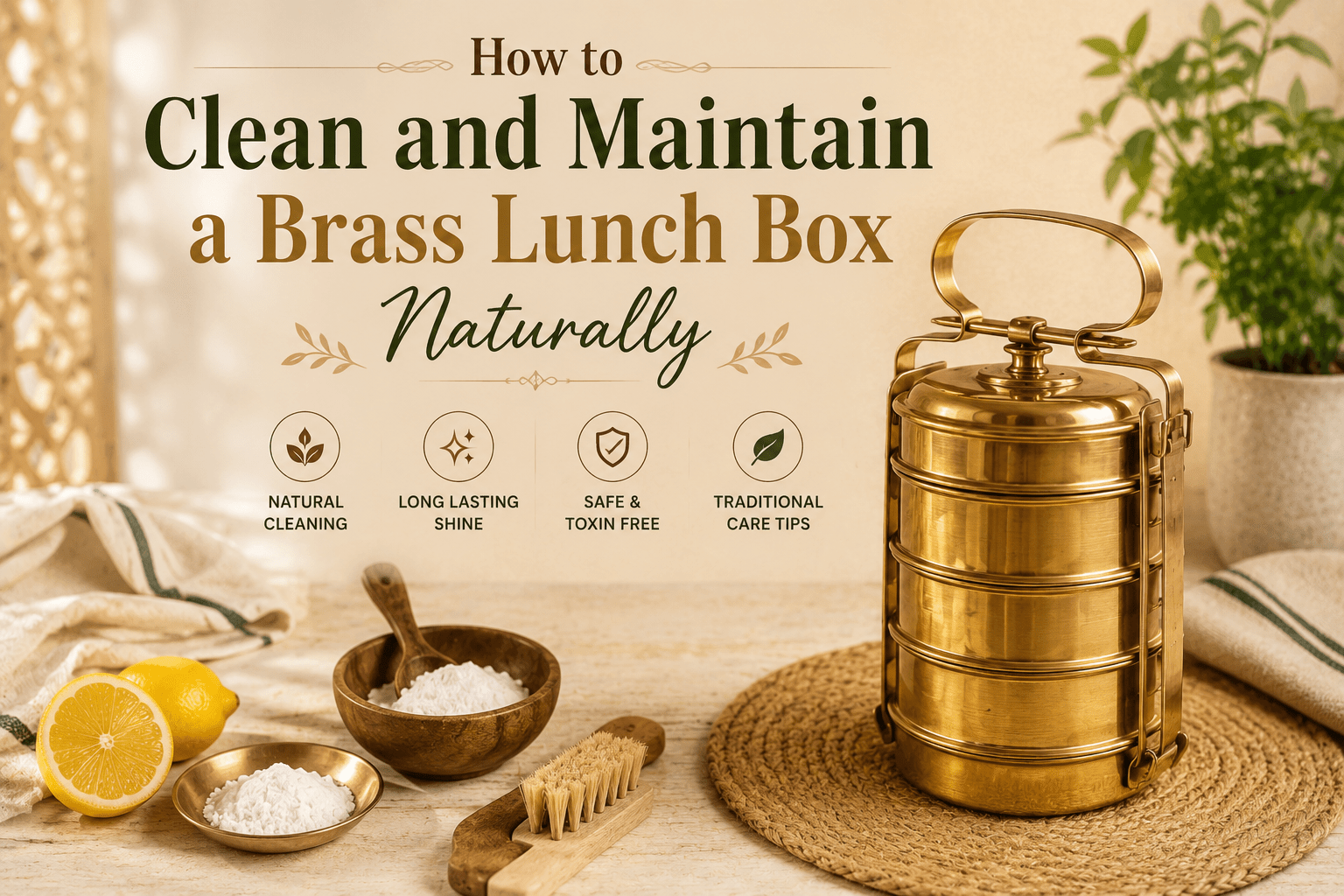
How to Clean and Maintain a Brass Lunch Box Naturally
Introduction
A handcrafted Royal Lunch Box is more than just a practical way to carry homemade meals—it is a timeless piece of Indian craftsmanship designed to last for years. If you're still deciding whether brass is the right material for you, our detailed comparison of Brass vs Stainless Steel Lunch Box can help you choose the best option. Whether you use it daily for office lunches or occasionally for travel and family outings, proper cleaning and maintenance play a vital role in preserving its beauty, durability, and functionality.
Like all premium metalware, brass naturally changes over time. Exposure to air, moisture, and regular handling can gradually create a darker surface known as a patina. While many people appreciate this natural ageing process as part of brass's unique character, others prefer maintaining its bright golden shine.
The good news is that caring for a brass lunch box is simple. With regular cleaning, proper drying, and a few natural household ingredients, you can keep your handcrafted lunch box looking elegant while ensuring it remains suitable for everyday use.
If your lunch box includes a traditional food-grade tin lining (Kalai), a little extra care will also help protect the inner surface and extend the life of the product.
Royal Lunch Box – Handmade Brass 4 Tier Office Tiffin with Tin Lining
In this complete guide, you'll learn how to clean a brass lunch box naturally, remove tarnish safely, maintain the tin lining, avoid common mistakes, and preserve your handcrafted lunch box for many years.
Table of Contents
- Why Brass Needs Proper Care
- Understanding Natural Brass Patina
- Daily Cleaning Routine
- Natural Ways to Clean a Brass Lunch Box
- What to Avoid While Cleaning Brass
- Caring for the Tin Lining (Kalai)
- Long-Term Maintenance Tips
- Common Cleaning Mistakes
- Frequently Asked Questions
Why Does a Brass Lunch Box Need Proper Care?
Brass is a durable metal that has been used in Indian households for generations because of its strength, elegance, and long lifespan. However, like any natural metal, brass reacts with its environment.
Over time, exposure to air, humidity, fingerprints, and everyday use may cause the exterior to lose some of its original shine. This is completely normal and does not indicate poor quality. In fact, many antique brass products develop a beautiful patina that reflects their age and authenticity.
Regular maintenance doesn't mean polishing your lunch box every day. Instead, simple cleaning habits help prevent dirt and residue from building up while preserving the handcrafted finish.
A well-maintained brass lunch box not only looks beautiful but also continues to reflect the timeless craftsmanship that makes it special.
Understanding Natural Brass Patina
One of the first things new brass owners notice is that the surface gradually changes colour.
This natural process is called patina.
Patina develops when brass reacts with oxygen and moisture in the surrounding environment. Depending on how frequently the lunch box is used and where it is stored, the finish may become slightly darker or develop a rich antique appearance over time.
Many collectors and traditional brass enthusiasts actually value this natural ageing because it gives every handcrafted product its own unique personality.
If you prefer the bright golden finish of new brass, occasional polishing with a suitable brass cleaner or natural home remedy can restore its shine. If you enjoy the vintage appearance, simply continue with regular cleaning without frequent polishing.
Both approaches are perfectly acceptable—the choice depends entirely on your personal preference.
Daily Cleaning Routine
Cleaning your brass lunch box after each use is the easiest way to keep it in excellent condition.
Follow these simple steps:
Step 1: Empty the Lunch Box
Remove any leftover food immediately after your meal to prevent residue from drying inside the compartments.
Step 2: Wash with Mild Soap
Use lukewarm water and a mild dishwashing liquid to clean both the exterior and the tin-lined interior.
Avoid strong detergents or harsh chemical cleaners.
Proper maintenance becomes even easier when you use high-quality Brass Kitchen Utensils designed for everyday cooking and dining.
Step 3: Use a Soft Sponge
Clean the surface using a soft sponge or cotton cloth.
Never use steel wool or abrasive scrubbers, as they can scratch the brass finish and damage the tin lining.
Step 4: Rinse Thoroughly
Make sure all soap residue is completely removed before drying.
Step 5: Dry Immediately
Use a clean microfiber or soft cotton cloth to dry every compartment completely.
Leaving moisture on brass for extended periods may encourage tarnishing, so drying immediately after washing is one of the most important maintenance habits.
Natural Ways to Clean a Brass Lunch Box
One of the biggest advantages of owning a brass lunch box is that it can be cleaned using simple household ingredients. You don't always need expensive commercial cleaners to restore its shine. Traditional cleaning methods have been used for generations and are still effective when done correctly.
Before trying any cleaning method, always make sure the lunch box is empty, washed with mild soap, and completely cool.
1. Lemon and Salt Method
Lemon and salt are among the most popular natural ingredients for cleaning brass. The mild acidity of lemon combined with the gentle abrasiveness of salt helps remove tarnish from the outer brass surface.
How to Use
- Cut a fresh lemon into half.
- Sprinkle a small amount of salt over the cut surface.
- Gently rub the mixture onto the brass exterior using circular motions.
- Leave it for 2–3 minutes.
- Rinse thoroughly with clean water.
- Wipe dry immediately with a soft microfiber cloth.
Note: Use this method only on the outside of the lunch box. Avoid applying it to the food-grade tin-lined interior.
The same gentle cleaning methods are also suitable for many handcrafted Brass Cookware products.
2. Baking Soda Paste
Baking soda is another gentle cleaning option for removing light stains and restoring the shine of brass.
Steps
- Mix baking soda with a small amount of water to form a smooth paste.
- Apply the paste to the brass exterior using a soft cloth.
- Rub gently without applying excessive pressure.
- Rinse thoroughly with lukewarm water.
- Dry immediately.
This method is ideal for occasional deep cleaning.
3. Tamarind Pulp
Tamarind has traditionally been used in Indian households to clean brass utensils.
How to Clean with Tamarind
- Soak tamarind in warm water for a few minutes.
- Apply the pulp gently to the brass surface.
- Rub lightly using a soft cotton cloth.
- Wash with clean water.
- Dry completely.
This traditional method helps refresh the brass exterior while preserving its natural beauty.
4. Commercial Brass Polish
If you prefer a ready-made solution, you can use a good-quality brass polish designed specifically for brassware.
Always follow the manufacturer's instructions and polish only the outer brass surface. Avoid using brass polish on the tin-lined interior.
Commercial polish is best reserved for occasional restoration rather than daily cleaning.
How Often Should You Clean Your Brass Lunch Box?
Cleaning frequency depends on how often you use your lunch box.
After Every Use
- Wash with mild soap and lukewarm water.
- Dry immediately with a soft cloth.
Once Every 2–4 Weeks
- Clean the brass exterior using a natural method such as lemon and salt or baking soda if you wish to maintain a bright finish.
Occasionally
- Use a brass polish to restore shine if needed.
- Inspect the tin lining for signs of wear.
Remember, regular washing is more important than frequent polishing. A consistent cleaning routine helps preserve the handcrafted finish while preventing residue from building up.
What to Avoid While Cleaning a Brass Lunch Box
To protect the beauty and longevity of your handcrafted lunch box, avoid these common mistakes:
❌ Using steel wool or abrasive scrubbers
❌ Washing with strong acids or bleach
❌ Leaving the lunch box wet after cleaning
❌ Scrubbing the tin lining aggressively
❌ Using harsh chemical cleaners not intended for brass
❌ Storing the lunch box while it is still damp
Following these simple precautions will help maintain both the brass exterior and the traditional tin lining for years.
💡 Expert Tip
A little care goes a long way. Regular cleaning with mild soap, thorough drying after every wash, and occasional polishing of the outer brass surface are usually all that's needed to keep your brass lunch box looking elegant. There's no need to over-polish or use harsh cleaning products—consistent, gentle care is the best way to preserve its handcrafted finish.
Caring for the Food-Grade Tin Lining (Kalai)
One of the defining features of a traditional brass lunch box is its food-grade tin lining, commonly known as Kalai. This thin coating is applied to the interior of the lunch box using a time-honoured process that has been followed by Indian artisans for generations.
The purpose of the tin lining is to create a protective food-contact surface while preserving the traditional functionality of brass utensils. Because it is a natural coating, it gradually wears with regular use, which is completely normal.
Fortunately, with proper care, the tin lining can remain in good condition for a long time.
Tips to Protect the Tin Lining
- Wash the lunch box gently using mild dish soap.
- Use only a soft sponge or cotton cloth for cleaning.
- Avoid using steel scrubbers or abrasive pads.
- Do not scrape food with sharp metal utensils.
- Dry the lunch box thoroughly after washing.
- Avoid prolonged storage of highly acidic foods.
By following these simple practices, you can help preserve the tin lining and enjoy your handcrafted brass lunch box for many years.
How to Store Your Brass Lunch Box
Proper storage is just as important as regular cleaning.
When the lunch box is not being used, store it in a cool, dry place away from excessive moisture. Humid conditions can encourage tarnishing on the brass exterior over time.
These storage practices also help preserve other handcrafted Brass Dinner Sets.
Before storing, always ensure that the lunch box is completely dry, both inside and outside.
If you use your brass lunch box only occasionally, wrapping it in a soft cotton cloth or storing it in a fabric pouch can help protect the surface from dust and scratches.
Avoid stacking heavy cookware or sharp utensils directly on top of the lunch box, as this may affect its handcrafted finish.
When Should You Re-Tin (Re-Kalai) Your Brass Lunch Box?
Since the tin lining is a protective coating, it naturally becomes thinner with regular use.
Signs that your lunch box may need professional re-tinning include:
- The interior coating appears significantly worn.
- Large areas of brass become visible inside the compartments.
- The surface looks uneven after years of regular use.
Re-tinning is a traditional maintenance process carried out by experienced artisans. It restores the protective tin layer and helps extend the life of your brass lunch box.
The frequency of re-tinning depends on how often the lunch box is used. For most households, it is only needed after extended everyday use.
Common Mistakes That Can Damage a Brass Lunch Box
Many brass products lose their appearance not because of age, but because of improper care.
Avoid these common mistakes:
1. Leaving Food Inside for Too Long
Remove leftover food soon after meals and wash the lunch box promptly. Dried food residue becomes more difficult to clean and may affect the appearance of the interior.
2. Using Harsh Cleaning Chemicals
Bleach, strong acids, and abrasive cleaners can damage both the brass finish and the tin lining.
Always use mild cleaning products.
3. Skipping the Drying Step
One of the most common mistakes is allowing the lunch box to air dry while water remains on the surface.
Instead, dry it immediately with a soft microfiber or cotton cloth after every wash.
4. Using Abrasive Scrubbers
Steel wool, hard brushes, and rough scrubbing pads may scratch the handcrafted brass finish.
Always choose soft cleaning materials.
You can also read our complete guide on How to Clean Brass Cooking Utensils Naturally for additional brass care techniques.
5. Ignoring Regular Maintenance
Brass does not require frequent polishing, but occasional cleaning and proper storage help preserve its beauty and extend its lifespan.
A few minutes of care after each use can keep your lunch box looking elegant for years.
Expert Tips to Keep Your Brass Lunch Box Looking New
✔ Clean after every use.
✔ Dry immediately with a soft cloth.
✔ Polish only the exterior when needed.
✔ Store in a cool, dry place.
✔ Handle the handcrafted finish with care.
✔ Re-tin the interior professionally when required.
✔ Avoid harsh chemicals and abrasive cleaning tools.
✔ Treat your brass lunch box as a long-term investment rather than a disposable container.
Did You Know?
A well-maintained handcrafted brass lunch box can last for decades. Many traditional brass utensils are passed down through generations, making them not just everyday kitchen essentials but also treasured family heirlooms that preserve India's rich metalworking heritage.
Frequently Asked Questions (FAQs)
1. How do you clean a brass lunch box naturally?
You can clean the exterior of a brass lunch box using natural ingredients like lemon and salt, baking soda paste, or tamarind pulp. For everyday cleaning, wash it with mild dish soap, rinse thoroughly, and dry it immediately with a soft cloth. Avoid using these natural cleaners on the food-grade tin-lined interior.
2. Can I wash a brass lunch box every day?
Yes. A brass lunch box is designed for regular use. Daily cleaning with mild soap and lukewarm water helps keep it hygienic while preserving its handcrafted finish.
3. Why does my brass lunch box become dull over time?
Brass naturally develops a patina when exposed to air and moisture. This is a normal process and is often appreciated for its antique appearance. If you prefer a brighter finish, you can occasionally polish the exterior using a suitable brass cleaner or a natural cleaning method.
4. Is it safe to use lemon or tamarind on brass?
Yes, but only on the outer brass surface. Natural ingredients like lemon, tamarind, and baking soda are commonly used to remove tarnish from brass. Avoid applying them to the food-grade tin-lined interior.
5. How often should I polish a brass lunch box?
Polishing is optional and depends on your preferred appearance. If you enjoy the natural patina, regular washing is enough. If you prefer a bright golden finish, occasional polishing of the exterior is sufficient.
6. What should I avoid while cleaning a brass lunch box?
Avoid steel wool, abrasive scrubbers, bleach, strong chemical cleaners, and harsh acids. These can damage the brass finish or affect the tin lining.
7. How do I protect the tin lining inside the lunch box?
Wash the interior gently with mild soap and a soft sponge, avoid scratching it with metal utensils, and dry it thoroughly after each wash. When the lining becomes significantly worn over time, it can be professionally re-tinned (Kalai).
8. How should I store a brass lunch box?
Store it in a cool, dry place after making sure it is completely dry. If it is not used regularly, wrapping it in a soft cotton cloth helps protect it from dust and scratches.
9. Can a brass lunch box last for many years?
Yes. With proper cleaning, careful storage, and occasional maintenance of the tin lining, a handcrafted brass lunch box can remain in excellent condition for many years.
10. Where can I buy a premium handcrafted brass lunch box?
Royal Stuffs offers handcrafted brass lunch boxes made by skilled Indian artisans. Designed for office use, travel, gifting, and everyday meals, they combine traditional craftsmanship with practical functionality.
Final Thoughts
A handcrafted brass lunch box is more than just a container for carrying meals—it's a long-lasting investment in traditional craftsmanship, sustainability, and everyday functionality. Like any premium metalware, it rewards proper care with years of reliable use and timeless beauty.
Explore why handcrafted brass products continue to be valued in modern homes in our article Why Brass Utensils Remain Popular in Traditional Cooking.
Fortunately, maintaining a brass lunch box doesn't require expensive products or complicated routines. Washing it with mild soap, drying it thoroughly, and occasionally cleaning the exterior with natural ingredients are simple habits that can help preserve its handcrafted finish.
If your lunch box features a traditional food-grade tin lining (Kalai), gentle handling and periodic professional re-tinning will further extend its lifespan.
Whether you use your brass lunch box every day or only on special occasions, regular care ensures it continues to reflect the craftsmanship and heritage that make it unique.
Looking to build a complete traditional kitchen? Explore our handcrafted Copper Water Bottles for a perfect addition to your everyday dining routine.
Read more

Common Mistakes While Using Kansa Utensils | Complete Care Guide
Learn the common mistakes while using Kansa utensils and discover simple care tips to keep your handcrafted Kansa Dinner Set looking beautiful for years.
Read more
Old Brass Items: How to Identify, Restore & Style Traditional Brass Décor
Discover how to identify genuine old brass items, restore their natural beauty, and style traditional brass décor in modern Indian homes. Learn simple cleaning tips, restoration mistakes to avoid, ...
Read more