

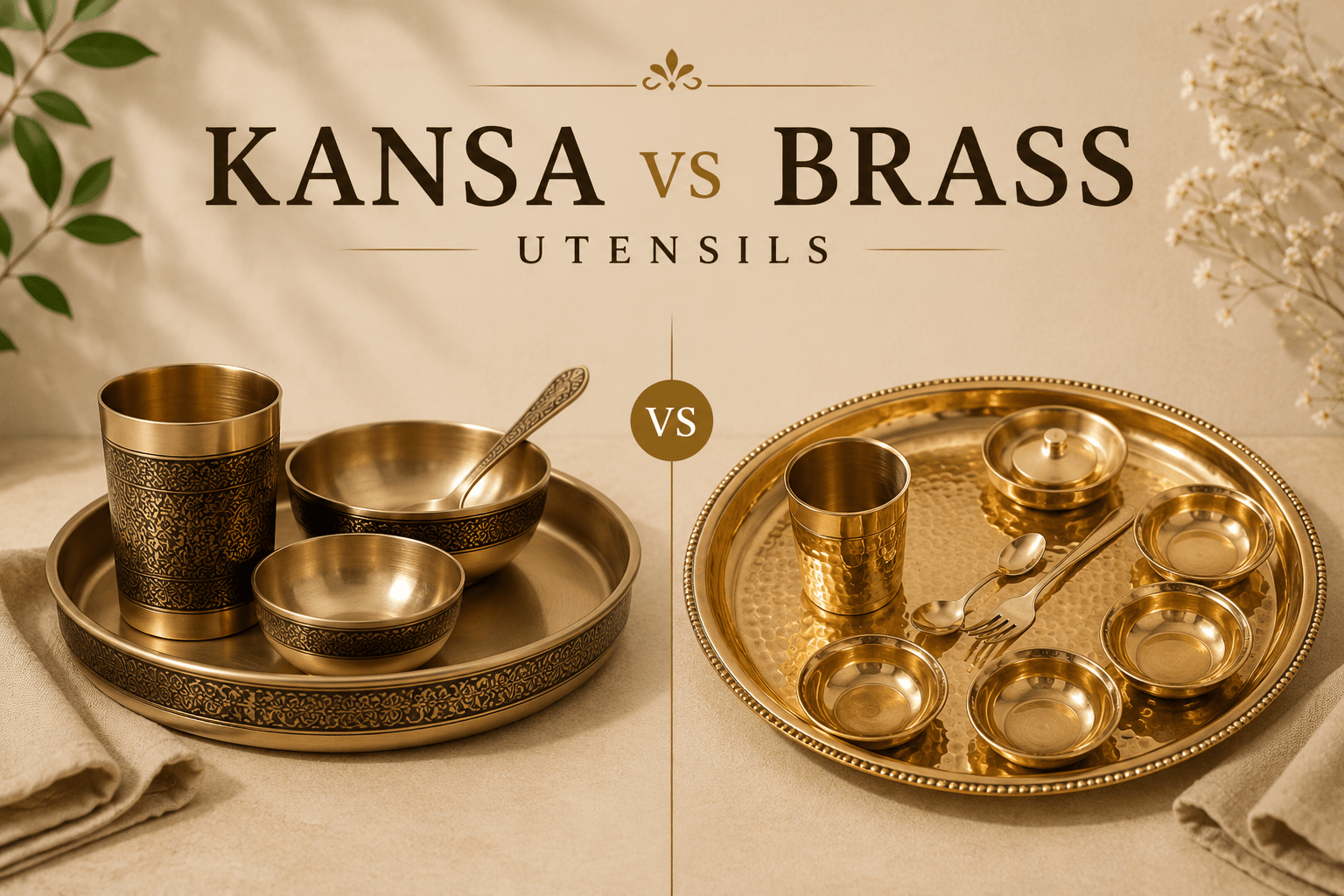
Kansa vs Brass Utensils | Which Is Better for Traditional Dining?
Introduction
Kansa and brass utensils have been an important part of Indian households for centuries. Both metals are deeply rooted in traditional Indian culture and continue to be popular among families who appreciate heritage-inspired living and handcrafted diningware.
If you're looking to invest in traditional metal utensils, you may wonder whether Kansa or brass is the better choice. While both offer timeless beauty and durability, each has unique characteristics that make it suitable for different preferences and uses.
In this guide, we'll compare Kansa vs Brass Utensils to help you choose the right option for your home.
What Are Kansa Utensils?
Kansa is a traditional bronze alloy primarily made from copper and tin. Often referred to as bell metal, Kansa has been used for generations in Indian households for dining and serving meals.
Common Kansa products include:
• Kansa Dinner Sets
• Kansa Thali Sets
• Kansa Bowls
• Kansa Plates
• Kansa Glasses
Explore our handcrafted Kansa Dinner Sets collection designed for traditional and modern homes.
To understand the history and composition of this timeless metal, read our guide on What Is Kansa Metal? Complete Guide.
What Are Brass Utensils?
Brass is an alloy made primarily from copper and zinc. Known for its warm golden appearance, brass is widely used for diningware, cookware, pooja items, and home décor.
Popular brass products include:
• Brass Dinner Sets
• Brass Cookware
• Brass Drinkware
• Brass Kitchen Utensils
• Brass Pooja Accessories
Explore our premium Brass Dinner Sets collection inspired by traditional Indian craftsmanship.
Kansa vs Brass Utensils: Key Differences
| Feature | Kansa Utensils | Brass Utensils |
|---|---|---|
| Material | Copper and Tin Alloy | Copper and Zinc Alloy |
| Appearance | Bronze-Golden Finish | Bright Golden Finish |
| Traditional Use | Diningware | Diningware, Cookware, Décor |
| Craftsmanship | Handcrafted Heritage Pieces | Traditional Utility and Décor |
| Popular Products | Kansa Dinner Sets | Brass Dinner Sets and Cookware |
Both metals are valued for their traditional appeal and craftsmanship.
Appearance and Aesthetic Appeal
One of the biggest differences between Kansa and brass utensils is their appearance.
Kansa
Kansa has a softer bronze-golden tone that creates a refined and heritage-inspired look. Its subtle elegance makes it a popular choice for luxury dining collections and Ayurvedic dining sets.
Brass
Brass has a brighter golden finish that adds richness and visual appeal. It is commonly used for both diningware and decorative pieces.
Traditional Significance
Both Kansa and brass hold an important place in Indian traditions.
Kansa has long been associated with traditional dining practices and family meals, while brass is widely used in kitchens, temples, and ceremonial occasions.
Because of this, many households choose to incorporate both metals into their homes.
You can also explore our article on Ayurvedic Importance of Kansa Dinnerware to learn more about Kansa's connection to traditional dining practices.
Which Is Better for Dining?
The choice between Kansa and brass depends on personal preference and lifestyle.
Choose Kansa if you prefer:
• Traditional diningware
• Heritage-inspired table settings
• Handcrafted artisan products
• Premium dining collections
Choose Brass if you prefer:
• Multipurpose utensils
• Dining and cooking collections
• Traditional golden aesthetics
• A wider variety of products
Many homeowners choose both metals to create a complete traditional dining experience.
To understand why Kansa continues to be preferred by many families, read Benefits of Eating in Kansa Utensils.
Featured Collections
Looking for authentic handcrafted metal dining collections?
Explore our premium Kansa Dinner Sets and Brass Dinner Sets collections that celebrate India's rich metalworking traditions.
Building a Heritage Kitchen
A well-designed traditional kitchen often includes multiple handcrafted metal collections.
Many families pair Kansa dinnerware with Brass Cookware and Copper Kitchenware to create a cohesive dining and cooking setup inspired by Indian heritage.
Frequently Asked Questions (FAQ)
Which is better, Kansa or brass utensils?
Both have unique qualities. Kansa is often preferred for premium dining collections, while brass is valued for its versatility and traditional appeal.
What is Kansa made of?
Kansa is primarily made from copper and tin.
What is brass made of?
Brass is primarily made from copper and zinc.
Can Kansa and brass utensils be used together?
Yes, many households use both Kansa and brass products as part of a traditional dining and kitchen setup.
Are Kansa and brass utensils suitable for gifting?
Absolutely. Both make excellent gifts for weddings, anniversaries, housewarming ceremonies, and festive occasions.
Final Thoughts
When comparing Kansa vs Brass Utensils, there is no single right choice. Both metals represent India's rich heritage, skilled craftsmanship, and timeless design traditions.
Whether you choose a handcrafted Kansa Dinner Set, a traditional Brass Dinner Set, or a combination of both, these timeless pieces can add elegance, authenticity, and cultural value to your home.
Read more
What Is Kansa Metal? Complete Guide
Discover what Kansa metal is, its traditional significance, composition, uses, and why handcrafted Kansa utensils continue to be valued in Indian homes.
Read more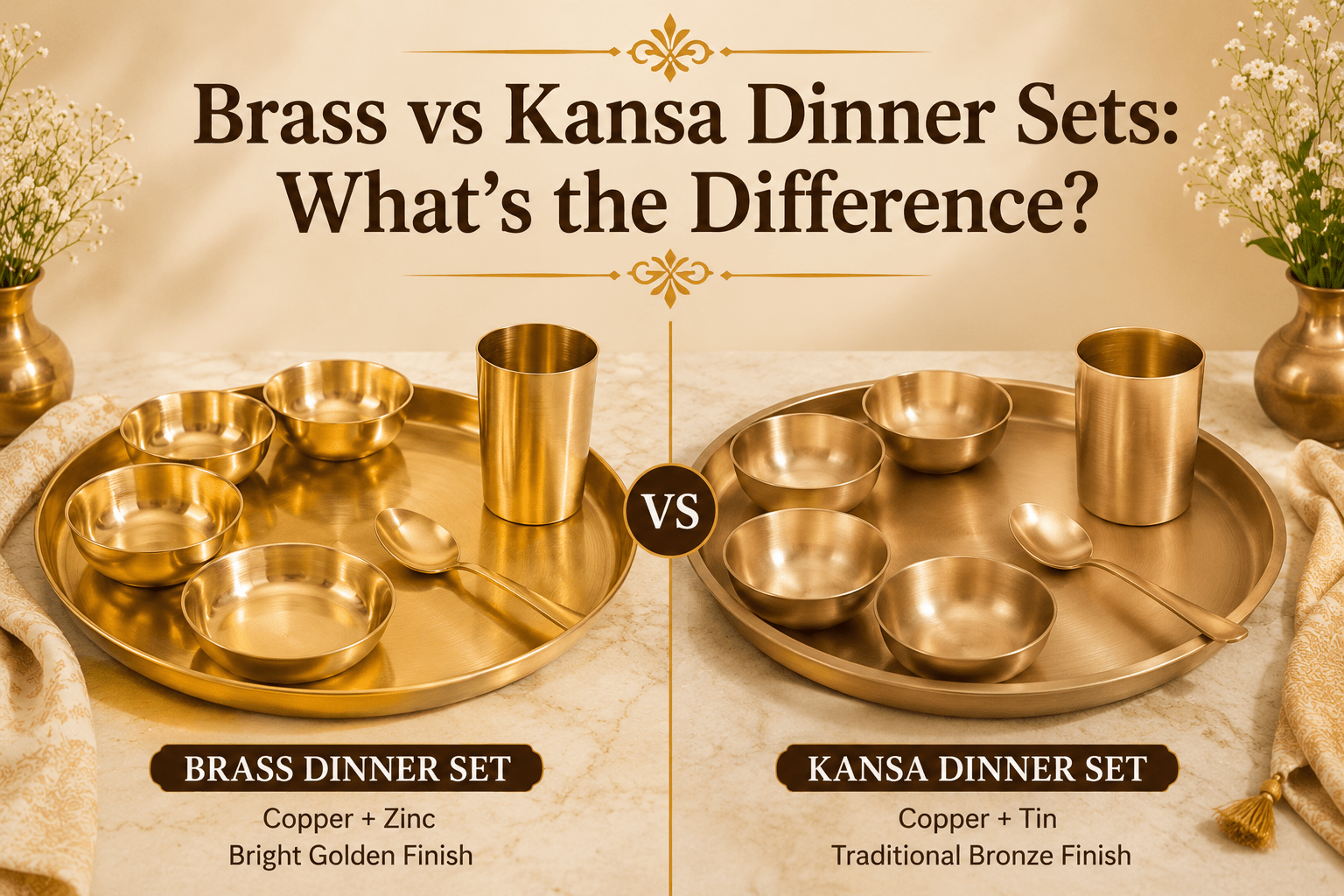
Brass vs Kansa Dinner Sets: What’s the Difference?
Confused between Brass and Kansa dinner sets? Learn the differences, benefits, and features of both traditional dining collections in this complete guide.
Read more