

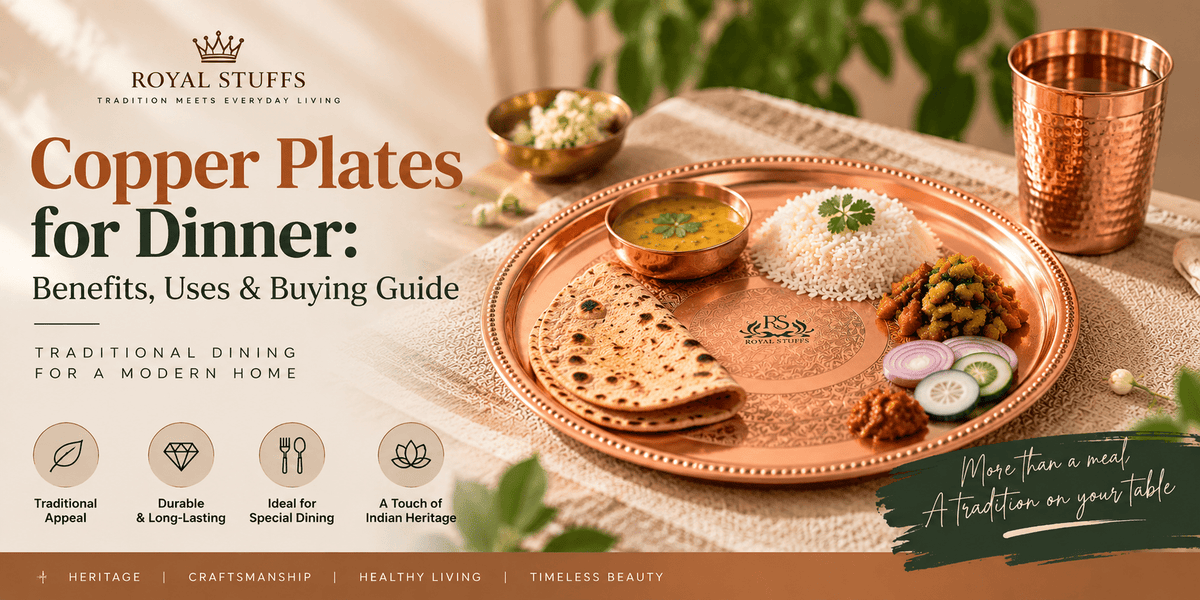
Copper Plates for Dinner: Benefits, Uses & Buying Guide
Copper has been part of Indian households for centuries, valued for its distinctive appearance, traditional craftsmanship, and connection with everyday rituals. While copper is commonly associated with water vessels and glasses, copper dinnerware also offer a beautiful way to bring traditional metalware into modern dining.
From festive meals and traditional thalis to special family dinners, a well-crafted copper plate can make the dining experience feel more rooted and elegant. However, copper requires more care than materials such as stainless steel, and it is important to understand which foods are suitable for direct contact.
This guide explains the benefits of copper dinner plates, their traditional uses, what foods to avoid, cleaning methods, and what to look for when buying one.
What Are Copper Plates for Dinner?

(Ornate copper plate with traditional engraved design on a cream dining table)
Copper dinner plates are dining plates made primarily from copper and designed for serving food. They may feature a smooth polished surface, hammered texture, engraved patterns, or traditional Indian detailing.
Explore our copper plates to see handcrafted options suitable for traditional dining.
Unlike ordinary ceramic or stainless-steel plates, copper has a naturally warm reddish-golden appearance that develops character over time.
A copper plate can be used for:
-
Traditional Indian meals
-
Festive dining
-
Special occasions
-
Pooja and religious meals where appropriate
-
Serving dry or suitable foods
-
Decorative traditional table settings
When buying one for eating, always check that it is food-contact safe and specifically intended for serving food.
Why Are Copper Plates Traditionally Used?

(Traditional Indian meal served on an engraved copper dinner plate)
Copper has a long history in Indian households and traditional metalware.
Traditional copper utensils remain popular among households that appreciate Indian metalworking traditions.
Copper vessels have been used for storing and serving water, while copper utensils have also appeared in traditional kitchens and ceremonial settings.
The appeal is not only practical. Copper represents an important part of India's metalworking heritage, particularly in regions known for skilled artisans and handcrafted utensils.
Today, copper plates combine this heritage with contemporary dining. A handcrafted plate can turn an ordinary meal into a visually memorable experience while keeping traditional craftsmanship alive.
Benefits of Using Copper Plates for Dinner
1. Beautiful Traditional Appearance
One of the biggest advantages of copper dinnerware is its appearance.
The warm reddish-brown tone of copper creates an elegant contrast with colourful Indian dishes. Foods such as rice, dal, vegetables, breads and sweets can look especially attractive against the metallic surface.
This is one reason copper dinnerware works particularly well for festive and heritage-inspired table settings.
For festive dinners and traditional table settings, copper plates can create a distinctive heritage-inspired look.
2. Durable With Proper Care
Copper is a durable metal that can remain useful for many years when handled and maintained correctly.
Unlike disposable or fragile dinnerware, a quality copper plate can become a long-term part of your kitchen or dining collection.
However, copper can scratch, tarnish and develop patina, so proper cleaning and storage are important.
3. Reusable and Long-Lasting
A well-made copper plate is reusable rather than disposable. With regular care, it can continue to serve for years.
This makes handcrafted metal dinnerware particularly appealing for people who appreciate durable household products and traditional craftsmanship.
4. Ideal for Special Dining
Copper plates work especially well when you want to create a traditional dining experience.
They can be used during:
-
Festivals
-
Family gatherings
-
Traditional dinners
-
Wedding-related functions
-
Cultural celebrations
-
Special meals at home
Pairing copper plates with traditional bowls, glasses and serving utensils can create a cohesive Indian table setting.
5. Showcases Indian Craftsmanship
Many copper utensils feature hammered textures, engraved borders and handmade detailing.
Choosing handcrafted copper dinnerware is therefore more than simply choosing a plate. It can also be a way of appreciating traditional Indian metal craftsmanship.
What Foods Can You Serve on Copper Plates?

(Copper dinner plate with rice roti and suitable traditional Indian foods)
This is one of the most important considerations when using copper dinnerware.
Copper can react with acidic foods, particularly when they remain in contact with the metal for an extended period. Therefore, copper plates are best used thoughtfully. If you're specifically looking for copper plates for dinner, choose products designed and finished for food contact.
Foods that are generally more suitable for short serving periods include:
-
Rice
-
Rotis and parathas
-
Dry vegetables
-
Breads
-
Non-acidic snacks
-
Sweets
-
Dry fruits
For foods with significant acidity, use a food-safe bowl or suitable lining rather than placing them directly on unlined copper. This is an important consideration when choosing copper utensils for food, particularly for Indian dishes containing tamarind, tomato or lemon.
What Foods Should You Avoid?

(Acidic foods kept separate from an unlined copper dinner plate)
Avoid prolonged direct contact between unlined copper and acidic foods.
Examples include:
-
Lemon-based foods
-
Citrus fruits and juices
-
Tomato-heavy preparations
-
Vinegar-based foods
-
Tamarind-heavy dishes
-
Acidic pickles
-
Other strongly acidic preparations
The concern is not simply staining. Acidic ingredients can react with copper, which is why unlined copper cookware and dinnerware require more careful food selection.
If you want to serve acidic foods, consider using a food-safe lined copper plate or placing the food in appropriate serving bowls.
How to Use Copper Plates Safely
Follow a few simple practices:
1. Choose food-safe copper.
Buy plates specifically manufactured for food contact.
2. Check the lining.
Some copper dinnerware may have a suitable lining. Understand what the manufacturer recommends before use.
3. Avoid prolonged food storage.
Copper plates are better suited to serving than storing food.
4. Be careful with acidic foods.
Use separate bowls when necessary.
5. Clean after use.
Do not leave food residue sitting on the plate for long periods.
These simple habits can help preserve both the appearance and usability of your copper dinnerware.
How to Clean a Copper Dinner Plate

(Gentle cleaning of an ornate copper dinner plate with a soft cloth)
Copper naturally changes colour with exposure to air and moisture. This patina is a normal characteristic of copper and does not necessarily mean the plate is damaged.
For routine cleaning:
-
Remove food residue after use.
-
Wash gently with mild soap and water.
-
Use a soft cloth or non-abrasive sponge.
-
Rinse thoroughly.
-
Dry the plate completely with a soft cloth.
-
Use a food-contact-safe copper polish when appropriate.
Avoid steel wool, harsh abrasive powders and aggressive scrubbing because they can scratch the copper surface.
For more detailed maintenance, follow the manufacturer's care instructions.
For more detailed maintenance, see our guide on how to clean copper utensils.
How to Choose the Right Copper Plate
Before buying copper plates for dinner, consider these factors:
Material Quality
Look for clearly described copper material and a product intended for food use.
Size and Capacity
Choose a plate size according to how you normally serve meals. Larger plates work well for thali-style dining, while smaller ones can be useful for snacks and desserts.
Thickness
A well-made plate should feel sturdy rather than excessively thin or flimsy.
Finish
Choose between polished, hammered or engraved finishes depending on your preferred style.
Food-Safe Construction
If the plate has a lining, understand what material is used and how it should be maintained.
Craftsmanship
Hand-hammered and engraved detailing can give the plate a distinctive traditional character.
Copper vs Brass vs Stainless Steel Plates

(Copper brass and stainless steel dinner plates compared side by side)
| Feature | Copper | Brass | Stainless Steel |
|---|---|---|---|
| Appearance | Warm reddish-gold | Golden yellow | Silver |
| Traditional appeal | High | High | Moderate |
| Maintenance | Higher | Moderate | Low |
| Patina | Can develop | Can develop | Minimal |
| Acidic foods | Requires care | Requires care | Generally easier |
| Best for | Traditional & special dining | Traditional dining | Everyday convenience |
The best choice depends on your priorities. Copper offers a distinctive heritage appearance, brass provides a classic golden aesthetic, while stainless steel is often chosen for convenience and everyday practicality.
If you're deciding between these two traditional metals, our guide to brass vs copper utensils explains their differences in greater detail.
Frequently Asked Questions
Are copper plates good for dinner?
Copper plates can be suitable for serving dinner when they are food-safe and used according to the manufacturer's instructions. Extra care is needed with acidic foods.
If you are also considering copper drinkware, see our guide to the copper drinking glass and its traditional uses.
Can I eat acidic food on a copper plate?
Avoid prolonged direct contact with acidic foods on unlined copper. Use a suitable bowl or food-safe lining instead.
Can copper plates be used every day?
They can be used regularly if they are designed for food contact and maintained properly. However, stainless steel may be more convenient for people who prefer very low-maintenance dinnerware.
Why does my copper plate turn dark?
Copper naturally develops patina through exposure to air and moisture. Gentle cleaning and appropriate copper-safe polishing can help restore its shine.
Are hammered copper plates better?
Hammered copper plates are mainly appreciated for their craftsmanship, texture and traditional appearance. The quality of the plate depends on its construction and intended use rather than texture alone.
Final Thoughts

(Family enjoying a traditional Indian meal served on a handcrafted copper thali plate)
Copper plates for dinner bring together traditional Indian craftsmanship and elegant dining. Their warm metallic appearance makes them particularly attractive for festive meals, cultural occasions and special family dinners.
At the same time, copper requires more thoughtful care than stainless steel. Choosing food-safe dinnerware, avoiding prolonged contact with acidic foods, cleaning gently and storing the plates properly can help preserve their beauty for years.
If you appreciate traditional Indian metalware and want to add a heritage-inspired touch to your dining table, a handcrafted copper plate can be a beautiful and meaningful choice.
Explore the Royal Stuffs Copper Collection to discover handcrafted copperware designed to bring traditional Indian craftsmanship into modern homes.
Read more

Copper Water Jug: Benefits, Uses & How to Choose the Right One
Learn the benefits and traditional uses of a copper water jug, plus practical tips for choosing, using, cleaning, and maintaining the right copper jug for your home.
Read more
Copper Tiffin Box: Benefits, Features & What to Check Before Buying
Discover the benefits and features of a copper tiffin box, what foods to use it for, how to care for it, and the key things to check before buying.
Read more